
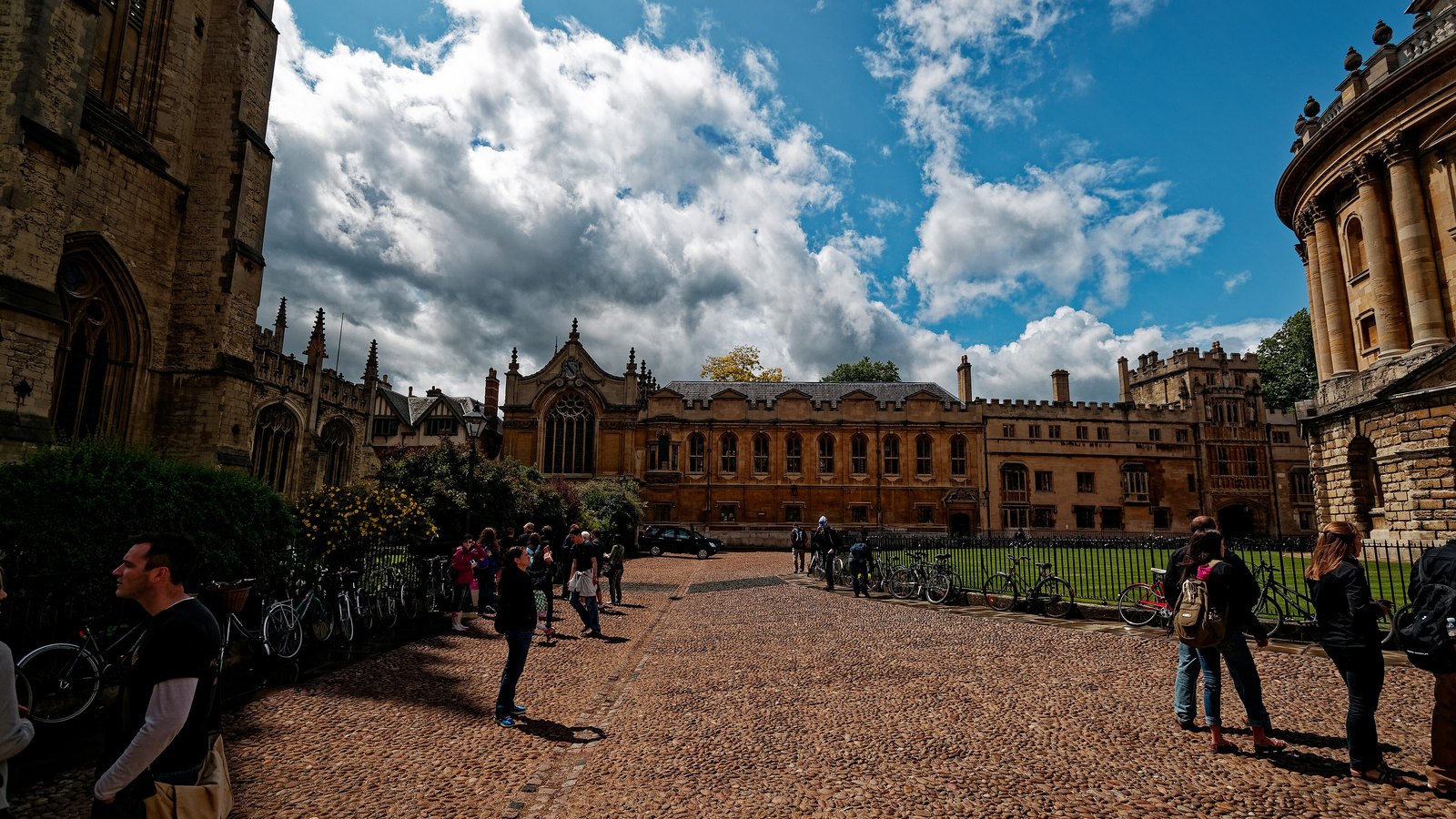
On November 28, 2026, collegiate authorities at the University of Oxford mounted a formal public defence of a contentious 100-megawatt academic computing data centre development, rejecting community allegations of excessive environmental consumption and maintaining that the high-performance infrastructure is dedicated to sovereign scientific research and quantum technologies rather than commercial artificial intelligence slop.
Collegiate Defence of Sovereign Research Infrastructure
Representatives from the University of Oxford collegiate estate responded on November 28, 2026, to public protests and formal planning objections lodged against the proposed Exeter-Oxford Innovation District (EXOq) at Frieze Farm. The outline application, registered as 26/00720/OUT with Cherwell District Council, includes up to 34,000 square metres of dedicated computing space designed to house a 100-megawatt high-performance computing facility alongside academic laboratories and research hubs.
The intervention followed public demonstrations on November 27 outside collegiate premises on Turl Street in Oxford, where environmental campaigners and students challenged the site’s energy footprint. Responding to community criticism reported by This Is Oxfordshire, Nicholas Badman, finance and estates bursar, delivered a categorical defence of the project, establishing a clear division between speculative commercial models and rigorous scientific computation.
“We are aware of the surge in local interest in EXOq in the past week and the particular focus on sustainability and climate impact, and we welcome the opportunity to bring some clarity to the proposals,” Badman stated. “The Innovation District as a whole, and the data centre element of it specifically, is not for general social media, cloud services and AI slop. Compared to others, it is modest in scale, megawatt size rather than gigawatt. The ambition is for EXOq to become the pre-eminent quantum ecosystem in the UK and potentially Europe, building on Oxford’s world-leading academic breadth and depth in this exciting new field of computer development.”
University researchers across biomolecular design, climatology, and particle physics have faced acute computing bottlenecks. Collegiate leaders underscored that domestic, sovereign compute clusters are vital to shield scientific inquiry from proprietary foreign cloud dependencies.
Technical Specifications and Comparative Compute Scale
Covering up to 34,000 square metres, the planned data centre is engineered for low-latency quantum simulation, molecular dynamics, and advanced materials analysis rather than commercial multi-tenant hosting. As documented in casrai guides on high-performance computing architecture, academic workloads require sustained parallel precision rather than high-volume consumer throughput.
Unlike commercial installations that frequently scale past 500 megawatts, the Oxford design operates at 100 megawatts and incorporates closed-loop liquid cooling. Through a formal partnership with district energy provider 1Energy, captured waste thermal energy will be piped into municipal networks to heat homes and civic amenities across Kidlington. The project parameters compare directly against other major computing tiers:
| Infrastructure Category | Proposed Oxford EXOq Facility | National Supercomputers (e.g. Frontier) | Commercial Hyperscale Campus |
|---|---|---|---|
| Primary Purpose | Quantum simulation and academic lab discovery | Sovereign open science and physics modeling | Multi-tenant consumer cloud and commercial LLMs |
| Electrical Design Load | 100 MW capacity | 21 to 29 MW (supercomputer hall draw) | 300 MW to 1,000+ MW (gigawatt scale) |
| Cooling Architecture | Liquid-to-liquid capture with heat export | Direct liquid cooling with closed towers | Evaporative cooling or direct-to-chip loops |
| Thermal Heat Export | Municipal district network connection | Site-specific thermal absorption | Predominantly atmospheric heat rejection |
| Workload Governance | Academic peer review and university spinouts | National laboratory merit allocation | Unconstrained commercial monetization |
Scientific benchmarks from the US Department of Energy Frontier supercomputer and the exascale El Capitan supercomputer demonstrate that dense scientific clusters achieve optimal efficiency when thermal dissipation is captured for secondary civic use.
Environmental Controversy and Green Belt Planning Context
The proposed development faces intensive scrutiny under statutory land-use protections. The 40-hectare site at Frieze Farm occupies open agricultural land within the Oxford Green Belt between North Oxford and Kidlington. Local environmental coalitions argue that constructing extensive infrastructure compromises the Green Belt’s statutory purpose of preventing urban coalescence.
Grid capacity concerns intensified following national planning decisions that refused development consent for the nearby Botley West solar farm, which had been considered as a possible regional clean energy supplier. Furthermore, conservationists have raised alarms regarding the site’s boundary with Stratfield Brake, an ecologically rich woodland parcel. Campaigners argue that the 10-metre ecological buffer zone planned in sections of the development is inadequate to protect soil biology and mature root networks.
Under the statutory provisions of the National Planning Policy Framework, development within protected Green Belt land requires applicants to demonstrate very special circumstances. Collegiate submissions argue that national technological security, quantum research infrastructure, and localized economic renewal meet the legal threshold for exceptional approval.
Stakeholder Objections and Academic Community Mobilisation
Public engagement records on the local planning portal reveal substantial opposition. Between November 19 and November 28, 2026, more than one hundred formal public comments were submitted regarding application 26/00720/OUT, the vast majority registering objections. The campaign organisation Stop EXOq Data Centre coordinated demonstrations in central Oxford to demand the withdrawal of the computing element.
As reported by the Oxford Mail, campaign leader Dr Carol Peaker highlighted the disparity between the centre’s power requirements and municipal consumption. “Between 2004 and 2024, Oxford’s average draw on the grid per year was 83 megawatts, and this development is 100 megawatts before secondary cooling loads are counted,” Peaker stated during the November 27 assembly. Suzanne McIver of Friends of Stratfield Brake reiterated concerns over ancient woodland buffers, while university student groups questioned the balance between institutional expansion and climate obligations.
Conversely, university science faculty maintain that without dedicated local infrastructure, experimental teams will be forced to outsource computations to overseas commercial hyperscalers, raising data integrity and cost barriers.
Implications for University Research Computing and Compliance
The Oxford dispute illustrates emerging governance challenges for university research offices, high-performance computing managers, and estates directors nationwide. As deep learning and quantum simulations become indispensable to laboratory disciplines, universities must secure heavy compute throughput without undermining institutional carbon targets.
For institutional research administrators, the development highlights critical operational priorities:
- Workload Audit Frameworks: Institutions must implement clear workload evaluation systems aligned with the research data quality framework to verify that power-intensive compute is allocated to validated research rather than unmonitored commercial tasks.
- Thermal Reclamation Agreements: Capital planning for institutional clusters must integrate verifiable heat-export contracts with municipal partners, converting compute cooling into local energy infrastructure.
- Severability and Governance Covenants: Where academic data centres form part of larger private-public developments, university boards must insert binding covenants ensuring compute resources cannot be separated into unregulated commercial hosting.
- Domestic Research Sovereignty: Establishing domestic, university-governed infrastructure protects sensitive scientific datasets from extraterritorial regulatory shifts and proprietary cloud pricing volatility.
Oxford collegiate representatives confirmed that governance charters will mandate academic oversight committees to allocate compute time solely to peer-reviewed scientific investigations and approved spinouts.
Upcoming Regulatory Decisions and Planning Milestones
The outline application remains under review by Cherwell District Council planning officers, with technical consultation materials available through the EXOq project portal. Statutory agencies, highway authorities, and environmental specialists are concluding evaluations on flood risk mitigation and grid connection viability.
The application is scheduled to go before the Cherwell District Council Planning Committee for determination in the second quarter of 2027. Should outline approval be granted, detailed reserved matters applications covering architectural profiles, acoustic buffering, and heat transfer networks will follow. If refused, applicants retain statutory appeal rights to the planning inspectorate under national infrastructure guidance.
Sources
- Cherwell District Council: Planning Application 26/00720/OUT for Land at Frieze Farm (EXOq Innovation District), checked 2026-11-28
- This Is Oxfordshire: Oxford University college data centre ‘not for AI slop’, checked 2026-11-28
- Oxford Mail: Oxford protesters descend on university college amid data centre plans, checked 2026-11-28
- EXOq Project: Exhibition Boards for Proposed Innovation District at Frieze Farm, checked 2026-11-28
- UK Ministry of Housing, Communities & Local Government: National Planning Policy Framework, checked 2026-11-28






