
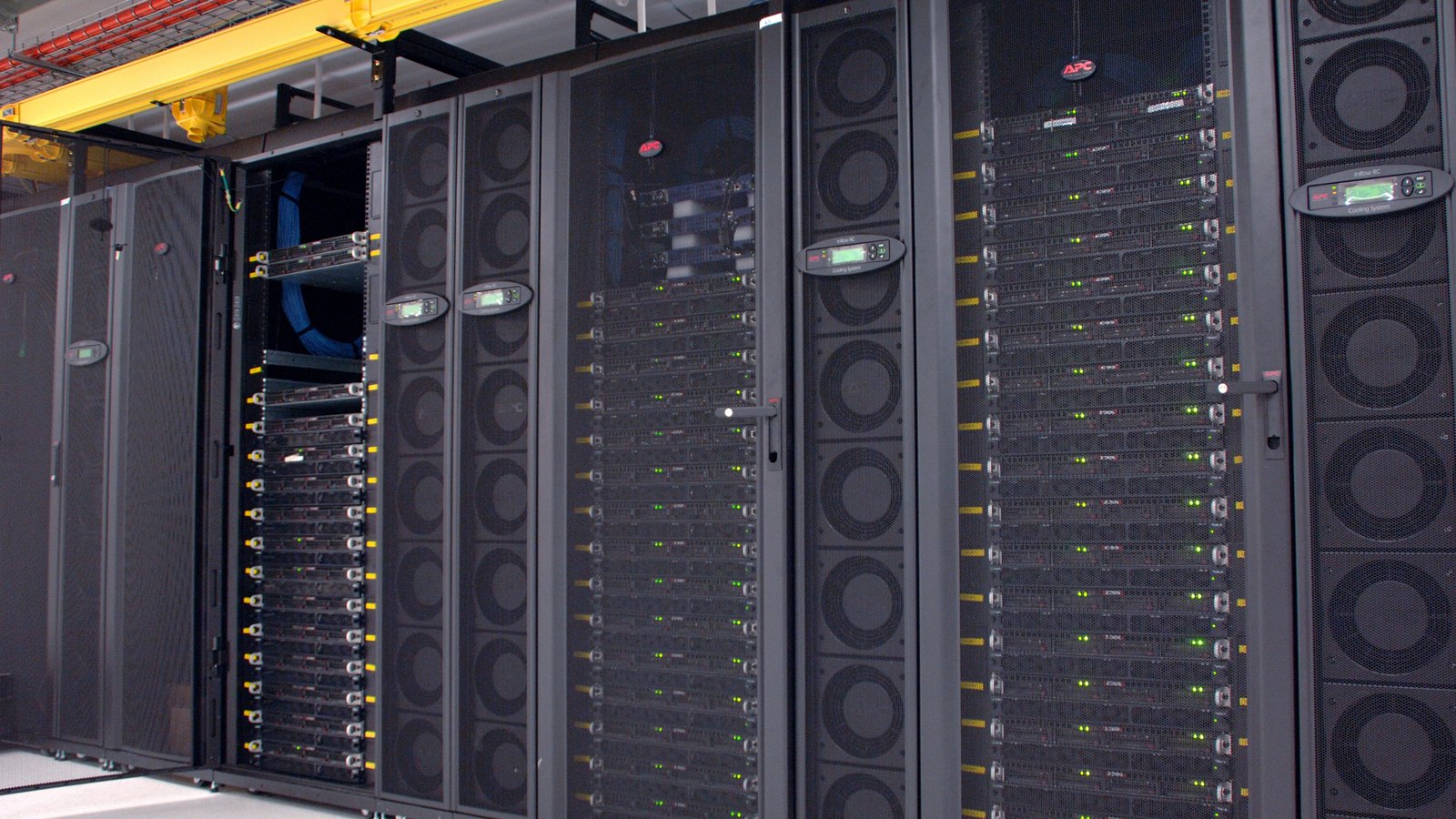
On 27 November 2026, Shanghai-based enterprise cloud software and digital commerce provider Weimob Group disclosed two commercial procurement agreements to assemble a 5,000-unit artificial intelligence compute cluster built around Nvidia RTX PRO 5500 workstation graphics processors. The strategic investment illustrates how Chinese cloud vendors and institutional research computing centres are turning to professional workstation-grade PCIe hardware to sustain multimodal model workloads and enterprise inference capacity while operating within the compliance parameters established by U.S. export controls.
Procurement Structure and Hardware Acquisition Terms
According to regulatory disclosures filed with the Hong Kong Stock Exchange and detailed in Digitimes reporting on Weimob’s GPU cluster, the hardware purchases are being executed through Weimob’s wholly owned operating entity, Shanghai Weimob Intelligent Computing. The initiative encompasses two separate commercial contracts with domestic hardware distributors for a total capital outlay of approximately 430.5 million yuan (approximately 60 million U.S. dollars). The larger contract covers 4,000 Nvidia RTX PRO 5500 processors acquired from Ingram Micro Trading (Shanghai) for approximately 344 million yuan. Ingram Micro Trading is a subsidiary of U.S.-listed Ingram Micro Holding, with the contract requiring a 10 percent advance payment within two business days of signing followed by full payment upon each delivered batch. A secondary contract secures 1,000 units from Shanghai Fuxin Technology, an established Nvidia visualization partner, for 86.5 million yuan with a 5 percent initial deposit.
Under Hong Kong listing regulations, the primary purchase agreement triggered discloseable transaction thresholds, prompting the public filing. Weimob stated in its corporate disclosure that the compute cluster will power proprietary generative AI products, focusing specifically on multimodal processing, digital image creation, and automated video generation for enterprise clients. The company also confirmed that upon fulfilling internal computational requirements, it intends to lease surplus capacity to third-party commercial clients and research organisations.
Workstation GPU Architecture Under U.S. Export Controls
The choice of hardware reflects an architectural pivot by Chinese technology firms navigating trade restrictions administered by the U.S. Bureau of Industry and Security China export guidance. Under the Export Administration Regulations, particularly Export Control Classification Numbers 3A090 and 4A090, the U.S. Department of Commerce restricts the direct sale and export of advanced data-centre accelerators—such as the Nvidia H100, H200, B200, and B300—based on Total Processing Performance metrics and interconnect bandwidth density thresholds. Tailored data-centre alternatives like the Nvidia H20 remain subject to rigorous licensing reviews and regulatory uncertainty.
To maintain infrastructure resilience without triggering export prohibitions, domestic technology providers are turning to PCIe workstation cards. As detailed in technical documentation from Nvidia professional desktop and workstation GPU architecture, the RTX PRO 5500 is engineered on the Blackwell microarchitecture and incorporates 84 gigabytes of high-speed GDDR7 memory. While primarily designated for professional visualization, engineering design, and local simulation, its large memory capacity makes it viable for running medium-scale foundation models and agentic workflows that underpin modern advances in artificial intelligence. Infrastructure planners evaluating aggregate compute density rely on standardized compute FLOPS estimate calculations to model cluster throughput across distributed nodes.
Comparative Specifications and Export Classification Parameters
Deploying professional workstation processors in high-density server configurations involves distinct architectural trade-offs compared to purpose-built data-centre silicon. The following table summarizes key technical parameters, interconnect bandwidth, and regulatory status across contemporary Nvidia compute architectures deployed in scientific and enterprise facilities:
| Specification Metric | Nvidia RTX PRO 5500 | Nvidia H20 (Data Centre) | Nvidia B300 / B200 |
|---|---|---|---|
| Microarchitecture | Blackwell (Workstation) | Hopper (Custom China) | Blackwell (Flagship) |
| Memory Type and Capacity | 84 GB GDDR7 | 96 GB HBM3 | 192–288 GB HBM3e |
| System Bus Interface | PCIe Gen 5.0 (x16) | PCIe Gen 5.0 / SXM5 | SXM6 / NVLink Module |
| Interconnect Bandwidth | Standard PCIe (~128 GB/s) | NVLink (900 GB/s) | NVLink (1.8 TB/s) |
| U.S. BIS Export Status | Commercially Available | Restricted / Monitored | Restricted / Prohibited |
| Primary Workload Profile | Inference and Multimodal GenAI | Enterprise LLM Fine-Tuning | Frontier Foundation Training |
The primary constraint of workstation clusters lies in inter-card communication bandwidth. Unlike flagship supercomputers such as the Frontier supercomputer that utilize custom high-bandwidth coherent interconnects across tens of thousands of nodes, PCIe-based clusters must route inter-GPU gradient exchanges through the host system bus and standard network fabrics. This topology introduces communication latency during full-parameter pretraining of frontier models. However, for decoupled inference tasks, retrieval-augmented generation pipelines, and parameter-efficient fine-tuning methods such as Low-Rank Adaptation (LoRA), an aggregated pool of 5,000 units with 84 GB memory per card provides substantial operational capacity without requiring specialized data-centre fabric licenses.
Industry Trends and Multi-Card Aggregation Strategies
Weimob’s infrastructure procurement follows an established pattern among Chinese cloud operators seeking alternatives to restricted enterprise silicon. As documented in Crypto Briefing analysis of export workarounds and confirmed by International Business Times coverage of China’s GPU procurement, larger domestic tech conglomerates including ByteDance, Alibaba, and Tencent have placed aggregate orders exceeding three million workstation GPUs. These corporate initiatives demonstrate that enterprise demand for artificial intelligence hardware remains resilient across Chinese industry despite tightening bilateral trade barriers.
By contracting with local distributors representing international vendors, corporate buyers utilize established commercial supply chains. The reliance on Ingram Micro Trading highlights how multinational IT distributors manage compliance verification while fulfilling regional commercial demand for products that fall beneath controlled performance thresholds.
Implications for Academic Research and Institutional Compliance
The growing reliance on aggregated workstation hardware carries significant operational implications for academic researchers, university computer centres, and research administration offices. Because premier data-centre chips remain inaccessible to non-exempt Chinese research institutions, academic research groups are increasingly adopting modular workstation clusters to support doctoral research, natural language processing studies, and computational biology pipelines.
For institutional research administrators and export control compliance officers, these deployments underscore evolving challenges in technology governance. Export control frameworks historically applied to tangible dual-use commodities under arrangements such as the Nuclear Suppliers Group have increasingly expanded to cover computational processing density, high-speed networking fabrics, and cloud infrastructure access. University research offices must track hardware provenance, end-user verification, and multi-node server configurations to ensure institutional infrastructure remains aligned with international compliance mandates and funder research security guidelines.
Regulatory Scrutiny and Future Export Outlook
The large-scale clustering of workstation GPUs has attracted heightened scrutiny from international regulators and policymakers. U.S. Commerce Department officials have been reviewing whether multi-chip aggregation techniques effectively circumvent the strategic intent of semiconductor controls. Ongoing policy evaluations focus on high-performance PCIe cards, regional data-centre transshipment corridors across Southeast Asia, and remote Infrastructure-as-a-Service compute access granted to restricted entities.
As regulatory authorities assess potential revisions to Export Administration Regulations performance thresholds, enterprise developers and academic institutions are prioritizing diversified infrastructure stacks. Future policy revisions may introduce stricter aggregation limits or narrow the gap between workstation and data-centre export restrictions, directly impacting hardware procurement strategies across the global research ecosystem.
Sources
- Digitimes: China’s Weimob to form Nvidia RTX PRO 5500 cluster as chip export restrictions loom, checked 2026-11-27
- Crypto Briefing: Weimob to form Nvidia RTX PRO 5500 cluster amid export restrictions, checked 2026-11-27
- International Business Times: US Chip Curbs Can’t Shake China’s Appetite For Nvidia. Another Chinese Firm Is Buying 5,000 Blackwell GPUs, checked 2026-11-27
- U.S. Bureau of Industry and Security: Export Administration Regulations and Advanced Computing Semiconductor Controls for China, checked 2026-11-27
- Nvidia Corporation: RTX PRO in Desktops | Built For Professionals, checked 2026-11-27






