
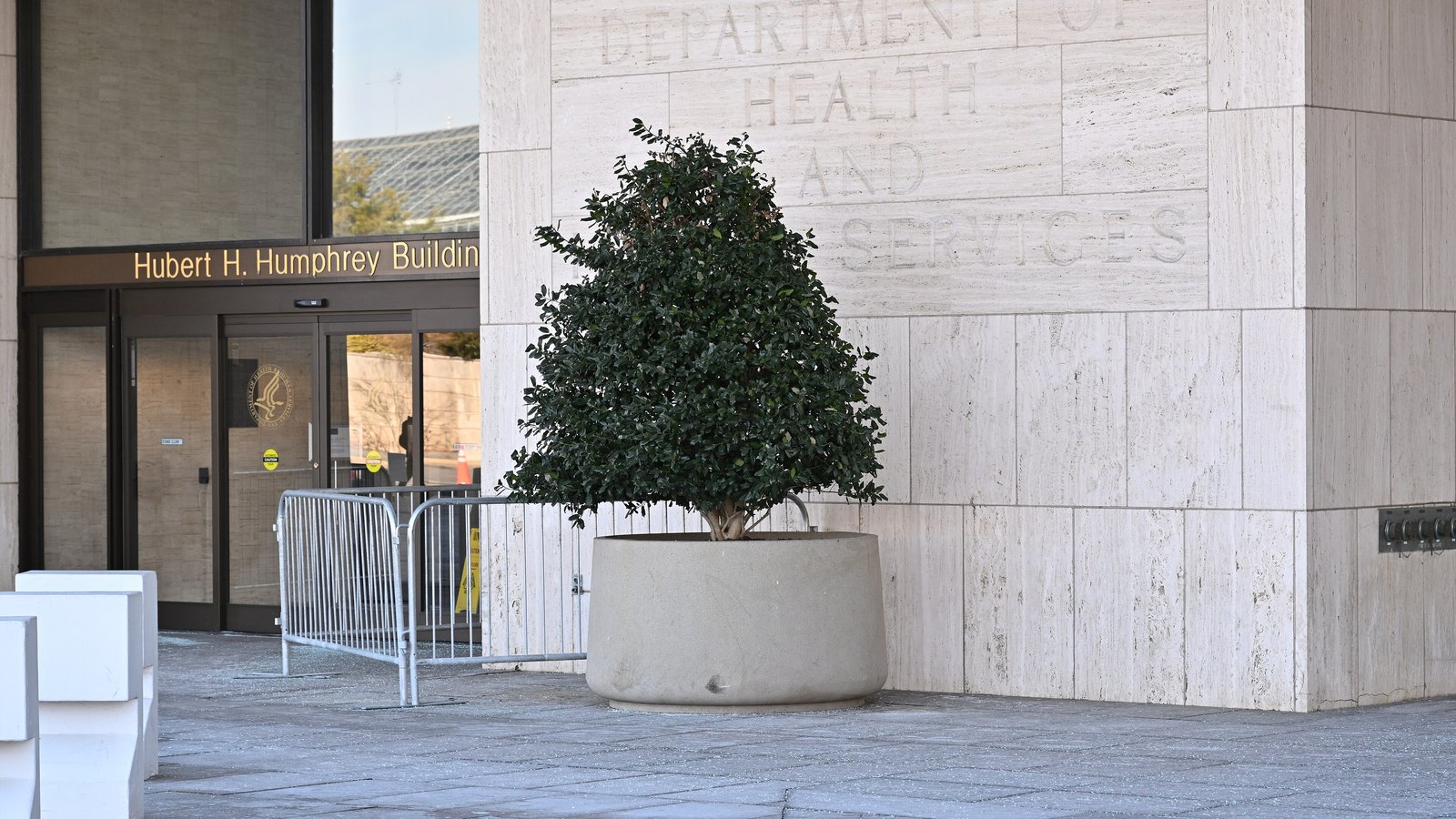
On November 26, 2026, the Substance Abuse and Mental Health Services Administration placed on public inspection Federal Register Notice 2026-24100 under the Paperwork Reduction Act, initiating a formal revision of its 988 Cooperative Agreements Monitoring Program information collection activities. The regulatory action alters evaluation metrics, reporting instruments, and data schedules for hundreds of recipient organizations, creating direct compliance and data governance obligations for university research centers, state agencies, and institutional award administrators.
Federal Register Notice 2026-24100 and Agency Scope
The notice, published in the Federal Register under OMB Control Number 0930–0394, requests Office of Management and Budget approval for an updated information collection package spanning four critical federal crisis and behavioral response grant mechanisms. Authorized under Section 3506(c)(2)(A) of the Paperwork Reduction Act of 1995, the proposal reflects statutory mandates established by Congress in appropriations legislation directing SAMHSA to enhance program evaluation, implement rigorous performance metrics, and verify service quality across the national crisis network.
According to the official filing signed by Public Health Advisor Alicia Broadus, the information collection serves to evaluate four distinct funding mechanisms: the 988 Suicide and Crisis Lifeline Network Administrator Cooperative Agreement, the State and Territory Cooperative Agreements, the Crisis Center Follow-up Cooperative Agreements, and the Tribal Cooperative Agreements. The agency noted that revisions have been made across several reporting instruments, adding new standardized templates while retiring obsolete data collection forms to align grantee reporting with federal evidence-based care guidelines.
Key Reporting Instruments and Burden Estimates
Under the revised clearance package detailed in the official Federal Register Document 2026-24100 text, SAMHSA estimates an annualized burden of 1,613 hours across 416 recipient organizations, totaling 1,447 individual responses annually. The economic burden is calculated at $73,568.96 per year based on an hourly wage rate of $45.61 for community and social service occupations, derived from Bureau of Labor Statistics occupational employment data.
Recipient obligations vary significantly depending on the cooperative agreement mechanism. State and territory recipients bear the largest aggregate administrative workload, accounting for 795 total annual burden hours distributed across semi-annual progress reports, semi-annual key metrics templates, monthly Government Project Officer meeting agendas, and dedicated communication and sustainability plans. Meanwhile, crisis center follow-up awardees submit progress reports, Government Project Officer agendas, and semi-annual key metrics reports governing coordination with crisis stabilization and mobile crisis outreach services.
The following table summarizes the annualized respondent universe, reporting frequency, and estimated burden hours for each instrument contained in the OMB 0930–0394 information collection package:
| Collection Instrument / Template | Respondent Universe | Annual Frequency | Hours per Response | Total Annual Burden Hours | Estimated Annual Cost |
|---|---|---|---|---|---|
| Tribal Government: Semi-Annual Progress Report Template | 19 | 2 | 2.0 | 76 | $3,466.36 |
| Tribal Government: GPO Meeting Agenda Template | 19 | 12 | 0.5 | 114 | $5,199.54 |
| Tribal Government: Optional Local Evaluation Plan Template | 19 | 1 | 2.0 | 38 | $1,733.18 |
| State/Territory: Semi-Annual Progress Report Template | 53 | 2 | 2.0 | 212 | $9,669.32 |
| State/Territory: Semi-Annual Key Metrics Report Template | 53 | 2 | 1.0 | 106 | $4,834.66 |
| State/Territory: GPO Meeting Agenda Template | 53 | 12 | 0.5 | 318 | $14,503.98 |
| State/Territory: Communications Plan Template | 53 | 1 | 1.0 | 53 | $2,417.33 |
| State/Territory: Sustainability Plan Template | 53 | 1 | 2.0 | 106 | $4,834.66 |
| Crisis Center: Semi-Annual Progress Report Template | 31 | 2 | 2.0 | 124 | $5,655.64 |
| Crisis Center: Semi-Annual Key Metrics Report Template | 31 | 2 | 2.0 | 124 | $5,655.64 |
| Crisis Center: GPO Meeting Agenda Template | 31 | 12 | 0.5 | 186 | $8,483.46 |
| 988 Network Admin: Lifeline Key Metrics and Progress Report | 1 | 12 | 13.0 | 156 | $7,115.16 |
| Total / Summary | 416 | 61 | 28.5 | 1,613 | $73,568.96 |
Background and Regulatory Context
Congress formally established the 988 three-digit dial code in 2020 through the National Suicide Hotline Designation Act, and the National Suicide Prevention Lifeline completed its operational transition to the abbreviated code in July 2022. To bolster state and local crisis infrastructure, federal appropriations directed substantial discretionary grant and cooperative agreement funding to regional call centers, academic medical affiliates, and municipal behavioral programs.
However, consecutive appropriations acts in 2023 and 2026 placed heightened scrutiny on federal award accountability. Lawmakers specifically mandated that SAMHSA implement uniform performance measurement architectures to track routing speed, in-state answer rates, follow-up connection quality, and service capacity. Standardizing these metrics within SAMHSA’s broader post-award reporting requirements ensures that federal program officials receive timely, verifiable operational data while monitoring compliance with 2 CFR 200 Subpart D post-award requirements.
Unlike standard research grants where federal program staff maintain arm’s-length oversight, federal cooperative agreements involve substantial programmatic involvement by agency officers. In contrast to NIH mechanisms such as the U01 cooperative agreement where federal staff collaborate primarily on scientific study design, SAMHSA cooperative agreements integrate monthly Government Project Officer meetings directly into the regulatory monitoring framework.
Stakeholder Perspectives on Federal Reporting Burden
The publication of Notice 2026-24100 highlights persistent tensions across higher education and research administration regarding administrative workload. University associations and compliance bodies, including the Council on Governmental Relations, have frequently analyzed how cumulative federal reporting requirements impact sponsored program administration. COGR’s active policy work on research compliance continues to emphasize the need for federal agencies to harmonize data collection instruments, eliminate redundant progress filings, and avoid imposing uncompensated administrative overhead on recipient institutions.
Under the Paperwork Reduction Act review process overseen by the Office of Information and Regulatory Affairs, agencies must invite public comment on whether proposed data collections possess practical utility, whether burden calculations reflect realistic institutional commitments, and whether automated IT systems can streamline data transfers. Institutional administrators reviewing public docket submissions on information collection reviews often point out that agency burden models frequently underestimate the internal staff time needed to clean administrative datasets, conduct privacy reviews, and reconcile electronic records prior to submission.
Implications for Universities, Evaluators and Research Offices
For university sponsored programs offices, academic evaluators, and behavioral science departments partnering with state agencies, SAMHSA’s proposed revisions introduce several concrete operational considerations:
- Award Compliance and Alignment: Principal investigators and project directors holding 988 cooperative agreement subawards must review existing grant agreements against the updated templates to verify that internal workflows produce required semi-annual progress and metrics data without programmatic delay, following institutional federal grant reporting requirements.
- Data Systems and Information Governance: Academic evaluation teams collecting call volume, referral linkage, and outcome metrics must configure institutional databases to align with SAMHSA’s standardized key metrics templates, maintaining rigorous data stewardship in line with institutional research data governance protocols and privacy standards.
- Tribal Data Sovereignty and Optional Evaluation: For entities collaborating with American Indian and Alaska Native communities under Tribal Cooperative Agreements, the collection framework incorporates an Optional Local Evaluation Plan template (OMB burden estimate: 2.0 hours). Universities supporting tribal partners should ensure that all evaluation protocols respect indigenous data governance principles and tribal data ownership frameworks.
- Budgeting Administrative Effort: While SAMHSA bases its $73,568.96 aggregate cost projection on a $45.61 community service wage rate, university sponsored projects offices should assess whether actual effort spent by data analysts, compliance officers, and faculty investigators exceeds federal allocations, ensuring proper cost accounting across departmental budgets.
Comment Deadlines and Procedural Next Steps
Public inspection of Notice 2026-24100 commenced on November 26, 2026, with official publication in the Federal Register scheduled for November 27, 2026. The statutory 60-day public comment window under the Paperwork Reduction Act will close on January 26, 2027.
Written comments and technical recommendations regarding the proposed information collection may be submitted directly to SAMHSA Reports Clearance Officer Alicia Broadus at the Office of Management and Budget clearance address (5600 Fishers Lane, Room 15E57A, Rockville, MD 20852) or electronically via email to [email protected]. Submissions should reference OMB Control Number 0930–0394 and Federal Register Document Number 2026-24100. Following the close of the 60-day comment period, SAMHSA will review public feedback, adjust reporting instruments as appropriate, and submit a final information collection request to OMB for formal three-year clearance.
Sources
- Federal Register: Agency Information Collection Activities: Proposals, Submissions, and Approvals (Document 2026-24100), checked 2026-11-26
- Federal Register: Official Notice Text for SAMHSA 988 Cooperative Agreements Monitoring Program (FR Doc. 2026-24100), checked 2026-11-26
- Substance Abuse and Mental Health Services Administration: Post-Award Reporting Requirements, checked 2026-11-26
- Council on Governmental Relations: Research Compliance Policy Issues and Administrative Burden, checked 2026-11-26
- Office of Information and Regulatory Affairs: Information Collection Review and Paperwork Reduction Act Dockets, checked 2026-11-26






