
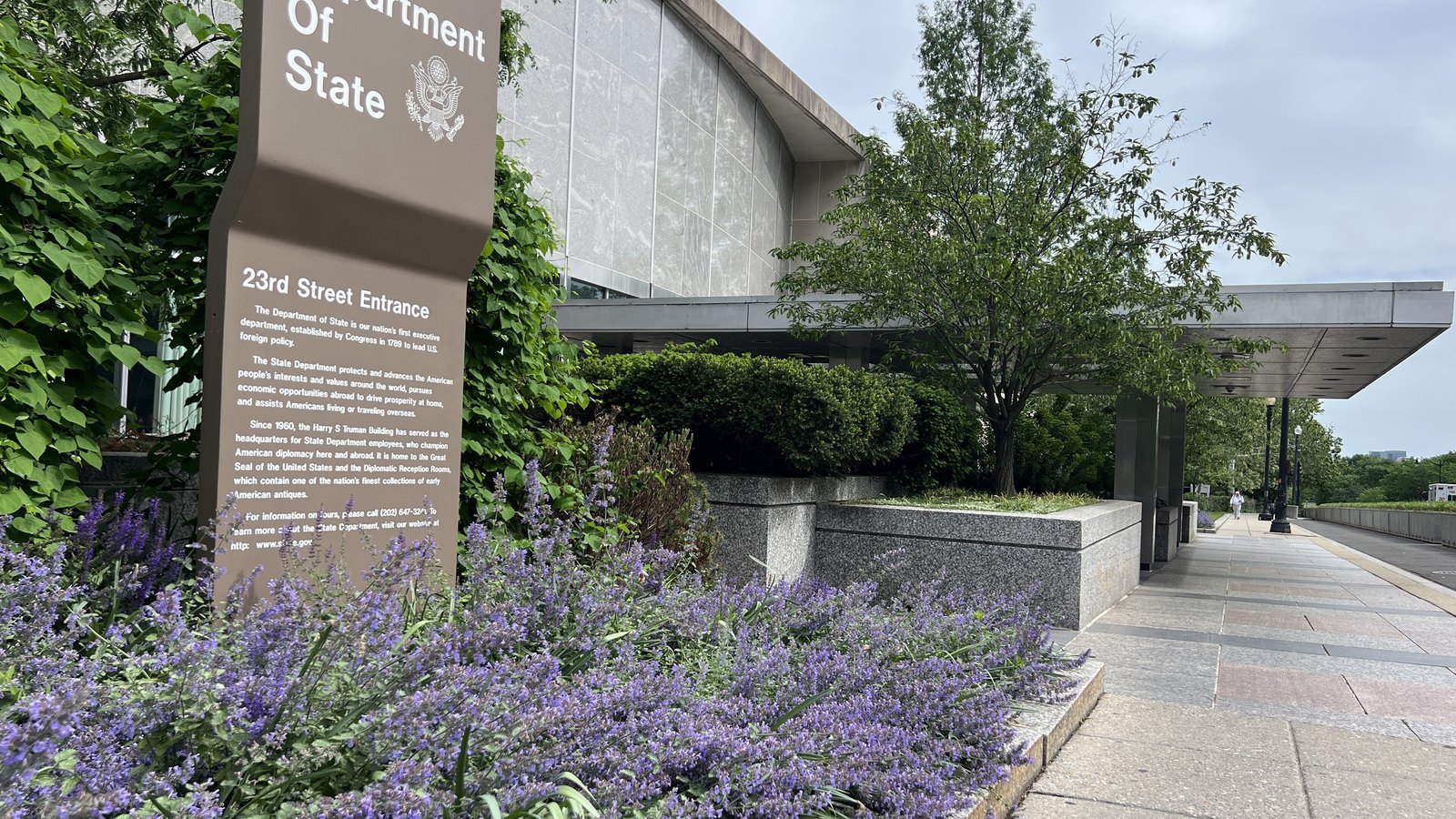
Following the State Department’s separate November 23 Countering America’s Adversaries Through Sanctions Act actions published under notice 2026-23793, the State Department and OFAC published four Federal Register notices on November 24, 2026, adding designated individuals and entities to the Specially Designated Nationals List under Executive Orders 14404 and 14059, compelling university export-control and research offices to update restricted-party screening protocols.
Four Federal Register Notices Add Individuals and Entities to SDN List
On November 24, 2026, the federal government published four sanctions notices in Volume 91, Number 225 of the Federal Register, formalising designations to the Specially Designated Nationals and Blocked Persons List (SDN List). Three notices were published by the Department of State’s Bureau of Economic, Energy, and Business Affairs, and a fourth was issued by the Treasury Department’s Office of Foreign Assets Control (OFAC). These notices codify administrative blocking determinations that restrict designated foreign individuals and commercial enterprises under U.S. jurisdiction.
The primary action, FR Doc. 2026-23898 (Public Notice 13170), formalises September 3, 2026 determinations designating an individual and five Cuban state-owned enterprises in mining, energy, and banking. Concurrently, the State Department published FR Doc. 2026-23899 (Public Notice 13171), covering September 17 determinations that sanction four mining support and research entities, and FR Doc. 2026-23902 (Public Notice 13172), designating a commercial bank as of October 15. In tandem, OFAC published FR Doc. 2026-23908, adding 14 individuals and six entities tied to international narcotics trafficking following determinations signed November 19, 2026.
Named Designees, Sanctions Authorities, and Entity Details
The State Department notices target designated sectors of the Cuban economy under Executive Order 14404. Under FR Doc. 2026-23898, the State Department designated Fidel Ernesto Castro Calis pursuant to Section 2(a)(i)(I) as an adult family member of Alejandro Castro Espin. The notice also blocks five state-owned enterprises: Empresa de Servicios Comandante Rene Ramos Latour (NICAROTEC) and Empresa Importadora y Abastecedora del Niquel (CEXNI) in mining, Comercial CUPET S.A. in energy, Empresa Importadora de Abastecimiento para el Petroleo (ABAPET) for being owned or controlled by Union Cuba Petroleo, and Banco Exterior de Cuba in financial services.
Under FR Doc. 2026-23899, the State Department added four state-owned mining and technical bodies. Crucially for academic research administrators, the designees include Centro de Investigaciones del Niquel Capitan Alberto Fernandez Montes de Oca (CEDINIQ, also known as CEINNIQ), an applied nickel research center based in Moa, Holguin, Cuba. The notice also sanctions Empresa de Servicios Tecnicos de Computacion Comunicaciones y Electronica (SERCONI), engineering firm Empresa de Ingenieria y Proyectos del Niquel (CEPRONIQUEL), and Pinares S.A. FR Doc. 2026-23902 adds Banco Internacional de Comercio S.A. (BICSA), a commercial financial institution in Havana.
OFAC’s FR Doc. 2026-23908 imposes blocking sanctions under Executive Order 14059 against transnational criminal networks. The notice designates the Italian ‘Ndrangheta and the Comanchero Outlaw Motorcycle Gang. Named individuals linked to the ‘Ndrangheta include Rocco Remo Commisso, Francesco Commisso, Vincenzo DeMaria, Angelo Figliomeni, Cosimo Figliomeni, and Luigi Vescio Sr., along with family associates Laura Vescio, Rose Vescio, and Luigi Vescio Jr., and four Canadian funeral and limousine entities: Fratelli Vescio Funeral Homes Ltd., Phantom Limousine Services Inc., Vescio Funeral Home Maple Inc., and Vescio Funeral Homes Inc. Comanchero-affiliated designees include Alexandre Varela Villar (identifying a TRX digital currency address), Marco Francis Coffen, Allan John Norman Meehan, Pasilika Naufahu, and Vetekina Naufahu.
| Federal Register Document | Issuing Agency | Legal Authority | Target Sector / Jurisdiction | Designees Added | Action Date |
|---|---|---|---|---|---|
| FR Doc. 2026-23898 | Department of State | Executive Order 14404 | Cuba (Mining, Energy, Banking) | 1 Individual, 5 Entities | September 3, 2026 |
| FR Doc. 2026-23899 | Department of State | Executive Order 14404 | Cuba (Research, Mining Support) | 4 Entities | September 17, 2026 |
| FR Doc. 2026-23902 | Department of State | Executive Order 14404 | Cuba (Commercial Banking) | 1 Entity | October 15, 2026 |
| FR Doc. 2026-23908 | Treasury (OFAC) | Executive Order 14059 | Transnational Narcotics Networks | 14 Individuals, 6 Entities | November 19, 2026 |
Statutory Framework, Executive Orders, and Property-Blocking Mandates
These actions operationalise presidential authorities that delegate sanctions implementation to the State and Treasury Departments. Executive Order 14404 authorises the blocking of all property and interests in property of persons operating in identified sectors of the Cuban economy, including mining, energy, and financial services. Regulatory controls operate within the broader framework of the OFAC Cuba Sanctions program, which strictly regulates transactions and scientific engagement involving Cuban state enterprises.
Executive Order 14059 authorises blocking sanctions on foreign persons contributing materially to international illicit drug proliferation. Under both executive orders, all property and interests in property of designated persons within U.S. jurisdiction are blocked. Furthermore, compliance requirements extend through OFAC’s 50 Percent Rule: any entity owned 50 percent or more in the aggregate by one or more blocked persons is blocked by law, even if unlisted by name. This mandate requires institutional compliance programs to exercise heightened due diligence when structuring collaborations under international research export control guidance.
Agency Enforcement and Federal Regulatory Stance
State Department notices signed by Senior Bureau Official Hugo Y. Yon of the Bureau of Economic, Energy, and Business Affairs state that designations take legal effect on their issuance dates, with Federal Register publication providing conclusive public notice. Regulatory inquiries are directed to Rajeev M. Wadhwani, Director of the Office of Economic Sanctions Policy and Implementation.
In the Treasury notice, OFAC Director Bradley T. Smith confirmed that U.S. persons are prohibited from engaging in any transactions or dealings with designated persons. Prohibitions encompass contracts, licensing, technical exchanges, and payments. Under the International Emergency Economic Powers Act, statutory civil penalties exceed 350,000 dollars per violation, alongside potential criminal penalties for willful noncompliance.
Compliance Implications for University Export Control and Research Offices
These designations impose concrete compliance duties on higher education institutions and sponsored project offices. The inclusion of Centro de Investigaciones del Niquel (CEDINIQ) in FR Doc. 2026-23899 directly implicates academic research. University departments in materials science, geology, and chemical engineering must confirm that faculty do not maintain active joint research, co-authorship agreements, or data exchanges with CEDINIQ or its parent institutions.
University export control officers must synchronize screening systems with updated federal records. In academic compliance practice, universities screen international partners against federal lists. As detailed in Stanford University’s restricted-party screening guidance, screening applies to foreign visiting scholars, international subawards, and material transfer agreements before project initiation. Similarly, Washington University in St. Louis compliance protocols mandate batch screening across accounts payable and international service contracts to prevent unauthorized transactions.
Sponsored project teams must also verify subawards and banking channels. Prime recipients remain responsible for subrecipient vetting under established subaward vs subcontract compliance distinctions. For federally funded life sciences, institutions must verify foreign collaborators to satisfy NIH foreign subaward requirements. Additionally, institutional research security officers must ensure wire transfers do not touch Banco Exterior de Cuba or BICSA, as U.S. correspondent banks will block payments involving sanctioned financial entities.
Immediate Operational Deadlines and Screening Protocol Updates
Because the designations took effect upon their administrative signature dates in autumn 2026, transactional prohibitions are fully active upon Federal Register publication on November 24, 2026. Research compliance offices and procurement units must immediately carry out key operational measures:
- Screening Database Re-Indexing: Verify that restricted-party screening tools have updated SDN feeds reflecting the four Federal Register notices.
- Subaward and Collaboration Audits: Re-screen active international subcontracts, material transfer agreements, and visiting researcher rosters for ties to CEDINIQ, CEPRONIQUEL, or Cuban state entities.
- Financial Channel Verification: Ensure accounts payable systems flag payments routing through Banco Exterior de Cuba (SWIFT/BIC BECUCUHH) or BICSA (SWIFT/BIC BIDCCUHH).
- Mandatory Blocked Property Disclosures: Under 31 CFR 501.603, report any blocked property or rejected transactions to OFAC within 10 business days.
Sources
- Federal Register: Notice of Department of State Sanctions Actions (FR Doc. 2026-23898), checked 2026-11-24
- Federal Register: Notice of Department of State Sanctions Actions (FR Doc. 2026-23899), checked 2026-11-24
- Federal Register: Notice of OFAC Sanctions Action (FR Doc. 2026-23908), checked 2026-11-24
- U.S. Department of the Treasury: Cuba Sanctions Guidance, checked 2026-11-24
- Stanford University: Export Controls: Restricted Party Screening, checked 2026-11-24
- Washington University in St. Louis: Restricted Party Screenings, checked 2026-11-24






