
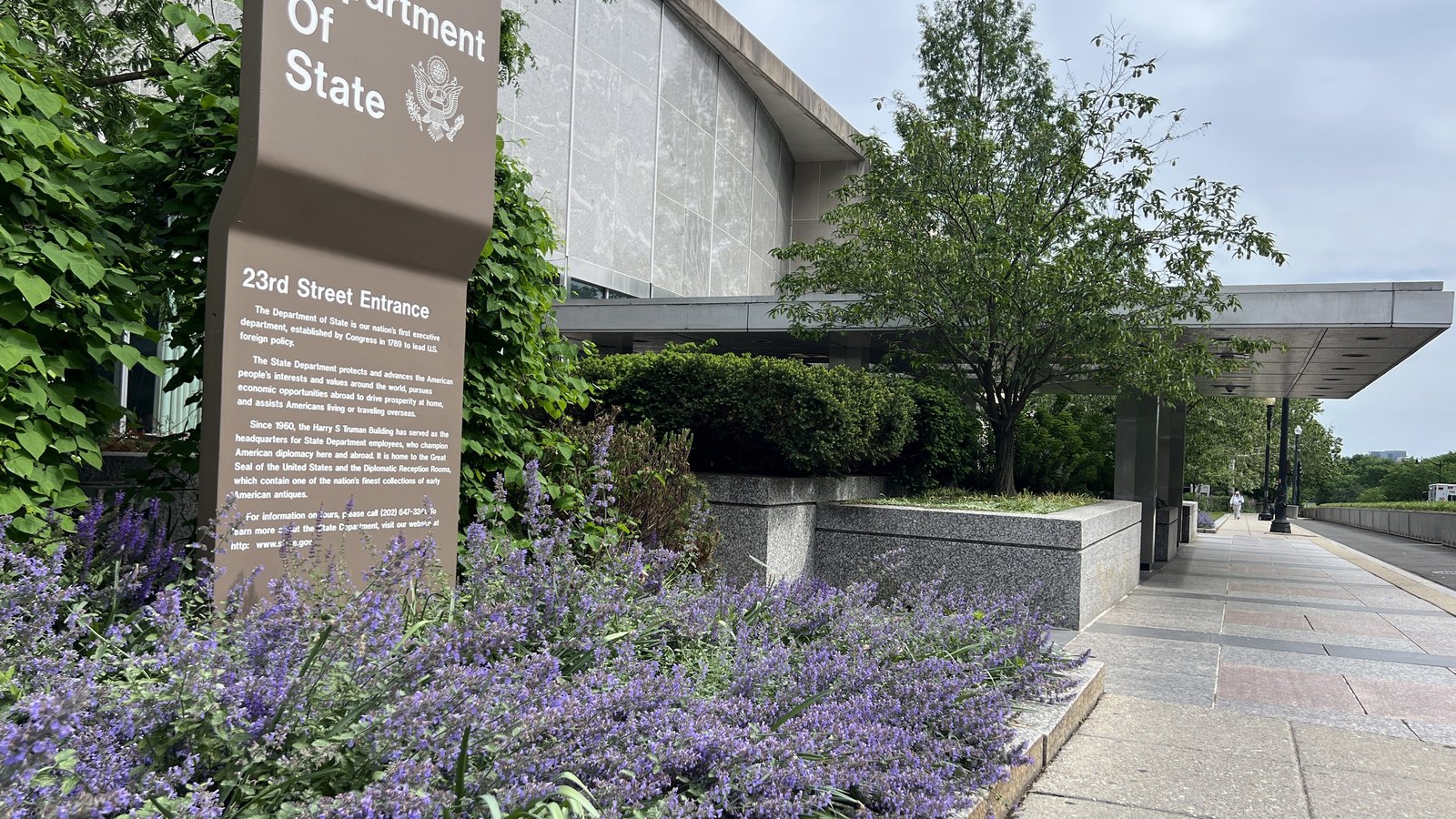
On November 23, 2026, the U.S. Department of State published Federal Register Notice 2026-23793 announcing formal blocking determinations against foreign entities and individuals under Executive Order 14404 and Executive Order 13949, adding them to the Department of the Treasury Office of Foreign Assets Control (OFAC) List of Specially Designated Nationals and Blocked Persons (SDN List) with direct regulatory implications for university export control compliance, international research partnerships, and material transfer workflows.
State Department issues designations under E.O. 14404 and E.O. 13949
The formal publication of Federal Register Notice 2026-23793 confirms interagency sanctions determinations executed earlier in the month by the Department of State in consultation with partner federal agencies. Signed by Gonzalo O. Suarez, Deputy Assistant Secretary in the Bureau of Arms Control and Nonproliferation, Public Notice 13175 documents executive actions taken on November 4 and November 5, 2026, that block all property and interests in property of designated targets subject to United States jurisdiction.
The notice targets actors across two distinct enforcement vectors: conventional weapons proliferation networks linked to Iran, and commercial entities providing technological and material support to the Cuban government. Under statutory frameworks coordinating the International Emergency Economic Powers Act (IEEPA), the Countering America’s Adversaries Through Sanctions Act (CAATSA), and broader nonproliferation authorities, the determinations integrate these persons into the Treasury Department’s consolidated sanctions infrastructure overseen by the Office of Foreign Assets Control.
While primary sanctions enforce absolute bans on direct transactions by U.S. individuals and organizations, several listed entities are specifically designated as subject to secondary sanctions. This classification exposes foreign intermediaries, international financial institutions, and multinational research consortia to potential U.S. enforcement actions if they knowingly facilitate significant material or technological transactions with the blocked parties.
Designated entities, statutory authorities, and blocking scopes
The published notice encompasses commercial entities, state-owned enterprises, and individual facilitators located across Nigeria, Belarus, Russia, and China. In accordance with U.S. economic sanctions policy and implementation guidelines, the actions impose asset freezes, transaction prohibitions, and strict screening mandates across global supply chains.
| Designated Entity or Person | Jurisdiction | Sanctions Authority | Action Date | Program Tags and Designated Conduct |
|---|---|---|---|---|
| Vanguard Tactical Supply Limited | Abuja, Nigeria | E.O. 13949 Sec. 1(a)(iii) | Nov 4, 2026 | [NPWMD] [IFSR] [IRAN-CON-ARMS-EO]; procurement network linked to Behrouz Namazi; secondary sanctions risk |
| Mohammed Ali Tolibov | Belarus | E.O. 13949 Sec. 1(a)(iii) | Nov 4, 2026 | [NPWMD] [IFSR] [IRAN-CON-ARMS-EO]; arms procurement intermediary linked to Armory Alliance LLC; secondary sanctions risk |
| Alisher Domullodzhanov | Russia / Tajikistan | E.O. 13949 Sec. 1(a)(iii) | Nov 4, 2026 | [IRAN-CON-ARMS-EO]; conventional arms proliferation support network |
| Beijing H and C Technologies Co., Ltd. | Beijing, China | E.O. 14404 Sec. 2(a)(i)(D) | Nov 5, 2026 | [CUBA-EO14404]; wholesale distributor of electronic and telecommunications equipment supporting Government of Cuba |
| China National Electronics Import-Export Company (CEIEC) | Beijing, China / Caracas, Venezuela | E.O. 14404 Sec. 2(a)(i)(D) | Nov 5, 2026 | [CUBA-EO14404] [VENEZUELA]; state-owned enterprise providing material and technological services to Government of Cuba |
The determinations under Executive Order 14404, established in May 2026 to target repression and threats to national security, emphasize commercial electronics and telecommunications suppliers. By sanctioning state-owned Chinese enterprises such as CEIEC and Beijing H and C Technologies under Section 2(a)(i)(D), the State Department underscores that commercial supply networks providing advanced dual-use hardware or software to blocked regimes face immediate exclusion from U.S. technological and economic spheres.
Evolution of secondary sanctions and nonproliferation enforcement
The designations in Notice 2026-23793 reflect an intensifying convergence between traditional nonproliferation controls and broad economic embargo regimes. Historically, nonproliferation actions focused narrowly on entities directly involved in missile, chemical, biological, or nuclear weapons programs. However, contemporary enforcement frameworks increasingly target intermediate distribution layers, including commercial distributors of general electronic components, telecommunications gear, and dual-use instrumentation.
Under Executive Order 13949, federal agencies target any person who materially contributes to the transfer of conventional arms or items intended for military end-uses. The inclusion of commercial suppliers in Nigeria and individual logistics facilitators in Eastern Europe demonstrates how globalized procurement networks are mapped and systematically dismantled by U.S. intelligence and enforcement bodies.
Simultaneously, the deployment of Executive Order 14404 against major Asian technology exporters demonstrates the operational integration of Cuba sanctions regulations with secondary sanctions mechanisms. Rather than relying exclusively on primary jurisdiction, the order allows the United States to isolate third-country companies that provide technological, material, or logistical support to Cuban state organs.
Institutional responses and export compliance sector scrutiny
Trade compliance analysts and academic legal specialists have highlighted the operational complexity created by these designations. Unlike narrow list updates, designations involving state-owned conglomerates with extensive subsidiary footprints trigger the strict application of OFAC’s 50 Percent Rule. Under this rule, any entity owned 50 percent or more in the aggregate by one or more blocked persons is automatically blocked by operation of law, even if not explicitly named on the SDN List.
Compliance professionals emphasize that commercial electronics distributors frequently maintain joint ventures, distribution subsidiaries, and research partnerships across third countries. University export control officers must navigate this complexity when managing scientific collaborations, international consortia, and hardware procurement agreements.
Legal counsel specializing in international trade law note that research institutions must not rely solely on simple keyword searches. Automated compliance software and due diligence protocols must analyze corporate ownership structures, registered agents, and alternate corporate aliases to ensure that hidden subsidiaries of designated firms do not enter institutional supply chains.
Compliance obligations for university research administration and subawards
For academic research institutions, the publication of Notice 2026-23793 carries immediate operational duties across sponsored programs, technology transfer, and laboratory operations. University compliance systems must coordinate across administrative silos to verify that faculty, research staff, and procurement officers do not engage with blocked entities or their unlisted subsidiaries.
To maintain robust compliance, research institutions should implement strict measures across several key operational areas:
- Automated restricted-party screening: Sponsored research offices and compliance staff must execute comprehensive restricted-party screenings across all foreign subrecipients, visiting researchers, international vendors, and academic partners against the updated OFAC SDN List and the federal Consolidated Screening List.
- Subaward due diligence and pass-through vetting: When issuing an international subaward, universities must verify that foreign subrecipient entities and their key personnel have no affiliation or subcontracts with designated parties. Standard flow-down provisions should require foreign collaborators to certify compliance with U.S. trade and sanctions laws.
- Material transfer agreement protocols: Any outgoing or incoming Material Transfer Agreement involving physical biological specimens, advanced chemical compounds, specialized microelectronics, or telecommunications prototypes must undergo thorough export control review before signature and dispatch.
- Fundamental research boundary clarification: Institutional compliance guidance, such as that provided by university export controls offices, emphasizes that while the Fundamental Research Exclusion protects published academic research results from export licensing, it provides zero exemption from OFAC economic sanctions or property-blocking prohibitions. A designated entity cannot receive research services, material transfers, or financial transactions regardless of whether the underlying work is basic research.
- Research security officer coordination: The designated Research Security Officer should collaborate directly with procurement officers to verify vendor manifests and ensure that laboratories do not acquire hardware, telecommunications components, or diagnostic instruments originating from or serviced by newly blocked Chinese state-owned electronics distributors.
Implementation timelines and ongoing enforcement audits
The asset-blocking mandates announced in Notice 2026-23793 took legal effect immediately upon the State Department’s formal determinations on November 4 and November 5, 2026. The subsequent publication in the Federal Register establishes public record notice, extinguishing potential legal defenses based on lack of constructive knowledge for transactions initiated after the filing date.
Federal enforcement agencies, including OFAC, the Department of Commerce Bureau of Industry and Security (BIS), and the Department of Justice National Security Division, maintain active audit programs examining institutional supply chains and international research collaborations. Research offices must maintain complete, dated screening records and audit logs for all international agreements, material transfers, and subawards for at least five years to substantiate regulatory compliance during federal oversight reviews.
Sources
- Federal Register: Notice of Department of State Sanctions Actions (Public Notice 13175), checked 2026-11-24
- Office of Foreign Assets Control: Cuba Sanctions Program and Regulatory Guidance, checked 2026-11-24
- U.S. Department of State: Economic Sanctions Policy and Implementation, checked 2026-11-24
- Washington University in St. Louis: Restricted Party Screenings and Institutional Protocols, checked 2026-11-24
- Carnegie Mellon University: Export Controls and International Trade Compliance, checked 2026-11-24






