
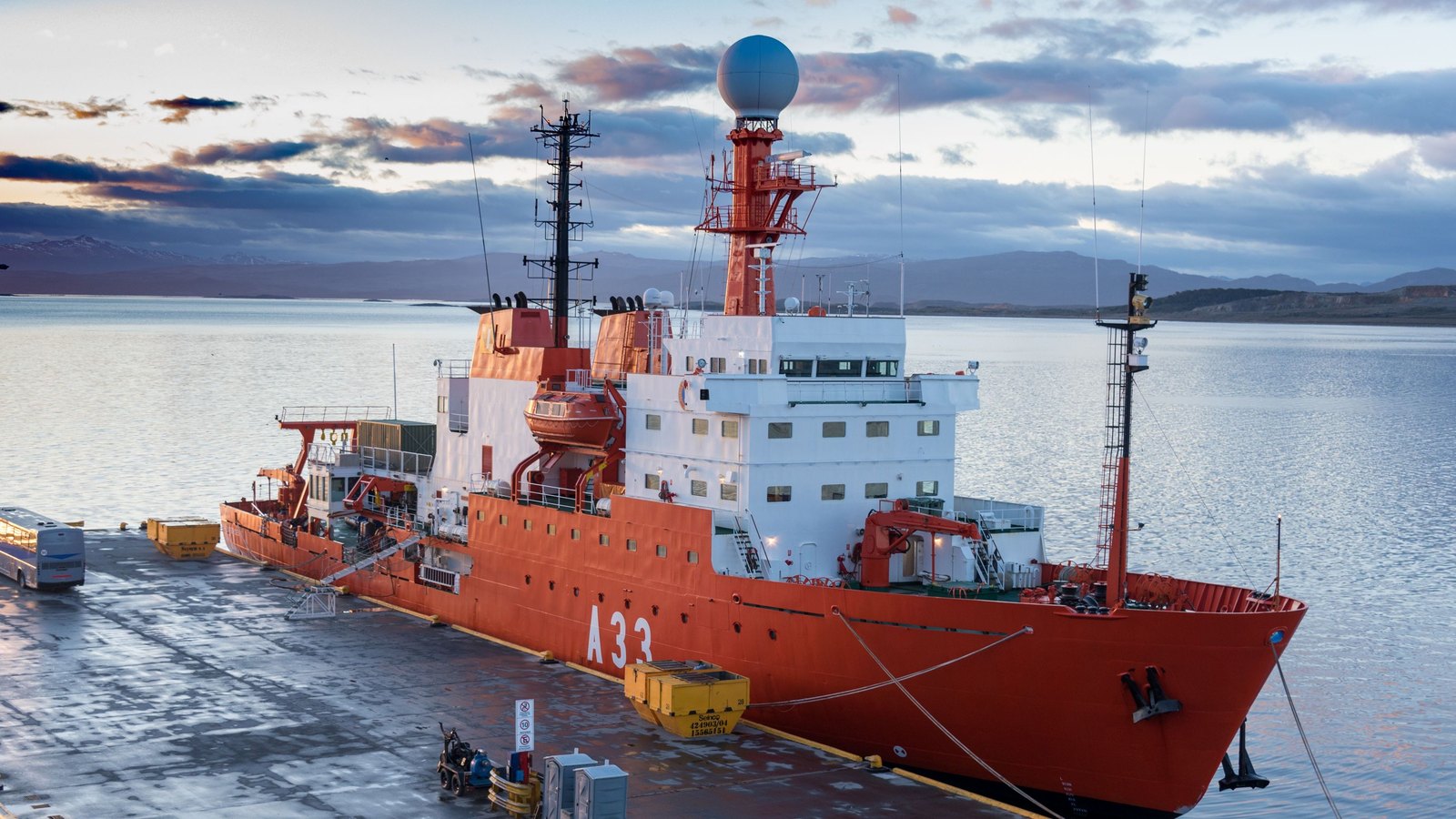
On November 23, 2026, the U.S. Department of State announced a public teleconference meeting scheduled for December 8, 2026, to coordinate national positions ahead of the International Maritime Organization Maritime Safety Committee session in London, establishing critical safety codes for autonomous surface ships, low-carbon marine fuels, and shipborne navigation systems that directly impact university oceanographic vessels, marine robotics laboratories, and research institutions operating uncrewed marine platforms.
State Department Convenes Public Preparatory Session for IMO MSC
The U.S. Department of State announced on November 23, 2026, that it will hold an open public teleconference meeting on Tuesday, December 8, 2026, at 1:00 p.m. Eastern Time. Published under Public Notice 13178 in the Federal Register public notice (Document 2026-23817), the meeting prepares the official United States delegation for the 112th session of the International Maritime Organization Maritime Safety Committee (MSC 112), convening at IMO Headquarters in London from December 14 to December 18, 2026.
Authorized under 22 U.S.C. 2656 and 5 U.S.C. 552, the notice was issued by Emily Gibbons, Coast Guard Liaison Officer in the State Department’s Office of Ocean and Polar Affairs. Meeting coordinator LCDR Emily Sysko of the U.S. Coast Guard established an RSVP and reasonable accommodation deadline of November 27, 2026. Although the Federal Register document heading references MSC 111, the substantive text confirms the session coordinates the upcoming MSC 112 agenda items.
Agenda Highlights: Autonomous Ships, Green Fuels, and Vessel Systems
The Maritime Safety Committee oversees IMO technical safety mandates. The December 2026 session focuses on seventeen substantive agenda items, prioritizing the goal-based code for Maritime Autonomous Surface Ships (MASS) and safety rules for low-carbon fuels:
- Maritime Autonomous Surface Ships: Advancing the goal-based instrument for MASS, reviewing operational feedback from initial sea trials, and establishing regulatory requirements for shore-based Remote Operations Centres (ROCs).
- Alternative Marine Fuels: Developing safety frameworks for vessels using greenhouse gas reduction technologies and alternative fuels, including methanol, ammonia, hydrogen, and marine battery systems.
- Mandatory Amendments and Security: Updating the International Convention for the Safety of Life at Sea (SOLAS) and reviewing maritime cybersecurity and piracy countermeasures.
- Sub-Committee Technical Reports: Reviewing findings from Ship Systems and Equipment (SSE 12), Navigation, Communications and Search and Rescue (NCSR 13), Implementation of IMO Instruments (III 12), and the Carriage of Cargoes and Containers (CCC 12).
For oceanographic expeditions carrying hazardous reagents or specialized power supplies, vessel operations must comply with dangerous goods standards under IMDG Code classes. The IMO framework standardizes four degrees of autonomy across commercial and research vessels:
| Degree | IMO Definition | Command Structure | Research Application |
|---|---|---|---|
| Degree 1 | Automated processes and decision support | Seafarers on board operate systems with algorithmic aids | Research vessels with automated acoustic positioning |
| Degree 2 | Remotely controlled ship with crew on board | Controlled from a Remote Operations Centre with crew aboard | Test vessels validating autonomous passage plans |
| Degree 3 | Remotely controlled ship without crew on board | Operated entirely from a Remote Operations Centre | Uncrewed surface vessels (USVs) conducting offshore surveys |
| Degree 4 | Fully autonomous ship | Operating system makes decisions independently | Long-duration autonomous surface gliders and buoys |
Evolution of the IMO MASS Code and Decarbonization Frameworks
In 2017, the IMO initiated a regulatory scoping exercise across core treaties, including SOLAS, the International Regulations for Preventing Collisions at Sea (COLREGs), and the STCW Convention, to assess how existing maritime law accommodates automation. The goal was replacing prescriptive requirements with technology-neutral functional safety objectives.
As documented in the International Maritime Organization autonomous shipping framework, the Maritime Safety Committee adopted the non-mandatory MASS Code (Resolution MSC.595(111)) in May 2026, which took effect on July 1, 2026. This voluntary code governs cargo ships during an ongoing Experience-Building Phase, setting functional goals that ensure autonomous vessels achieve safety levels equivalent to conventional ships.
In parallel, the 2023 IMO Greenhouse Gas Strategy has accelerated alternative fuel adoption. Because new fuels such as ammonia present toxicity challenges and hydrogen introduces flammability risks, the IMO regulates low-flashpoint propulsion under the IGF Code. For research institutions tracking vessel footprints, marine fleet fuel consumption represents direct operational emissions accounted for under Scope 1, 2, and 3 emissions for research organizations.
Industry, Classification Society, and Maritime Engineering Perspectives
Maritime classification societies and engineering bodies have focused on translating the IMO’s goal-based standards into verifiable engineering criteria during the voluntary phase.
The American Bureau of Shipping MASS Code regulatory update notes that autonomous vessel certification requires rigorous qualification of both onboard automation and shore infrastructure. ABS emphasizes that operators must define clear Operational Design Domains (ODD), fail-safe fallback states, and robust cyber protections to safeguard vessels and remote links.
In its Lloyd’s Register MSC 111 summary report, the classification society highlighted that while the voluntary code establishes an international baseline, administrations must systematically gather operational trial data. Lloyd’s Register noted that moving toward mandatory rules requires resolving key questions around software verification, AI explainability, and remote handover protocols.
The Institute of Marine Engineering, Science and Technology echoed these findings. In the IMarEST analysis on the MASS framework, engineers underscored that demonstrating functional equivalency to traditional crewed vessels remains the primary technical challenge, particularly regarding COLREGs collision avoidance and remote machinery maintenance during extended autonomous deployments.
Implications for Oceanographic Fleets, Marine Robotics, and Research Compliance
The State Department preparatory meeting directly affects academic oceanographic programs and marine robotics laboratories. Academic institutions deploy autonomous surface vessels (ASVs), wave gliders, and uncrewed bathymetric craft that operate in shared maritime spaces alongside commercial traffic.
Academic fleet operations governed by the UNOLS Research Vessel Safety Standards must harmonize institutional shipboard protocols with evolving Coast Guard autonomous vessel policies. As uncrewed marine craft expand in range and displacement, university operators must address watchkeeping rules, AIS carriage, and Remote Operations Centre licensing.
For robotics researchers, goal-based safety mandates mean navigation algorithms must demonstrably conform to COLREGs collision avoidance rules. Research offices supporting autonomous marine trials must review maritime liability, insurance coverage, and export controls on advanced satellite telemetry and autonomous control software.
At the data level, uncrewed platforms generate continuous sensor streams. Oceanographic researchers utilize specialized visualization tools such as Ocean Data View to analyze hydrographic, CTD, and biogeochemical datasets collected by autonomous craft. Furthermore, deploying automated platforms across coastal waters demands active alignment with ocean and coastal management frameworks to protect marine ecosystems and satisfy jurisdictional requirements.
Upcoming Deadlines, London Negotiations, and the Path to Mandatory Standards
Following the December 8, 2026 public teleconference, the United States delegation will participate in MSC 112 negotiations at IMO Headquarters in London from December 14 to December 18, 2026. Delegation officials will work to establish the structured reporting framework for the Experience-Building Phase, standardizing how member states submit autonomous trial data through 2028.
The IMO timeline projects adopting a mandatory MASS Code—anchored by a new chapter under SOLAS—by July 1, 2030, with international entry into force scheduled for January 1, 2032. Concurrently, the Sub-Committee on Carriage of Cargoes and Containers will convene in 2027 to finalize safety provisions for ammonia and hydrogen bunkering. Academic research offices and fleet managers should track these milestones to align vessel refits and grant proposals with international standards.
Sources
- Federal Register: Notice of Public Meeting To Prepare for International Maritime Organization MSC 111 Session, checked 2026-11-29
- International Maritime Organization: Autonomous Shipping and MASS Code Framework, checked 2026-11-29
- American Bureau of Shipping: International Code of Safety for Maritime Autonomous Surface Ships (MASS Code), checked 2026-11-29
- Lloyd’s Register: MSC 111 Summary Report and Maritime Safety Decisions, checked 2026-11-29
- IMarEST: MASS Code: A New Framework for Autonomous Shipping, checked 2026-11-29
- UNOLS: Research Vessel Safety Standards (RVSS), checked 2026-11-29






