
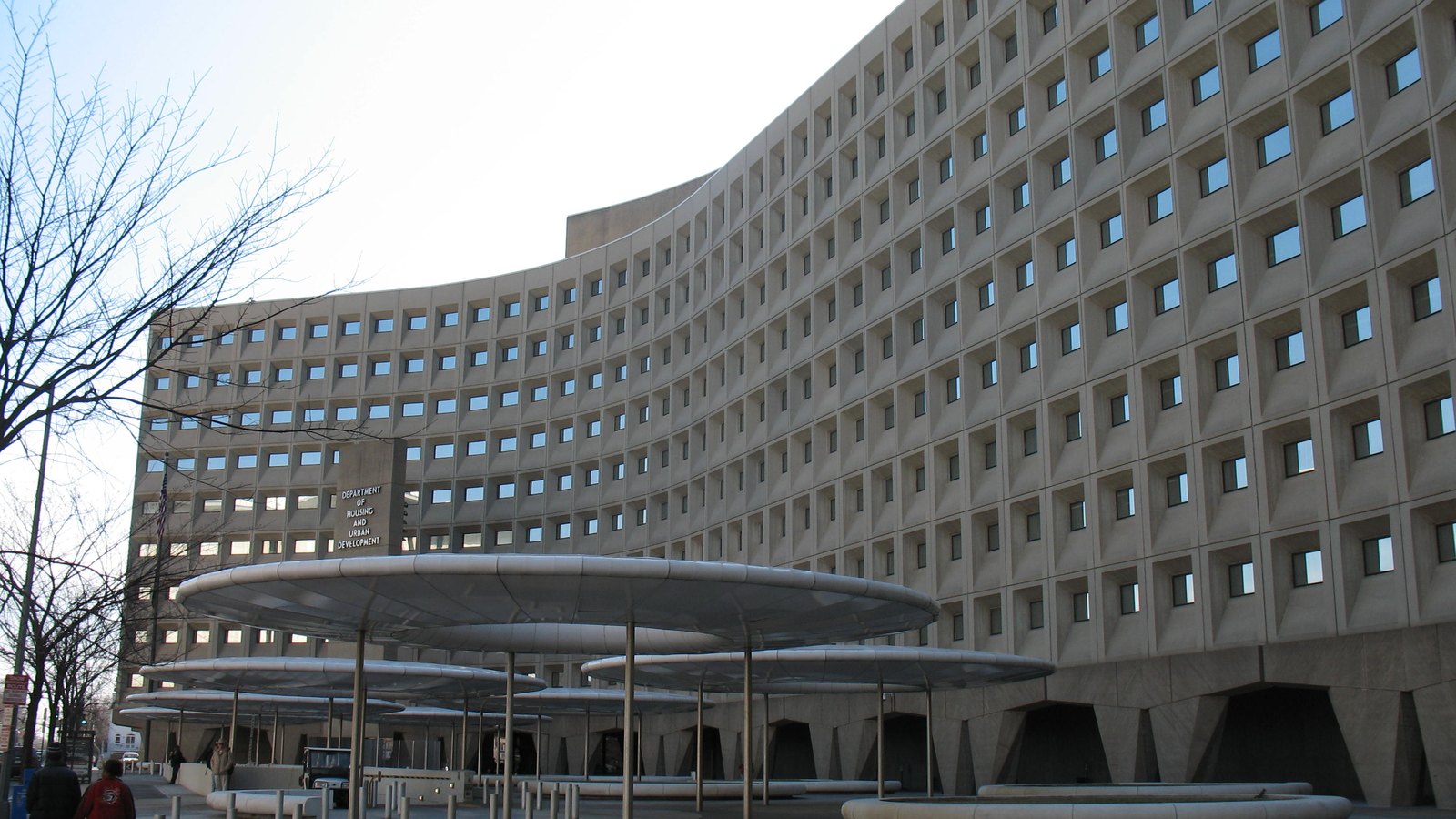
On November 30, 2026, the U.S. Department of Housing and Urban Development (HUD) published a formal notice in the Federal Register requesting public nominations to fill voting seats on the Manufactured Housing Consensus Committee (MHCC). Authorized under federal statute to draft and review updates to the preemptive federal HUD Code, the 21-member consensus committee directly impacts university civil engineering faculties, building science researchers, and academic research offices investigating factory-built housing technologies, materials performance, and regulatory compliance standards.
Federal Register Notice Opens Consensus Committee Seats
In Federal Register Document 2026-24172 (Docket No. FR-6566-N-02), HUD’s Office of the Assistant Secretary for Housing—Federal Housing Commissioner issued a formal request for nominations to serve on the Manufactured Housing Consensus Committee, establishing a nomination deadline of December 30, 2026. The committee serves as the primary statutory technical advisory body responsible for recommending periodic revisions to the federal manufactured home construction and safety standards, as well as associated procedural and enforcement regulations.
Issued by Joseph M. Gormley, President of the Government National Mortgage Association performing the delegable duties of the Assistant Secretary for Housing, the notice confirms appointments remain at the Secretary’s discretion. Nominations are open to the public; current members whose initial terms conclude on December 31, 2026, must formally reapply. Submissions are processed through Home Innovation Research Labs in Upper Marlboro, Maryland, the administering organization under Mary Jo Houton, Administrator of HUD’s Office of Manufactured Housing Programs.
Statutory Composition, Member Categories, and Committee Structure
The MHCC was established under Section 604 of the National Manufactured Housing Construction and Safety Standards Act of 1974 (42 U.S.C. 5403), as amended by the Manufactured Housing Improvement Act of 2000 (Public Law 106-569). By statute, the committee is organized as a federal advisory committee not composed of federal employees, operating under the Federal Advisory Committee Act (5 U.S.C. Chapter 10). The Secretary appoints 22 total members: 21 voting members equally divided across three stakeholder categories, plus one non-voting member representing the HUD Secretary.
To ensure balanced participation and prevent single-interest dominance, Congress established statutory parity among three seven-member groups. Nominees in the consumer category must have no financial interest in the manufactured housing sector and remain subject to a one-year post-service compensation ban. Similar structural independence principles parallel other federal technical frameworks, such as FDA recognized consensus standards, where statutory advisory bodies enforce rigorous stakeholder balance and conflict-of-interest screening.
| Member Category | Voting Seats | Statutory Constituency and Qualifications | Ethics and Conflict-of-Interest Rules |
|---|---|---|---|
| Producers and Retailers | 7 seats | Commercial manufacturers, primary suppliers, and licensed retailers of manufactured homes. | Standard federal advisory committee financial disclosure; must certify industry affiliation and compliance. |
| Users and Consumers | 7 seats | Consumer advocacy organizations, recognized consumer leaders, and resident homeowners of manufactured housing. | Prohibited from having significant financial interest in the industry; subject to a one-year post-service industry compensation ban. |
| General Interest and Public Officials | 7 seats | University researchers, structural and materials engineers, public code officials, and state housing regulators. | At least three of the seven appointees must have no significant financial interest in or relationship to the industry. |
Voting members serve staggered three-year terms for up to two consecutive terms. While members receive no federal salary, travel expenses and per diem allowances are reimbursed under 5 U.S.C. 5703. The committee convenes once or twice annually, delegating technical deliberations to subcommittees on structural engineering, fire safety, mechanical systems, and enforcement regulations.
Regulatory Evolution of the HUD Code and Consensus Rulemaking
Unlike site-built construction governed by local municipal building codes, manufactured housing nationwide adheres to a single preemptive federal standard: the HUD Code, codified at 24 CFR Part 3280, with procedural enforcement rules under 24 CFR Part 3282. Preemption prevents local jurisdictions from excluding factory-built homes that satisfy federal standards, making MHCC technical recommendations pivotal to national housing production.
Federal consensus rulemaking requires rigorous technical and economic substantiation before standards become binding regulations. When establishing structural, fire safety, or energy requirements, agencies follow administrative principles—such as regulatory evaluation guidelines under OMB Circular A-4—to evaluate compliance burdens and net societal benefits. Recent rulemaking priorities include multi-story manufactured housing, accessibility enhancements, truss design loads, and advanced thermal envelope specifications.
Trade coverage by HousingWire highlighted that HUD’s regulatory overhaul represents the most extensive modernization of manufactured home safety standards in decades, clearing backlogs of technical proposals originally recommended by the MHCC.
Stakeholder Perspectives and Recent Committee Activity
Federal housing leadership has underscored the committee’s role in expanding affordable housing supply. In a statement on recent appointments, HUD announced new appointments to the MHCC, with Federal Housing Commissioner Frank Cassidy noting that diverse technical perspectives are essential to modernize the HUD Code and remove barriers hindering production of efficient, high-quality, and affordable homes.
Industry trade associations, including the Manufactured Housing Institute, have supported accelerated review cycles to align federal standards with factory automation and modular construction. Consumer protection groups have emphasized maintaining robust representation in the Users category to ensure updates to wind-zone ratings, roof truss loads, and indoor air quality protect occupant safety and structural durability.
Crucially, recent appointments have elevated academic research centers within the consensus framework. In early 2026, HUD appointed academic housing experts, including Dr. Andrew McCoy, Director of the Virginia Center for Housing Research and Associate Director of the Myers-Lawson School of Construction at Virginia Tech University, to the committee. This integration ensures empirical construction research directly informs federal regulatory deliberations.
Implications for University Researchers and Institutional Research Offices
The opening of MHCC nominations creates direct opportunities and governance obligations for academic institutions, faculty investigators, and university research administrations across civil engineering, architecture, and public policy disciplines.
First, faculty specializing in structural engineering, fire dynamics, sustainable materials, and industrialized construction are eligible for nomination under the General Interest and Public Officials category. Academic researchers provide peer-reviewed rigor and empirical testing experience that satisfy statutory technical independence requirements. University research offices and departmental chairs should actively support eligible faculty seeking nomination, ensuring institutional conflict-of-interest disclosures align with federal advisory committee guidelines under 5 U.S.C. Chapter 10.
Second, MHCC deliberations shape federal research funding priorities. As the committee identifies technical gaps in resilient building envelopes, seismic anchoring, or heat pump integration in modular structures, grant-making bodies—including HUD’s Office of Policy Development and Research, the Department of Energy’s Building Technologies Office, and the National Science Foundation—issue targeted calls for proposals. Academic laboratories equipped for structural testing and environmental simulation play a central role in executing these federally funded research contracts.
Third, faculty participating in consensus bodies generate foundational scholarly contributions. Empirical testing and computational modeling conducted to validate proposed HUD Code amendments regularly yield peer-reviewed publications in prominent academic literature, including the International Journal of Civil Engineering and Advances in Civil Engineering. These publications document critical advances in load-bearing capacity, materials fatigue, and seismic resistance for industrialized construction systems.
Next Steps, Nomination Submission, and Review Timeline
Qualified individuals seeking appointment or reappointment to the MHCC must submit complete nomination materials before the solicitation window closes on December 30, 2026. HUD specifically encourages applications from professionals with engineering or technical backgrounds relevant to the design, structural integrity, fire prevention, and thermal performance of manufactured homes.
Application packages may be submitted electronically through the portal administered by Home Innovation Research Labs (mhcc.homeinnovation.com) or delivered by mail to the Office of Manufactured Housing Programs in Upper Marlboro, Maryland. Submissions must include a curriculum vitae or resume, a summary of technical qualifications, and formal certifications addressing eligibility criteria and financial conflicts of interest.
Following the nomination deadline, HUD will evaluate submissions across all three statutory categories to ensure balanced representation without commercial dominance. Appointees confirmed by the Secretary will assume their seats for three-year terms starting in 2027, participating in scheduled public deliberations and specialized working groups to evaluate proposed amendments to federal manufactured housing standards.
Sources
- Federal Register: Manufactured Housing Consensus Committee (MHCC): Notice Inviting Nominations of Individuals To Serve on the Committee, checked 2026-11-29
- U.S. Department of Housing and Urban Development: HUD Announces New Appointments to Manufactured Housing Consensus Committee, checked 2026-11-29
- HousingWire: HUD issues extensive update to manufactured housing safety standards, checked 2026-11-29
- Electronic Code of Federal Regulations: 24 CFR Part 3280 — Manufactured Home Construction and Safety Standards, checked 2026-11-29






