
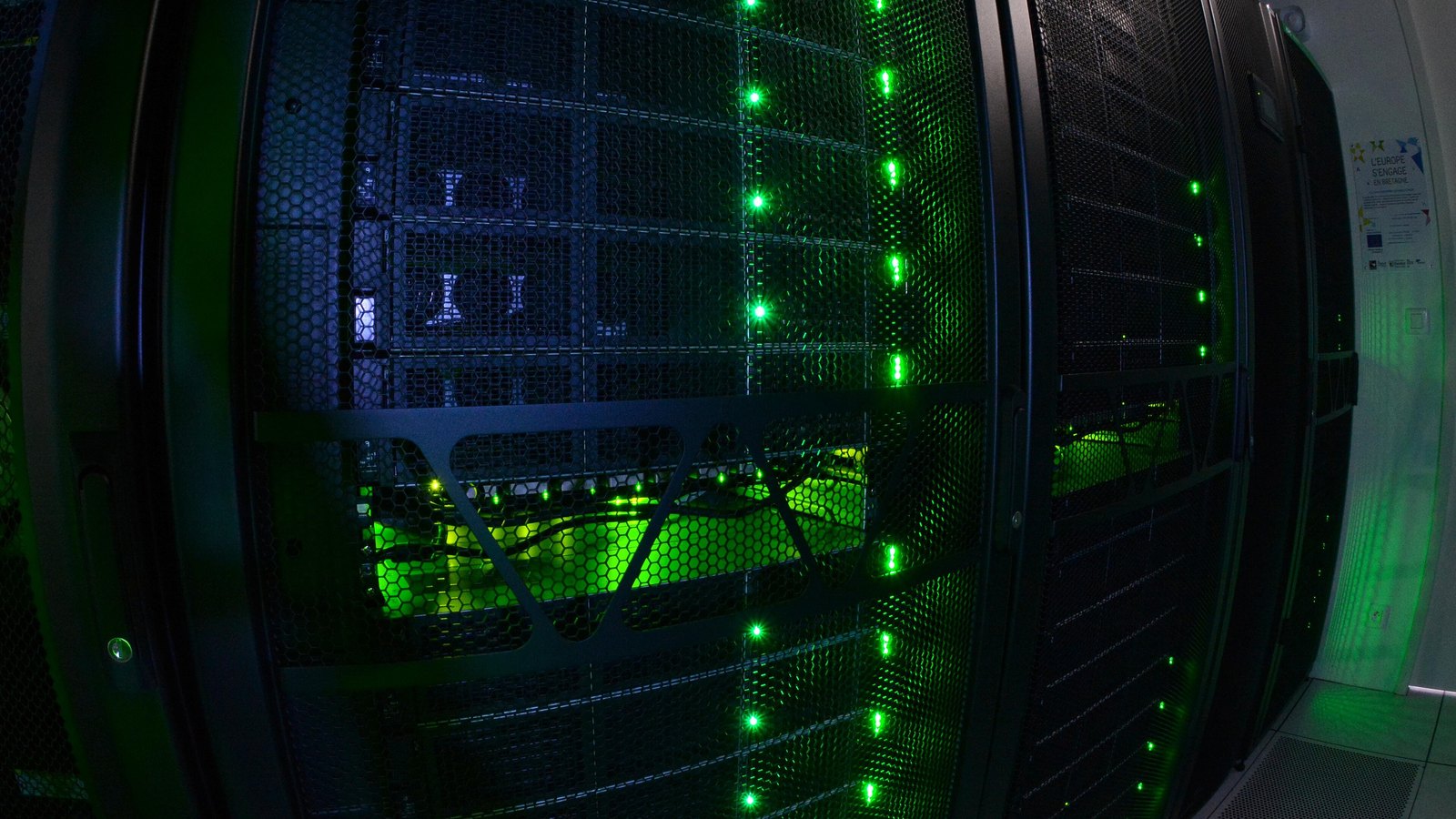
Stony Brook University began receiving high-density HPE Cray supercomputing hardware in late November 2026 for Kitsune, a new National Science Foundation-funded supercomputer engineered to deliver more than 60,000 AMD processor cores for academic researchers across the United States. Deployed in partnership with the University at Buffalo, the cluster introduces high-throughput memory architecture to support genomics, AI inference, and computational workloads that standard parallel systems support inefficiently.
HPE Cray Supercomputing Hardware Arrives at Stony Brook University
Engineers and systems administrators at Stony Brook University’s Institute for Advanced Computational Science and the Stony Brook Supercomputing Center took physical delivery of the initial compute and networking infrastructure for the university’s incoming flagship cluster in late November 2026. The deployment follows a landmark award from the National Science Foundation, which designated the institution to build and host a premier Category I capacity resource for the national research community, as detailed in the Stony Brook Supercomputing Center announcement. The cluster, christened ‘Kitsune’ (the Japanese word for fox, 狐), continues an institutional naming tradition established by its predecessor system, ‘Ookami’ (Japanese for wolf, 狼), which operated as an experimental architecture testbed.
Procured via an initial hardware order finalized in October 2026, Kitsune is housed in a high-density HPE Cray XD2000 shared-infrastructure platform. Rather than catering exclusively to massive monolithic simulation codes, Kitsune was purpose-built to address the pervasive ‘long tail of science’—research workflows in bioinformatics, structural biology, statistical modeling, and computational linguistics that demand vast memory bandwidth and rapid scalar execution rather than dense GPU arrays. Once fully integrated, the system will serve as a foundational platform for academic institutions nationwide requiring dependable, scalable compute time.
Technical Specifications, Architecture, and NSF Grant Structure
The Kitsune installation integrates enterprise high-density server nodes into a high-throughput fabric managed under Rocky Linux 10. The system comprises 162 total physical nodes, consisting of 160 dedicated compute nodes and two redundant login nodes. Processing capacity is driven by dual-socket AMD EPYC 9965 processors from the 5th Generation AMD EPYC family, codenamed ‘Turin,’ built on advanced ‘Zen 5’ microarchitecture, which AMD officially launched to expand high-density data center and enterprise computing capabilities. Each node incorporates 384 CPU execution cores (192 cores per socket), yielding an aggregate compute fabric exceeding 60,000 physical cores.
To maintain balance across memory-bound scientific routines, compute nodes are configured with either 768 GB or 1.5 TB of high-speed DDR5 memory operating across 24 memory channels at 6,400 MT/s, culminating in 126 TB of aggregate cluster RAM. The cluster features an InfiniBand NDR-400 fabric providing 400 Gbps non-blocking interconnect speeds per node and is backed by a 6 PB usable parallel file system running IBM GPFS (Spectrum Scale). Federal investment for the system was formalized under NSF Award OAC-2505376, titled ‘Sustainable Cyber-infrastructure for Expanding Participation.’
| Parameter | Kitsune Supercomputer Specification | Administrative Details |
|---|---|---|
| Lead Institution | Stony Brook University (IACS / SBSC) | Grantee Organisation |
| Partner Institution | University at Buffalo (CCR) | Collaborating Research Facility |
| Federal Grant Mechanism | NSF ACSS Category I (Solicitation 24-583) | Award OAC-2505376 |
| Federal Funding Obligated | $13.77M Initial ($21.95M Obligated to Date) | Five-Year Operational Scope |
| Chassis Platform | HPE Cray Supercomputing XD2000 | High-Density Shared Infrastructure |
| Node Count & Cores | 162 Nodes (160 Compute, 2 Login) | 61,440 Total Cores (384 per Node) |
| Processors | Dual AMD EPYC 9965 (Turin, Zen 5) | 2.25 GHz Base / 3.7 GHz Boost |
| Peak Compute Performance | 6.7 PFLOPS Double Precision | 41.2 TFLOPS DP per Node |
| System Memory | 126 TB Total DDR5 (768 GB to 1.5 TB per Node) | 24 Memory Channels at 6,400 MT/s |
| Storage & Interconnect | 6 PB Usable Parallel GPFS / Spectrum Scale | 400 Gbps InfiniBand NDR-400 Fabric |
| Operating Environment | Rocky Linux 10 / Slurm Workload Manager | Over 500M Core-Hours Annually |
Evolution From Ookami to Kitsune and the Long Tail of Research Computing
The architectural philosophy behind Kitsune directly reflects lessons gathered during the operation of Ookami, Stony Brook’s prior testbed funded under NSF award OAC-1927880. While Ookami served as a pioneering deployment of ARM-based Fujitsu A64FX processors featuring high-bandwidth memory (HBM) to evaluate memory-subsystem efficiency, Kitsune translates those empirical insights into a production-scale capacity cluster. Understanding the boundaries of high-performance computing platforms has become essential for academic research computing centres evaluating how commodity x86 architectures compare against specialized vector or accelerator nodes.
National supercomputing acquisitions in the United States have heavily favored accelerator-dense supercomputers tailored for deep learning training runs and massive physical fluid dynamics. However, national surveys of computational workloads demonstrate that thousands of NSF-supported principal investigators execute code that vectorizes imperfectly or relies on complex branching logic, graph traversals, and extensive memory footprinting. By deploying the AMD Turin architecture within an HPE Cray chassis, Stony Brook and the University at Buffalo offer an energy-efficient alternative that avoids the costly software refactoring often required to port legacy research codes to specialized graphics processors.
Leadership Perspectives and Multi-Institutional Collaboration
Project leadership emphasizes that Kitsune was created to lower administrative and technical hurdles for academic research teams that historically lacked access to top-tier supercomputers. Robert J. Harrison, director of the Institute for Advanced Computational Science at Stony Brook and principal investigator on the project, highlighted the expansive mission of the initiative during the announcement: ‘This project employs a comprehensive, multilayered strategy, with regional and national elements to ensure the widest possible benefits. The team will collaborate with multiple initiatives and projects, to reach a broad audience that spans all experience levels from high school students beginning to explore science and technology to faculty members advancing innovation through scholarship and teaching.’
Collaboration with the University at Buffalo’s Center for Computational Research represents a vital component of the operational framework. Co-principal investigators Alan Calder at Stony Brook alongside Matthew Jones and Nikolay Simakov at Buffalo bring decades of combined supercomputing administration and user-enablement experience. By distributing user support and systems expertise across both State University of New York flagship campuses, the team ensures round-the-clock systems engineering, curated software module maintenance, and specialized consultation for scientific workflows spanning climate modeling, computational chemistry, quantum mechanics, and public health analytics.
Operational Implications for Academic PIs and Sponsored Research Offices
For principal investigators drafting grant proposals and research teams preparing computational campaigns, the commissioning of Kitsune introduces direct operational advantages. Researchers managing complex datasets must structure sound data pipelines governing their research data, particularly when staging high-volume sequencing files or astronomical survey images across Kitsune’s 6 PB parallel file system. Investigators designing machine learning workflows can leverage the system’s full 512-bit AVX-512 data path, VNNI, and bfloat16 vector extensions to conduct each reproducible AI experiment on high-density CPU nodes without competing for constrained GPU reservation queues.
University sponsored research offices and campus research computing facilitators should advise faculty that computational time on Kitsune will not require direct billing against institutional grant accounts. As an NSF-funded national capacity instrument, allocation credits are awarded merit-free or via streamlined scientific review through the national cyberinfrastructure. Investigators should review established institutional guidelines on how to request an NSF ACCESS compute allocation to identify appropriate allocation tiers—ranging from Explore and Discover grants for graduate student pilot studies to Accelerate and Maximize tiers for multi-investigator research consortia.
Rollout Timeline, Benchmarking, and ACCESS Allocation Schedule
Following the delivery of the HPE Cray XD2000 hardware, engineering teams at Stony Brook University have initiated physical rack assembly, power provisioning, and high-speed InfiniBand cable routing. The formal commissioning process encompasses rigorous burn-in stress tests, memory error verification across all 126 TB of DDR5 RAM, and high-performance Linpack benchmarking to validate the cluster’s rated 6.7 PFLOPS double-precision compute envelope. Early pilot user groups will be admitted for acceptance testing through December 2026 and January 2027.
Kitsune is scheduled to achieve full production status in the first quarter of 2027. Following successful completion of acceptance benchmarking, compute capacity will be formally transferred into national availability via the NSF ACCESS program under resource identifier kitsune.sbsc.access-ci.org, as registered in the NSF ACCESS Operations portal. Prospective users and research facilitators can join the ACCESS Kitsune Affinity Group to receive launch schedules, attend training webinars on compiler optimization for Zen 5 cores, and review pre-launch storage allocation policies.
Sources
- Stony Brook Supercomputing Center: NSF award funds Kitsune, flagship cluster of Stony Brook’s new Tier 1 supercomputing center, checked 2026-11-25
- National Science Foundation: Award Details – NSF Award Search, checked 2026-11-25
- NSF ACCESS: SBSC Kitsune | Operations, checked 2026-11-25
- AMD: AMD Launches 5th Gen AMD EPYC CPUs, Maintaining Leadership Performance and Features for the Modern Data Center, checked 2026-11-25






