
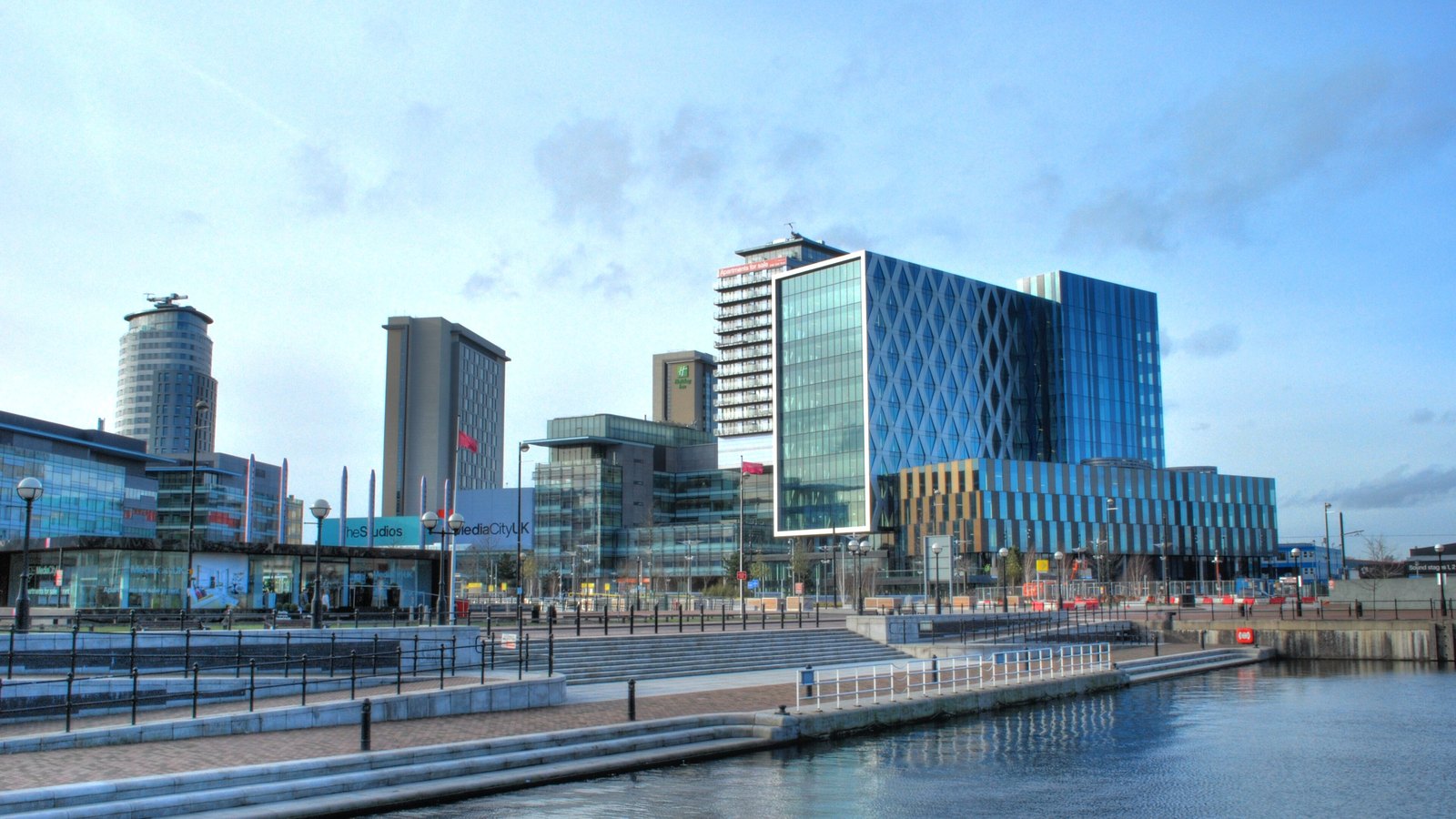
On 25 November 2026, UK Research and Innovation (UKRI) announced a £49 million research and innovation investment package for the UK creative industries at the BEYOND conference in Salford. The package funds five university-led regional R&D clusters, 40 high-growth creative technology businesses, and an evidence centre expansion, establishing vital collaboration channels and co-funding requirements for university research offices.
£49 Million Investment Package for Creative R&D
The £49 million package, financed through UKRI’s Creative Industries Programme, decentralises research capacity across all four UK nations. Administered collaboratively by the Arts and Humanities Research Council (AHRC) and Innovate UK, the investment supports applied research, technological demonstration, and commercial scaling across video gaming, film and television production, digital music technology, interactive design, and the performing arts.
The funding directly implements the UK Government’s Creative Industries Sector Vision, published jointly by the Department for Culture, Media and Sport (DCMS) and the Creative Industries Council. The cross-government strategy targets £50 billion in gross value added growth and one million additional creative jobs by 2030. By deploying research grants outside London and the South East, the new allocations direct essential R&D infrastructure into coastal, post-industrial, and regional academic communities.
Programme Allocations Across Clusters and Createch Firms
The funding package allocates capital and operational resources across three primary programme streams: regional university clusters, early-stage enterprise acceleration grants, and macroeconomic policy evidence generation.
| Programme Stream | Lead Institution | Allocation | Geographic Scope | Primary Research Focus |
|---|---|---|---|---|
| Amgen Creative Cluster | University of South Wales | Part of £34M Cluster Wave | Wales | Live performance technologies, immersive creative testbeds, and bilingual digital storytelling. |
| Green Design North | Manchester Metropolitan University | Part of £34M Cluster Wave | Northern England | Sustainable and circular design systems, green product lifecycles, and regional industrial partnerships. |
| CreateSci | University of East Anglia | Part of £34M Cluster Wave | East Anglia | Convergence of creative technology with life sciences, clean energy communication, and tech adoption. |
| ScreenJourneys | King’s College London | Part of £34M Cluster Wave | Four Nations (London, Edinburgh, Cardiff, Belfast) | Screen tourism infrastructure, film-induced travel analytics, and location-based digital experiences. |
| UK Publishing Futures | Northumbria University | Part of £34M Cluster Wave | North East England and National | Responsible artificial intelligence in editing, supply-chain decarbonisation, and SME workflows. |
| Next Wave Pilot | Innovate UK | £10,000,000 Total | 10 UK Regions (40 SMEs) | Digital human replication, 4D performance broadcasting, voice gaming, and generative AI IP protection. |
| Policy and Evidence Centre | Creative PEC (Newcastle / RSA) | £5,000,000 Extension | United Kingdom | Longitudinal cluster analysis, creative labour market dynamics, and national R&D policy evaluation. |
The £34 million cluster allocation funds the second wave of five multi-institutional partnerships led by UK universities. In Wales, the Amgen cluster—deriving its name from the Welsh term for alternative or better—establishes localized testbeds connecting creative microclusters across rural and coastal areas. Green Design North unites Manchester Metropolitan University with Lancaster, Sheffield Hallam, and Northumbria universities, alongside the Design Council, to create zero-carbon design standards. In the East of England, CreateSci connects creative digital tools with life science and renewable energy corridors. ScreenJourneys forms a four-nations consortium across London, Edinburgh, Cardiff, and Belfast to commercialise screen tourism, while UK Publishing Futures teams Northumbria University with major publishers, including Hachette, Pan Macmillan, and Bonnier, to test responsible AI adoption and sustainable production.
Delivered by Innovate UK, the Next Wave pilot awards £10 million to 40 createch small and medium-sized enterprises (SMEs) across 10 UK regions, with individual grants between £110,000 and £500,000. Each enterprise must provide at least 30 percent match funding toward eligible innovation expenses. Funded projects include turning anatomical scans into lifelike digital characters, broadcasting live four-dimensional spatial performances, developing voice-driven educational games, and securing artist copyrights against generative models.
The remaining £5 million extends the Creative Industries Policy and Evidence Centre (Creative PEC), co-hosted by Newcastle University and the Royal Society of Arts (RSA). The centre conducts economic benchmarking and independent assessments of creative clusters and innovation to support data-driven policy decisions.
Creative Industries Sector Plan and Research Infrastructure
The £49 million award package advances nearly a decade of structured public investment in UK creative research infrastructure. In 2018, AHRC launched the initial Creative Industries Clusters Programme under the Industrial Strategy Challenge Fund, proving that structured university-industry partnerships significantly increase commercial turnover, patent filings, and regional private equity attraction.
The new investments interface directly with the £75.6 million CoSTAR Network, the UK’s flagship infrastructure for convergent screen technologies supported by the UKRI Infrastructure Fund. CoSTAR’s national lab facilities at Pinewood Studios and regional production stages provide virtual production stages, LED volumes, and markerless motion capture environments that regional clusters can leverage for advanced prototyping.
Government and Research Council Perspectives
Stakeholders highlighted regional decentralisation and humanities-led technological innovation as twin pillars of the announcement.
Creative Industries Minister Ian Murray underscored the regional focus: “As we set out in our Creative Industries Sector Plan, this Government is committed to ensuring that the creative industries can thrive in all corners of the UK by making businesses stronger and improving access to creative careers. This package of investment speaks to that through decentralisation and innovation. These are projects and organisations with major growth potential, and we’re excited to see what they can achieve with this boost.”
Professor Christopher Smith, UKRI Creative Industries Champion and Executive Chair of the Arts and Humanities Research Council, noted: “The creative industries are a powerful engine for growth, creating jobs in all four nations of the UK and driving R&D innovation. The investments announced today in our world-leading creative industries are ambitious and wide-ranging, taking in five new Creative Industries Clusters that reach right across the UK and 40 businesses working at the current edge of createch. Together, these investments demonstrate the extraordinary vitality, diversity and ingenuity of our world-class creative industries, and the central role they play in shaping the UK’s future economy through innovation, collaboration and creativity.”
Operational Guidance for Research Offices and Grant Applicants
The deployment of £49 million across university clusters and enterprise grants introduces specific procedural requirements for higher education research offices and grant administrators.
All future competitive calls and sub-award schemes within the programme will administer proposals through the centralised UKRI Funding Service portal. Institutional research offices must ensure that principal investigators, co-investigators, and project partners maintain verified profiles within the digital system prior to call deadlines.
Project costings must navigate distinct financial models. University cluster awards follow standard Full Economic Costing (fEC) rules, with UKRI providing 80 percent of fEC while institutions budget eligible indirect costs and overheads. In contrast, collaborative SME sub-projects and Innovate UK Next Wave grants require commercial participants to supply minimum 30 percent match funding under UK subsidy control frameworks.
Lead institutions managing regional clusters must establish comprehensive multi-party collaboration agreements with every partner grant consortium member. Agreements must define background intellectual property ownership, commercial licensing rights, and revenue-sharing mechanisms for foreground intellectual property created during joint development.
Finally, projects utilising createch methodologies—such as volumetric human scanning, biometric tracking, or generative AI training—require rigorous institutional research ethics board approvals, explicit subject consent frameworks, and intellectual property compliance protocols.
Next Steps, Governance Milestones, and Delivery Timelines
Operational rollout of the £49 million investment begins immediately following the Salford announcement:
- Winter 2026–2027: Finalisation of consortium agreements and establishment of operational project directorates across the five designated host universities.
- Spring 2027: Onboarding and milestone reviews for the 40 Next Wave SME grant recipients under Innovate UK monitoring.
- Summer 2027: Launch of competitive sub-grant calls, industry innovation vouchers, and collaborative R&D funding streams managed by regional clusters.
- Autumn 2027: Creative PEC publishes its first baseline macroeconomic evaluation assessing regional business participation and private co-investment across the funded clusters.
- 2028: Mid-term operational reviews conducted by AHRC and Innovate UK to measure commercial outputs and alignment with national Industrial Strategy targets.
Sources
- UK Research and Innovation: £49 million funding announced for UK creative industries, checked 2026-11-25
- Department for Culture, Media and Sport: Creative industries sector vision, checked 2026-11-25
- Creative Industries Policy and Evidence Centre: Creative Clusters and Innovation, checked 2026-11-25
- CoSTAR Network: Our purpose, checked 2026-11-25






