
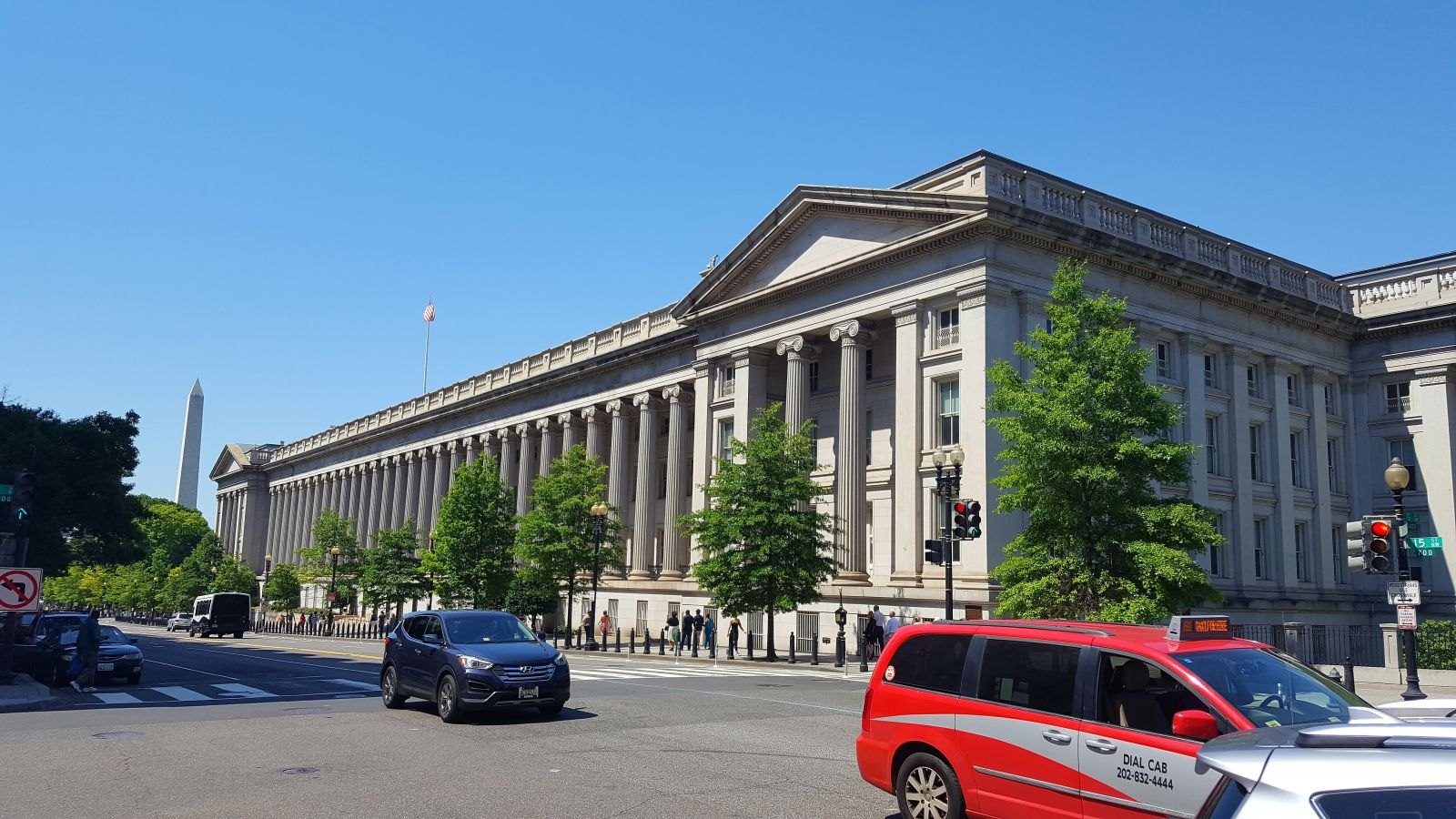
On November 27, 2026, the US Department of the Treasury and the Internal Revenue Service published Federal Register Notice 2026-24116 (91 FR 76879), opening a 60-day public comment period through January 26, 2027, on Office of Management and Budget Control Number 1545-1632, which governs digital disclosure standards, electronic participant elections, and paperless recordkeeping across university and employer retirement plans.
IRS Re-Examines Paperless Disclosures for Retirement Plans
The notice from the Internal Revenue Service formally initiates an extension review of existing regulatory collections established under Treasury Decision 8873 and Treasury Decision 9294. These frameworks codified the standards by which sponsors of qualified retirement plans may satisfy statutory notice and election obligations through electronic media under 26 CFR 1.401(a)-21. Covering an estimated 455,625 institutional respondents generating 11.7 million electronic transactions each year, the information collection encompasses mandatory distribution explanations, direct rollover notices under Treasury Regulation 1.402(f)-1, and participant consent verifications under Treasury Regulation 1.411(a)-11.
Under the Paperwork Reduction Act of 1995 (44 U.S.C. 3506(c)(2)(A)), federal agencies must periodically reassess the operational utility, technical feasibility, and administrative burden of active reporting regimes. The IRS specifically requested public input on whether the recordkeeping rules retain practical utility, whether annual compliance estimates accurately reflect actual institutional labor, and how automated electronic collection systems can reduce documentation overhead for plan sponsors without eroding beneficiary protections.
Key Information Collection Specifications and Regulatory Deadlines
The information collection request details critical operational parameters for institutions maintaining defined contribution programs, including IRC 401(k) arrangements and IRC 403(b) tax-sheltered annuity plans widely utilized by colleges, universities, and academic medical centers. Plan fiduciaries and institutional payroll officers must adhere to rigorous criteria to ensure that digital notices are at least as understandable as written paper notices and that digital participant elections remain fully auditable.
The following table summarizes the regulatory specifications, burden figures, and submission guidelines established in the Federal Register announcement:
| Regulatory Parameter | Specification / Metric | Administrative Source |
|---|---|---|
| Federal Notice Identification | FR Doc. 2026-24116; 91 FR 76879 | Federal Register (Issued Nov 24, 2026; Published Nov 27, 2026) |
| OMB Control Number | 1545-1632 | Office of Management and Budget |
| Treasury Decision Projects | TD 8873 and TD 9294 | Department of the Treasury / Internal Revenue Service |
| Primary Governing Regulation | 26 CFR 1.401(a)-21; 26 CFR 1.402(f)-1; 26 CFR 1.411(a)-11 | Internal Revenue Code Subchapter A |
| Public Comment Deadline | January 26, 2027 | 60-Day Notice Period |
| Estimated Annual Respondents | 455,625 plan administrators and employers | IRS Paperwork Reduction Act Supporting Statement |
| Estimated Annual Responses | 11,700,000 participant transmissions | IRS Information Collection Filing |
| Estimated Time per Response | 2 minutes (0.033 hours) | Federal Register Published Estimate |
| Total Annual Burden Hours | 477,563 aggregate compliance hours | Office of Information and Regulatory Affairs (OMB) |
| Submission Address | Andres Garcia, Room 6526, 1111 Constitution Ave NW, Washington, DC 20224 | IRS PRA Clearance Officer |
Evolution of Electronic Notice Standards and Federal Coordination
The regulatory foundations of OMB Control Number 1545-1632 trace back to the passage of the Electronic Signatures in Global and National Commerce Act (E-SIGN Act) in 2000 and the subsequent promulgation of Treasury Decision 8873. Historically, paper disclosures were mandatory for almost all core participant actions, including spouse waivers, benefit distribution options, and rollover advisories. Treasury Decision 9294 expanded the framework by establishing two distinct operational avenues for digital distribution: the consumer consent method mirroring E-SIGN rules, and an effective access standard for participants with routine workplace network connectivity.
Over the past decade, retirement administration has undergone substantial statutory and technological transformation. While Treasury regulations govern qualification requirements under the Internal Revenue Code, university plan administrators must simultaneously comply with parallel Department of Labor (DOL) safe harbors under Title I of the Employee Retirement Income Security Act (ERISA). The DOL established an opt-out default electronic delivery framework in 2020 via Notice of Internet Availability (NOIA), while Section 338 of the SECURE 2.0 Act introduced counterbalancing paper benefit statement mandates for defined contribution plans. This complex multi-agency landscape highlights the importance of the IRS public comment proceeding as federal regulators evaluate technological harmonization.
Higher Education and Institutional Perspectives
University human-resources executives and benefits fiduciaries have expressed keen interest in the IRS information collection proceeding. Academic institutions operate highly diverse workforce cohorts ranging from tenured faculty and full-time research scientists to transient postdoctoral scholars, graduate teaching assistants, adjunct instructors, and hourly campus service personnel. Ensuring uniform delivery of mandatory retirement disclosures across these disparate employee populations presents unique logistical hurdles.
Higher education associations, including human resources and business officer organizations, have repeatedly pointed out that modern cloud-based enterprise human capital management platforms—such as Workday, PeopleSoft, and vendor portals operated by TIAA and Fidelity—provide immediate, authenticated access to plan materials. Institutional fiduciaries argue that paperless communications substantially improve participant engagement, accelerate contribution updates, and eliminate tens of thousands of dollars in annual paper printing and physical postage expenses. However, plan fiduciaries also emphasize that IRS rules must provide clarity regarding mobile application push notices, multi-factor authentication logging, and contingency workflows when institutional email addresses are deactivated upon grant conclusion.
Implications for University Research Offices and Sponsored Projects
Although retirement plan governance is primarily led by institutional human-resources departments, the rules governing OMB Control Number 1545-1632 carry direct financial and operational ramifications for central research administration offices. In sponsored research, employer contributions to retirement plans, pension trusts, and administrative oversight constitute core components of allowable personnel expenses under Uniform Guidance cost principles, specifically 2 CFR 200.431.
Research institutions must incorporate retirement expenditures into annual composite fringe benefit rates in sponsored research budgets, which are directly charged to federal grants from agencies such as the National Institutes of Health and the National Science Foundation. These calculations are closely audited during the negotiation of negotiated indirect cost rate agreements (NICRA) with federal cognizant agencies such as the Department of Health and Human Services (HHS) Cost Allocation Services or the Office of Naval Research.
Moreover, modern digital notice and election mechanisms interface directly with institutional payroll infrastructure, supporting compliant effort reporting and payroll certification systems. When investigators manage multi-source salary funding, precise digital recording of retirement elective deferrals ensures equitable cost distribution without distorting faculty effort allocation across multiple grants. Administrative efficiencies achieved through automated, compliant paperless notices help contain institutional overhead, reinforcing internal controls within the wider grants management and research funding framework.
Next Steps and Public Comment Protocol
The public comment period for OMB Control Number 1545-1632 remains open through Tuesday, January 26, 2027. University benefits directors, plan sponsors, research policy analysts, and software vendors may submit formal written comments to the Internal Revenue Service clearance office. Submissions must explicitly reference OMB Control No. 1545-1632 and should address the practical accuracy of the 477,563 annual burden hour estimate, opportunities for technological simplification, and the operational intersection between IRS digital standards and campus HR systems.
Following the conclusion of the 60-day comment window, the Department of the Treasury and IRS will review stakeholder submissions before submitting a formal Information Collection Request package to the Office of Information and Regulatory Affairs (OIRA) within OMB for final three-year renewal approval.
Sources
- Federal Register: Agency Information Collection Activities; Comment Request on New Technologies in Retirement Plans, checked 2026-11-28
- Internal Revenue Service: IRC 403(b) Tax-Sheltered Annuity Plans, checked 2026-11-28
- Electronic Code of Federal Regulations: 26 CFR 1.401(a)-21 — Rules Relating to the Use of an Electronic Medium to Provide Applicable Notices and to Make Participant Elections, checked 2026-11-28
- Legal Information Institute: 2 CFR § 200.431 – Fringe Benefits, checked 2026-11-28






