
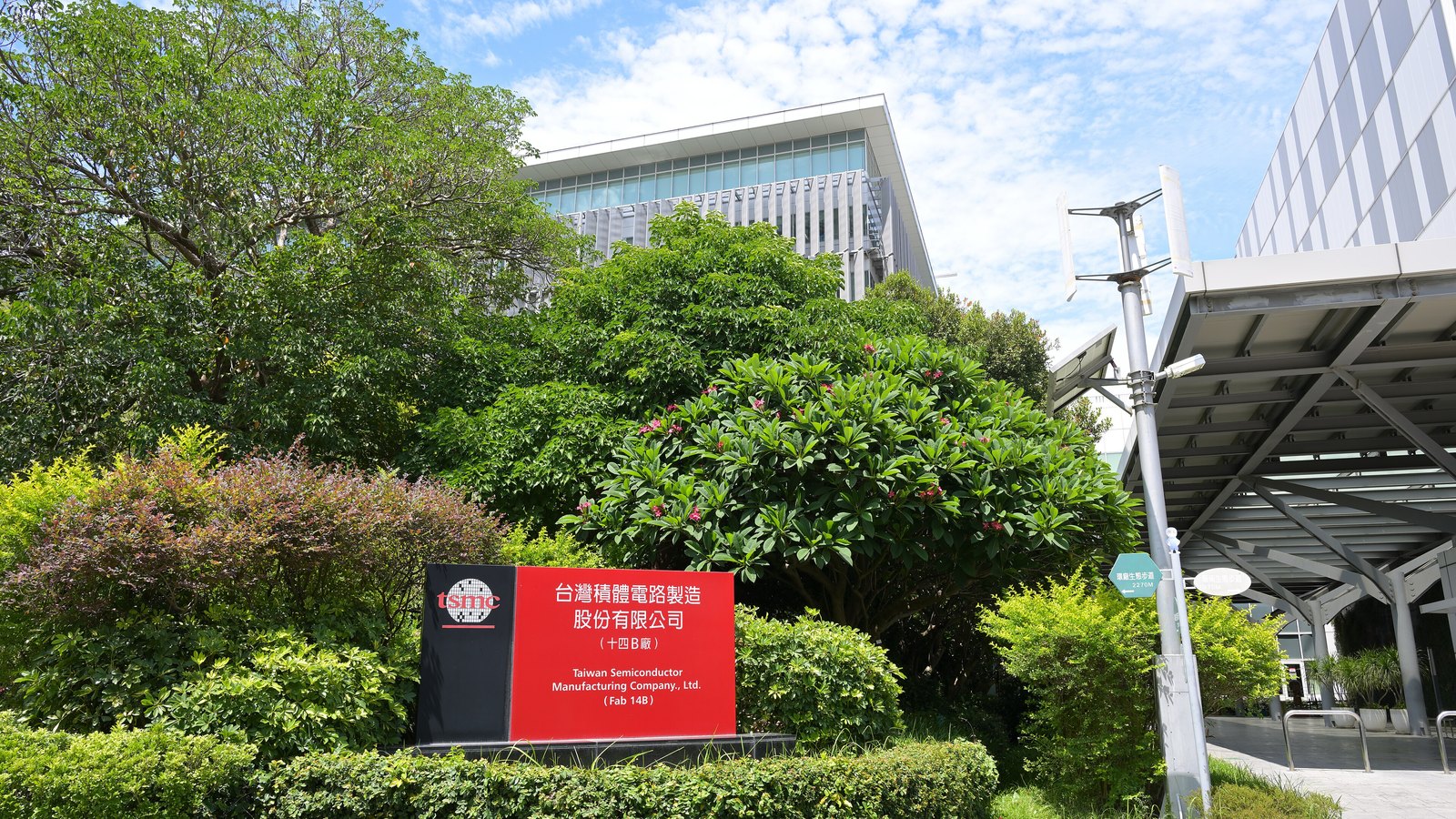
TSMC and Samsung Electronics have suspended some chip shipments to Chinese customers while they apply for US export licences, the Financial Times reported on 19 November 2026. The pause follows a Bureau of Industry and Security (BIS) interim final rule that took effect the same day and narrows the ways a foundry can show that an advanced logic chip is outside US controls. For research offices, universities and labs that buy, host or share advanced computing hardware, the rule changes what a licence check looks like.
What happened
The Financial Times reported on 19 November, citing people familiar with the matter, that TSMC and Samsung told Chinese clients in recent days that they would halt sales of certain processors while they seek licences from the US Commerce Department, according to Seoul Economic Daily and National Technology. Seoul Economic Daily names Baidu’s Kunlun AI unit and ByteDance among Samsung’s Chinese customers, and reports that TSMC supplies smartphone chips to Xiaomi, Oppo and Vivo. Both outlets attribute the reporting to the Financial Times.
The trigger is a BIS interim final rule titled Addressing Remote Access to Advanced Semiconductors. BIS released it on 16 November, the Federal Register published it on 19 November 2026 (91 FR 74970, document 2026-23529, docket 261116-0005), and it is effective on publication.
Key details of the rule
The rule does several things at once. According to the Federal Register document, it:
- restricts exports of advanced computing items to overseas data centres that give significant compute access to companies headquartered in Macau or in Country Group D:5, with a licence requirement where there is knowledge that a data centre, or linked data centres, provides access to more than 12,000,000 aggregate TPP (total processing performance) to such companies;
- adds a licence requirement for advanced semiconductors going to Indonesia, Malaysia, Singapore, Thailand and Brazil, with an exception for end users headquartered in the United States that file the new monthly reports under section 743.10;
- changes the presumptions that front-end fabricators and outsourced semiconductor assembly and test companies (OSATs) face when they export advanced-node logic chips; and
- rescinds the AI Diffusion Rule, including the ECCN 4E091 model-weights control and the Data Center Validated End User framework.
The foundry change is the one behind the shipment pause. Under the existing control, a fabricator must presume that a logic chip at the 16/14 nm node or below is a controlled data-centre AI chip unless it shows otherwise. As described by MLQ.ai, which quotes the Federal Register text, there were three ways to overcome that presumption: an attestation from an approved or authorised designer, the fabricator’s own attestation that the packaged chip falls below transistor-count thresholds, or an attestation from an approved packaging company. The rule text amends the relevant notes to remove the second and third routes for designers located in, or with an ultimate parent in, Country Groups D:1, D:4 or D:5, or in the newly licensed destinations. That closes the route that let Chinese designers use independent packaging and testing firms to certify that chips fell outside US controls, a change National Technology also describes, again citing the FT.
Reaction and reporting
Reuters, as relayed by MLQ.ai, reported that TSMC halted orders from affected Chinese designers on 16 nm processes and below unless they hold US export licences. It also reported that no mainland Chinese company appears on the US list of approved chip designers, and that TSMC’s guidance calls for closer checks on customers’ operating locations, parent companies, major shareholders, packaging providers and shipping routes, including orders placed through intermediaries in Taiwan, the United States, Europe, Japan and Southeast Asia. Reuters could not verify how some Chinese AI chip designers had reached TSMC’s 7 nm technology before the rule.
The restrictions reach beyond AI accelerators. Seoul Economic Daily reports that BIS eliminated an exemption that had let foundries supply advanced chips from certain design firms if they certified the chips were not subject to export controls, so TSMC and Samsung also notified consumer-electronics customers of suspensions. One lawyer quoted by the FT said both companies must now apply for licences even for consumer chips made on advanced processes. Industry sources told the FT that Commerce is likely to grant licences for smartphone chips, but that approval delays could disrupt production. MLQ.ai reports that China’s Commerce Ministry has vowed countermeasures.
Background and context
The rule follows weeks of US action on AI chip exports. casrai covered Nvidia’s halt of shipments of powerful AI chips to China, the reported Commerce rule on third-country data centres, and the House Foreign Affairs Committee’s release of licence data. The new development here is the foundry-level change and the suspension of shipments by the two largest advanced-node manufacturers. For the background on how chip thresholds and licensing are structured, see the casrai guide on compute governance and export-control thresholds.
What it means for researchers, universities and research offices
- Compute procurement and hosting. Institutions that buy advanced chips, or that run or rent capacity in data centres in Indonesia, Malaysia, Singapore, Thailand or Brazil, should check whether the new country-based licence requirement applies to the hardware and to the hosting arrangement. The rule’s US-headquartered end-user exception depends on the monthly reports described in section 743.10.
- Collaborations with partners in China and Macau. The data-centre control looks at who gets access to compute, not only who owns it. Research offices that give partner institutions or companies in China or Macau access to shared clusters should ask export-control staff how the 12,000,000 aggregate TPP access threshold and the knowledge standard apply.
- Equipment and component supply. Labs that depend on chips made by TSMC or Samsung for instruments, prototypes or custom hardware, and that have Chinese designers or suppliers in the chain, should expect longer lead times while licences are sought.
- Screening and records. Entity screening and ECCN classification remain the starting point. The casrai guide to the BIS Entity List and the deemed-export screening checklist for lab onboarding cover the routine checks that sit alongside this rule.
What happens next
According to the Federal Register document, BIS is taking comments until 19 January 2027. Exports in transit are covered by a savings clause if completed no later than 21 December 2026, and existing data centres serving Macau or D:5 companies must obtain a licence within 90 days of the effective date. The new reporting under section 743.10 applies to exports made on or after 19 November 2026. China’s Commerce Ministry has vowed countermeasures, as reported by MLQ.ai. Institutions with open orders or hosting arrangements that touch the affected countries and chip classes should have their export-control office review them against the rule text now.
Sources
- Bureau of Industry and Security, Addressing Remote Access to Advanced Semiconductors, interim final rule, Federal Register, 19 November 2026
- Seoul Economic Daily, TSMC, Samsung Halt Some Chip Shipments to China as U.S. Rules Take Effect, 20 November 2026
- National Technology, TSMC and Samsung suspend some chip shipments to Chinese customers after export controls, 20 November 2026
- MLQ.ai, TSMC and Samsung curb some chip shipments to Chinese customers as a new US rule takes effect, 19 November 2026


