
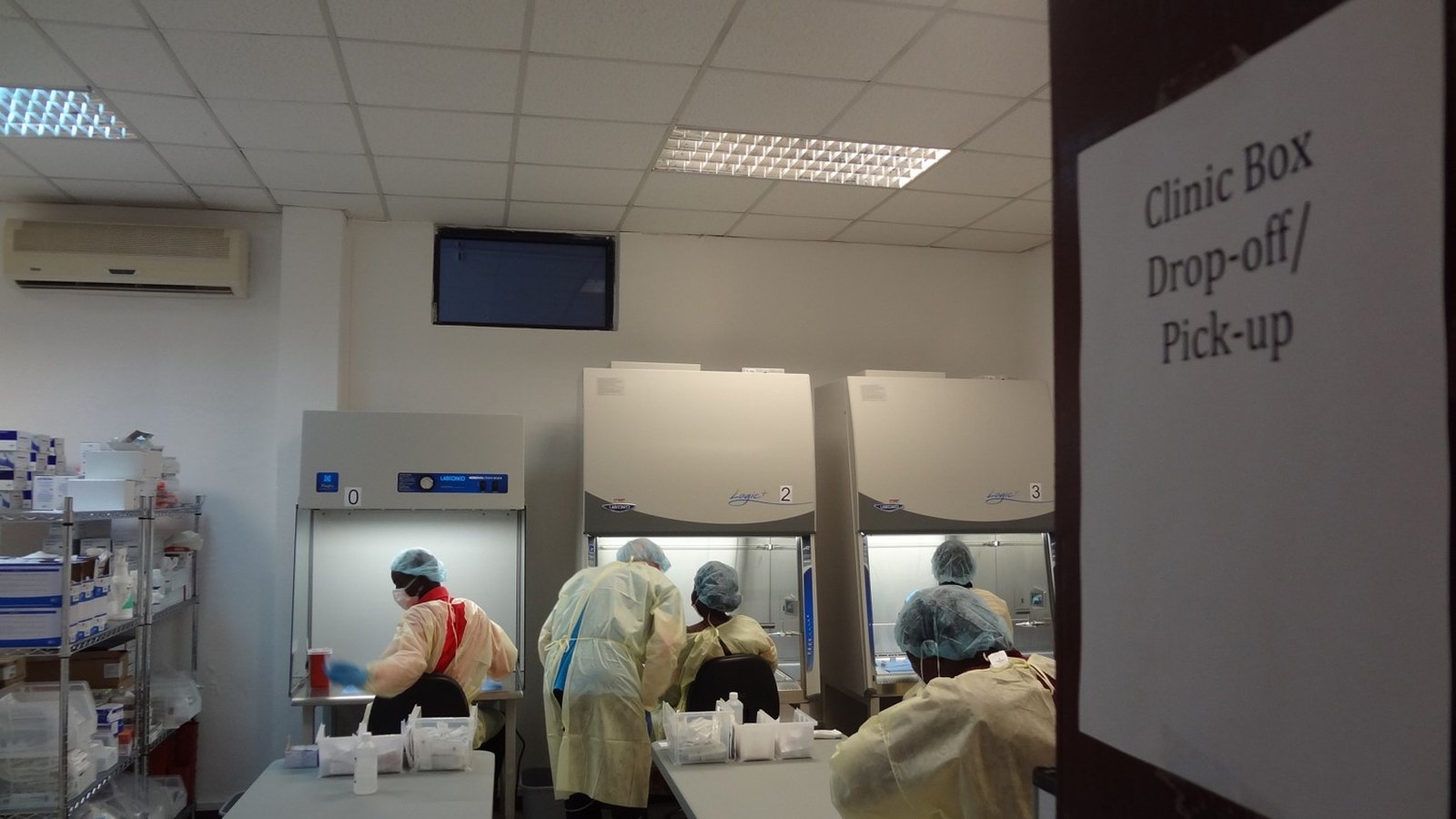
The Uganda Virus Research Institute launched Africa’s first mRNA Phase I trial of a Bundibugyo ebolavirus vaccine on 27 November 2026, testing Moderna’s candidate mRNA-1469 in about 224 volunteers aged 1 to 65. It is the first study of the vaccine in children, and it follows WHO’s decision, covered in an earlier CASRAI report, to add the candidate to the Tumaini trial in the Democratic Republic of the Congo.
What happened
UVRI, a state-run institute in Uganda, announced on Friday 27 November 2026 that it had started a clinical trial of Moderna’s mRNA vaccine against Bundibugyo ebolavirus, according to Reuters. The study is registered by the institute as mRNA-1469-P102 and runs in collaboration with Moderna after review and approval by Uganda’s regulatory authorities, according to the UVRI release. Screening and enrolment of volunteers is now underway, and participants will be followed for approximately one year from the study injection.
The trial is designed to measure the safety of the vaccine and the immune response it produces. UVRI says it will enrol approximately 224 healthy volunteers from 1 to 65 years of age and will, for the first time, test the vaccine in children from 1 year of age. The institute’s director, Professor Pontiano Kaleebu, said: “We have worked very fast supported by the Ugandan regulators”, according to the release.
This is an early-phase safety and immune-response study. It does not test whether the vaccine prevents Ebola disease, and the vaccine is not available outside trials.
Key details
| Item | Detail reported |
|---|---|
| Study code | mRNA-1469-P102 |
| Run by | Uganda Virus Research Institute, in collaboration with Moderna |
| Participants | Approximately 224 healthy volunteers aged 1 to 65 |
| Follow-up | Approximately one year from the study injection |
| Status on 27 November 2026 | Screening and enrolment underway |
| Funding named in the release | Up to US$58.5 million from the Coalition for Epidemic Preparedness Innovations (CEPI) to Moderna |
| First study of the vaccine | Canada, healthy adults aged 18 to 65, from August 2026 |
Bernama, citing a joint statement issued in Kampala, reported the same trial code, enrolment and funding figures. Reuters describes the age range differently, saying the trial tests children aged one year and above, which is consistent with the 1 to 65 range in the release.
Background and context
Moderna’s candidate first entered human testing in Canada. CEPI reported on 4 August 2026 that the first volunteers were dosed on 3 August at three sites, with around 80 healthy adults planned. CEPI said it had committed up to US$50 million for preclinical work, the Phase 1 trial and scaled manufacturing, and that Moderna would provide at a minimum 500,000 doses to low- and middle-income countries at access pricing if the vaccine is licensed.
The Uganda study sits alongside a larger effort in the Democratic Republic of the Congo. On 4 November 2026 the World Health Organization announced that its Technical Advisory Group on candidate vaccine prioritization had recommended two candidates for further clinical evaluation: the ChAdOx1 vaccine developed by the University of Oxford and the Serum Institute of India, and Moderna’s mRNA-1469. Both enter the Tumaini trial following national approvals, and WHO expects results from the vaccine trial in early 2027. The UVRI release adds that the Oxford vaccine has been in trials in the United Kingdom since July 2026 and in Uganda since October 2026.
Tumaini is a Phase 2/3 adaptive platform trial that vaccinates the high-risk contacts of confirmed cases in rings. CEPI recorded the first vaccination in Bunia on 23 October 2026, with the Institut National de Recherche Biomédicale in the DRC and the University of Antwerp as co-leads and co-sponsors. An article from Gavi’s VaccinesWork dated 10 November 2026 reports that participants are randomly assigned to an Ebola vaccine or a comparator vaccine, and that everyone receives the alternative on day 29. The same article cites nearly 11,000 cases and more than 5,300 deaths in the DRC as of 7 November 2026. Reuters calls the outbreak the second-largest on record globally.
Reaction
Richard Hatchett, chief executive of CEPI, said in the announcement: “Children are often among those hardest hit when Ebola strikes, yet they are too often the last to benefit from new vaccines.” Hamilton Bennett, Moderna’s executive director of resilience research and development, said in the UVRI release that evaluating the vaccine in paediatric populations will provide valuable data.
What it means for researchers, universities and research offices
For research offices and ethics committees, the study is a concrete example of an African institute running a first-in-region mRNA vaccine trial on a timetable set by the outbreak, with approval from national regulators. Institutions that sponsor or host outbreak trials can compare their own review and contracting steps with the pace Kaleebu describes. Trial teams working on emergency studies will find the design useful: one candidate is tested in adults in Canada, then in an age range that starts at 1 year in Uganda, while WHO’s advisory group moves the same candidate toward a ring-vaccination trial in the DRC.
Funders and sponsors should note that CEPI funding and its access commitments are stated in public announcements. Universities negotiating outbreak-response agreements can see what is disclosed in practice: funder, collaborating manufacturer, participant numbers, age range and follow-up time. Anyone planning paediatric inclusion in a first-in-human programme can read the ICH E11A paediatric extrapolation guideline alongside the trial design, and teams new to early-phase work can start from the CASRAI explanations of clinical trial phases, the Phase 1 trial and good clinical practice. The vaccine platform is also different from the adenovirus-based approach used by the Oxford candidate, which the guide to viral vector vaccines explains.
This post was medically reviewed by Dr. Diana Nieves Castro, MD. It reports trial design and does not give medical advice.
What happens next
Volunteers in Uganda will be followed for approximately one year from the study injection, so follow-up in the study runs to about late 2027. Reuters reports that Moderna’s vaccine will also enter trials in the Congo soon, alongside the Oxford and Serum Institute candidate, and that scientists are testing whether Merck’s Ervebo vaccine gives cross-protection against Bundibugyo. WHO expects results from the Tumaini vaccine trial in early 2027.
Sources
- Uganda Virus Research Institute: Africa’s first mRNA Phase I Bundibugyo ebolavirus vaccine trial launched, 27 November 2026
- Reuters via CP24: Uganda launches Africa’s first trial of an mRNA Bundibugyo Ebola vaccine, 27 November 2026
- Bernama-Xinhua: Uganda launches Africa’s 1st trial of mRNA vaccine against Bundibugyo Ebola, 28 November 2026
- WHO: Two new candidate vaccines to join Ebola trial as treatment research advances, 4 November 2026
- CEPI: Moderna’s Bundibugyo ebolavirus vaccine candidate enters first human trial, 4 August 2026
- CEPI: First participant vaccinated in pivotal Phase 2/3 Bundibugyo vaccine trial in the DRC, 23 October 2026
- Gavi VaccinesWork: Can two new vaccines help turn the tide against Bundibugyo Ebola?, 10 November 2026






