
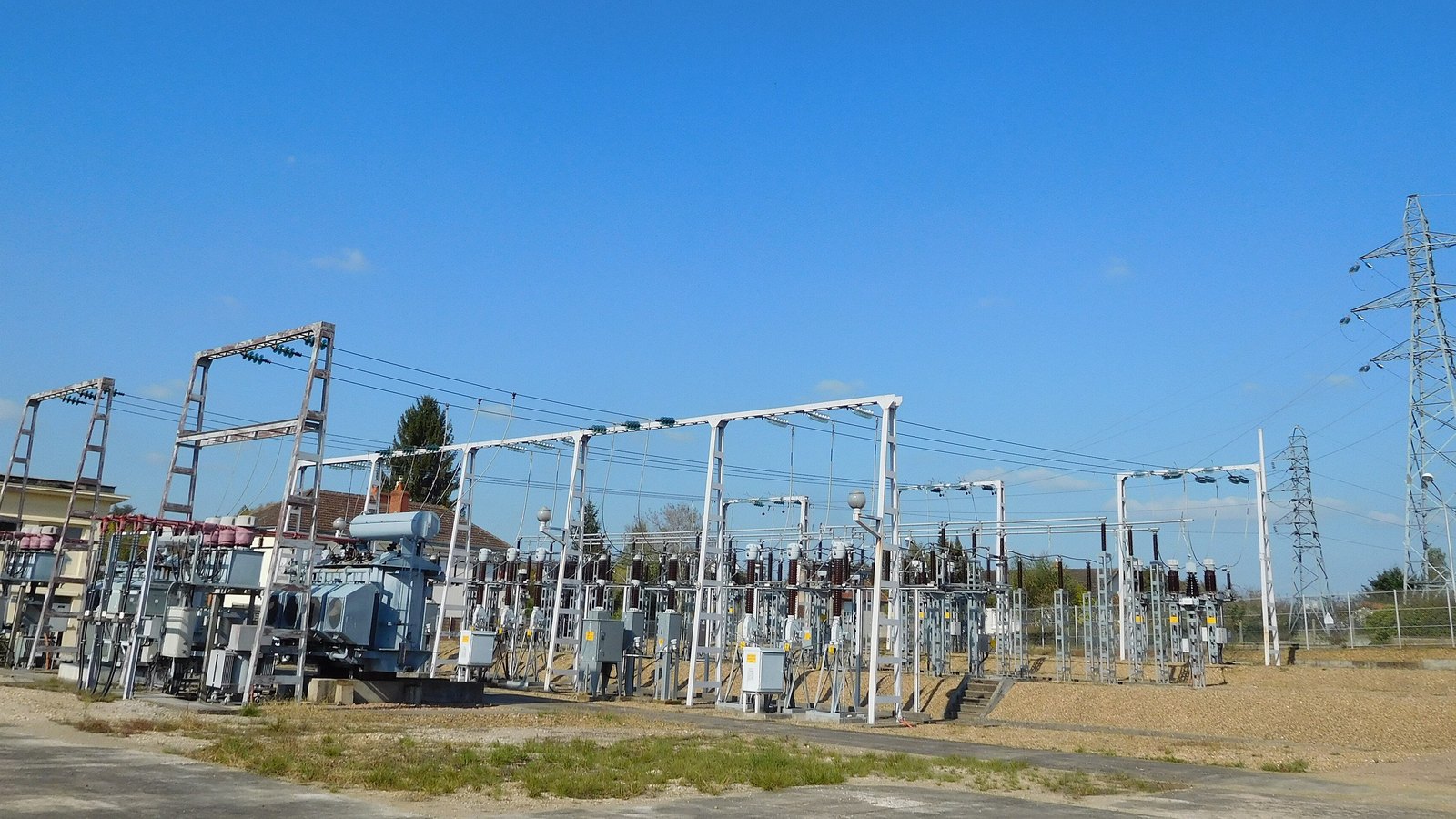
On November 26, 2026, the UK Department for Energy Security and Net Zero published the comprehensive interim evaluation of Phase 3 of the Energy Savings Opportunity Scheme, examining compliance outcomes, reporting friction, and energy efficiency gains across large commercial enterprises, independent scientific institutions, and clinical research facilities.
Implementation Findings From the ESOS Phase 3 Reporting Cycle
The interim evaluation published by the Department for Energy Security and Net Zero provides the first systematic government assessment of how UK industry and large non-public entities adapted to strengthened Phase 3 audit mandates under the Energy Savings Opportunity Scheme. Spanning 140 pages alongside survey data tables, the evaluation synthesises compliance filings submitted by qualifying organisations, cross-sector participant surveys, and qualitative interviews with corporate energy managers and lead assessors. The findings detail operational adaptations introduced during Phase 3, notably the deployment of the digital Manage your Energy Savings Opportunity Scheme (MESOS) reporting system and tighter audit thresholds designed to accelerate measurable decarbonisation.
Phase 3 represented a substantial structural overhaul of the scheme. The evaluation documents that while qualifying organisations successfully adapted to standardised reporting templates, the transition required upfront investment in data collation. Lead assessors reported that participants evaluated broader electrification and building fabric measures, though capital constraints frequently dictated which audit recommendations progressed to physical installation. Overall, the evaluation confirms that legislative tightening succeeded in capturing granular consumption profiles across energy-intensive operations, establishing a verified baseline for future compliance phases.
Key Regulatory Changes and Audit Performance Metrics
The Phase 3 compliance period, which set its qualification threshold on December 31, 2022, introduced several pivotal legal amendments to the scheme structure. The most significant operational change was the reduction of the de minimis exemption threshold from 10% to 5% of total organizational energy consumption. This revision required qualifying entities to conduct detailed energy audits or demonstrate approved alternative compliance across at least 95% of their total energy footprint, directly bringing secondary sites, specialized testing labs, and auxiliary process cooling systems into statutory audit scope.
Additionally, Phase 3 mandated the calculation and reporting of standardized energy intensity ratios across four distinct functional categories: buildings, transport, industrial processes, and other organizational activities. Participants were required to articulate consumption relative to verifiable business output indicators, such as gross internal floor area, production units, or full-time personnel counts. The evaluation reveals that establishing reliable intensity metrics proved demanding for complex organisations operating multi-use scientific campuses, where energy demand fluctuates based on research campaigns rather than uniform commercial occupancy.
The table below summarizes the statutory requirements across the regulatory phases of the Energy Savings Opportunity Scheme:
| Compliance Dimension | Phase 2 (2015–2019) | Phase 3 (2019–2023 / Extended) | Phase 4 (2023–2027) |
|---|---|---|---|
| Audit Coverage Floor | 90% of total energy consumption (10% de minimis exemption) | 95% of total energy consumption (5% de minimis exemption) | 95% of total energy consumption (5% de minimis exemption) |
| Reporting Infrastructure | Basic online notification portal | Standardised digital reporting via MESOS portal | MESOS portal with mandatory action plan tracking |
| Energy Intensity Ratios | Optional or discretionary metric reporting | Mandatory reporting across buildings, transport, and processes | Mandatory reporting with longitudinal year-on-year tracking |
| Action Plan Disclosures | Voluntary internal recommendation sharing | Mandatory action plan filing and annual progress updates | Mandatory explanation when action plan targets are missed |
| Alternative Routes | ISO 50001, DECs, Green Deal Assessments | ISO 50001, DECs, Green Deal Assessments | ISO 50001 certified energy management systems only |
| Net Zero Integration | Not incorporated in scheme scope | Voluntary reporting outside core MESOS workflow | Voluntary BSI PAS 51215-1:2025 assessment integration |
Evolution of UK Mandatory Energy Auditing and MESOS Digital Reporting
The Energy Savings Opportunity Scheme was established under The Energy Savings Opportunity Scheme Regulations 2014 (SI 2014/1643) to transpose Article 8 of the European Union Energy Efficiency Directive into domestic legislation. Following the United Kingdom’s withdrawal from the EU, the framework was retained and subsequently reformed through secondary legislation to align with national statutory obligations under the Climate Change Act 2008, specifically the legally binding mandate to achieve net-zero greenhouse gas emissions by 2050.
Administered primarily by the Environment Agency as the lead UK scheme regulator, alongside Scottish Environment Protection Agency (SEPA), Natural Resources Wales (NRW), and the Northern Ireland Environment Agency (NIEA), ESOS applies to all UK undertakings meeting the definition of a large enterprise. This qualification captures organisations that employ 250 or more persons, or have an annual turnover exceeding £44 million and an annual balance sheet total exceeding £38 million. Corporate groups must comply if even a single UK entity meets these qualification thresholds.
Official compliance guidance published under the Energy savings opportunity scheme framework required participants to transition to the MESOS digital portal during Phase 3. The digital rollout faced technical delays, prompting the Environment Agency to introduce an enforcement grace period extending compliance notifications into 2024. The newly released interim evaluation underscores that while digital standardization created initial friction, it successfully aggregated high-quality energy audit data that previously remained siloed across paper reports, aligning UK audit requirements with international best practices in sustainability reporting.
Stakeholder and Industry Response to Strengthened Audit Thresholds
Corporate response to the Phase 3 evaluation reflects a balance between acknowledged administrative burdens and recognized operational benefits. Energy management professionals and independent sustainability organisations, such as The Carbon Trust, noted that lowering the de minimis exemption to 5% pushed corporate decision-makers to evaluate neglected energy drains. Facilities teams discovered substantial energy wastage in secondary facilities, continuous thermal conditioning loops, and legacy mechanical systems that had previously escaped review under the 10% exclusion rule.
However, survey feedback in the DESNZ report reveals persistent concerns regarding the return on investment for formal audit exercises. While lead assessors identified substantial potential energy savings per participant, organizations reported that internal capital competition and short payback hurdle rates (frequently requiring returns within 24 months) prevented the implementation of deeper structural retrofits. Industry stakeholders have called for clearer fiscal incentives to bridge the gap between audit identification and physical installation, particularly for long-term decarbonisation assets such as commercial heat pumps and high-efficiency heat recovery systems.
Operational Implications for Research Institutes, Laboratories, and Supercomputing Facilities
The findings of the Phase 3 interim evaluation carry direct strategic implications for research-intensive organisations. While publicly funded universities and higher education funding bodies often qualify as contracting authorities exempt from ESOS, large independent research institutes, biomedical charities, commercial technology transfer operations, contract research organisations, and clinical trial sponsors fall squarely within the scope of large undertakings. These organisations manage highly specialised scientific infrastructure characterized by extraordinary energy densities.
Laboratories and high-performance computing (HPC) data centres present unique compliance challenges under ESOS. Containment laboratories, vivariums, and cleanrooms frequently demand 100% outside air changes and rigorous temperature stability, consuming three to eight times more energy per square metre than commercial office spaces. Facility directors must navigate stringent mechanical design standards, including ASHRAE Standard 90.1 and the International Energy Conservation Code, ensuring that energy conservation retrofits do not compromise biosafety, particulate filtration, or experimental reproducibility.
Scientific equipment also represents a major operational load. Ultra-low temperature (ULT) freezers operating at -80°C consume energy comparable to an entire domestic household. Implementing targeted cold storage management, as detailed in research analyses on cold-storage energy in research, allows research facilities to meet ESOS audit recommendations through temperature tune-ups (-70°C operation), preventive seal maintenance, and freezer inventory consolidation. Furthermore, research offices are integrating green lab certification frameworks alongside the 5R framework in lab sustainability, embedding waste reduction, equipment scheduling, and equipment power management into daily laboratory practice.
To avoid the disruptive four-year cyclical audits required under ESOS, several biomedical campuses are transitioning to enterprise-wide ISO 50001 certified energy management systems. An accredited ISO 50001 system satisfies ESOS compliance automatically, providing a continuous management framework that integrates real-time sub-metering, lab ventilation scheduling, and procurement standards directly into ongoing facility operations.
Timeline and Requirements for ESOS Phase 4 and Annual Action Plan Updates
Organisations subject to ESOS must prepare for imminent compliance milestones. For Phase 3 participants, the immediate regulatory requirement is the submission of the first annual progress update on their published action plan, due via the MESOS system by December 5, 2026. This filing requires board-level director sign-off and must document the energy efficiency measures implemented over the preceding 12 months, detailing whether projected energy and cost savings were achieved.
Simultaneously, preparations are commencing for ESOS Phase 4. Organisations must evaluate their qualification status based on corporate headcount and financial metrics as of the qualification date on December 31, 2026. Phase 4 compliance assessments must be fully completed and notified through MESOS by December 5, 2027. Regulators have confirmed several critical structural adjustments ahead of Phase 4:
- Discontinuation of Alternative Routes: Display Energy Certificates (DECs) and Green Deal Assessments (GDAs) will no longer be permitted as compliance mechanisms for Phase 4, leaving ISO 50001 certification as the sole valid alternative to a full ESOS energy audit.
- Accountability for Action Plans: In Phase 4, participants must formally report progress against action plan commitments within their assessment, submitting mandatory explanations whenever stated energy-saving commitments have not been fulfilled.
- Voluntary Net Zero Standards: Phase 4 participants may incorporate voluntary net-zero decarbonisation assessments using British Standards Institution specifications BSI PAS 51215-1:2025 and PAS 51215-2:2025, enabling organisations to align compliance audits with long-term capital transition planning.
The Department for Energy Security and Net Zero confirmed that the final evaluation report for Phase 3 and Phase 4 implementation will be published in 2027, informing future policy refinements as the UK progresses toward its statutory carbon budgets.
Sources
- Department for Energy Security and Net Zero: Energy Savings Opportunity Scheme (Phase 3): interim evaluation, checked 2026-11-26
- Department for Energy Security and Net Zero: Energy savings opportunity scheme (ESOS): find out if you qualify and how to comply, checked 2026-11-26
- Environment Agency: About us – Environment Agency, checked 2026-11-26
- UK Legislation: The Energy Savings Opportunity Scheme Regulations 2014 (SI 2014/1643), checked 2026-11-26
- The Carbon Trust: Solutions – Energy Efficiency and Decarbonisation Advice, checked 2026-11-26






