
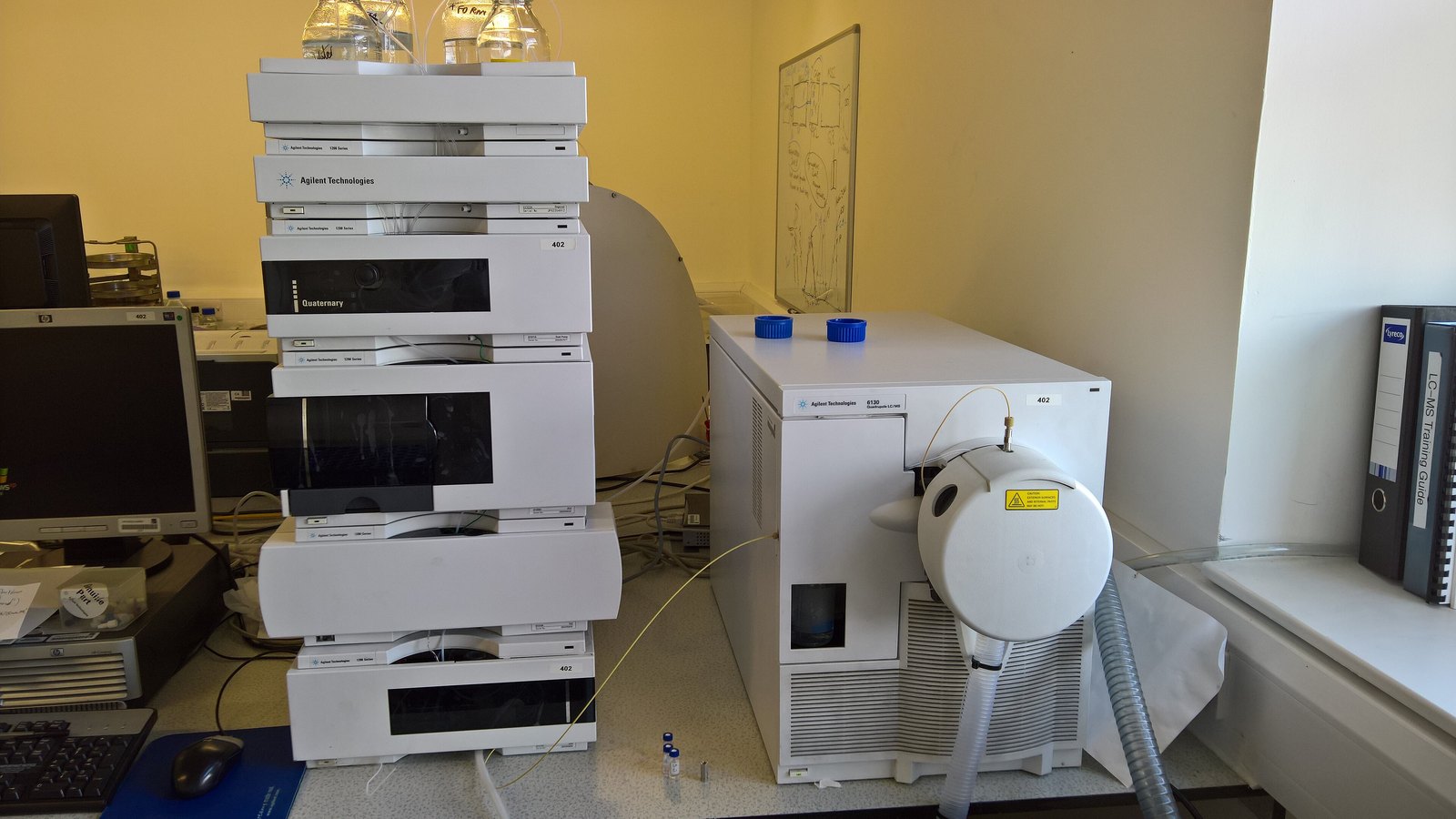
On 26 November 2026, the UK Environment Agency published a technical research report introducing a high-performance liquid chromatography screening test to evaluate the environmental mobility of polar and ionisable chemicals. Developed with Fraunhofer IME and wca Environment, the methodology addresses critical regulatory blind spots in groundwater protection, offering university researchers and environmental testing laboratories a rapid alternative to standard hydrophobic soil sorption assays.
Environment Agency Evaluates HPLC Screening Protocol for Leaching Hazards
The Environment Agency Chief Scientist’s Group released its technical research report examining whether liquid chromatography can establish an effective high-throughput screening method for chemical mobility. Commissioned under Science Manager Steph Jones at the agency’s Chemicals Assessment Unit, the experimental research was executed by contractors Adam Peters of wca Environment Ltd and Dieter Hennecke of the Fraunhofer Institute for Molecular Biology and Applied Ecology.
The study tackles a critical weakness in regulatory environmental safety: current statutory frameworks rely on hydrophobic partitioning models that fail to predict how polar and electrically charged substances migrate into aquifers. Mobile chemicals that do not bind strongly to organic matter can penetrate subsoil layers and reach drinking water sources. By measuring retention times on specialised high-performance liquid chromatography (HPLC) columns, the project investigated whether chromatographic separation can serve as an operational surrogate for subsurface mobility.
Chromatographic Configuration and Column Screening Results
The investigation examined 56 target substances classified as potentially mobile environmental contaminants, covering human and veterinary pharmaceuticals, agrochemicals, biocides, and industrial additives. An initial subset of 10 benchmark substances was utilized to optimize mobile phase compositions, gradient profiles, and flow rates before expanding testing across the entire chemical library.
Researchers evaluated four distinct chromatography column chemistries under varied buffer strengths and operating conditions to assess their capacity to simulate environmental mineral and organic interactions. Cation-exchange columns proved the most discriminatory stationary phase architecture.
| Evaluation Parameter | Experimental Specification | Analytical Observation | Regulatory Implication |
|---|---|---|---|
| Target Chemical Library | 56 potentially mobile substances (10 calibration benchmarks) | Included acidic, basic, zwitterionic, and neutral polar molecules | Broad representation of emerging contaminants of regulatory concern |
| Evaluated Column Stationary Phases | 4 distinct columns (reverse-phase, mixed-mode, and ion-exchange) | Cation-exchange chemistries demonstrated greatest retention discrimination | Confirms mineral charge interactions supersede simple hydrophobic binding |
| Cationic Substance Behavior | Positively charged compounds at neutral pH | Pronounced retention variance across diverse ionic strengths | Allows fine-grained ranking of electrostatic sorption affinity |
| Anionic Substance Behavior | Negatively charged compounds at neutral pH | Minimal column retention, eluting near the chromatographic void volume | Highlights rapid mobility but poses resolution challenges for screening |
| Instrumental Reproducibility | Multi-day repeatability and retention time stability | Consistent retention profiles achieved under standardized buffer conditions | Demonstrates technical viability for inter-laboratory quality standards |
Chromatographic behavior diverged sharply according to molecular charge. Positively charged substances exhibited substantial retention variation, reflecting electrostatic binding with negatively charged functional sites similar to clay minerals in soils. Conversely, negatively charged compounds showed negligible column retention, eluting near the void volume. While rapid elution confirms the high mobility of anionic contaminants, it presents an analytical hurdle for resolving relative mobility tiers among acidic compounds.
Limitations of Hydrophobic Partitioning and the PMT Regulatory Shift
Chemical registration rules have long relied on the organic carbon-water partition coefficient (Koc) to predict leaching. Established standards, including the OECD Test Guidelines for the Chemicals Programme such as OECD TG 121 (HPLC estimation of Koc) and OECD TG 106 (batch equilibrium sorption), assume that sorption in soil is driven predominantly by hydrophobic absorption into solid organic carbon.
For modern polar and ionisable chemicals, this mechanism fails. Molecules interact through ion exchange, cation bridging, and hydrogen bonding. In low-carbon aquifers, these interactions govern contaminant transport. Relying solely on log Koc frequently underestimates leaching potential.
In response, international regulators are establishing hazard classes for Persistent, Mobile, and Toxic (PMT) and very Persistent, very Mobile (vPvM) substances. The European Chemicals Agency has introduced formal CLP classification criteria for PMT and vPvM substances. Prioritization frameworks are increasingly emphasized in environmental science literature, including regulatory prioritization frameworks published in environmental health literature, while UK authorities oversee chemical safety via the UK REACH chemical regulatory regime. Methodological analyses of contaminant transport and degradation pathways are regularly reviewed in Environmental Processes and Impacts.
Stakeholder Feedback and Technical Workshop Consensus
Following testing, the Environment Agency convened an expert workshop bringing together regulators, contract research organizations, industry scientists, and academic researchers. Stakeholders confirmed the urgent need for rapid screening tools, noting that traditional OECD TG 106 batch equilibrium studies require extensive radiolabelling and weeks of incubation, creating an unsustainable compliance bottleneck.
Workshop participants stressed that synthetic HPLC columns cannot fully simulate the microbiological diversity, pore geometry, and natural organic matter found in heterogeneous aquifers. Academic specialists emphasized that column retention metrics must be calibrated against real-world soil leaching data before being used for formal regulatory decisions.
Specialists also noted analytical difficulties with electrospray ionization suppression when evaluating polar metabolites in high-salt mobile phases. Resolving these challenges will require standardized quality assurance and surveillance frameworks across environmental monitoring networks, such as those evaluated in Environmental Monitoring and Assessment Journal research.
Implications for Environmental Chemistry Laboratories and Research Administration
The Environment Agency findings signal increasing regulatory scrutiny of mobile chemicals, with direct consequences for academic chemistry departments and research institutions. Environmental analytical facilities must develop competence in mixed-mode and ion-exchange liquid chromatography alongside reverse-phase systems to characterize polar pollutants accurately.
University laboratory managers must update analytical protocols and safety precautions for complex mobile phase chemistries, adhering to established laboratory safety equipment protocols when handling specialized solvents and standards. Research offices and compliance managers should anticipate expanding mobility testing requirements in environmental risk assessments. Principal investigators developing agrochemicals and pharmaceuticals should incorporate mobility screening early in discovery pipelines, aligning institutional chemical waste practices with food and chemical toxicology safety guidelines.
Next Research Priorities and Standardisation Timelines
The Environment Agency Chief Scientist’s Group outlined key research priorities to advance the screening method toward regulatory application. Upcoming efforts will focus on expanding empirical datasets linking cation-exchange retention times to physical column percolation across representative UK soils, including chalk aquifer substrates and sandy loam.
Technical teams are also exploring alternative stationary phases, such as specialized anion-exchange and zwitterionic materials, to resolve the retention limitations observed for negatively charged contaminants. Internationally, the Environment Agency plans to share findings with the OECD Working Party of National Coordinators for the Test Guidelines Programme to assess whether the chromatographic screening protocol can form the basis for a harmonized OECD Test Guideline.
Sources
- Environment Agency: Technical development for a screening test to assess the environmental mobility of polar and ionisable substances, checked 2026-11-26
- European Chemicals Agency: CLP Classification for PMT and vPvM Substances, checked 2026-11-26
- OECD: OECD Test Guidelines for the Chemicals Programme, checked 2026-11-26
- National Center for Biotechnology Information: A Regulatory Prioritization Framework for PMT/vPvM Substances, checked 2026-11-26
- Health and Safety Executive: UK Registration, Evaluation, Authorisation and Restriction of Chemicals (REACH), checked 2026-11-26






