
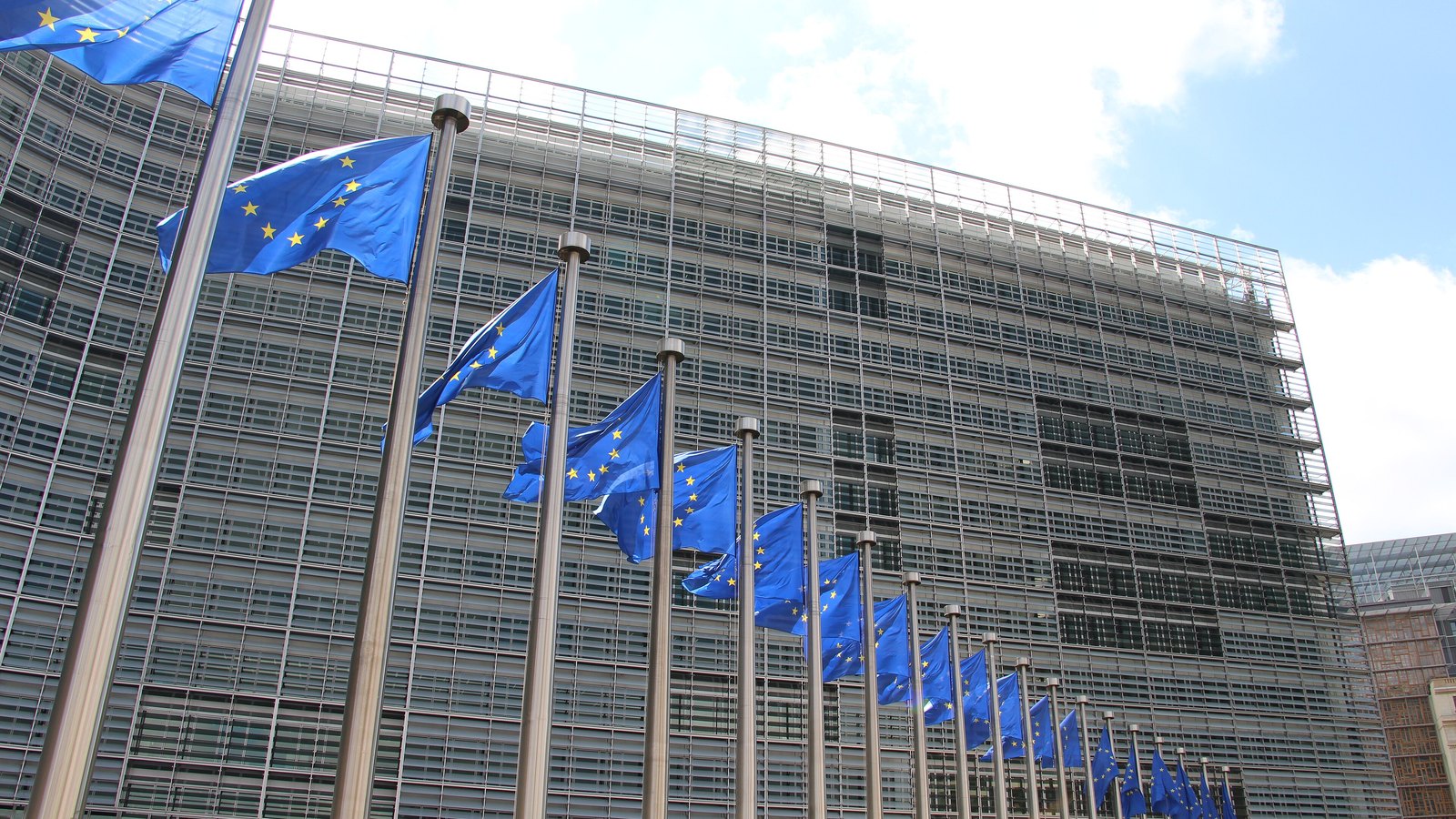
On November 25, 2026, the African Union Commission and the European Commission officially published their renewed 10-year Roadmap for Research and Innovation on Food and Nutrition Security and Sustainable Agriculture (FNSSA) for 2027 to 2036. Unveiled at the AU-EU-Med Innovation Fair in Bari, Italy, the cross-continental framework establishes four strategic research pillars, mandates open-science data sharing, and sets binding coordination mechanisms for upcoming Horizon Europe and African funding instruments.
What happened
The European Commission and the African Union Commission released the finalized strategic framework for the renewed AU-EU FNSSA Roadmap (2027–2036), cementing a ten-year renewal of their flagship multilateral science alliance. As detailed in the official European Commission announcement, the renewed strategy builds directly on the foundational 2016–2026 roadmap, transitioning the bilateral programme into an outcome-oriented deployment framework to tackle mounting climate pressures, biodiversity loss, and food system fragilities across Africa and Europe.
The rollout occurred during the dedicated AU-EU-Med Innovation Fair in Bari, Italy, organized within the Mediterranean Innovation Agrifood Week. The gathering convened diplomats, university rectors, research directors, and agricultural enterprise innovators from 52 African countries and 27 European Union Member States to formalize collaborative mechanisms ahead of the 2027 transition window.
Codified under the AU-EU High-Level Policy Dialogue (HLPD) on Science, Technology and Innovation, the roadmap treats the scientific journey as a seamless continuum linking basic discovery, field validation, multi-actor demonstration, regulatory harmonization, and localized market uptake.
Key details and strategic priorities
The renewed 2027–2036 roadmap concentrates bilateral co-funding and institutional research consortia across four mutually reinforcing thematic priorities:
- Priority 1: Sustainable management of agriculture and food systems. Focuses on agroecological transitions, climate adaptation, soil health restoration, sustainable land and water management, forestry protection, and resilient aquatic food systems.
- Priority 2: Agri-food systems transformation for healthy nutrition shaped by social change. Centers on shifting dietary patterns, micronutrient deficiencies, post-harvest preservation, and the systemic integration of the One Health approach across the food chain.
- Priority 3: Integrated agri-food markets, trade, and innovation deployment. Targets territorial market infrastructure, sanitary and phytosanitary (SPS) compliance, regional trade integration under AfCFTA, and agricultural enterprise scaling.
- Priority 4: Bioeconomy as an engine of sustainable transformation. Directs funding toward bioproduct innovation, agricultural side-stream valorisation, circular bio-refineries, and fossil-resource substitution.
The roadmap embeds two mandatory cross-cutting enablers: digitalization and artificial intelligence (AI), alongside Social Sciences and Humanities (SSH). Digital technologies, including precision sensing and predictive crop modelling, will optimize resource allocation and pest monitoring. SSH disciplines are structurally integrated to guarantee participatory co-design and gender-inclusive adoption pathways for smallholders.
This revamped architecture builds on a portfolio review of the 2016–2026 cycle, which tracked 731 joint collaborative research projects engaging 2,363 distinct organizations. Flagship consortia like the UP-RISE project successfully laid technical foundations for the African Food Safety Agency and hygiene standards for informal markets, while UPSCALE advanced push-pull biocontrol systems in East Africa.
The following table compares the structural parameters and governance mandates between the initial and renewed roadmaps:
| Governance Dimension | Initial Roadmap (2016–2026) | Renewed Roadmap (2027–2036) |
|---|---|---|
| Thematic Architecture | Broad agricultural research pillars with decentralized sub-actions | Four focused priorities: Agroecology, Nutrition/One Health, Markets/Trade, Bioeconomy |
| Enablers | Ad hoc ICT integration; optional social science participation | Mandatory cross-cutting enablers: Digitalization/AI and Social Sciences and Humanities |
| Impact Scope | Scientific publication and piloting (TRL 3–5) | Full innovation journey from laboratory discovery to market scaling (TRL 3–8) |
| Open Science Mandate | Standard open-access journal articles upon project completion | Open-science repositories tracking raw datasets and publication of null results |
| Monitoring System | Periodic portfolio reviews and output counting | Decision-oriented Monitoring, Evaluation, and Learning (MEL) framework with corrective milestones |
| Consortium Co-design | Primarily universities and public agricultural research bodies | Quadruple-helix co-design: academia, farmer federations, industry/SMEs, and regional regulators |
Background and policy context
Inaugurated in 2016 under the AU-EU High-Level Policy Dialogue on Science, Technology and Innovation, the FNSSA partnership has mobilized over EUR 1 billion in collaborative investments drawn from Horizon 2020, Horizon Europe, African national matching contributions, and development funds.
The renewed 2027–2036 roadmap synchronizes bilateral funding with continental strategies. For the African Union, the roadmap aligns with Agenda 2063, the Science, Technology and Innovation Strategy for Africa (STISA 2034), and the Comprehensive Africa Agriculture Development Programme (CAADP) Kampala Strategy and Action Plan 2026–2035, ensuring alignment with national agricultural plans.
For the European Union, the roadmap advances the Strategic Vision for Agriculture and Food, the New Strategic Approach to R&I for sustainable agriculture and forestry, and the AgRI 2040 and Food 2040 frameworks. It also supports the EU Global Gateway strategy, the Clean Industrial Deal, and United Nations Sustainable Development Goal 2 (Zero Hunger).
Stakeholder and sector reaction
Participants at the Bari launch stressed that the ten-year commitment delivers long-term institutional stability. European Commission Directorate-General for Research and Innovation officials noted that the framework shifts bi-continental cooperation from isolated research papers to coordinated solutions linked to enterprise and policy.
Leaders from the International Research Consortium on FNSSA (IRC-FNSSA) welcomed the explicit mandate for co-ownership. They noted that past North-South research often suffered from asymmetric structures where European entities led proposal design while African partners were limited to local trial execution. The renewed roadmap enforces shared agenda-setting, mutual budget control, and equitable intellectual property stewardship.
African agricultural science federations praised the bioeconomy and trade pillars, noting that local post-harvest valorisation and AfCFTA standards enable research organizations to deliver tangible economic returns for rural farming communities.
What it means for researchers, universities and research offices
The renewed roadmap introduces specific operational requirements for university research offices and sponsored project teams:
- Equitable consortium governance: Proposals must demonstrate genuine co-leadership between African and European institutions. Sponsored projects offices must formalize intellectual property terms, co-authorship policies, and shared data rights through a robust institutional consortium agreement before project initiation.
- Open science and negative results: Consortia must implement rigorous open-science protocols, including the public deposition of raw datasets and systematic logging of null results and implementation challenges. Research teams must submit a compliant data management plan outlining repository hosting, FAIR principles, and genetic resource protections.
- Subaward compliance and financial oversight: Multi-country fund distribution requires enhanced due diligence. European coordinators and African co-leads must execute standardized pre-award evaluations using an institutional subrecipient commitment form to verify financial audits, procurement standards, and international reporting systems.
- Interdisciplinary SSH integration: Agricultural and biological grant applications must incorporate socio-economic analysis, community adoption models, and gender metrics, necessitating cross-faculty collaboration between agronomists and social scientists.
What happens next
Following the Bari Innovation Fair unveiling on November 25, 2026, the AU-EU FNSSA Working Group and IRC-FNSSA will advance operational rollout across several target milestones:
- December 2026: Synthesis of stakeholder sessions from the Mediterranean Innovation Agrifood Week and publication of final technical annexes.
- First Quarter 2027: Finalization of the decision-oriented Monitoring, Evaluation, and Learning (MEL) indicators across ongoing partnership cohorts.
- Mid-2027: Release of dedicated AU-EU collaborative topics under the Horizon Europe 2025–2027 work programmes alongside matching African calls.
- Late 2027 to 2028: Formal transition of bilateral governance structures to oversee funded projects and prepare multi-annual programming for Framework Programme 10 (FP10).
Sources
- European Commission Directorate-General for Research and Innovation: African Union and European Union publish their renewed Roadmap for research and innovation on food and nutrition security and sustainable agriculture, checked 2026-11-26
- African Union: Agenda 2063: The Africa We Want, checked 2026-11-26
- Mediterranean Innovation Agrifood Week: About MIAW – Innovation week, checked 2026-11-26
- UP-RISE Consortium: About UP-RISE | UP-RISE Food Safety, checked 2026-11-26






