
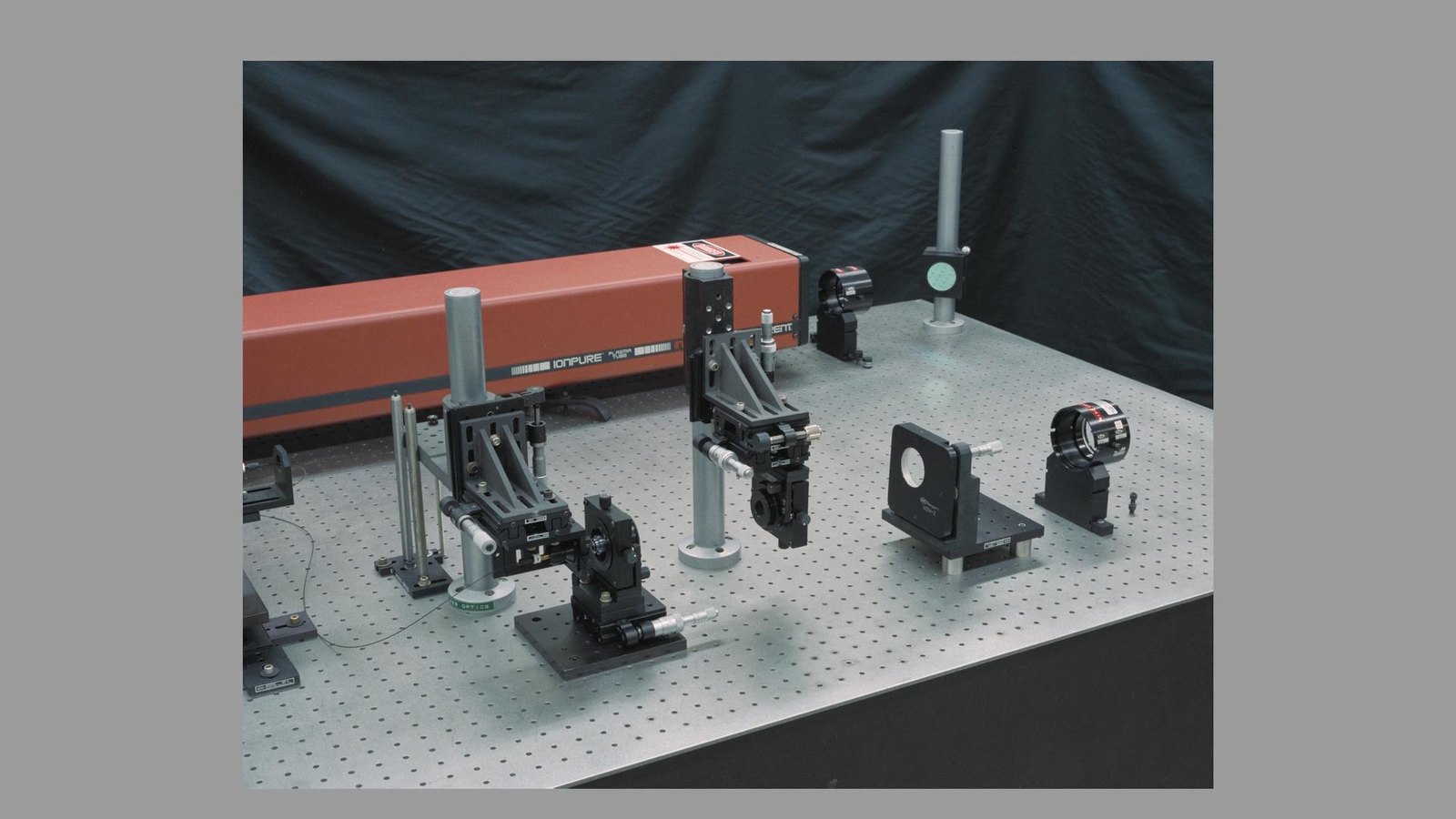
On November 26, 2026, UK Defence Innovation and the Defence Science and Technology Laboratory released updated competition documentation for a £2.8 million research initiative, funding advanced electro-optic and infrared sensing technologies across contested battlefield domains to accelerate university and deep-tech innovations into frontline defence systems within 12 to 24 months.
Competition Scope and Dual-Stage Structure
The procurement framework, published in the official Electro Optic Sensing Technologies competition document, establishes a two-stage application procedure designed to evaluate concepts efficiently. Run under the Electro Optic Sensing project, the funding call seeks innovative hardware and software capable of enhancing electro-optic and infrared (EOIR) sensing in contested, degraded environments where radio-frequency systems encounter severe interference.
Detailed rules on the Electro Optic Sensing Technologies notice page confirm that UKDI expects to fund five to seven proposals, with a cost limit of £600,000 per project excluding value-added tax. Funded efforts must advance between Technology Readiness Levels (TRL) 3 and 6, progressing by at least one TRL. Stage 1 bids require an idea overview and outline plan submitted via the UKDI portal by December 9, 2026, at 12:00 Midday GMT, with screening outcomes announced on December 16. Invited innovators then submit full proposals by February 23, 2027, ahead of contract starts in May 2027.
This phased selection mirrors early-stage defence screening practices, much like submitting a concept-focused DARPA BAA white paper before preparing resource-intensive technical bids. Applicants provide a Proposal Value Proposition Statement, an abstract, and delivery plans outlining their approach to battlefield operational challenges.
Key Technical Challenges and Target Parameters
The initiative addresses six distinct technical challenges across terrestrial, maritime, and aerial operating domains. Innovators may submit up to three separate, standalone bids targeting specific capability gaps.
| Challenge Area | Domain | Technical Focus | Target Metric |
|---|---|---|---|
| Infrared Active Imaging | Land / Air | Penetrate fog and foliage using mid-wave (2–5 µm) and long-wave (7–8 µm) infrared bands | Identify tanks at 4 km through 70% foliage occlusion; 30 cm spatial resolution at 10 Hz |
| Laser Threat Warning | Sea / Air | Detect, classify, and locate continuous-wave and pulsed lasers; counter optical jamming | Coverage across visible to extended SWIR spectrum; sensor electromagnetic shielding |
| Wide-Area Sensing | Land / Air | Maintain cost-effective day and night surveillance over large expanses (tens of km²) | Low false-alarm rate; automated edge detection; handoff to narrow-field identification systems |
| Dim and Distant Targets | Littoral / Air | Detect and classify sub-pixel and few-pixel targets at optical sensor range limits | Reliable tracking of low-flying aerial threats and slow drones without radar cross-cueing |
| Underwater Sensing | Maritime | Optical spectroscopy for temperature and salinity depth profiling through turbid water | Real-time depth profiles beyond 50 m; temperature accuracy under 0.2°C; 3D imaging past 20 m |
| Automated Data Processing | Cross-Domain | Automatic target recognition for 3D LiDAR and machine learning for hyperspectral imagery | Integration with 50+ military vehicle models; small-target detection in high-dimensional data |
For Challenge 1, laser source development is explicitly excluded; Dstl supplies calibrated pulsed laser sources at 100 kHz (3.5 µm and 7.8 µm, 100 ps pulse) and 100 Hz (2.1 µm and 3.9 µm, 10 ns pulse) with approximately 100 mW average power. Bidders must focus on rapid 1D scanning or 2D focal-plane arrays operating at 10 Hz rather than bulky two-dimensional mechanical scanners.
For data processing challenges, Dstl provides government-furnished baseline hyperspectral datasets comprising roughly 150 images across visible-near infrared, short-wave infrared, and long-wave infrared spectra. This approach connects with broader defence methodologies for DARPA AI development, allowing researchers to train algorithms on real-world military signatures without independently sourcing proprietary sensor data.
Background and Strategic Sensing Priorities
Electro-optic and infrared sensors provide crucial passive intelligence, allowing units to detect and track threats without broadcasting detectable electromagnetic signatures. Modern operational environments, however, feature dense foliage, smoke, active laser dazzlers, and uncrewed aerial systems designed to evade standard optical detection.
As the Ministry of Defence science and technology organisation, the Defence Science and Technology Laboratory oversees national sensor modernisation from Porton Down. The EOS call translates fundamental laboratory research into deployable frontline prototypes, ensuring sovereign capability across contested domains.
These priorities mirror capability roadmaps outlined in allied assessments of DoD critical technology areas, particularly in advanced sensing, trusted artificial intelligence, and directed energy protection. Furthermore, alignment with multilateral frameworks under the NATO innovation and technology adoption initiative ensures that UK-developed sensor architectures can support interoperability across Five Eyes and allied coalitions.
Industry and Academic Reception
Photonics developers and defence consortia have welcomed the call structured progression, highlighting the value of non-dilutive capital to de-risk optical technologies between TRL 3 and 6. Academic labs frequently face a development cliff when transitioning benchtop optical instruments to ruggedised prototypes suitable for field trials.
The provision of standardised government-furnished laser sources has drawn particular praise from deep-tech startups. By removing the need to build specialized illumination hardware, the programme lowers entry barriers for software developers and detector specialists focusing on low-noise receivers and edge-computing sensor fusion.
Implications for Researchers and University Offices
The call welcomes bids from UK registered companies, sole traders, and higher education institutions. Commercial agreements will operate under the UKDI Innovation Standard Contract, incorporating DEFCON 705 intellectual property provisions. Under DEFCON 705, contractors retain foreground intellectual property while granting the UK Government royalty-free rights for defence research and operational use.
For academic researchers receiving foundational grants from the Engineering and Physical Sciences Research Council, this competition establishes a direct translation mechanism into defence capabilities. University research offices must ensure compliance with security mandates, including Baseline Personnel Security Standard clearance for personnel accessing the UKDI workspace at Imperial College London.
Spinouts and university laboratories must also fulfill cybersecurity governance under the Defence Cyber Security Model (Def Stan 05-138) following award notification. Managing dual-use technology transfer of this complexity parallels navigating fundamental physical science awards in the DARPA DSO pipeline, requiring rigorous oversight of research assets.
Additionally, universities handling sensitive photonics technologies must ensure robust compliance mechanisms, reflecting protective standards similar to those in the DARPA Countering Foreign Influence Program to safeguard sovereign technical intellectual property across multi-institution teams.
Submission Timetable and Next Steps
Innovators intending to bid should prepare for the following procedural milestones:
- Stage 1 Submission Deadline: December 9, 2026, at 12:00 Midday GMT.
- Stage 1 Decisions Released: December 16, 2026, at 12:00 Midday GMT.
- Stage 2 Proposal Call Opens: January 6, 2027, for invited applicants.
- Collaboration Survey Cut-off: February 18, 2027, for teaming arrangements.
- Stage 2 Full Bid Deadline: February 23, 2027, at 12:00 Midday GMT.
- Assessment Outcome Notification: April 30, 2027.
- Contract Commencement: Aiming for May 2027 with 12 to 24 month delivery timelines.
To support consortia formation between academic photonics groups and industrial primes, UKDI is running a collaboration survey closing February 18, 2027, allowing potential partners to coordinate capabilities before final Stage 2 submissions.
Sources
- GOV.UK: Electro Optic Sensing Technologies: Competition Document, checked 2026-11-26
- GOV.UK: Electro Optic Sensing Technologies Notice and Guidance, checked 2026-11-26
- Defence Science and Technology Laboratory: About Dstl and Defence Research Facilities, checked 2026-11-26
- Engineering and Physical Sciences Research Council (EPSRC): Research Remit and Capability Programmes, checked 2026-11-26
- NATO: Innovation and Technology Adoption Policy, checked 2026-11-26





