
On 27 November 2026, the U.S. Fish and Wildlife Service published proposed rules under the Endangered Species Act in the Federal Register for the piebald madtom, streaked horned lark, and companion regional taxa across five states. The actions establish Section 4(d) protections, define critical aquatic and grassland habitats, and alter scientific collection permitting and compliance protocols for university researchers and field biologists.
Regulatory Actions and Proposed Classifications
The regulatory package issued by the U.S. Fish and Wildlife Service (USFWS) advances long-pending listing determinations for rare freshwater, avian, and invertebrate taxa. Leading the announcements is Document 2026-24292 (Docket No. FWS-R4-ES-2026-1420), which proposes to list the piebald madtom (Noturus gladiator) as a threatened species with protective regulations under Section 4(d). The freshwater catfish, endemic to the Hatchie and Loosahatchie river systems in western Tennessee and northern Mississippi, had been under petition review following significant contractions in occupied stream reaches. Alongside the listing, the agency proposed 159 river miles of critical habitat across both states to safeguard spawning gravels and woody debris snags.
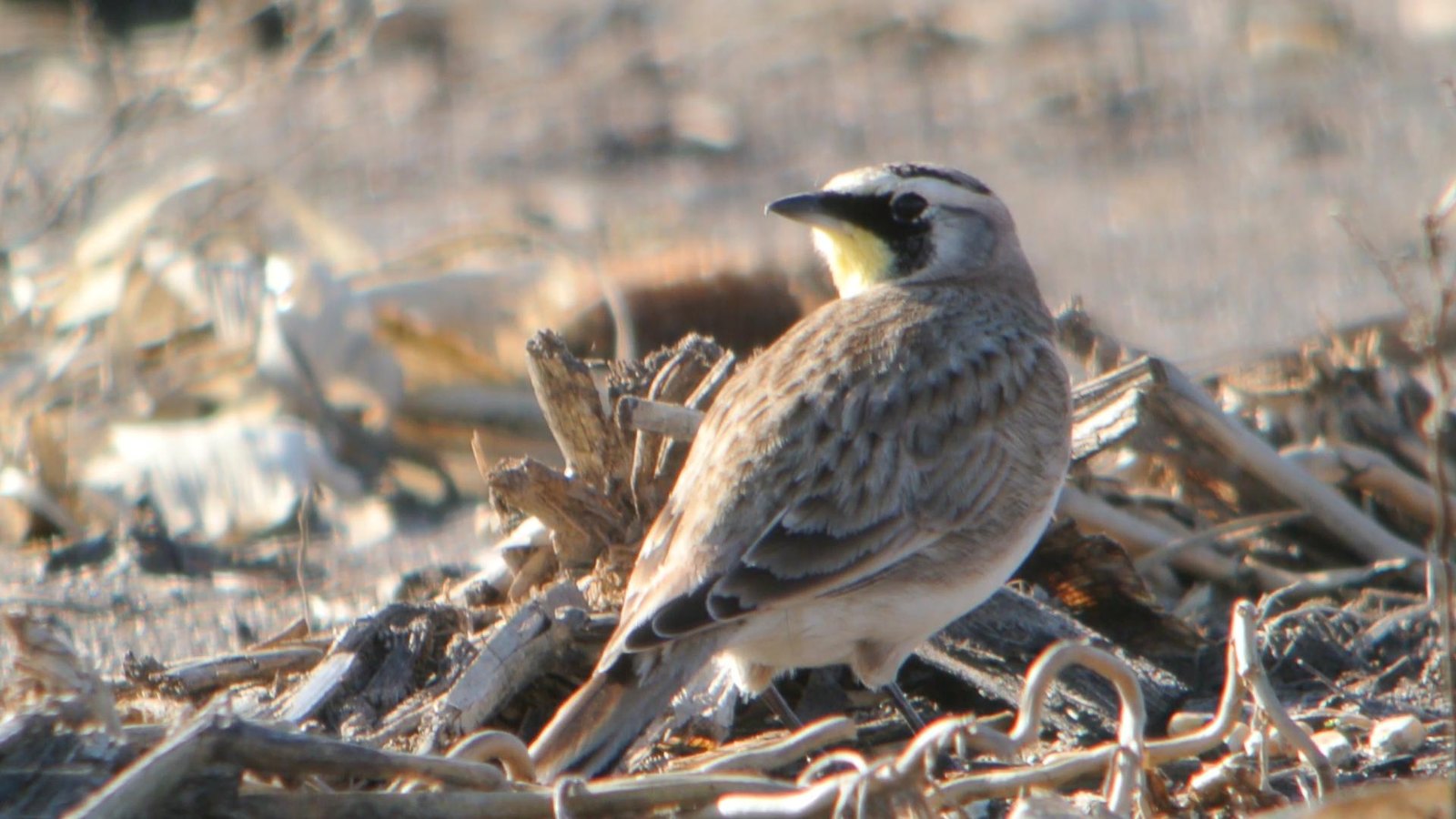
Concurrently, the agency issued Document 2026-24304 (Docket No. FWS-R1-ES-2026-3862) in the Federal Register for the streaked horned lark (Eremophila alpestris strigata). This rulemaking maintains the Pacific Northwest songbird as a threatened species while updating its Section 4(d) framework across Washington and Oregon, incorporating multi-year demographic surveys from the Willamette Valley, Puget Sound prairies, and lower Columbia River islands.
The third action, Document 2026-24219 (Docket No. FWS-R2-ES-2024-0158), proposes threatened status with a Section 4(d) rule for Ferris’s copper (Lycaena ferrisi), an endemic butterfly confined to subalpine meadows in Arizona’s White Mountains. The service determined that designating critical habitat is not prudent, warning that publishing detailed maps would invite unauthorized collection. The determinations also reflect broader regional status evaluations, including findings for southeastern forest species such as the Ozark chinquapin (Castanea ozarkensis), where biologists assessed root-sprouting resilience.
Key Provisions and Docket Specifications
| Species and Taxon | Proposed Status | Docket and RIN | Geographic Scope | Critical Habitat Proposal | Comment Deadline |
|---|---|---|---|---|---|
| Piebald madtom (Noturus gladiator) | Threatened with 4(d) Rule | FWS-R4-ES-2026-1420 RIN 1018-BH43 |
Hatchie and Loosahatchie basins (TN, MS) | 159 river miles proposed | 29 January 2027 |
| Streaked horned lark (Eremophila alpestris strigata) | Threatened with Revised 4(d) Rule | FWS-R1-ES-2026-3862 RIN 1018-BJ18 |
Willamette Valley, Puget Sound, Columbia River (OR, WA) | Designated in 2013 (unchanged) | 29 January 2027 |
| Ferris’s copper (Lycaena ferrisi) | Threatened with 4(d) Rule | FWS-R2-ES-2024-0158 RIN 1018-BH95 |
White Mountains montane meadows (AZ) | Not prudent (poaching risk) | 29 January 2027 |
The proposed rules open a 60-day public comment window ending on 29 January 2027 at 11:59 p.m. Eastern Time, following formal Federal Register publication on 30 November 2026. Requests for public hearings must be received in writing by 14 January 2027. Under the U.S. Fish and Wildlife Service Endangered Species Program, the Section 4(d) framework customizes prohibitions to support beneficial land use and scientific restoration activities.
For the piebald madtom, the 4(d) rule prohibits direct take, commercial trade, and destructive channel modification while excepting state-approved stream restoration and standard agricultural conservation practices. For the streaked horned lark, the rule evaluates agricultural practices in the Willamette Valley and wildlife hazard management at airfields to balance flight safety with ground-nesting protections.
Conservation History and Ecological Drivers
The listings respond to mounting environmental pressures documented across regional watersheds and open landscapes. Described taxonomically in 2004 after separation from the northern madtom, the piebald madtom relies on clear, flowing lowland runs with stable sand-clay substrates. Extensive channelization, agricultural sedimentation, and riparian clearing have degraded nesting habitat, while rising stream temperatures and altered baseflows heighten extinction vulnerability.
In the Pacific Northwest, the streaked horned lark has lost more than 90 percent of its native grassland habitat to fire suppression, agricultural conversion, and urban expansion. Field biologists with the Washington Department of Fish and Wildlife report that surviving breeding populations now rely heavily on working landscapes, including active airfields, commercial farms, and dredge spoil islands along the Columbia River.
Prairie restoration research led by the Institute for Applied Ecology has explored chemical fallow and native grass establishment at sites like Herbert Farm to transition larks away from high-risk fields. Nesting dynamics detailed by the Audubon Field Guide demonstrate that ground clutches remain highly vulnerable to early tilling, predation, and mowing.
Agency Findings and Scientific Stakeholder Reaction
Regulatory filings emphasize collaborative conservation mechanisms across federal and state jurisdictions. Melissa Moore, Acting Field Supervisor at the Mississippi Ecological Services Field Office, stated in the filing that the piebald madtom’s restricted distribution makes it acutely susceptible to water quality shifts, noting that critical habitat designation establishes clear benchmarks for inter-agency consultation on federal water projects.
In Oregon, Field Supervisor Kessina Lee highlighted that revising the streaked horned lark rule allows the service to integrate range-wide demographic data while coordinating conservation measures with agricultural producers and airport authorities. In Arizona, Field Supervisor Heather Whitlaw noted that while Ferris’s copper requires habitat protection from wildfire and drought, withholding spatial mapping prevents commercial exploitation by private collectors.
Academic researchers and conservation groups commended the regulatory actions. University ichthyologists noted that federal listing will catalyze targeted survey funding, while agricultural extension specialists welcomed tailored 4(d) exemptions that protect cooperative farmers from unintended take liability.
Implications for University Research Offices and Field Biologists
The proposed classifications carry immediate compliance obligations for academic research offices, field stations, and university investigators. Faculty conducting aquatic sampling, seining, or electrofishing in Hatchie or Loosahatchie reaches must obtain Section 10(a)(1)(A) recovery permits once listing takes effect.
Institutional compliance committees must review active protocols. Protocols administered by university Institutional Animal Care and Use Committee (IACUC) panels must incorporate federal take thresholds and handling precautions for listed vertebrates, including handling limits during field tagging or physiological monitoring.
Data governance and field stewardship procedures must also be updated. Biodiversity observations should be deposited in a trustworthy data repository, with occurrence records routed through the Global Biodiversity Information Facility (GBIF). However, investigators must apply spatial fuzzing to sensitive locality records for Ferris’s copper and madtom nests. Sponsored research offices must ensure that institutional data management plans incorporate these federal compliance standards.
Next Steps, Public Hearings, and Comment Deadlines
Public comments on all three proposals must be submitted through regulations.gov by 29 January 2027 using dockets FWS-R4-ES-2026-1420 (piebald madtom), FWS-R1-ES-2026-3862 (streaked horned lark), or FWS-R2-ES-2024-0158 (Ferris’s copper). Requests for public hearings must be received in writing by 14 January 2027.
Over the next 12 months, USFWS will evaluate submitted biological data and independent peer reviews before issuing final listing determinations and critical habitat rules, expected in late 2027.
Sources
- Federal Register: Endangered and Threatened Species: Threatened Species Status with Section 4(d) Rule for the Piebald Madtom, checked 2026-11-27
- Federal Register: Endangered and Threatened Species: Status for Streaked Horned Lark with a Section 4(d) Rule, checked 2026-11-27
- U.S. Fish & Wildlife Service: Endangered Species, checked 2026-11-27
- Washington Department of Fish & Wildlife: Streaked horned lark, checked 2026-11-27
- Institute for Applied Ecology: Streaked Horned Lark Monitoring at Herbert Farm Natural Area, 2021, checked 2026-11-27
- Audubon Field Guide: Horned Lark, checked 2026-11-27






