
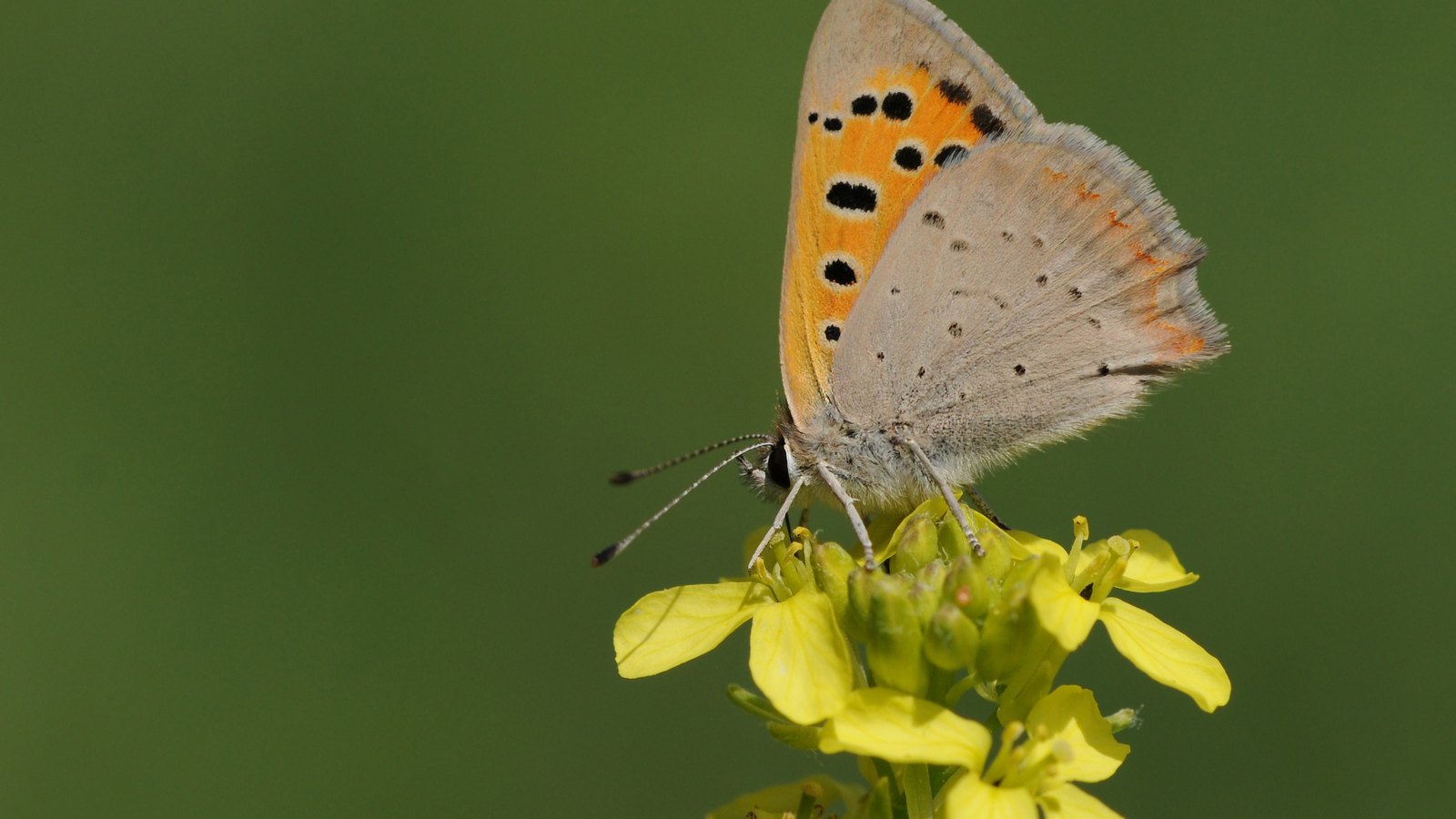
On November 27, 2026, the U.S. Fish and Wildlife Service proposed threatened species status under the Endangered Species Act for Ferris’s copper butterfly (Lycaena ferrisi), issuing tailored Section 4(d) conservation rules across east-central Arizona. The 68-page rule mandates federal recovery permits for university entomologists and field researchers studying the montane cienega pollinator, barring commercial collection while protecting scientific monitoring.
Threatened Listing and Section 4(d) Protections for Montane Butterfly
The U.S. Fish and Wildlife Service (USFWS) filed a 68-page proposed rule on public inspection on November 27, 2026, scheduled for official publication in the Federal Register on November 30, 2026 (Docket No. FWS-R2-ES-2024-0158, RIN 1018-BH95). Under the statutory authority of 16 U.S. Code § 1533, the agency determined that Ferris’s copper butterfly warrants listing as a threatened species, concluding a 12-month review initiated by a petition from Forest Guardians (now WildEarth Guardians).
Ferris’s copper is a rare lycaenid butterfly endemic to the White Mountains of Apache and Greenlee Counties in east-central Arizona. The species occupies high-elevation perennial wet meadows, cienegas, and low-order montane streams between 6,200 and 9,440 feet (1,900 to 2,800 meters) elevation. Its documented range spans 86 watersheds across 2,520 square miles (6,527 square kilometers), overlapping the Apache-Sitgreaves and Gila National Forests as well as reservation lands of the White Mountain Apache and San Carlos Apache Tribes.
Alongside the listing, USFWS proposed a tailored protective rule under Section 4(d) of the Endangered Species Act (ESA), codified at 50 CFR § 17.47(l). The rule applies statutory prohibitions against take, import, export, interstate shipment, and commercial sale, while exempting beneficial habitat restoration, wildfire fuels reduction, emergency firefighting, and lawful outdoor recreation.
Species Status Assessment and Watershed Viability Projections
The biological basis of the listing rests on a Species Status Assessment (SSA) report evaluating the species’ viability through resiliency, redundancy, and representation. Ferris’s copper exhibits an obligate dependency on dock host plants in the genus Rumex (principally Rumex occidentalis, western dock), where females deposit eggs and larvae feed through successive molts. The species also requires nectar-producing wildflowers and sufficient winter snowpack to insulate overwintering eggs against desiccation and sub-zero extremes.
The SSA modeled future habitat condition across 86 watersheds under two climate pathways (SSP2-4.5 and SSP5-8.5) projected to 2050 and 2090. Primary stressors include reduced water availability from regional drought, groundwater pumping for agriculture and energy, woody plant encroachment into wet meadows, and high-intensity wildfires. While 48 watersheds currently provide optimal or suitable habitat, predictive models project that by 2050, more than 73 percent of watersheds become unsuitable under moderate warming, with all suitable wet meadow habitat lost under high emissions by 2090.
| Condition Category | Current Baseline | Scenario 1: SSP2 (2050) | Scenario 2: SSP2 (2090) | Scenario 3: SSP5 (2050) | Scenario 4: SSP5 (2090) |
|---|---|---|---|---|---|
| Optimal Watersheds | 9 | 7 | 6 | 6 | 0 |
| Suitable Watersheds | 39 | 9 | 8 | 16 | 0 |
| Marginal Watersheds | 28 | 3 | 1 | 1 | 0 |
| Not Suitable Watersheds | 10 | 67 | 71 | 63 | 86 |
| Total Evaluated Watersheds | 86 | 86 | 86 | 86 | 86 |
Taxonomic Distinctiveness and Montane Cienega Vulnerabilities
Ferris’s copper was originally recognized as a morphologically distinct sister taxon to the ruddy copper complex (Lycaena rubidus) in 1977, distinguished by unique genital morphology and wing melanism resulting from pre-Pleistocene reproductive isolation. Subsequent comparative larval instar studies confirmed primitive morphological traits consistent with sister-species divergence, leading the Service to formally adopt Lycaena ferrisi as a valid species in the SSA.
The species profile maintained in the U.S. Fish and Wildlife Service ECOS system records the butterfly as a narrow Arizona endemic. High-elevation cienegas depend on shallow groundwater and persistent saturation. When conifers encroach on open wet meadows due to fire suppression and water diversion, the canopy outcompetes Rumex dock colonies, narrows adult flight corridors, and fragments metapopulations.
USFWS determined that designating critical habitat is “not prudent” under ESA Section 4(a)(3). Documented listings on commercial insect vendor sites, such as BicBugs and Givenchy Sale, demonstrate that pinned specimens are actively collected and sold. Because populations are localized and sedentary, publishing maps and coordinates would expose colonies to targeted commercial collection, exacerbating extinction risks without providing additional conservation benefits on public lands.
Agency Findings and Entomological Community Reactions
In the rulemaking notice, USFWS Director Brian Nesvik emphasized that tailoring Section 4(d) regulations focuses enforcement on major threats—unlawful take and commercial trade—while providing flexibilities for beneficial ecological activities. Firefighting and meadow rehabilitation directly support butterfly persistence and can proceed without unnecessary administrative delay.
During peer review of the draft SSA, five independent entomologists and ecologists evaluated the methodology. Reviewers concurred with the biological findings while recommending expanded analysis of ant mutualisms in larval survival, nonnative plant competition, and livestock grazing impacts. The Service incorporated these recommendations into SSA Version 1.1, affirming that invasive weed removal and fuel breaks offer net conservation gains.
Invertebrate conservation groups supported listing the butterfly but noted the challenges of critical habitat exemption. While entomologists agree that commercial specimen poaching poses real hazards to rare coppers, researchers highlighted that withholding critical habitat places greater responsibility on Forest Service managers to protect hydrologic corridors against surface water diversion and mining runoff.
Compliance Mandates for Academic Entomologists and Field Stations
The proposed listing establishes direct compliance requirements for university entomology departments, evolutionary biology laboratories, and field stations working in the White Mountains. Because the Section 4(d) rule extends take prohibitions, researchers may no longer capture, handle, or sacrifice specimens without federal authorization.
Under 50 CFR § 17.32, academic investigators and conservation geneticists must obtain Section 10(a)(1)(A) scientific recovery permits prior to netting adults or conducting larval surveys. University research offices must anticipate permit review timelines of three to six months, incorporating clearance windows into grant schedules. Collection of voucher specimens will face strict scrutiny requiring proof that lethal sampling directly aids species recovery.
Museum curators and scientific repositories must also review custody procedures. University insect collections handling tissue samples or historical specimens must execute formal material transfer agreements to verify provenance and ensure compliance with interstate transport bans. When depositing occurrence data with the Global Biodiversity Information Facility, curators must document collection dates to demonstrate lawful acquisition.
Field researchers installing monitoring instruments or botanical exclosures in occupied drainages must address endangered species requirements in their data management plans. Because public disclosure of exact locations facilitates illegal collection, investigators must implement strict data curation measures, including coordinate fuzzing in published repositories. In addition, university biorepositories holding any Ferris’s copper biospecimen must ensure inventory tracking aligns with federal regulatory standards.
Public Comment Deadlines and Implementation Timeline
The proposed rule establishes a 60-day public comment period following official Federal Register publication on November 30, 2026, closing in late January 2027. Comments must be submitted electronically through the federal eRulemaking portal on Docket No. FWS-R2-ES-2024-0158 or by mail to the USFWS Policy and Regulations Branch in Falls Church, Virginia.
Requests for public hearings must be submitted in writing within 45 days of publication. USFWS specifically invited scientific comments on the taxonomic boundary of the ruddy copper complex, microhabitat ant associations, and compliance costs for Section 10 scientific permits. Following the comment period, the agency will evaluate stakeholder input and issue a final determination within 12 months.
Sources
- Federal Register: Public Inspection: Endangered and Threatened Species: Status with Section 4(d) Rule for Ferris’s Copper, checked 2026-11-28
- Regulations.gov: Proposed Rule: Threatened Species Status with Section 4(d) Rule for Ferris’s Copper (Docket FWS-R2-ES-2024-0158), checked 2026-11-28
- U.S. Fish and Wildlife Service: Environmental Conservation Online System Species Profile for Ferris’s Copper (Lycaena ferrisi), checked 2026-11-28
- Legal Information Institute: 16 U.S. Code § 1533 – Determination of Endangered Species and Threatened Species, checked 2026-11-28
- Legal Information Institute: 50 CFR § 17.32 – Permits for Threatened Species, checked 2026-11-28






