
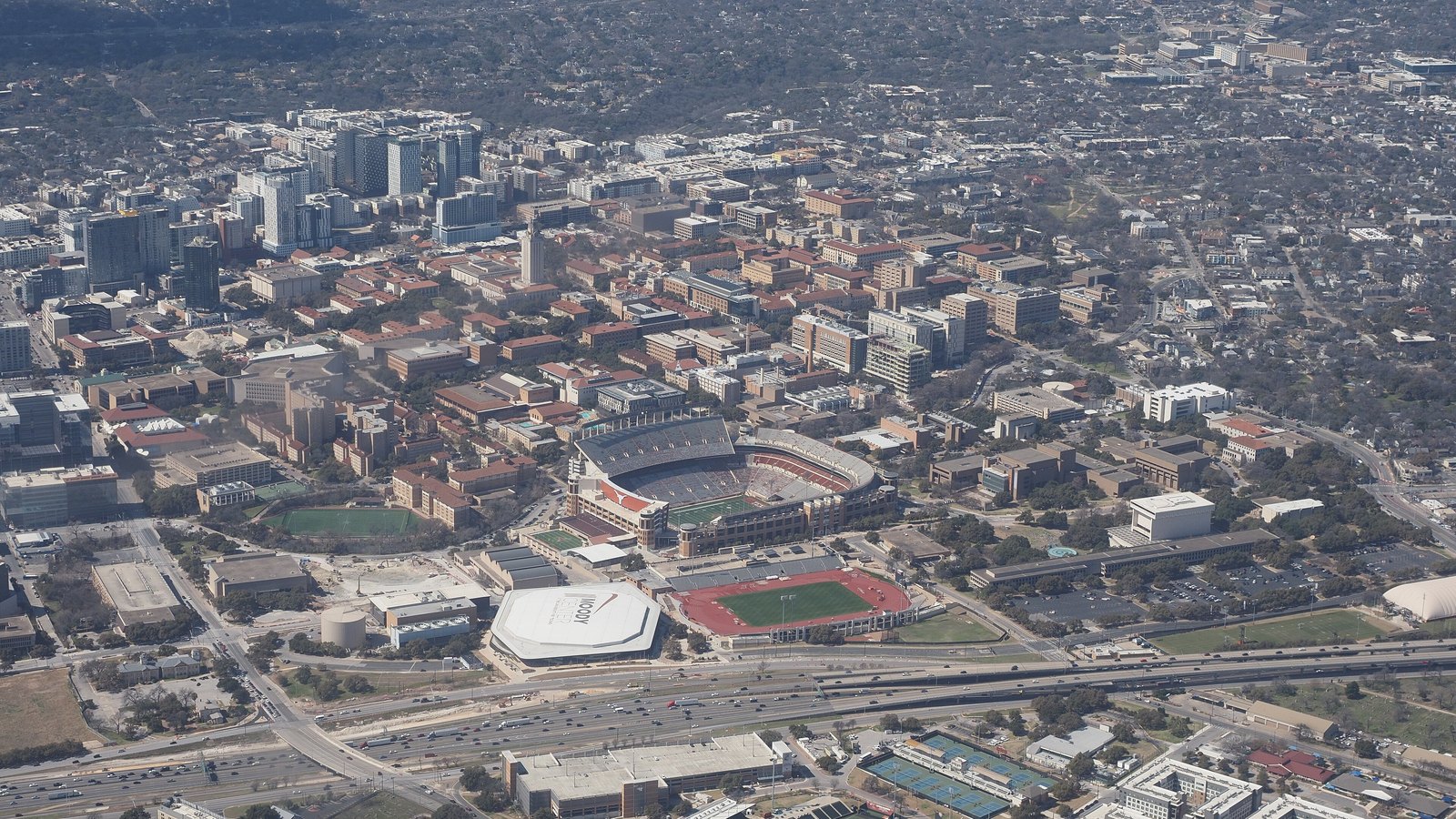
The University of Texas at Austin officially opened the Horizon supercomputer at the Texas Advanced Computing Center in November 2026, debuting as the nation’s fastest academic system at No. 24 on the global TOP500 list. Operating from a dedicated liquid-cooled facility in Round Rock, Texas, the National Science Foundation-backed platform delivers 4,000 advanced GPUs to academic teams conducting open scientific inquiries across climate modeling, power-grid stability, and biomolecular simulation.
Horizon supercomputer launch and November 2026 TOP500 debut
The Texas Advanced Computing Center (TACC) at the University of Texas at Austin launched Horizon to its initial wave of academic researchers on November 17, 2026, marking the operational start of the primary instrument within the National Science Foundation’s Leadership-Class Computing Facility (LCCF). The launch coincided with the 68th edition of the international TOP500 supercomputer rankings announced at the SC26 conference in Chicago, where Horizon debuted at No. 24 globally. This placement made Horizon the highest-ranked academic supercomputer in the United States, ahead of Texas A&M University’s VISION system at No. 76.
Horizon’s commissioning represents a major expansion of open civilian scientific infrastructure. While commercial AI datacentres and federal weapons laboratories have captured leading positions on global lists, Horizon is dedicated entirely to university faculty, postdoctoral fellows, and research groups pursuing non-classified basic and applied science. As reported in casrai coverage of the 68th TOP500 supercomputer rankings at SC26, international turnover among top supercomputers reached a historic low, making Horizon’s arrival at No. 24 a standout development for academic computational capacity.
Technical architecture and Round Rock facility specifications
Constructed through a hardware partnership with Dell Technologies, NVIDIA, VAST Data, Spectra Logic, Versity, and Sabey Data Centers, Horizon is housed in a newly developed 20-megawatt colocation data centre in Round Rock, Texas. The facility employs direct liquid cooling to support extreme density, achieving up to a sixfold improvement in energy efficiency relative to conventional academic data halls.
Phase 1 provides immediate access to 4,000 NVIDIA Blackwell GPUs organized across 1,000 Grace Blackwell nodes (GB200 NVL4 platform), interconnected by NVIDIA Quantum-X800 InfiniBand networking running at 800 Gb/s per port with in-network computing features. Primary storage consists of a 400-petabyte all-flash VAST Data NVMe cluster delivering over 12 terabytes per second of aggregated read throughput, supported by Spectra Logic and Versity hierarchical archiving systems.
The table below summarizes the key architectural specifications of Horizon Phase 1 compared with TACC’s retired Frontera system.
| System Characteristic | Horizon (Phase 1, Launched Nov 2026) | Frontera (Retired Oct 2026) |
|---|---|---|
| Peak AI Throughput | 80 Exaflops FP4 / 20 Exaflops BF16 | Unaccelerated CPU baseline (<0.1 Exaflops) |
| Simulation Performance (FP64) | 140–300 Petaflops (10x Frontera throughput) | 23.5 Petaflops Linpack (38.7 Petaflops Peak) |
| GPU Compute Infrastructure | 4,000 NVIDIA Blackwell GPUs (GB200 NVL4) | 360 NVIDIA Quadro RTX 5000 GPUs |
| System Interconnect | NVIDIA Quantum-X800 InfiniBand (800 Gb/s) | Mellanox HDR InfiniBand (200 Gb/s) |
| Primary Storage Tier | 400 PB All-Flash NVMe (>12 TB/s read) | 50 PB Lustre Hybrid Disk/Flash Storage |
| Facility Location & Cooling | 20 MW Liquid-Cooled Facility (Round Rock, TX) | Air-Cooled Campus Machine Room (Austin, TX) |
| TOP500 Standing at Debut | No. 24 Worldwide (No. 1 US Academic) | No. 5 Worldwide (June 2019) |
Succession from Frontera and the NSF LCCF mandate
Horizon serves as the direct operational successor to Frontera, which was decommissioned in October 2026 after more than seven years of continuous service. Originally funded through a 2018 NSF award, Frontera processed over 8 million compute jobs across fields such as infectious disease modeling, stellar astrophysics, and quantum chemistry. However, modern scientific workloads increasingly combine large-scale numerical PDEs with transformer foundation models and multi-modal training sets, requiring modern heterogeneous superchips.
The National Science Foundation committed $457 million over ten years to build and operate the Leadership-Class Computing Facility at TACC, positioning Horizon as a flagship national science asset alongside facilities like the James Webb Space Telescope. By anchoring Horizon within the broader national data infrastructure, the NSF ensures university scientists maintain parity with corporate AI laboratories while preserving rigorous open data and publication standards.
Institutional leadership and federal scientific response
University leaders highlighted Horizon’s balanced architecture, pointing out that national challenges require coupled simulation and AI approaches rather than isolated compute clusters. Fernanda Leite, vice president for research at UT Austin, emphasized that the platform empowers researchers to address high-stakes societal questions that cannot be tested experimentally in physical laboratories.
“Horizon is built for questions that matter most to Texas and the nation but are too big, too complex or too risky to test in a lab,” Leite said in the university announcement. “Researchers also could use the system to analyze large amounts of biological data to help advance treatments for deadly diseases.”
Dan Stanzione, executive director of TACC and associate vice president for research at UT Austin, framed Horizon as a generational leap for the academic research enterprise. “We have built an engine for discovery, a balanced system for both AI and simulation, which will unlock entirely new approaches to scientific problems and fundamentally change the pace and scale at which science is done,” Stanzione stated.
Implications for academic research teams and resource allocations
For principal investigators, research deans, and sponsored project offices, Horizon provides zero-cost compute allocations funded directly by federal appropriations. Unlike commercial cloud credits with variable egress fees, Horizon cycles are awarded through merit-based peer review.
Allocations are administered under the NSF LCCF governance framework. During the Early Operations Period, TACC opened the Leadership Resource Allocation (LRAC) track with specific operational requirements:
- Allocation Scope: LRAC awards grant between 125,000 and 500,000 Service Units (SUs) on Horizon for six-month project windows, with optional allocations of up to 50,000 SUs on TACC’s Vista system.
- Funding Prerequisites: Applicants must hold current, peer-reviewed federal research grants (e.g., NSF, NIH, or DOE) sufficient to support the researchers executing the computational workload.
- Demonstrated Code Scalability: Proposals must supply empirical scaling benchmarks demonstrating efficient GPU parallelization, similar to application criteria enforced by the Department of Energy’s ASCR Leadership Computing Challenge (ALCC).
- Biannual Cycles: Submissions undergo rolling reviews during early operations, shifting to twice-yearly competitive submission windows once full production commences.
- NAIRR Integration: Horizon participates in the National AI Research Resource (NAIRR) Pilot Deep Partnership, facilitating joint allocations of compute cycles, foundation models, and specialized datasets.
Research offices should assist faculty in formulating proposals by establishing an audited compute FLOPs estimate and verified container configurations to preserve computational reproducibility across distributed Blackwell nodes.
Phase 2 Vera processor rollout and allocation timelines
Horizon’s deployment follows a phased roadmap. While Phase 1 delivers GPU acceleration via 4,000 Blackwell chips in November 2026, Phase 2 will introduce 4,752 dual-socket NVIDIA Vera CPU-only nodes in early 2027. This second phase expands traditional memory-intensive, scalar, and legacy scientific codes that rely on standard CPU execution rather than GPU offloading.
Full production operations and regular LRAC allocation rounds will begin following Phase 2 acceptance testing in mid-2027. Academic researchers preparing large NSF proposals can consult TACC user services for code profiling and porting assistance ahead of general production.
Sources
- Texas Advanced Computing Center: Horizon, checked 2026-11-20
- Leadership-Class Computing Facility: LCCF Allocations, checked 2026-11-20
- FOX 7 Austin: UT Austin launches Horizon, the nation’s most powerful academic supercomputer, checked 2026-11-20
- Daily Round Rock: UT Austin’s Horizon supercomputer, housed in Round Rock, opens to its first researchers, checked 2026-11-20
- Cornell Center for Advanced Computing: Introduction to Horizon, checked 2026-11-20
- TOP500: November 2026 | TOP500, checked 2026-11-20


