
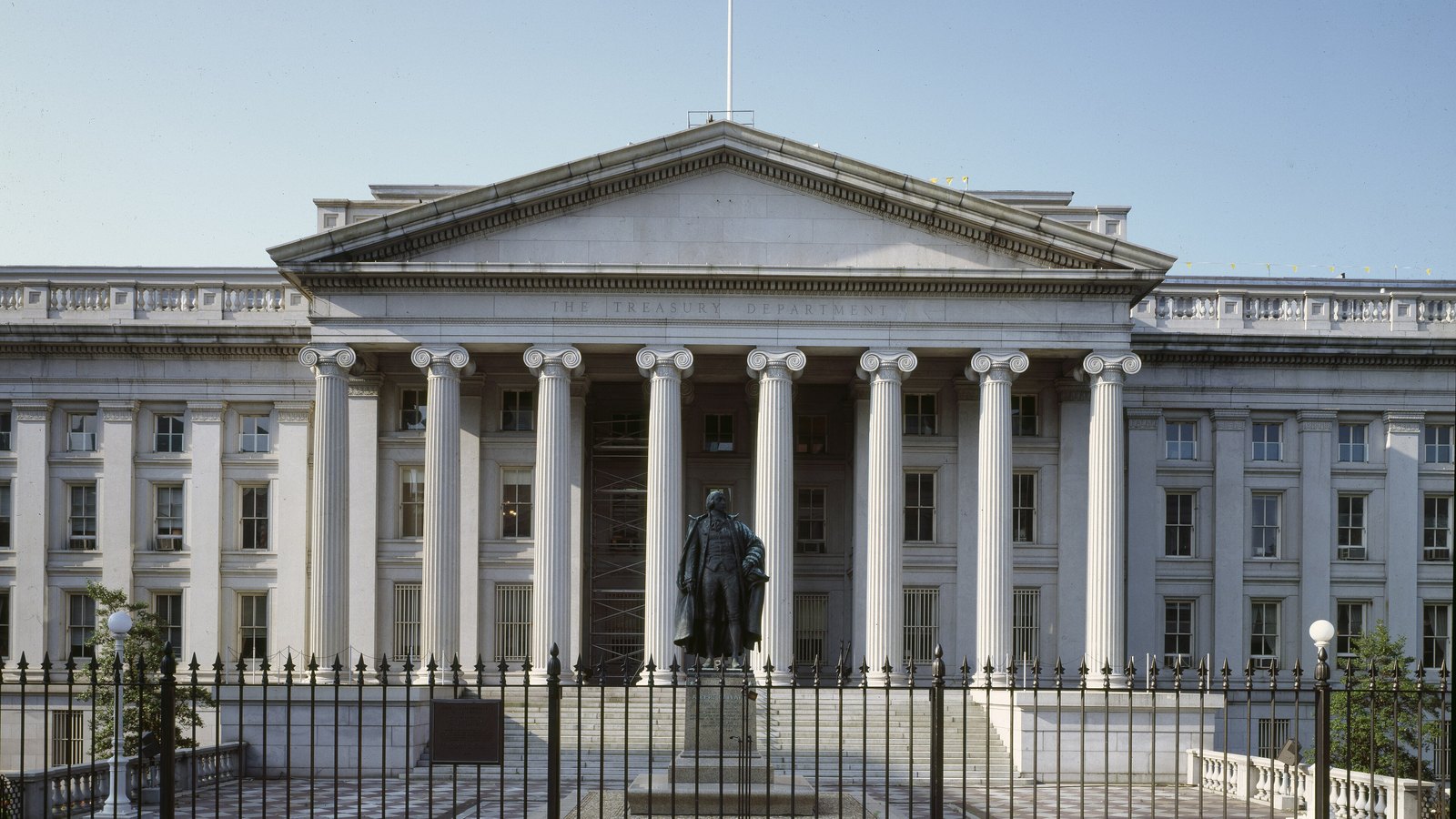
Following earlier friction where China warned against expanded semiconductor trade barriers, U.S. Treasury Secretary Scott Bessent confirmed on November 20, 2026, that current export limits on Nvidia H200 chips will hold without additional restrictions. Speaking after the enactment of a federal interim final rule curbing remote compute access, Bessent stated existing controls are sufficient, providing clarity for university computing clusters and international research compliance offices.
Scott Bessent confirms export threshold holds after remote curbs
Speaking in Washington on November 20, 2026, U.S. Treasury Secretary Scott Bessent clarified federal policy regarding advanced semiconductor trade following bilateral diplomatic talks and an official trip to Asia with President Donald Trump. In an interview with CNBC, Bessent declared that the federal government does not plan to impose further restrictions on approved Nvidia artificial intelligence processor exports to commercial buyers in China. Bessent stated that “the proper chip restrictions are in place” and affirmed that “the remote access has been curtailed,” as detailed in reporting by Hindustan Times.
Bessent emphasized that executive agencies are prioritizing the enforcement of established thresholds rather than drafting new bans. The confirmation indicates that cleared commercial buyers in China may continue receiving licensed shipments of Hopper-architecture accelerators, including the Nvidia H200, under existing Bureau of Industry and Security (BIS) export authorizations, provided they satisfy rigorous end-user verification protocols.
Regulatory provisions, chip volumes, and compute thresholds
The regulatory foundation underpinning Bessent’s announcement is an interim final rule issued by the Commerce Department’s Bureau of Industry and Security titled “Addressing Remote Access to Advanced Semiconductors” (RIN 0694-AK50), published in the Federal Register on November 19, 2026. The rule amended the Export Administration Regulations (EAR) by adding 15 CFR § 744.24, creating a worldwide end-use licensing mandate for data centers providing compute capacity to entities headquartered in Country Group D:5 destinations, including China, or Macau.
Concurrently, congressional committees scrutinized semiconductor export licenses previously granted by federal officials. According to formal committee disclosures released by Chairman Brian Mast of the House Foreign Affairs Committee on November 19, 2026, Commerce Department records indicate that BIS approved 21 export license applications authorizing 879,868 advanced AI processors for Chinese-tied entities through May 11, 2026. These authorizations covered 579,868 Nvidia H200 accelerators and roughly 300,000 comparable AMD Instinct MI325X units, selected from vendor requests exceeding 3.4 million total processors. While marked as approved rather than delivered, the volume underscores the technical scale governed by modern export controls on artificial intelligence hardware.
| Regulatory Parameter or Metric | Established Threshold or Metric Value | Statutory Scope and Compliance Impact |
|---|---|---|
| Remote Compute Capacity Cap | 12,000,000 Total Processing Performance (TPP) | Applies globally to data centers serving D:5 headquartered entities. |
| Approved Accelerator Volume | 879,868 advanced processors (579,868 H200 / 300,000 MI325X) | Licensed across 21 applications through May 2026; subject to screening. |
| Destination Licensing Expansion | 5 nations: Brazil, Indonesia, Malaysia, Singapore, Thailand | Requires specific BIS authorization for advanced logic exports to prevent transshipment. |
| Named Recipient Authorizations | Alibaba (75,000), Tencent (150,000), Baidu (43,000), BYD (4,000) | Enterprise allocations granted under case-by-case national security reviews. |
| Public Comment Period | 60 calendar days (closing January 19, 2027) | Federal Register notice invites feedback from cloud and research sectors. |
The BIS rule also instituted a strict knowledge standard for infrastructure providers. Cloud service providers, commercial colocation facilities, and supercomputing operators must document the ownership chain of remote tenants to ensure compute power above the 12 million aggregate TPP threshold is not rented to restricted overseas organizations.
Context of the remote-access loophole and congressional scrutiny
The policy baseline outlined by Bessent addresses an enforcement gap that emerged as physical hardware embargoes intensified. While earlier federal controls halted direct exports of cutting-edge architectures—such as Nvidia’s Blackwell systems—foreign organizations bypassed hardware restrictions by leasing computing capacity remotely through third-country facilities in Southeast Asia and the Middle East.
This bypass mechanism faced intense scrutiny in early November 2026 following corporate changes at Nvidia, including the resignation of chief executive Jensen Huang amid investigations into intermediary supply routes linked to Megaspeed International, a Singapore-based computing firm. Congressional committees initiated inquiries into whether overseas cloud hubs were routing model training cycles to restricted defense entities.
Under statutory authorities codified in the Export Control Reform Act of 2018, lawmakers accelerated reviews of dual-use licensing standards. The new BIS regulation formally rescinded the previous administration’s AI Diffusion Rule, replacing its global tiers with targeted extraterritorial end-use controls. By addressing the remote-access channel directly through EAR § 744.24, the administration concluded that existing hardware shipment limits on Hopper-tier accelerators are sufficient without cancelling standing commercial licenses.
Reactions from federal agencies, lawmakers, and industry observers
The confirmation that chip export policies will hold drew divergent responses across Washington and the technology sector. Following the release of committee licensing records, a spokesperson for the Bureau of Industry and Security defended the agency’s oversight track record, noting that federal export decisions strictly follow national security criteria published in the Federal Register. As documented in coverage published in Newsday, Commerce officials emphasized that the department maintains transparency with congressional overseers, applying rigorous case-by-case reviews rather than blanket presumptions of denial for older chip tiers.
In Congress, leaders of the House Foreign Affairs Committee voiced contrasting views on the disclosures. Committee Chairman Brian Mast argued that public transparency was necessary to ensure dual-use technologies do not enhance foreign military modernization. Conversely, Ranking Member Gregory Meeks pointed to procedural complexities within the interagency review pipeline, questioning whether evaluations adequately keep pace with the velocity of commercial AI hardware development.
Market analysts and semiconductor industry representatives expressed relief at Bessent’s clarification. The certainty that approved H200 shipments will proceed enables manufacturers to maintain predictable supply lines while reassuring cloud infrastructure providers in approved jurisdictions.
What it means for universities, supercomputing centres, and research offices
For academic research institutions, high-performance computing (HPC) facilities, and sponsored project offices, Bessent’s policy confirmation and the new BIS interim final rule carry direct operational compliance requirements.
First, campus computing centres providing remote access to advanced GPU clusters—specifically systems exceeding the 12 million TPP threshold—must establish identity verification procedures for external users. If academic clusters are shared with foreign visiting scholars or international consortia, export compliance administrators must ensure compute cycles are not provided to organizations affiliated with Country Group D:5 entities without a BIS license. This intersects directly with institutional deemed export regulations, which govern access to technical data and software controls by foreign national researchers in domestic laboratories.
Second, research administrators overseeing cloud compute procurement must verify that overseas facilities comply with destination licensing mandates in newly regulated jurisdictions, specifically Brazil, Indonesia, Malaysia, Singapore, and Thailand. Sponsored projects utilizing cloud infrastructure in these nations must confirm service providers maintain proper BIS exclusions.
Third, university compliance teams must update their institutional research security compliance programs. Because federal grant agencies require rigorous safeguarding of dual-use hardware, campus export control officers must integrate computing facility audits into standard risk management assessments, ensuring faculty collaborating on multinational AI initiatives remain aligned with federal parameters.
Next steps, regulatory timelines, and oversight milestones
The regulatory framework announced by the administration sets in motion several critical milestones. Because the BIS interim final rule took effect immediately upon Federal Register publication on November 19, 2026, export compliance officers and data center operators must adjust operational workflows immediately.
The Commerce Department has opened a 60-day public comment period on RIN 0694-AK50, inviting input from cloud providers, academic institutions, and semiconductor manufacturers until January 19, 2027. This consultation window offers research universities an opportunity to seek formal administrative guidance on how the 12 million aggregate TPP threshold applies to academic collaborative research and non-profit computing consortia.
Data centers delivering compute capacity above the controlled threshold to covered entities have a 90-day transition window to file for necessary export licenses or adjust tenant arrangements. Meanwhile, Capitol Hill will maintain active oversight: the Senate Banking Committee and the House Foreign Affairs Committee have scheduled hearings for December 2026 to examine semiconductor supply chains, agency license approvals, and interagency coordination between Treasury and Commerce.
Sources
- Federal Register: Addressing Remote Access to Advanced Semiconductors, checked 2026-11-21
- U.S. House Committee on Foreign Affairs: Chairman Brian Mast Exercises Legislative Authority to Publicly Release AI Chip License Information for China, checked 2026-11-21
- Hindustan Times: No further restrictions on Nvidia’s chip exports to China after block on remote access: Scott Bessent, checked 2026-11-21
- Newsday: Treasury secretary says no further restrictions are needed for Nvidia chip exports to China, checked 2026-11-21


