
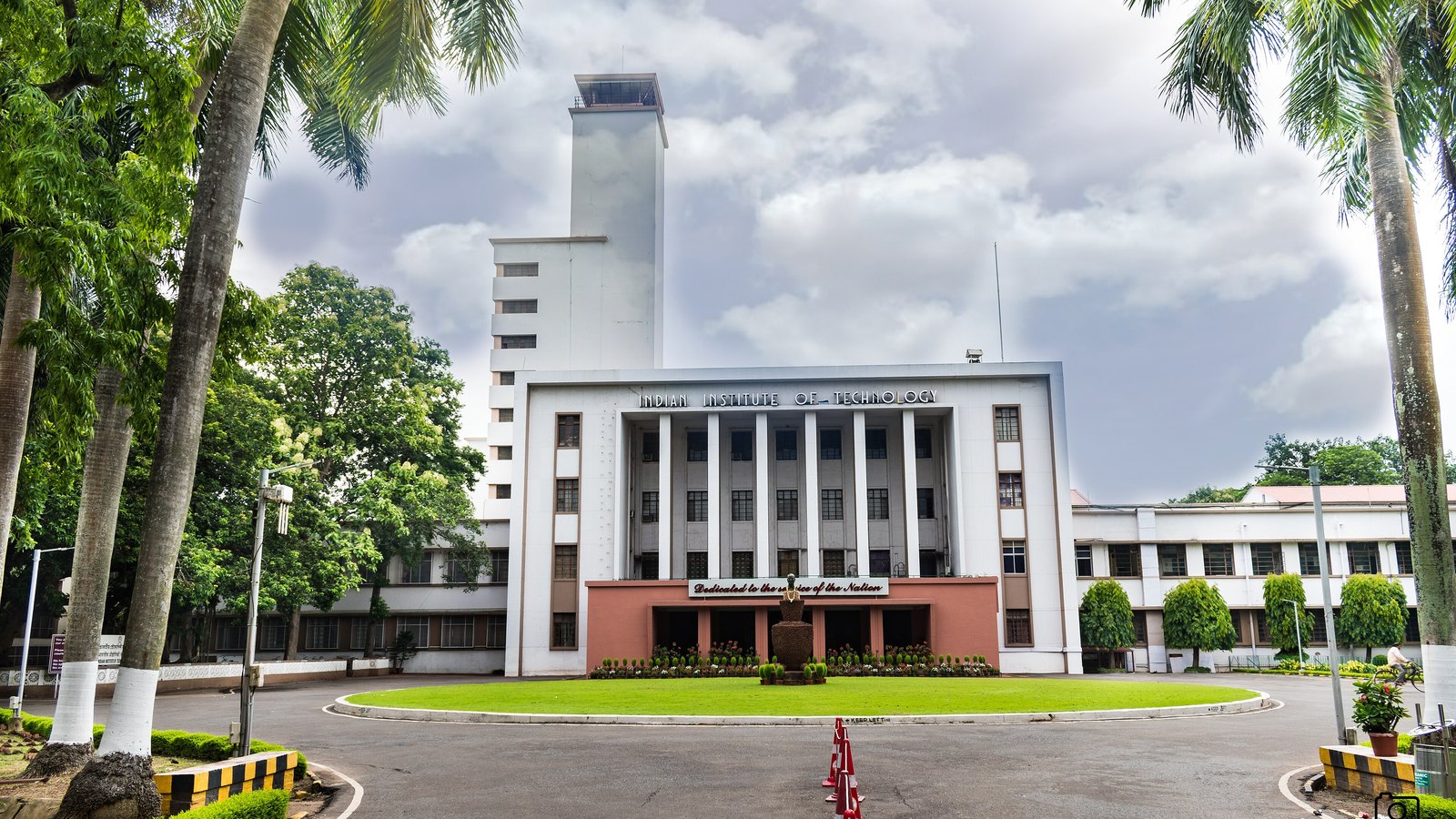
Google committed $5 million (approximately ₹46 crore) to the Indian Institute of Technology Kharagpur on November 21, 2026, during its 75th Foundation Day celebrations to accelerate advanced artificial intelligence research across Indic languages, materials science, agriculture, and educational technology, per the Google announcement. The multi-year grant funds faculty initiatives, student training, and campus compute capacity, establishing an operational model for corporate-academic research partnerships across Indian technical universities.
Google $5 Million AI Commitment Unveiled at IIT Kharagpur Platinum Jubilee
The grant was formally announced during the Platinum Jubilee celebrations marking the 75th Foundation Day of IIT Kharagpur in West Bengal. Envisioned through collaborative planning between the institute and Google leadership, the initiative establishes a direct philanthropic and technical research alliance between the global technology firm and India’s oldest Indian Institute of Technology. The funding provides untied institutional grant support intended to deepen basic and applied AI capabilities rather than commercial product development, with disbursements channeled into university research laboratories, computational upgrades, and specialized academic programs.
According to Business Standard coverage, the financial package of ₹46 crore will support university investigators across four primary scientific problem areas while underwriting open computational infrastructure for students and faculty. The announcement coincided with high-profile national milestone events at the Kharagpur campus, attended by senior government dignitaries, academic leaders, and alumni delegations who gathered to review the institute’s research trajectory.
Three Pillars of the Grant: Research Focus, Education, and AI Infrastructure
The $5 million commitment is structured across three core operational pillars designed to build durable research capacity across multiple academic departments:
- Advanced AI Research: Deploying applied artificial intelligence methods to address domain-specific challenges in Indic natural language processing, materials discovery, precision agriculture, and scalable educational technology.
- Educational Opportunities and Curriculum Modernization: Designing new AI curricula, sponsoring specialized pedagogical workshops, and funding hands-on training tracks for undergraduate students, postgraduate scholars, faculty members, and secondary school educators.
- AI Capacity Building and Compute Tooling: Upgrading campus-wide server architectures, high-performance computing clusters, machine learning frameworks, and engineering tooling to support intensive model training and evaluation.
The following table summarizes the grant allocations, technical focus areas, and institutional deliverables outlined across the three core pillars:
| Operational Pillar | Target Disciplines and Domains | Key Deliverables and Infrastructure | Primary Beneficiaries |
|---|---|---|---|
| Advanced AI Research | Indic NLP, Materials Science, Agriculture, EdTech | Open language datasets, materials discovery models, crop yield algorithms | Faculty investigators, doctoral fellows, postdocs |
| Educational Opportunities | Computer Science, Multidisciplinary Engineering | Modernized AI curricula, faculty training workshops, teacher development | Undergraduate students, graduate researchers, educators |
| AI Capacity Building | Campus Compute and Information Infrastructure | Machine learning frameworks, accelerator clusters, open developer tooling | Campus-wide research community, student engineering teams |
Under the advanced research pillar, the Indic language track will address data scarcity across low-resource Indian languages, developing multimodal benchmarks, tokenizers, and translation models. In materials science, researchers will apply machine learning to molecular property prediction and novel composite synthesis. Agricultural applications will focus on edge-deployable computer vision models for crop disease detection and soil moisture modeling, while educational technology work will target personalized tutoring architectures adapted for multilingual classrooms.
Institutional Context and Google Academic Collaborations in India
IIT Kharagpur holds a foundational position in Indian higher education. Established in 1951 at the site of the historic Hijli Detention Camp, it served as the template for India’s network of national institutes of technology. Google and Alphabet Chief Executive Officer Sundar Pichai is one of the institute’s most prominent alumni, having completed his Bachelor of Technology degree in Metallurgical Engineering at Kharagpur in 1993 before continuing postgraduate studies in the United States.
The $5 million grant expands upon earlier research ties between the company and the institute. Google previously collaborated with IIT Kharagpur under its Project Amplify initiative, which concentrated on creating open acoustic and text corpora to improve speech recognition and natural language understanding for regional Indian dialects. The new funding mechanism expands this relationship from a discrete project engagement into a broad, multi-disciplinary institutional program. Research offices evaluating similar corporate engagements can review the comparative mechanisms detailed in our guide on Google Research Grants, alongside the broader institutional environment outlined in India’s technology transfer and ANRF framework.
Leadership Perspectives from Pichai and Chakraborty
Institute leadership and corporate executives highlighted the strategic significance of long-term academic funding during the Platinum Jubilee ceremonies. Google CEO Sundar Pichai emphasized the enduring personal and institutional influence of the university, stating that IIT Kharagpur is driving ground-breaking work in Indic languages, agriculture, and education, and expressing enthusiasm for accelerating that impact to shape the path for the next generation of students just as the institute shaped his own career.
IIT Kharagpur Director Prof. Suman Chakraborty noted that the applied research framework had been conceptualized in close consultation with Pichai to align philanthropic corporate capital with urgent domestic technological priorities. Reporting by Fortune India emphasized that the funding is structured to empower faculty investigators to tackle large-scale challenges that cannot be resolved through short-term departmental budgets alone. In national broadcast coverage, DD News report highlighted that the grant reinforces the national objective of expanding technical artificial intelligence competencies beyond metropolitan tech centers into premier public research institutions across India.
Implications for University Research Offices and Sponsored Research Administration
Corporate grants of this scale introduce distinct governance, financial administration, and compliance considerations for university research offices. Sponsored projects involving unrestricted or programmatic corporate gifts require careful boundary management to protect academic independence, data stewardship, and publication freedom. Research administration teams managing comparable gifts should examine established institutional practices for industry-university research partnership structures and the precise drafting required in a formal sponsored research agreement.
Specific compliance and operational priorities for research offices include:
- Intellectual Property and Licensing Terms: Ensuring that research outputs generated under philanthropic or unrestricted corporate gifts remain within university ownership or enter open-source distribution, preventing exclusive rights assignment to the commercial sponsor. Sponsored research teams should guard against overreaching IP covenants and verify standard terms using publication delay and review clauses in sponsored research to guarantee that graduate students can publish theses without corporate veto.
- Compute Resource Governance: Structuring access protocols for corporate compute frameworks and on-premise hardware accelerators. Sponsored research offices must ensure compute time is equitably distributed across interdisciplinary project teams rather than monopolized by individual labs, while preventing mandatory lock-in to proprietary cloud APIs.
- Data Sovereignty and Compliance: Managing agricultural sensor data, local soil mappings, and Indic linguistic field recordings under India’s Digital Personal Data Protection Act (DPDP Act). Research offices must establish Institutional Review Board (IRB) and data governance protocols for collecting regional audio recordings and community-generated dialect samples to ensure valid informed consent and secure data residency.
- Curricular and Faculty Cross-Appointment: Administering interdepartmental curriculum development boards that bridge Computer Science and engineering disciplines like metallurgy, agricultural engineering, and humanities, ensuring teaching credits and faculty incentives are properly allocated.
Next Steps and Implementation Milestones
Following the Platinum Jubilee announcement, IIT Kharagpur and Google will establish a joint steering committee to oversee fund disbursements, project milestones, and infrastructural procurement schedules throughout the 2026–2027 academic cycle. Initial tranches will be directed toward campus high-performance computing hardware upgrades and establishing dedicated machine learning lab facilities within the computer science and multidisciplinary engineering complexes.
Faculty application windows for competitive internal seed grants across the four target domains—Indic languages, materials science, agriculture, and educational technology—are scheduled to open in the coming term. Pilot deployments of agricultural diagnostic tools and localized language translation modules are slated for preliminary field trials by mid-2027, with corresponding curriculum updates for undergraduate artificial intelligence courses rolling out across incoming student cohorts.
Sources
- Google India: Supporting AI research and talent development with IIT Kharagpur, checked 2026-11-21
- Business Standard: Google announces $5 mn funding for IIT Kharagpur for advanced AI research, checked 2026-11-21
- Fortune India: Google commits $5 million to IIT Kharagpur to accelerate advanced AI research, checked 2026-11-21
- DD News: Google announces USD 5 mn funding for IIT Kharagpur for advanced AI research, checked 2026-11-21


