
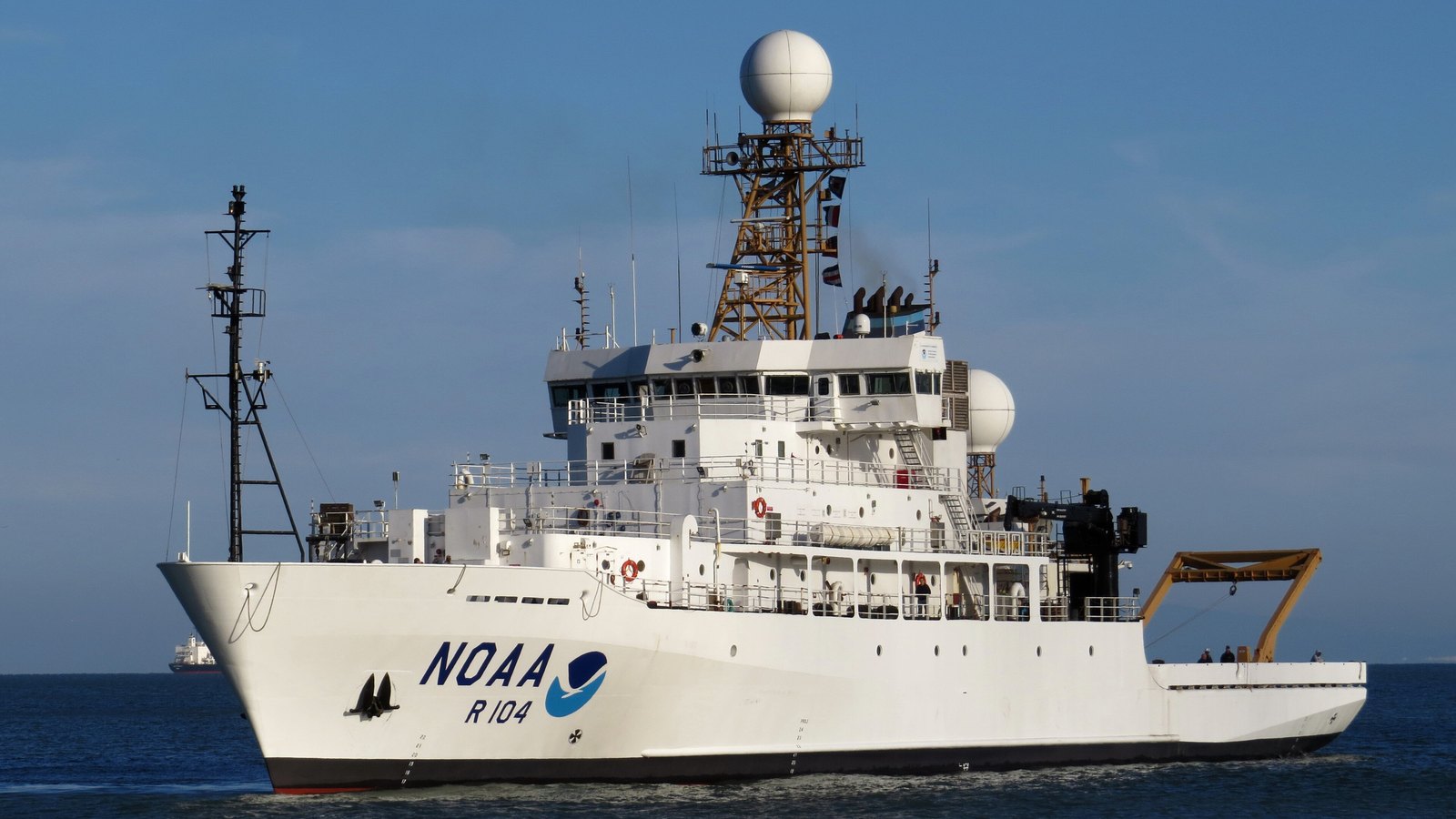
On November 19, 2026, the U.S. Department of the Interior and the Bureau of Ocean Energy Management completed Lease Sale PACM-1 offshore American Samoa, the first federal Outer Continental Shelf critical minerals auction in United States history. The commercial sale generated $6 million in high bids across 31.5 million acres of seabed prospective for cobalt, nickel, and rare earth elements, establishing an unprecedented regulatory precedent that requires extensive oceanographic baseline research and institutional compliance before extraction can occur.
What happened at Lease Sale PACM-1
The Department of the Interior and the Marine Minerals Administration, operating within the Bureau of Ocean Energy Management, conducted the auction on November 19, 2026, via a live oral bidding session livestreamed from Washington, D.C. The Bureau of Ocean Energy Management announced that Lease Sale PACM-1 generated $6 million in winning high bids across two offshore lease tracts on the Outer Continental Shelf off American Samoa. Commercial operator Wetstone US Ventures submitted the sole bids, securing both tracts at $3 million each.
The auction executes directives established under Executive Order 14285, “Unleashing America’s Offshore Critical Minerals and Resources.” The order instructed federal agencies to develop domestic marine reserves to protect manufacturing and reduce reliance on overseas mineral supply chains. Analysis published by Offshore Magazine on the auction results highlighted that the offered blocks cover prospective fields of polymetallic nodules and cobalt-rich ferromanganese crusts in federal Pacific waters.
Key auction details and lease provisions
Following publication of the Final Leasing Notice in the Federal Register on October 20, 2026, federal regulators established the operational terms and fiscal parameters for the Pacific tracts:
| Parameter | Specification |
|---|---|
| Sale Identifier | Lease Sale PACM-1 (Pacific Mineral Lease Sale 1) |
| Auction Date | November 19, 2026 |
| Total Acreage Offered | 31,503,235 acres (approx. 127,000 km²) |
| Geographic Location | 150 to 240 miles east of Pago Pago, American Samoa |
| Water Depth Range | 4,630 to 20,100 feet (1,412 to 6,127 meters) |
| Winning High Bidder | Wetstone US Ventures (sole qualified bidder) |
| Total High Bids | $6,000,000 ($3,000,000 per lease area) |
| Primary Lease Term | 20 years |
| Production Royalty Schedule | 2% for production years 1–5; 5% for subsequent years |
| Administrative Framework | Federal Register Final Leasing Notice (October 20, 2026) |
Industry reporting from National Fisherman reporting on the lease terms noted that maritime sectors tracked the 20-year lease duration closely. Federal officials stressed that lease issuance does not permit seabed extraction or physical test mining. Instead, the lease conveys an exclusive right to conduct non-invasive preliminary activities, such as acoustic bathymetric surveys, and the exclusive right to submit future exploration and mining plans for separate federal review.
Regulatory background and legal challenges
The auction proceeded amid major legal challenges. On November 16, 2026, three days before the bidding, U.S. District Judge Jill Otake of the District of Hawaii issued a decision in ongoing environmental litigation. As reported in legal coverage by Anadolu Agency coverage of the federal court ruling, Judge Otake voided the project’s environmental clearance after finding that the National Marine Fisheries Service violated the Endangered Species Act by failing to evaluate potential harms to protected marine life, including blue, fin, sei, and sperm whales, sea turtles, and threatened coral species.
Despite the judicial order vacating the biological opinion, the Department of the Interior moved forward with the sale. Agency attorneys determined that conducting the auction and issuing initial leases remained legally permissible because leases convey only non-destructive preliminary survey rights. Regulators stated that all future exploration plans require full Environmental Impact Statements under the National Environmental Policy Act and reinitiated Endangered Species Act consultations.
Stakeholder and community reaction
Administration leadership praised the sale as a major step for American resource independence. Interior Secretary Doug Burgum stated:
“This is the first time the United States has held an offshore critical minerals lease sale in the Pacific and a historic step for America’s energy and mineral security. Critical minerals are used in everything from electronics to defense systems. A dependable critical minerals supply chain is essential to American manufacturing and the technologies that power our economy and national defense. Today’s sale opens a path to learn more about the resources off the coast of American Samoa and assess whether they could contribute to a more reliable domestic supply.”
Acting Marine Minerals Administration Director Mike Olsen added:
“Critical minerals are essential to modern electronics, clean energy technologies and national defense. A dependable supply chain helps American manufacturers withstand disruptions, and any future development would be subject to rigorous U.S. safety and environmental standards.”
In contrast, Pacific Island leaders and regional advocates strongly condemned the sale. Guam Senator William Parkinson stated: “You don’t get to sell off our ocean first and ask whether it’s legal later. Washington needs to understand that the Pacific is not for sale.”
Regional civic organizations raised similar concerns over ecological and cultural impacts. Environmental reporting by Oceanographic Magazine reporting on community opposition recorded that over 76,000 public comments opposed the auction. Sabrina Suluai-Mahuka, founder of the American Samoa environmental nonprofit Finafinau, stated:
“More than 76,000 public comments, repeated calls for meaningful consultation, and now a federal court ruling that the government violated the Endangered Species Act. Yet here we are, watching our ocean being auctioned to the highest bidder. This is not just seabed on a map. This is our home, our livelihoods, our identity, and our responsibility to protect.”
What it means for researchers, universities and research offices
The initiation of Outer Continental Shelf mineral leasing establishes significant scientific and compliance obligations for universities and sponsored research offices:
- Oceanographic baseline research and sponsored awards: Because commercial mining cannot proceed without thorough environmental documentation, federal agencies including NOAA and BOEM will commission extensive academic research. Ocean science departments will see research opportunities in benthic taxonomy, sediment plume dynamics, bioacoustics, and abyssal microbiology. Interdisciplinary teams analyzing seabed cores or biological specimens must execute a formal material transfer agreement when transferring physical specimens between collaborating academic institutions.
- Research security and foreign disclosure controls: Critical minerals are designated defense-critical assets vital for energy storage and semiconductor applications. Academic departments conducting materials characterization or subsea robotics research must ensure institutional compliance with NSPM-33 research security program requirements, enforcing conflict-of-commitment disclosures, foreign talent screening, and data protection controls for bathymetric models.
- International maritime access and benefit-sharing: Because the PACM-1 tracts lie adjacent to the Exclusive Economic Zone of the Cook Islands, university research cruises operating across the South Pacific must observe cross-border protocols. Research administrators should align international oceanographic expeditions with established access and benefit-sharing compliance standards to respect territorial sovereignty and regional data agreements.
- Laboratory supply chain risk mitigation: For engineering and materials laboratories dependent on battery-grade metals and high-purity rare earths, domestic marine exploration signals long-term changes in component availability. Procurement officers should integrate structured supplier risk assessment workflows to identify critical supply dependencies and align lab purchasing with federal preference requirements.
What happens next
Following the November 19, 2026 auction, the Department of the Interior and the Marine Minerals Administration will review the winning bids and verify lessee financial qualifications before formally executing the 20-year leases with Wetstone US Ventures. The lease agreement opens an initial phase restricted to non-invasive seabed mapping and environmental data gathering.
In response to Judge Otake’s November 16 court order, the National Marine Fisheries Service must reinitiate formal section 7 consultations under the Endangered Species Act to reassess risks to protected marine mammals, sea turtles, and deep-sea corals. Any future delineation drilling, acoustic testing, or pilot extraction proposed by the lessee will require site-specific National Environmental Policy Act reviews, public comment periods, and coastal consistency determinations with the American Samoa territorial government before operations can proceed.
Sources
- Bureau of Ocean Energy Management: Department of the Interior Completes First-Ever Offshore Critical Minerals Lease Sale, checked 2026-11-21
- Offshore Magazine: First US offshore critical minerals lease sale generates $6 million in high bids, checked 2026-11-21
- Oceanographic Magazine: US issues first deep sea mining leases off American Samoa, checked 2026-11-21
- National Fisherman: First offshore critical minerals leasing fetches $6 million off American Samoa, checked 2026-11-21
- Anadolu Agency: US holds 1st deep-sea mining lease sale off American Samoa despite court ruling, checked 2026-11-21


