
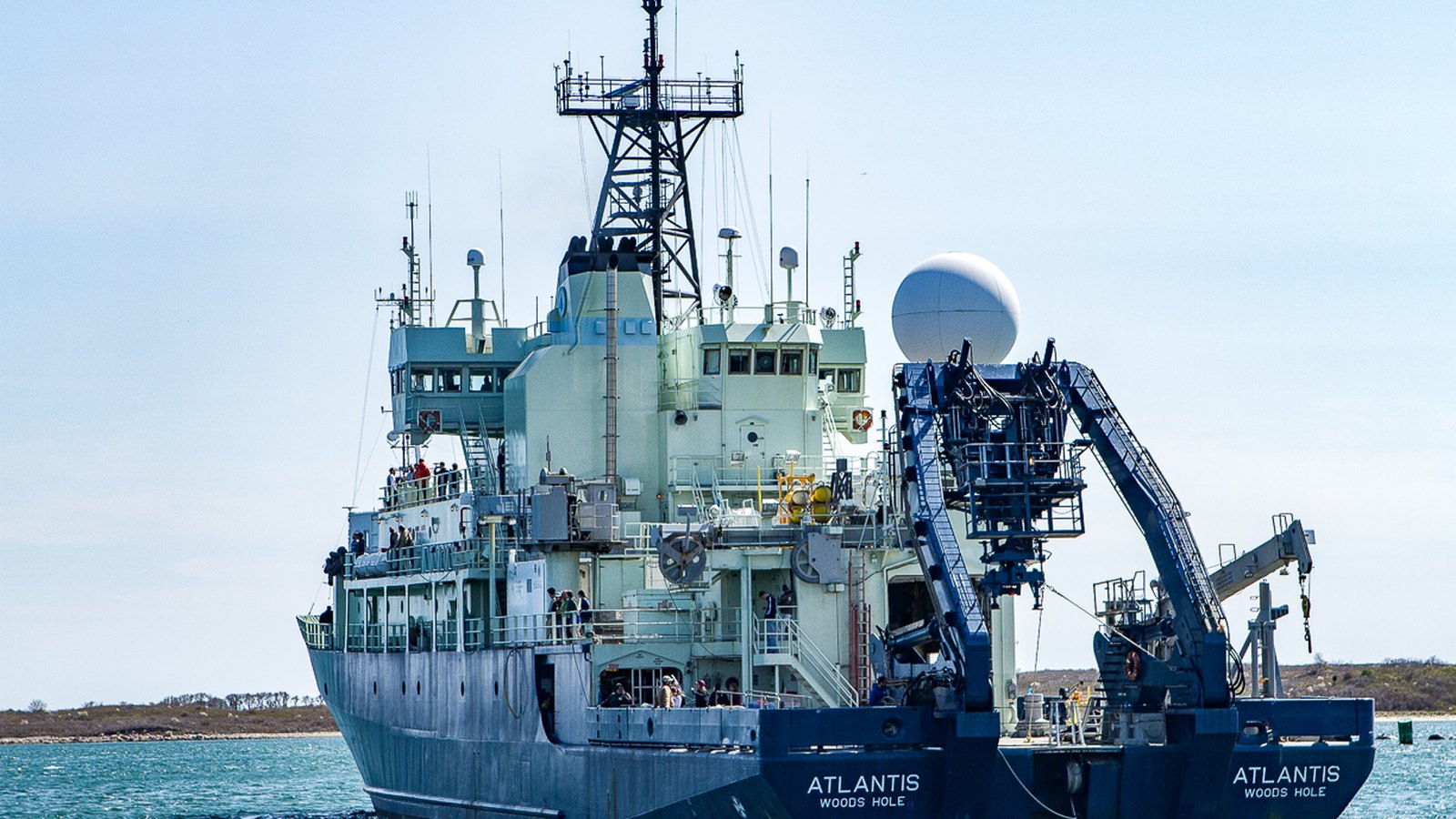
On November 27, 2026, U.S. Customs and Border Protection announced a 60-day public comment period on extending the mandatory Ship’s Stores Declaration under OMB Control Number 1651-0018, establishing federal inventory compliance requirements that directly govern maritime research vessels, oceanographic laboratories, and university marine fleet operators returning to American ports from international scientific expeditions.
CBP Initiates Form 1303 Information Collection Renewal
The Department of Homeland Security and U.S. Customs and Border Protection (CBP) published a notice of agency information collection activities in the Federal Register, initiating the Paperwork Reduction Act renewal process for CBP Form 1303 (Ship’s Stores Declaration). The declaration serves as the primary customs instrument used by arriving vessels to document articles retained on board, including shipboard provisions, maintenance supplies, technical stores, bunker fuel, and controlled medical narcotics.
Codified under 19 CFR Part 4 — specifically sections 4.7, 4.7a, 4.81, 4.85, and 4.87 — federal regulations require arriving vessel masters or designated marine agents to produce an itemized manifest of shipboard stores upon entry into the customs territory of the United States. Established as an international standard to replace heterogeneous national forms, Form 1303 ensures that restricted goods and consumables remain aboard duty-free without being unlawfully diverted into domestic commerce.
Key Reporting Parameters and Paperwork Reduction Act Burden Estimates
Under the Paperwork Reduction Act of 1995, CBP quantified the reporting burden associated with Form 1303, which covers commercial shipping carriers alongside non-commercial operators such as university oceanographic vessels. CBP estimates that 98,631 unique respondents file Form 1303 declarations annually, submitting an average of 72 responses per carrier across repeat voyages. This generates an aggregate volume of 7,101,432 annual responses. At an estimated completion time of 15 minutes (0.25 hours) per response, the total annual compliance burden reaches 1,775,358 hours.
The agency also highlighted the continuing transition toward electronic reporting through the Vessel Entrance and Clearance System (VECS). VECS digitizes maritime entry requirements, eliminating paper submissions and streamlining clearance through automated data ingestion across federal border processing systems.
The following table summarizes the core administrative specifications and burden calculations for CBP Form 1303:
| Specification | Regulatory Standard / Parameter |
|---|---|
| Agency and Sub-Agency | Department of Homeland Security; U.S. Customs and Border Protection |
| Collection Title | Ship’s Stores Declaration (CBP Form 1303) |
| OMB Control Number | 1651-0018 (Extension without change) |
| Statutory Authorities | 19 U.S.C. 1431, 1433; 44 U.S.C. 3501 et seq.; 19 CFR 4.7, 4.7a, 4.81, 4.85, 4.87 |
| Filing System | Vessel Entrance and Clearance System (VECS) digital portal; paper Form 1303 legacy backup |
| Annual Respondents | 98,631 carriers and vessel operators |
| Annual Responses per Carrier | 72 filings per respondent |
| Total Annual Responses | 7,101,432 filings |
| Burden Time per Filing | 15 minutes (0.25 hours) |
| Total Annual Burden Hours | 1,775,358 hours |
| Notice Publication Date | November 27, 2026 (91 FR 76782) |
| Comment Period Deadline | January 26, 2027 (60-day notice) |
Academic Research Fleets and the Maritime Customs Interface
While Form 1303 is standard for commercial merchant shipping, the regulation applies equally to oceanographic vessels operated by universities and marine research institutes. In the United States, academic marine science is conducted through the U.S. Academic Research Fleet, coordinated by the University-National Oceanographic Laboratory System (UNOLS). Institutions such as Woods Hole Oceanographic Institution, Scripps Institution of Oceanography, and Oregon State University manage vessels that regularly traverse high-seas corridors and foreign waters.
Upon returning from voyages outside U.S. territorial waters, research vessels must complete the customs clearance process. A central operational distinction for university marine superintendents is the separation between general ship’s stores and scientific cargo. Ship’s stores encompass consumable provisions, propulsion fuels, and maintenance goods strictly necessary for vessel operations. These supplies remain duty-free when declared on Form 1303.
By contrast, specialized scientific instrumentation — such as CTD rosettes, autonomous underwater vehicles, and benthic samplers — constitutes scientific equipment rather than ship’s stores. Because these assets are temporarily deployed abroad and returned home, research institutions typically clear them under an ATA Carnet or specialized export documentation. In addition, university vessel operators coordinate arrivals through port agents covered by a customs bond, ensuring that duty exemptions and clearance timelines remain secure.
Shipboard Consumables, Controlled Substances, and Safety Standards
Form 1303 compliance intersects with university environmental health, safety, and security protocols. Research expeditions carry significant inventories of specialized laboratory chemicals, preservation agents, and emergency medical supplies that require careful customs reporting.
Academic operators adhere to the UNOLS Research Vessel Safety Standards (RVSS), which govern hazardous materials management at sea. Scientific reagents such as formalin, ethanol, and mercuric chloride cannot be declared as general ship’s stores; instead, they must be documented on hazardous materials manifests complying with the International Maritime Dangerous Goods Code. Furthermore, Form 1303 mandates full disclosure of controlled narcotic medications maintained in shipboard medical lockers for offshore trauma care. Masters must declare exact pharmaceutical inventories to prevent customs delays or penalties.
These procedures are vital for major research facilities such as the Ocean Observatories Initiative, which deploys deep-sea moorings requiring complex hardware turnarounds. Additionally, advanced oceanographic sensors, acoustic sonars, and autonomous systems must maintain compliance with the Export Control Reform Act when transiting foreign waters.
Compliance Directives for University Marine Offices
University marine operations departments and expedition administrators should observe key operational directives to maintain customs compliance:
- Segregate Inventories: Maintain separate digital manifests distinguishing vessel operational stores (Form 1303) from scientific research chemicals, equipment, and biological samples.
- Adopt VECS Workflows: Ensure designated vessel officers and maritime agents hold valid credentials for electronic filing within CBP’s Vessel Entrance and Clearance System.
- Audit Controlled Substances: Conduct pre-arrival physical counts of all locked medical narcotics to ensure stocks match declared Form 1303 figures exactly.
- Coordinate Early with Port Agents: Transmit provisional stores declarations and dangerous goods manifests to customs brokers at least 48 to 72 hours prior to port arrival.
What Happens Next: Public Comments and OMB Submission
The publication of Notice 2026-24148 opens a 60-day public comment window running through January 26, 2027. CBP invites comments on whether the information collection is necessary for agency functions, the accuracy of its 1,775,358-hour annual burden estimate, methods to enhance data clarity, and opportunities for automated data collection via VECS.
Comments citing OMB Control Number 1651-0018 should be submitted by email to [email protected] or sent to the Economic Impact Analysis Branch within CBP’s Office of Trade in Washington, DC. After reviewing public feedback, CBP will submit the final collection package to OMB, publishing a subsequent 30-day notice in the Federal Register prior to final OMB approval.
Sources
- Federal Register: Agency Information Collection Activities; Extension; Ship’s Stores Declaration (CBP Form 1303), checked 2026-11-28
- eCFR: Title 19 Part 4 – Vessels in Foreign and Domestic Trades, checked 2026-11-28
- U.S. Customs and Border Protection: Vessel Entrance and Clearance System (VECS), checked 2026-11-28
- UNOLS: Research Vessel Safety Standards (RVSS), checked 2026-11-28






