
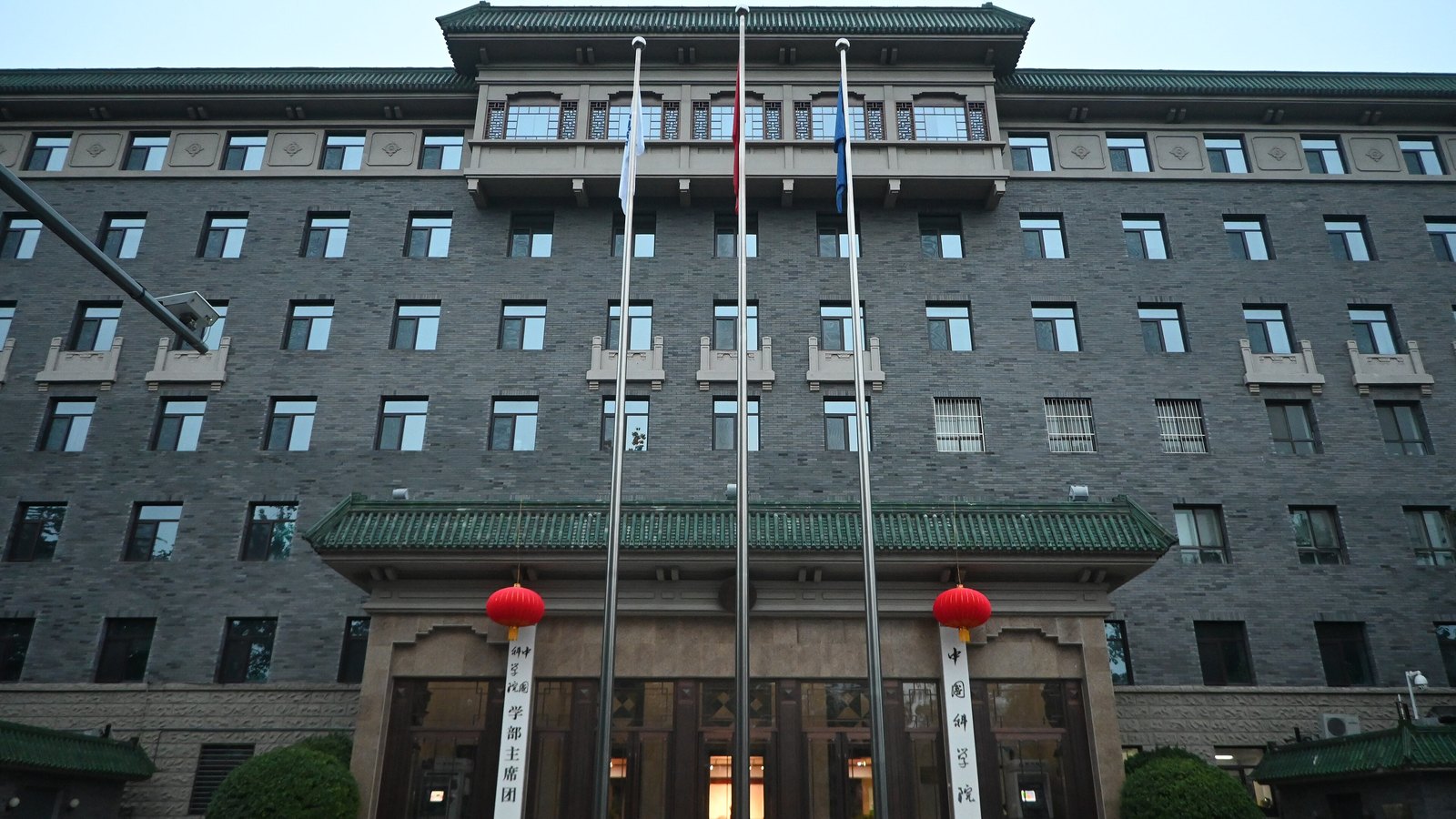
Clarivate released its Highly Cited Researchers 2026 list on 18 November 2026, naming 6,802 researchers, with 7,090 awards, from more than 1,200 institutions in 62 countries and regions. Mainland China holds 21% of awards and the Chinese Academy of Sciences is the most-represented institution, while Clarivate says its integrity filters are now adjusted for each research field.
What happened
Clarivate published the annual list through its Institute for Scientific Information (ISI) on 18 November 2026. The company says the selection draws on data from the Web of Science Core Collection and combines quantitative metrics with qualitative analysis by ISI analysts. According to Clarivate’s announcement, the list recognises 6,802 individuals. The total of 7,090 awards is higher because some researchers are recognised in more than one Essential Science Indicators (ESI) field.
Of those awards, 3,839 fall in the 21 ESI fields. Within them, 226 individuals appear in two fields and 29 appear in three or more. A further 3,251 are Cross-Field awards, which Clarivate gives to researchers whose influence extends across disciplines. Research Information, which reported the release the same day, described the 2026 announcement as placing particular emphasis on the integrity of the selection process.
Key details
The United States leads with 2,606 awards, or 37% of the total. Mainland China is second with 1,484 awards (21%), and the United Kingdom is third with 520 (7%). Clarivate reports that 86% of awards sit in just ten of the 62 countries and regions, and 74% in the first five. The table below reproduces the country ranking from Clarivate’s announcement, including its reported change in world share from the final 2025 list.
| Rank | Country or region | 2026 awards | World share | Change from 2025 (percentage points) |
|---|---|---|---|---|
| 1 | United States | 2,606 | 36.8% | -0.5 |
| 2 | Mainland China | 1,484 | 20.9% | +0.9 |
| 3 | United Kingdom | 520 | 7.3% | -0.7 |
| 4 | Germany | 373 | 5.3% | +0.3 |
| 5 | Australia | 292 | 4.1% | -0.2 |
| 6 | Canada | 215 | 3.0% | -0.1 |
| 7 | Netherlands | 199 | 2.8% | +0.1 |
| 8 | Switzerland | 151 | 2.1% | +0.3 |
| 9 | Hong Kong SAR | 147 | 2.1% | 0.0 |
| 10 | France | 121 | 1.7% | 0.0 |
By primary affiliation, the Chinese Academy of Sciences is first with 264 awards, ahead of Harvard University with 185 and Stanford University with 139. Adding the ten institutions in the table below gives 1,106 awards, about 15.6% of all 7,090.
| Rank | Institution | Country or region | 2026 awards |
|---|---|---|---|
| 1 | Chinese Academy of Sciences | Mainland China | 264 |
| 2 | Harvard University | United States | 185 |
| 3 | Stanford University | United States | 139 |
| 4 | Tsinghua University | Mainland China | 105 |
| 5 (tie) | Massachusetts Institute of Technology | United States | 75 |
| 5 (tie) | National Institutes of Health | United States | 75 |
| 5 (tie) | Zhejiang University | Mainland China | 75 |
| 8 | Max Planck Society | Germany | 65 |
| 9 | University of Pennsylvania | United States | 62 |
| 10 | University of Oxford | United Kingdom | 61 |
Background and context
Trinity College Dublin, describing the list in its own announcement, says a Highly Cited Researcher is an individual who has shown significant and broad influence in their fields over the past 11 years, and that only 0.1% of the world’s scientists and social scientists make the list. Each person selected has authored multiple Highly Cited Papers, which rank in the top 1% by citations for their field and publication year in the Web of Science Core Collection over the past decade. Casrai’s guide to how Clarivate selects the list sets out the method in more detail.
The 2026 release leans on integrity. Clarivate says it continues to refine its methodology, with filters to address hyper-prolific authorship, excessive self-citation and anomalous publication and citation patterns. These filters are now adjusted, or field normalised, for each field so that they account for typical patterns in each area and do not penalise them.
Part of the story is geography. The release records Mainland China gaining 0.9 percentage points of world share against the final 2025 list, while the United States, the United Kingdom and Australia each lost share. Three of the ten most-represented institutions, the Chinese Academy of Sciences, Tsinghua University and Zhejiang University, are in Mainland China. Five are in the United States, including the National Institutes of Health, a federal agency that ties with MIT and Zhejiang University at 75 awards. Casrai’s earlier reporting looked at why China’s corresponding-author counts run high, a separate bibliometric pattern.
Reaction
Bar Veinstein, President of Academia and Government at Clarivate, said in the announcement: “At a time when trust in research is increasingly at risk, we are committed to applying rigorous criteria and expert analysis, upholding the highest standards of research integrity and continuing to strengthen the foundations of our Highly Cited Researchers program.”
Universities began publicising their own results on the day. Trinity College Dublin named six scientists from five schools, and said Professor Luke O’Neill was again recognised in two categories, immunology and molecular biology and genetics. The University of Warwick named five academics and quoted David Pendlebury, Head of Research Analysis at ISI, who said the list “identifies and celebrates researchers who demonstrate significant and broad influence in their fields.” Duke University reported 27 scholars across Duke University, Duke Health and Duke-NUS Medical School, and noted that some listed people have since left, but that work done at Duke earned them a place.
What it means for researchers, universities and research offices
Clarivate says the 2026 validation period closed on 14 September and that Highly Cited Researchers may submit correction requests until 8 December 2026. Research offices can use that window to tell listed staff to check their affiliation and field, and to correct a mismatched Web of Science author record through the process for merging duplicate records. Duke’s note that some listed scholars have moved shows why affiliation attribution deserves a check before an institutional count is published.
Offices that quote a headline number should say what it counts. The 7,090 figure is awards, not people, and Clarivate states that its country and institution analysis is based on awards, which means a person recognised in two fields adds two to their institution’s total. The concentration also matters for benchmarking: adding the first two countries gives 4,090 awards, or about 58% of the world total, so a single list is a narrow basis for comparing institutions outside the top ten countries. A responsible-metrics approach treats a list like this as one input among several, not as an assessment of a department.
For international partnership teams, the institutional table gives a dated reference for the weight of Chinese institutions in highly cited output, alongside the integrity framing Clarivate chose for this year’s release.
What happens next
Corrections approved by Clarivate will be reflected in a final December update published on its Highly Cited Researchers microsite, after the 8 December 2026 correction deadline.
Sources
- Clarivate (PR Newswire): Clarivate Reveals Highly Cited Researchers 2026 List, 18 November 2026, checked 2026-11-19
- Research Information: Clarivate publishes Highly Cited Researchers 2026 list, 18 November 2026, checked 2026-11-19
- Trinity College Dublin: Six Trinity scientists named on Highly Cited Researchers list for 2026, 18 November 2026, checked 2026-11-19
- University of Warwick: Warwick researchers named among the world’s most cited, 18 November 2026, checked 2026-11-19
- Duke Today: Duke Scholars Featured in the Highly Cited Researchers 2026 List, 18 November 2026, checked 2026-11-19


