
On November 28, 2026, an international research team published a study in Communications Earth and Environment demonstrating that early diagenesis and contrasting manganese oxide mineral phases drive pronounced spatial heterogeneity in molybdenum and trace metal cycling across Pacific pelagic sediments. Led by geochemists from Constructor University, the Federal Institute for Geosciences and Natural Resources (BGR), and the Alfred Wegener Institute Helmholtz Centre for Polar and Marine Research, the research examined sediment gravity cores retrieved from deep-sea polymetallic nodule exploration areas in the Clarion-Clipperton Zone (CCZ). The findings reveal that abyssal porewater fluxes vary substantially between neighboring seabed contract areas, establishing critical baseline data for environmental assessments and challenging static assumptions used in paleoceanographic isotope models.
Abyssal Gravity Core Profiling in the Clarion-Clipperton Zone
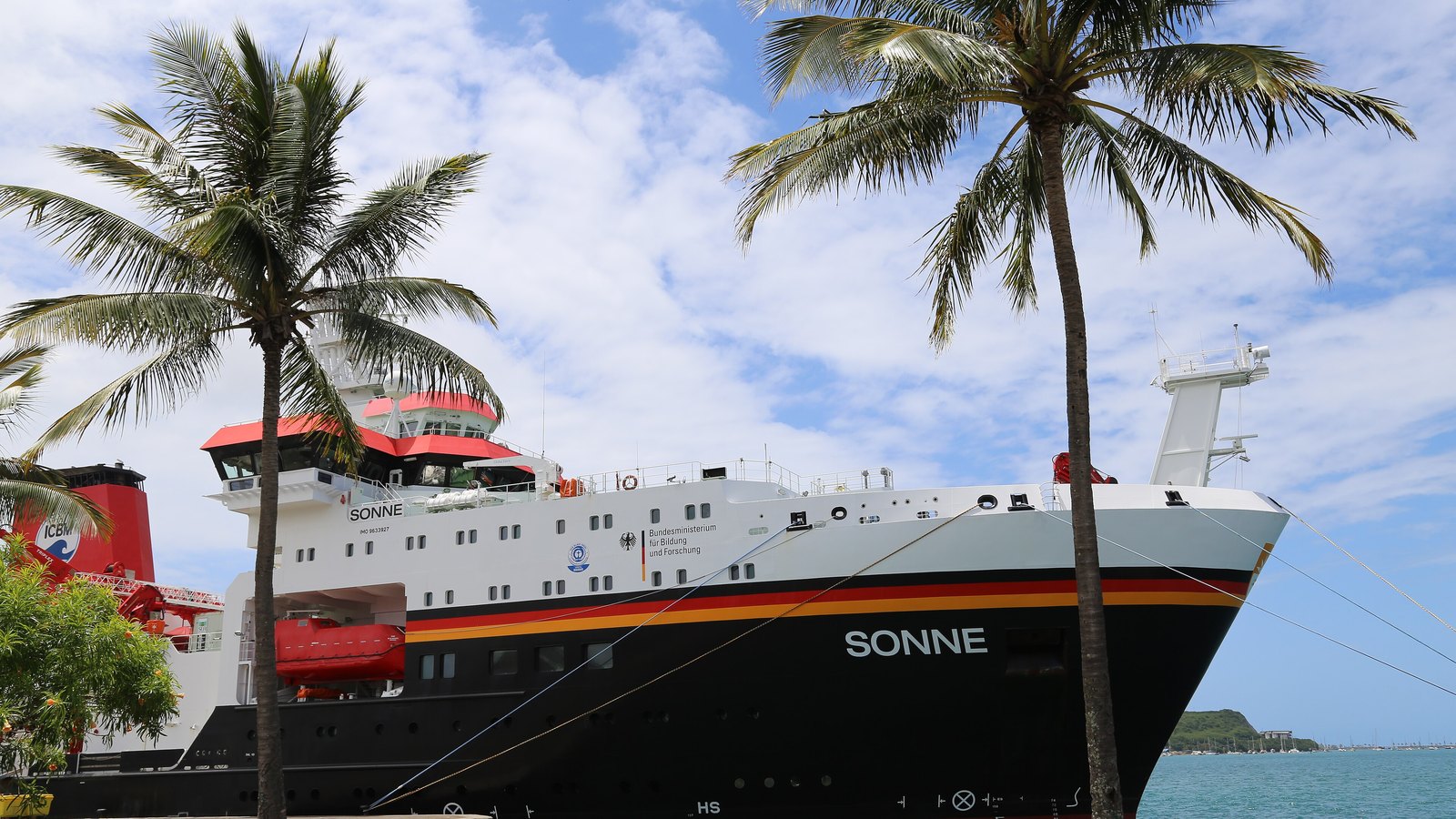
The study investigated pelagic sediment cores retrieved during expedition SO268 of the German research vessel RV Sonne across two exploration contract areas in the equatorial Northeast Pacific Ocean. Scientists analyzed geochemical distributions within the upper five meters of sediment across license areas managed by Germany’s BGR and the Belgian contractor Global Sea Mineral Resources (GSR). Both concessions operate under the regulatory framework of International Seabed Authority exploration contracts for polymetallic nodules, which mandate environmental baseline studies prior to commercial seabed operations.
Sampling spanned nodule-bearing seabed tracts, reference zones, and a nodule-barren area at water depths between 4,083 and 4,545 meters. Sediments consist primarily of siliceous ooze and silty mud with slow sedimentation rates of 0.2 to 0.6 centimeters per thousand years. Recovered gravity cores were transferred to shipboard cold rooms at 4 to 7 degrees Celsius for oxygen profiling and inert-atmosphere porewater extraction, preserving in situ redox conditions for trace element quantification.
Porewater Geochemistry and Mineralogical Controls on Metal Mobilization
Analytical measurements revealed stark geochemical contrasts between the two contract areas, driven by regional differences in particulate organic carbon (POC) flux. In the eastern CCZ (BGR area), POC flux is approximately 25% higher than in the north-central area (GSR), accelerating benthic microbial respiration. Consequently, oxygen penetration depths reach only 75 to 200 centimeters in BGR sediments, whereas porewater oxygen persists beyond 400 to 500 centimeters in the GSR sector.
These distinct redox regimes govern the reductive dissolution of sedimentary manganese oxides. In oxic porewaters across both areas, dissolved molybdenum (dMo) aligns with the homogeneous seawater background of ~110 nanomoles per kilogram. However, across the oxic-to-suboxic transition in BGR sediments, dMo concentrations surge to ~250 nanomoles per kilogram. In contrast, dMo in GSR sediments rarely exceeds 100 nanomoles per kilogram, even in deeper suboxic layers.
The table below details core coordinates, water depths, geochemical concentrations, and identified manganese mineral phases across the study sites:
| Core ID | Contract Area and Station Setting | Water Depth (m) | Coordinates | Peak Dissolved Mo (nmol/kg) | Peak Dissolved Mn (µmol/kg) | Dominant Solid Mn Phase |
|---|---|---|---|---|---|---|
| 016GC | BGR area – Trial site | 4,083 | 11° 55.863′ N, 117° 01.537′ W | ~250 | 1.68 | 10 Å phyllomanganate, todorokite |
| 037GC | BGR area – Reference site | 4,132 | 11° 50.708′ N, 117° 03.593′ W | ~250 | 8.20 | 10 Å phyllomanganate, todorokite |
| 104GC | BGR area – Dredge site pre-impact | 4,120 | 11° 51.780′ N, 117° 00.742′ W | ~250 | 14.50 | 10 Å phyllomanganate |
| 157GC | BGR area – No-Nodule area | 4,275 | 11° 50.976′ N, 117° 22.956′ W | below 100 | 23.00 | Todorokite (depleted solid Mo) |
| 071GC | GSR area – Trial site | 4,486 | 14° 06.696′ N, 125° 52.368′ W | below 100 | 0.05 | 7 Å phyllomanganate |
| 084GC | GSR area – Reference site | 4,545 | 14° 02.163′ N, 125° 55.471′ W | below 100 | 1.00 | 7 Å phyllomanganate |
| 144GC | GSR area – Karst structure | 4,522 | 14° 06.126′ N, 125° 51.550′ W | ~110 | 0.03 | 7 Å phyllomanganate (fully oxic) |
Decoupled Molybdenum and Cobalt Dynamics Across Redox Boundaries
The study demonstrated a notable decoupling between dissolved molybdenum and cobalt during suboxic early diagenesis. Dissolved cobalt closely tracked dissolved manganese release, peaking at 70 nanomoles per kilogram at the BGR No-Nodule site where dissolved manganese reached 23 micromoles per kilogram. In contrast, dissolved molybdenum profiles decoupled from manganese peak amplitudes, remaining elevated across broader horizons.
X-ray diffraction mineralogical data clarify this mechanism. In oxic sediments, cobalt is structurally incorporated as trivalent cobalt into the octahedral sheets of phyllomanganates. Molybdenum, present as molybdate, binds predominantly as an inner-sphere surface adsorption complex. When 10 Å phyllomanganates transform into tunnel-structured todorokite during burial, cobalt is reincorporated into the new lattice, whereas un-incorporated molybdate is released into the porewater.
Additionally, mineral stability varies between regions. GSR sediments are dominated by 7 Å phyllomanganates featuring a single water interlayer, conferring greater stability against dissolution than the double-interlayered 10 Å phases in the BGR area. Porewater filtration down to 0.02 micrometers confirmed the absence of colloidal manganese oxides, demonstrating that measured peaks reflect genuinely dissolved ionic species.
Implications for Paleoredox Reconstruction and Isotope Proxies
The findings carry major implications for geochemists applying molybdenum isotopes (delta-98-Mo) to reconstruct ancient atmospheric and oceanic oxygenation. Traditional models treat molybdenum burial in oxic pelagic sediments as a static, uniform sink. The CCZ data prove that molybdenum is actively mobilized during early diagenesis, diffusing upward to readsorb onto surface manganese oxides and downward into deeper sediments.
Because pelagic sediments cover extensive abyssal plains, unrecognized diagenetic recycling introduces systematic errors into oceanic mass-balance calculations. Incorporating these findings into global models aligns with modern marine biogeochemical mapping supported by the GEOTRACES international ocean trace element study program, showing that pelagic burial calculations must account for local mineralogical and redox controls.
Environmental Baseline Assessment for Deep-Sea Resource Governance
The research provides vital operational context for deep-sea mining governance. The Clarion-Clipperton Zone hosts vast polymetallic nodule deposits rich in nickel, copper, cobalt, and manganese. Pilot testing of seafloor collector systems, including the Patania II trials in 2021, disturbs surficial sediments and generates suspended plumes. Regulatory bodies require thorough baselines to differentiate natural geochemical fluxes from mining impacts.
Funded by the German Federal Ministry of Education and Research through the European JPI Oceans MiningImpact 2 collaborative research initiative, the study highlights that environmental monitoring cannot rely on surficial scrape sampling alone. Sub-surface geochemical gradients extending several meters into the seabed govern trace metal mobility, indicating that physical seabed disturbances could alter benthic porewater fluxes across regional contract areas.
What It Means for Marine Researchers and Grant Management Offices
For marine research institutions, the findings underscore the necessity of multi-meter core profiling protocols in marine geological sampling programs. Abyssal research campaigns cannot assume oxic pelagic sediments represent uniform geochemical environments. Cruise planning teams must budget for specialized clean-sampling infrastructure, including temperature-controlled processing and ultra-trace analytical instrumentation.
For research administrators, deep-sea research consortia face increasing data integration requirements. Project teams should utilize standardized visualization platforms such as Ocean Data View geochemical profiling tools. Furthermore, principal investigators funded under European or national programs must implement robust FAIR data management plans, ensuring porewater profiles and mineralogical diffraction datasets are deposited in certified archives like the PANGAEA earth and environmental science repository.
Next Steps for Abyssal Monitoring and Geochemical Data Archiving
Following these baseline assessments, scientists in the MiningImpact consortium are continuing benthic monitoring to assess long-term seabed recovery and microbial response to mechanical disturbance. These field programs seek to establish quantitative indicators of environmental status across deep-sea exploration zones.
Concurrently, marine research organizations are working alongside initiatives coordinated by the National Oceanic and Atmospheric Administration ocean and coastal stewardship initiatives to standardize environmental baseline criteria. As the International Seabed Authority negotiates exploitation regulations for seabed minerals, these empirical geochemical datasets provide an essential scientific foundation for defining environmental thresholds and regulatory monitoring standards.
Sources
- Communications Earth and Environment: Heterogeneous cycling of molybdenum and other trace metals in oxic to suboxic Pacific pelagic sediments, checked 2026-11-29
- International Seabed Authority: Polymetallic Nodules Exploration Contracts, checked 2026-11-29
- JPI Oceans: MiningImpact 2 Project and Environmental Baselines, checked 2026-11-29
- GEOTRACES: About the International Study of Marine Biogeochemical Cycles, checked 2026-11-29
- National Oceanic and Atmospheric Administration: Ocean and Coasts Research and Stewardship, checked 2026-11-29






