
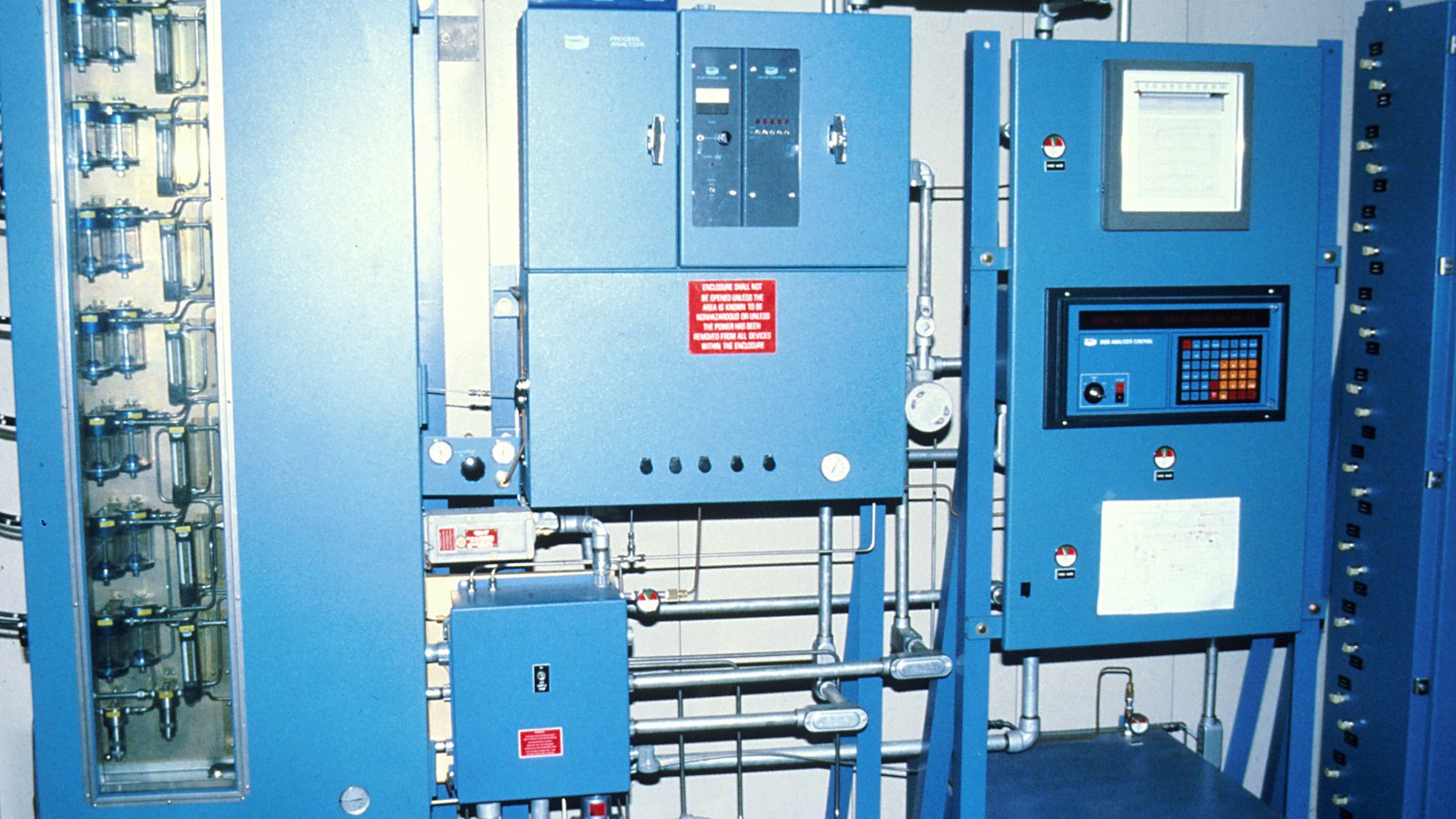
On 27 November 2026, the UK Department for Environment, Food and Rural Affairs published updated technical guidance for the national Toxic Organic Micro Pollutants Network, codifying continuous ambient air sampling and high-resolution mass spectrometry protocols across eight urban and rural monitoring stations. The revised framework establishes standardized workflows for quantifying trace persistent organic pollutants, directly impacting environmental chemistry research groups and university observatory managers supporting international atmospheric treaty compliance.
What happened
The UK Department for Environment, Food and Rural Affairs (Defra) issued updated operational guidance on 27 November 2026 for the Toxic Organic Micro Pollutants (TOMPs) Network. Operating within the broader UK air quality monitoring infrastructure, the TOMPs network serves as the primary observational baseline for persistent organic pollutants (POPs) across the UK. The new guidance delineates sampling protocols, chemical target suites, monitoring station histories, and laboratory quantification standards.
Under the updated technical framework, the network maintains eight active monitoring stations across England, Scotland, Wales, and Northern Ireland. These include rural background stations at High Muffles in North Yorkshire and Hazelrigg near Lancaster, an upland peatland station at Auchencorth Moss in south-east Scotland, a coastal background station at Weybourne in Norfolk, and urban background facilities in Manchester, Cardiff Lakeside, Belfast Kilmakee Leisure Centre, and the London Seacole Building site, which replaced the historical Nobel House station in 2024. Ambient air is sampled continuously over bi-weekly periods, with validated datasets published quarterly on Defra UK-AIR.
The operational guidance formally aligns monitoring with UK obligations under the UNECE Aarhus Protocol on POPs and the United Nations Stockholm Convention Global Monitoring Plan. Through calibrated sampling of persistent halogenated hydrocarbons, the network supplies essential empirical validation for the UK National Atmospheric Emissions Inventory.
Key details of the updated TOMPs network guidance
The technical guidance specifies field collection standards and advanced laboratory workflows designed to capture ultra-trace organic contaminants at picogram and femtogram per cubic metre levels. Field sampling employs Analitica Airflow and modified Andersen GPS-1 high-volume air samplers running continuously over 14-day intervals. Ambient air passes through glass or quartz fibre filters to capture particulate-phase compounds, backed by polyurethane foam (PUF) plugs that capture gas-phase vapours.
Laboratory analysis utilizes gas chromatography coupled to high-resolution mass spectrometry (GC-HRMS), including instruments such as the Micromass Autospec Ultima, to quantify polychlorinated dibenzo-p-dioxins and dibenzofurans (PCDD/Fs) alongside coplanar, dioxin-like polychlorinated biphenyls (PCBs). Routine non-dioxin-like PCBs and polybrominated diphenyl ethers (PBDEs, spanning tetra- to decaBDE) are quantified via GC-MS, while hexabromocyclododecane (HBCDD) isomer determination uses liquid chromatography-triple quadrupole mass spectrometry (LC-MS/MS).
| Monitoring Station | Classification | Operational Start | Sampler Type | Target Pollutants |
|---|---|---|---|---|
| London Seacole Building | Urban Background | 2024 (Nobel House 1991) | High-Volume Analitica Airflow | PCDD/Fs, PCBs, PBDEs, decaBDE, HBCDD |
| Manchester | Urban Background | 1991 | Modified Andersen GPS-1 / Analitica | PCDD/Fs, PCBs, PBDEs, decaBDE, HBCDD |
| Hazelrigg (Lancaster) | Semi-Rural / Academic | 1992 | High-Volume Analitica Airflow | PCDD/Fs, PCBs, PBDEs, decaBDE, HBCDD |
| High Muffles | Rural Background | 1997 | High-Volume Analitica Airflow | PCDD/Fs, PCBs, PBDEs, decaBDE, HBCDD |
| Weybourne | Coastal / Rural Background | 2008 (Stoke Ferry 1997) | High-Volume Analitica Airflow | PCDD/Fs, PCBs, PBDEs, decaBDE, HBCDD |
| Auchencorth Moss | Rural Upland Peatland | 2008 | High-Volume Analitica Airflow | PCDD/Fs, PCBs, PBDEs, decaBDE, HBCDD |
| Cardiff Lakeside | Urban Background | 2022 | High-Volume Analitica Airflow | PCDD/Fs, PCBs, PBDEs, decaBDE, HBCDD |
| Kilmakee Leisure Centre | Urban Background | 2022 | High-Volume Analitica Airflow | PCDD/Fs, PCBs, PBDEs, decaBDE, HBCDD |
Background and context: The evolution of UK POPs monitoring
The UK initiated systematic toxic organic micro-pollutant monitoring in 1991 to measure human exposure to dioxins and industrial PCBs following combustion and industrial emissions. Initial stations were established in London and Manchester, before expanding into semi-rural and rural catchments to evaluate regional atmospheric dispersion and long-range transport. Stations at Hazelrigg (1992), High Muffles (1997), and Weybourne (2008) created a long-term observational transect spanning contrasting human activity levels.
Over three decades, the network scope expanded to incorporate novel persistent halogenated substances. Polybrominated diphenyl ethers (PBDEs), decaBDE, and brominated aliphatic flame retardants such as HBCDD were integrated into routine surveillance as international regulations restricted their manufacture. Methodological frameworks published in the Environmental Monitoring and Assessment Journal emphasize that decadal monitoring records are vital to confirm whether regulatory bans yield measurable ambient declines.
The UK framework operates alongside multilateral environmental pacts explored in global environmental politics. Similar to atmospheric deposition studies carried out by the NOAA Great Lakes Environmental Research Laboratory, multi-station air networks distinguish primary industrial emissions from secondary re-volatilization out of soils and marine waters.
Stakeholder perspectives and academic partnerships
The TOMPs network relies on a central partnership between government agencies and higher education researchers. Chemical extraction, chromatographic purification, and high-resolution mass spectrometry are managed in collaboration with atmospheric chemists at the Lancaster Environment Centre at Lancaster University. Lancaster University researchers have developed robust carbon-13 isotope dilution quantification techniques, ensuring rigorous metrological precision across low picogram matrices.
Academic researchers note that sustained non-automatic air sampling delivers ground-truth validation that numerical transport models cannot replicate. Measuring gas-particle partitioning across shifting seasonal temperatures is critical for environmental exposure models. Ecotoxicological research tracing chemical bioaccumulation across food webs, including insect and terrestrial systems examined in environmental entomology, relies on baseline data from rural TOMPs stations to calibrate environmental risk models.
Regional bodies have similarly reinforced the need for harmonized trace monitoring. The European Environment Agency highlights that comprehensive air quality assessment requires integrating continuous non-automatic POPs networks with criteria pollutant stations, ensuring cross-border consistency across transboundary air regimes.
What it means for researchers, universities, and research offices
The updated guidance introduces operational and strategic implications for research institutions working in atmospheric science, analytical chemistry, and public health:
- Research Data Infrastructure: Investigators can access verified quarterly concentration records on UK-AIR to support longitudinal exposure studies and atmospheric chemistry grant proposals.
- Analytical Benchmarking: Academic analytical facilities measuring environmental halogenated contaminants should align extraction and GC-HRMS quantification protocols with published Defra quality standards.
- Observatory Infrastructure Management: Universities hosting or partnering with monitoring stations—including Lancaster University at Hazelrigg and research consortia at Weybourne and Auchencorth Moss—must maintain sample security and 14-day continuous sampling cycles.
- Research Grant Alignment: Investigators seeking Natural Environment Research Council (NERC) funding can leverage the eight-station network as collaborative infrastructure for co-monitoring emerging contaminants.
What happens next
Following the publication of the 27 November 2026 guidance, network operators will maintain continuous fortnightly sampling across all eight monitoring locations. Defra will publish quarterly validated concentration datasets for PCBs, dioxins, furans, and brominated flame retardants on the UK-AIR portal throughout 2027.
The synthesized annual TOMPs technical report covering monitoring trends and meteorological back-trajectories will be released in mid-2027. Furthermore, validated empirical measurements will be formally incorporated into the UK annual emission inventory submission to the UNECE Convention on Long-Range Transboundary Air Pollution and the global effectiveness evaluations of the Stockholm Convention.
Sources
- Department for Environment, Food and Rural Affairs: Air pollution monitoring: Toxic Organic Micro Pollutants Network – GOV.UK, checked 2026-11-28
- Defra UK-AIR: Toxic Organic Micro Pollutants (TOMPs) Networks, checked 2026-11-28
- Secretariat of the Stockholm Convention: Overview – Global Monitoring Plan, checked 2026-11-28
- European Environment Agency: Air pollution | In-depth topics, checked 2026-11-28
- Lancaster University: Research – Lancaster University, checked 2026-11-28






