

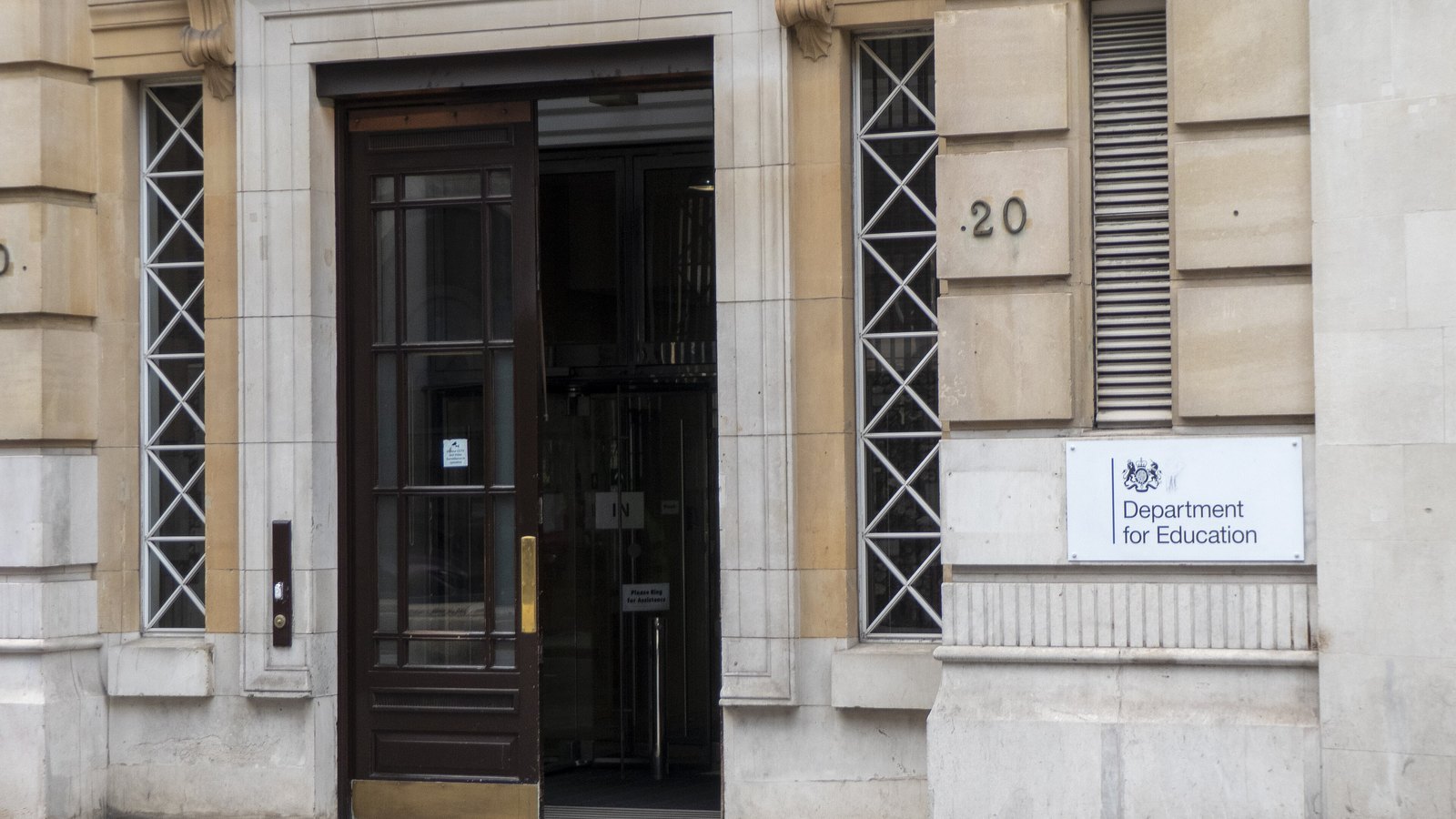
On 26 November 2026, the UK Department for Education published updated transparency disclosures for the 2026 to 2027 financial year, detailing departmental and executive agency procurement spending exceeding £25,000 alongside electronic purchasing card transactions over £500. The figures provide research administrators, university finance offices, and social science consortia with crucial visibility into state-funded educational research commissions, longitudinal evaluation contracts, and arm’s-length agency operations across England.
Transparency Release Scope and Expenditure Totals
The disclosures released under the government’s routine public transparency commitments reflect transactions executed through August 2026 for major commercial procurements and October 2026 for electronic payment cards. Published via the official DfE spend over £25,000 register, the release consolidates monthly expenditure across the core department as well as three critical executive agencies: the Standards and Testing Agency (STA), the Teaching Regulation Agency (TRA), and the newly operational Skills England body.
Across the August 2026 monthly release alone, the Department for Education and its constituent agencies recorded 23,225 discrete transactions representing over £8.36 billion in gross public outlays. While statutory local government grants, academy trust allocations, and student finance transfers account for the dominant share of total outlays—including £6.34 billion channeled through Funding and Financial Oversight and £1.28 billion via Higher Education Directorates—direct procurement across professional services, technical software development, and commissioned academic research represented tens of millions of pounds in contestable supplier contracts.
This regular cadence of public ledger publishing aligns with broader Whitehall commitments following the passage of the Procurement Act 2023, which mandates heightened transparency across public sector commercial pipelines and standardized pipeline reporting. The data release offers higher education institutions and independent research organizations an unvarnished audit trail of how central educational priorities translate into funded commercial projects and external service contracts, complementing existing DfE biodiversity grant funding guidance and sector-specific financial allocations.
Academic Research, Evaluation, and Skills Contracts
Within the commercial procurement line items, the August 2026 dataset highlights substantial investments directed to university research departments, independent policy institutes, and survey research organizations. Commissioned through the Strategy, Assessment, Research and Data Directorate (SARDIS), these outlays support national educational evaluation frameworks, curriculum development assessments, and longitudinal cohort tracking.
A primary recipient in the research domain is University College London (UCL), which secured £731,186 in research and development payments under SARDIS during August 2026, supplemented by multiple professional education consulting contracts delivered via UCL Consultants Ltd valued at £195,820, £134,457, and £114,762 across curriculum and school workforce directorates. In parallel, the National Foundation for Educational Research (NFER) recorded £186,892 in SARDIS research and evaluation expenditure alongside £30,378 in specialized educational services commissioned by the Standards and Testing Agency.
Specialist social research organizations and policy evaluation consultancies also featured prominently in the August disclosures. Verian Group UK Limited—formerly Kantar Public—accounted for £294,903 in research and evaluation services, while Alma Economics Limited received £78,750 for targeted economic analysis. Market and social research agency IFF Research secured multiple disbursements totaling more than £81,500 across communications and evaluation streams, while Ipsos MORI UK Limited and Ipsos (Market Research) Limited recorded £48,324 and £24,834 respectively. International policy think tank RAND Europe Community Interest Company logged £54,733 for curriculum and qualifications research, and Britain Thinks (Thinks Insight and Strategy Limited) received £29,250 for technical and vocational research.
Summary of Major Research and Agency Procurement Outlays
The August 2026 procurement register illustrates how public funds are apportioned across universities, independent research institutes, and executive agency delivery partners. The following table provides a comparative breakdown of key research, testing, and evaluation suppliers identified within the monthly disclosures, illustrating contract scale, expense area, and administrative purpose.
| Supplier Organisation | Expense Area | Expense Type | Contract Description | August 2026 Amount |
|---|---|---|---|---|
| University College London | SARDIS | Other Costs | Research and development | £731,186.00 |
| Verian Group UK Limited | SARDIS | Other Goods and Services | Research and Evaluation | £294,903.50 |
| National Foundation for Educational Research | SARDIS | Other Goods and Services | Research and Evaluation | £186,892.00 |
| UCL Consultants Ltd | Curriculum and Qualifications | Other Goods and Services | Professional Services | £195,820.93 |
| University of Sussex | School Workforce Directorate | Other Goods and Services | Professional Education Services | £137,450.02 |
| Alma Economics Limited | SARDIS | Other Goods and Services | Research and Evaluation | £78,750.00 |
| RAND Europe Community Interest Company | Curriculum and Qualifications | Other Costs | Research and development | £54,733.00 |
| IFF Research Limited | SARDIS | Marketing and Media Comms | Market Research and Evaluation | £52,261.54 |
| Ipsos MORI UK Limited | SARDIS | Other Costs | Research and development | £48,324.88 |
| Standards and Testing Agency (NFER Trading) | STA Operations | Other Goods and Services | Educational Testing Services | £30,378.00 |
These figures demonstrate that while central Whitehall funding streams like UKRI research funding mechanisms provide traditional peer-reviewed grant support, departmental direct procurement represents an equally vital, highly contestable revenue stream for university research faculties and policy institutes.
Purchasing Card Transactions and Emerging Agency Spending Patterns
Alongside the £25,000 procurement register, the Department for Education published its October 2026 electronic purchasing card solution (ePCS) dataset covering transactions over £500 under the companion DfE ePCS transparency publication. Recording 37 individual transactions, the purchasing card log provides granular insight into micro-procurement, operational software licensing, and arm’s-length body disbursements that bypass formal multi-stage tender processes.
Within the central department’s card usage, regulatory and international mobility expenses featured prominently, including three separate £3,165 transactions processed through the UK Visa and Immigration (UKVI) service for specialized personnel sponsorship. Direct university transactions also surfaced, including a £4,466 payment to the University of Nottingham for specialized operational support.
The electronic card log also illuminates operational spending by Oak National Academy, the arm’s-length curriculum body established to deliver open curriculum resources and classroom technology tools. Oak National Academy logged recurring card outlays for enterprise cloud infrastructure and artificial intelligence subscriptions, including £7,921 with Google Cloud, £4,407 with Anthropic, and £2,977 with OpenAI in October 2026. These disclosures reveal how public educational agencies are directly funding commercial foundation model access and cloud computing services to support curriculum delivery, continuous deployment, and digital resource generation.
Implications for University Research Contracts and Compliance
For university research offices, research finance directors, and academic principal investigators, regular departmental procurement disclosures carry substantial operational implications. Unlike academic research grants awarded under standard non-commercial terms, departmental commissions operate as formal public supply or service contracts. Navigating the legal and operational differences between grants versus commercial contracts requires distinct institutional governance mechanisms.
Under public contracts, universities deliver contracted outputs under rigid service level agreements, intellectual property assignments, and milestone payment schedules rather than academic freedom covenants. As highlighted by higher education sector networks including the British Universities Finance Directors Group, institutions bidding on government tenders must establish robust full-economic costing models that distinguish between cost-reimbursable versus fixed-price delivery structures to avoid unforeseen financial liabilities.
Furthermore, departmental commissioned research frequently involves linking administrative educational records, National Pupil Database subsets, and longitudinal school metrics. Universities handling these projects must maintain rigorous data protection protocols, aligning contract execution with data protection compliance for research datasets while satisfying departmental security accreditation standards. Because transparency datasets are published under the Open Government Licence v3.0, researchers and external analysts can freely scrutinize, reuse, and cross-reference commercial expenditure records against award notices published on Find a Tender.
Regulatory Transparency Timelines and Next Steps
The publication of the August spend over £25,000 register and the October ePCS dataset forms part of an established monthly transparency cycle managed by the Department for Education’s Finance and Commercial Directorate. Departmental procurement guidance indicates that subsequent monthly releases—covering September and October spend over £25,000 alongside November purchasing card transactions—are scheduled for publication across December 2026 and January 2027.
University commercial teams and research consortia preparing bids for upcoming DfE commissioned evaluations must monitor the Central Digital Platform as requirements under the Procurement Act 2023 complete their statutory implementation. Upcoming tenders in education analytics, regional skills mapping under Skills England, and national curriculum assessment frameworks will require participating academic institutions to meet mandatory supplier registration criteria, verifiable carbon reduction declarations, and prompt payment compliance.
Research institutions seeking to secure future departmental commissions should verify their dynamic purchasing system registrations and ensure internal research governance frameworks align with published transparency requirements, ensuring both contract performance and financial accounting stand up to public scrutiny.
Sources
- Department for Education: DfE and executive agency spend over £25,000: 2026 to 2027, checked 2026-11-28
- Department for Education: DfE and executive agency spend over £500 by ePCS: 2026 to 2027, checked 2026-11-28
- British Universities Finance Directors Group: Linking Payments to Contracts (Contracting Authorities), checked 2026-11-28
- The National Archives: Open Government Licence for Public Sector Information (v3.0), checked 2026-11-28
- UK Parliament: Procurement Act 2023 Statutory Provisions, checked 2026-11-28






