
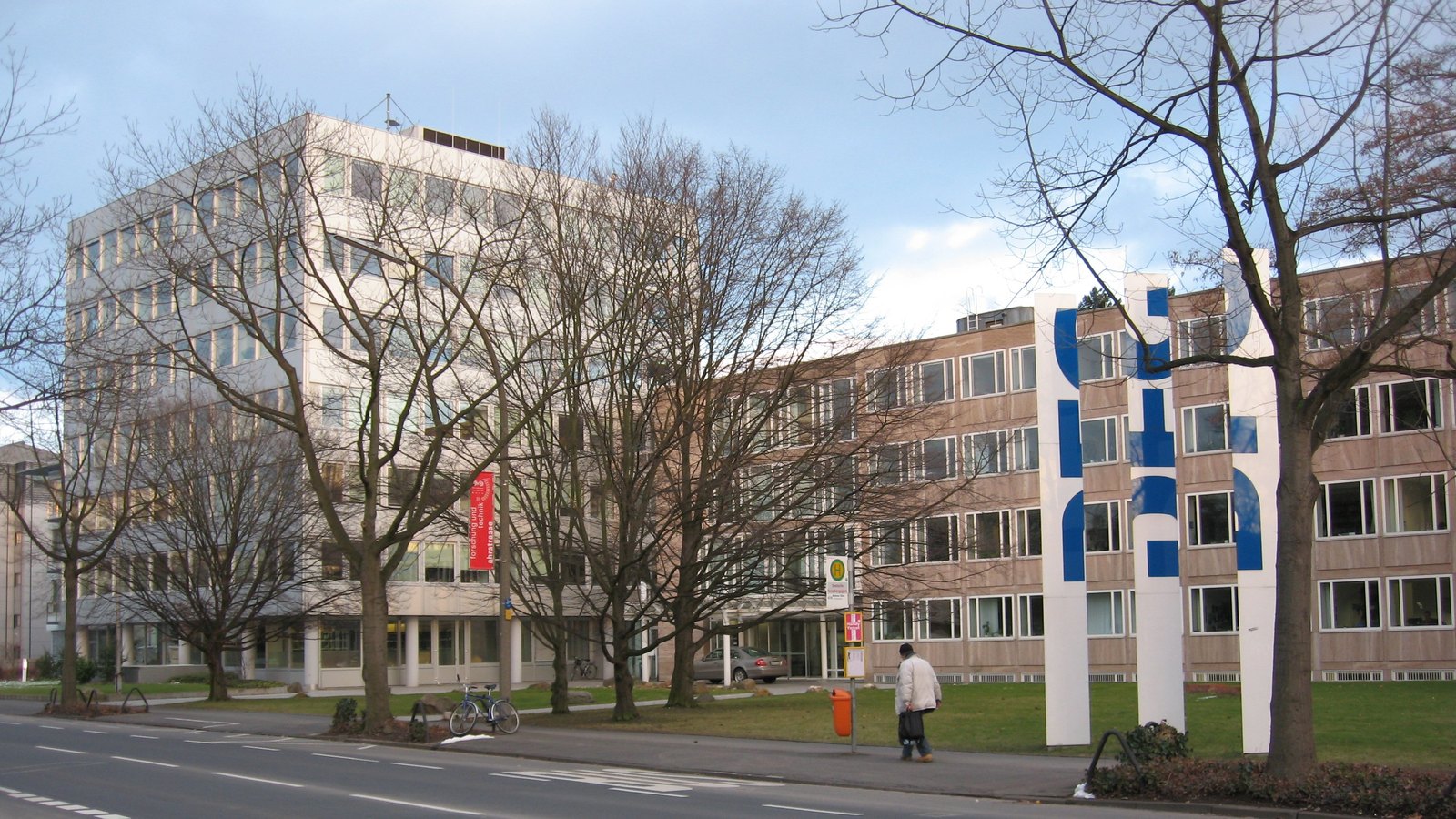
The Grants Committee of the Deutsche Forschungsgemeinschaft approved the establishment of 11 new Research Training Groups in Bonn on November 16, 2026, allocating approximately 72 million euros over an initial five-year funding period starting in early 2027 to strengthen structured doctoral education and accelerate early-career scientific independence across German research universities.
What happened
The Grants Committee (Bewilligungsausschuss) of the Deutsche Forschungsgemeinschaft (DFG, German Research Foundation) convened in Bonn to finalize autumn 2026 funding allocations for early-career researchers. In its official announcement, the DFG confirmed the approval of 11 new Research Training Groups (Graduiertenkollegs, RTGs) alongside renewals for four established programs, awarding approximately 72 million euros for an initial five-year funding cycle commencing in early 2027.
The newly funded consortia span a broad range of scientific disciplines, covering computer science model diversity, generative artificial intelligence, RNA folding, biohybrid implants, and exhibition studies. As reported across research institutions by the Informationsdienst Wissenschaft, each RTG establishes a coordinated qualification program that replaces isolated master-apprentice models with cohort-based interdisciplinary research environments.
Consortium leadership places extensive operational demands on faculty coordinators. Designated academic spokespersons must coordinate multi-departmental curricula and supervisory boards, reflecting the complex institutional responsibilities central to what a principal investigator does when directing multi-investigator academic initiatives.
Key details
The €72 million commitment funds the 11 new consortia for five years starting in early 2027. Each grant provides personnel and direct research costs, along with a standard 25 percent programme allowance (Programmpauschale) for indirect institutional expenditures. Managing these indirect allowances enables universities to maintain computational and lab infrastructure without diminishing direct researcher stipends, reflecting standard distinctions between direct cost vs indirect cost categories in research administration.
| Research Training Group | Host University | Spokesperson | Core Research Focus |
|---|---|---|---|
| NextBioPro² (GRK 3299) | RWTH Aachen University | Prof. Dr. Stefan Jockenhövel | Translational biohybrid respiratory implants and scaffold integration |
| RNA structure-mediated control of gene expression | Freie Universität Berlin | Prof. Dr. Florian Heyd | RNA folding mechanisms, gene regulation, and structural biology |
| Spectres of the Social | Humboldt-Universität zu Berlin | Prof. Dr. Barbara Schlieben | Premodern communication with non-human and metaphysical entities |
| Advanced Content Analytics | Goethe University Frankfurt | Prof. Dr. Oliver Hinz | Transparent machine learning for corporate unstructured data |
| Generative AI in the Sciences | Heidelberg University | Prof. Dr. Tristan Bereau | Generative AI for physics, astrophysics, and life science data |
| From Omics to Mechanisms | Heidelberg University | Prof. Dr. Dirk Grimm | Statistical modeling for high-throughput biological data |
| Differential Operators with Stochastics & Geometry | University of Jena | Prof. Dr. Daniel Lenz | Randomness and geometric irregularity in physical processes |
| Dimensions of Exhibiting | University of Kassel | Prof. Dr. Alexis Joachimides | Global exhibition practices, display politics, and cultural infrastructure |
| Molecular Signatures of Genes & Environment | University of Konstanz | Prof. Dr. Ivano Amelio | Gene-environment interactions and toxicological pollutant metrics |
| MODIUS (Model Diversity) | University of Rostock | Prof. Dr. Adelinde Uhrmacher | Multi-model computational architectures linking AI with simulations |
| Human Models in Inflammation & Thrombosis | University of Tübingen | Prof. Dr. Stefan Liebau | Human vascular models of inflammatory thrombosis to replace animal testing |
The Grants Committee also approved second-term renewals for four established RTGs: an International Research Training Group at TU Dresden partnering with King’s College London on affective disorders, alongside groups at the University of Hamburg (emotional learning), University of Passau (digital platform ecosystems), and University of Wuppertal (history of science and technology).
Several consortia target urgent methodological challenges. As detailed by Goethe University Frankfurt, its joint program with TU Darmstadt develops transparent AI methods to analyze complex corporate disclosures and regulatory filings. Concurrently, project documentation from the Institute of Applied Medical Engineering at RWTH Aachen shows that the NextBioPro² consortium received approximately €5.7 million to engineer biohybrid airway implants. Sector reporting from Bioengineer.org noted that these awards prioritize international recruitment and interdisciplinary mentoring structures.
Background and context
The DFG established the Research Training Groups program in 1990 to modernize German doctoral education, which had traditionally relied on an isolated master-apprentice model under an individual professor. RTGs established cohort-based learning, multi-advisor committees, and institutional funding stability.
The autumn 2026 awards reflect a systemic reform initiated in May 2021, when the DFG extended the standard initial funding period from four and a half to five years. This shift was designed to align grant timelines with complex doctoral projects, preventing premature renewal cycles while candidates conduct field or laboratory research. Because proposals approved after May 2021 operate on five-year terms, only four groups were eligible for renewal in November 2026. The DFG portfolio currently includes 200 RTGs, of which 28 are International Research Training Groups.
Operating multi-institutional consortia involving cross-university partners requires formal governance frameworks. These arrangements mirror the contractual mechanisms analyzed when universities determine whether an initiative functions under a grant vs contract vs cooperative agreement, establishing clear expectations for cost-sharing, data stewardship, and intellectual property.
Reaction
Consortium spokespersons underscored the necessity of sustained funding for complex interdisciplinary challenges. Professor Oliver Hinz of Goethe University Frankfurt noted that financial markets face massive volumes of unstructured multimodal data, making transparent, interpretable machine learning models essential to prevent hallucinations in high-stakes regulatory environments.
At RWTH Aachen, spokesperson Professor Stefan Jockenhövel emphasized that clinical translation requires doctoral researchers trained across engineering, cell biology, and ethics to successfully transition laboratory prototypes into approved clinical solutions.
DFG Grants Committee representatives noted that the approved groups demonstrate the value of structured training across disciplines, ensuring junior scholars receive comprehensive research and professional development.
What it means for researchers, universities and research offices
The funding announcement provides actionable takeaways for institutional research operations:
- For Principal Investigators and Spokespersons: Leading an RTG requires coordinating multi-advisor committees, structured qualification plans, and cohort progress tracking. Faculty leaders must deploy systematic research project management for principal investigators to manage cross-institutional milestones effectively.
- For Research and Sponsored Projects Offices: University administrations must prepare for funding rollouts in early 2027, allocate the 25 percent indirect cost allowance, and establish sub-allocation agreements between participating institutions.
- For Early-Career Researchers: Doctoral candidates gain five years of guaranteed funding, structured curricula, dual mentorship, and international mobility budgets.
- For Research Ethics and Data Governance Boards: Consortia involving generative AI, human tissue models, and sensitive corporate data must establish verified data management plans and ethical clearances prior to project launches.
What happens next
Host universities will launch international recruitment campaigns between December 2026 and February 2027 to hire doctoral candidates and postdoctoral mentors. Initial consortia activities will launch in spring 2027, with programs such as RWTH Aachen’s NextBioPro² scheduled to commence operations on April 1, 2027.
The DFG Grants Committee will convene its next funding session in May 2027, which will review establishment drafts and initiate renewal evaluations for the first cohorts funded under the five-year policy adopted in 2021. The 11 new RTGs will operate through early 2032, when they will be eligible to apply for a second five-year funding period.
Sources
- Deutsche Forschungsgemeinschaft: DFG to Fund 11 New Research Training Groups, checked 2026-11-21
- Informationsdienst Wissenschaft: DFG fördert elf neue Graduiertenkollegs, checked 2026-11-21
- Goethe University Frankfurt: Graduate Research Training Group Explores AI Analysis, checked 2026-11-21
- RWTH Aachen University: NextBioPro² DFG Research Training Group 3299, checked 2026-11-21
- Bioengineer.org: German Research Foundation Awards 72 Million Euros for 11 New Training Groups, checked 2026-11-21


