
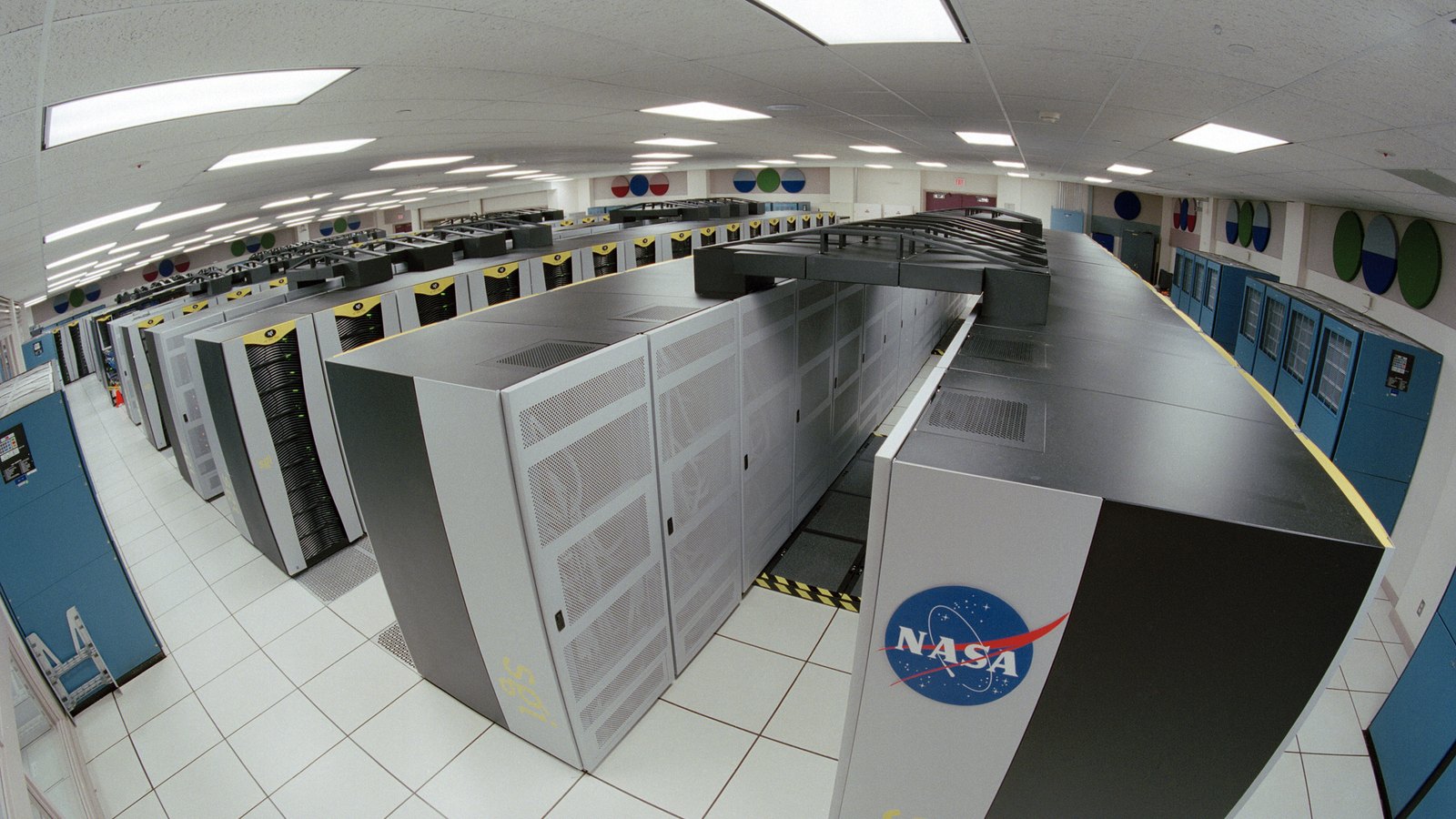
The Defense Advanced Research Projects Agency has awarded a two-year, $600,000 research grant under its Compositional Learning-And-Reasoning for Automated Complex Systems Engineering program to computer scientists at New Mexico State University to develop verified neuro-symbolic artificial intelligence architectures that pair machine learning pattern recognition with formal logical proofs for safety-critical defense engineering.
DARPA Selects NMSU Consortium for High-Assurance AI Research
On November 20, 2026, the Defense Advanced Research Projects Agency (DARPA) announced a $600,000 research award to New Mexico State University (NMSU) under the agency’s Compositional Learning-And-Reasoning for Automated Complex Systems Engineering (CLARA) program. The two-year award positions NMSU as the lead institution of one of only ten university research teams selected nationally to pioneer fundamental breakthroughs in mathematically verifiable artificial intelligence.
The funded effort, designated Project SPARTA (Splitting-based Polynomially-bounded Automated Reasoning with Tensorized Adaptation), is led by Professor Son Tran, head of the Department of Computer Science at NMSU, alongside Assistant Professor Stylianos Vasileiou. The NMSU leadership spearheads a multi-university research consortium that unites investigative groups from Arizona State University, directed by Professor Chitta Baral, and the University of Nebraska at Omaha, directed by Professors Yuliana Lierler and Jorge Fandinno. Tracking such cross-institutional awards and their scientific artifacts increasingly relies on infrastructure such as a Grant DOI to ensure provenance across academic consortia.
Project SPARTA addresses an urgent vulnerability in modern machine learning: the inability of probabilistic deep neural networks to provide strict mathematical guarantees regarding correctness, safety, and operational logic. By formally bridging statistical pattern recognition with automated theorem proving, the consortium intends to produce artificial intelligence systems capable of executing high-stakes decisions while furnishing transparent, verifiable deductive proofs that human engineers and automated auditors can inspect.
Technical Architecture of Project SPARTA and the CLARA Framework
The CLARA initiative, launched through DARPA’s Defense Sciences Office (DSO), is structured to transcend conventional machine learning paradigms that simply append post-hoc validation filters onto large-scale deep models. Instead, CLARA demands native algorithmic compositionality where statistical components and symbolic logic engines interact bidirectionally during inference.
Project SPARTA contributes three integrated innovations to the CLARA technical program:
- Splitting-Based Logic Programming: SPARTA utilizes theory splitting techniques derived from answer-set programming and declarative constraint logic. By mathematically decomposing large, intractable knowledge bases into modular sub-theories, the solver can verify discrete state transitions without evaluating unnecessary combinatorial branches.
- Polynomially-Bounded Automated Reasoning: A frequent impediment in automated deduction is exponential computational complexity. SPARTA enforces polynomial upper bounds across reasoning cycles, preventing automated theorem provers from encountering runtime timeouts during mission-critical engineering design workflows.
- Tensorized Adaptation Interfaces: Rather than passing unstructured text strings between models, SPARTA establishes algebraic tensor interfaces that directly align high-dimensional neural representations with discrete symbolic predicates. This bidirectional translation draws upon established principles in neural computation to synchronize continuous feature embeddings with symbolic knowledge bases.
The technical parameters and award characteristics of the CLARA research grant are summarized below:
| Program Specification | Project SPARTA Implementation | DARPA CLARA Objective |
|---|---|---|
| Award Amount and Duration | $600,000 over 24 months (two-year grant) | Targeted seed funding under Disruption Opportunity |
| Lead Institution | New Mexico State University (NMSU) | Top-tier university computer science faculties |
| Consortium Partners | Arizona State University, Univ. of Nebraska at Omaha | Multi-institution collaborative research teams |
| Reasoning Paradigm | Answer-Set Programming and Logic Splitting | Automated Reasoning (AR) and Knowledge Representation |
| Learning Integration | Tensorized continuous-discrete adaptation interfaces | Deep composition of Machine Learning (ML) with AR |
| Assurance Standard | Formally checkable proofs with polynomial bounds | Scalable, verifiable high-assurance system engineering |
Background: Addressing the Failure Modes of Statistical AI
Over the past decade, defense and commercial engineering sectors have embraced deep neural networks and large language models for complex systems automation. However, deep neural networks remain fundamentally inductive, relying on correlation rather than deduction. In safety-critical engineering domains—such as flight control software, aerospace trajectory synthesis, autonomous naval navigation, and power grid automation—a single hallucinated variable or unverified edge case can lead to catastrophic system failure.
Recognizing these limitations, the DARPA CLARA program was conceived to overcome what program managers describe as the superficial “tack-on” approach to artificial intelligence safety. Under prevailing industry practices, developers typically query a neural network and subsequently pass the output through external rule filters or prompt-based monitors. DARPA’s DSO identified this serial configuration as fundamentally brittle, offering little formal assurance when systems encounter out-of-distribution inputs.
CLARA was solicited as a Disruption Opportunity under DARPA’s Disruptioneering pipeline, designed to fast-track high-risk, high-reward basic research through agile contractual mechanisms. Specialized defense consulting analysis by McAllister and Quinn noted that DARPA utilizes these rapid Disruption Opportunities to seed breakthrough scientific explorations that challenge prevailing commercial assumptions. Academic researchers seeking to navigate defense research programs can access institutional entry points through DARPAConnect, which provides educational pathways and administrative guidance for universities competing for specialized agency grants.
Attributed Perspectives from Consortium Leadership and Defense Analysts
The core objective of Project SPARTA is to replace unverified statistical guesses with rigorous logical guarantees without sacrificing the inductive power of machine learning models. Consortium principal investigator Son Tran articulated the balance required for practical engineering deployment:
“Integrating these branches of artificial intelligence will provide the speed and flexibility of machine learning with verifiability based on artificial reasoning proofs that have strong logical explainability and computational tractability.”
Tran emphasized that computational tractability remains the make-or-break criterion. While formal logic offers unassailable correctness proofs, classical provers often choke on complex industrial systems, rendering verification impractical for real-time deployment. SPARTA’s polynomial bounding aims to guarantee that mathematical proofs execute within deterministic processing budgets.
Independent technology reporting from Superpower Daily observed that the NMSU-led initiative represents fundamental basic science rather than an off-the-shelf commercial product. The outlet highlighted that the central technical challenge will be demonstrating whether formal verification can remain scalable across arbitrary complex systems rather than functioning only in constrained, hand-curated laboratory benchmarks. Ensuring that such experimental proof frameworks support empirical reproducibility across diverse compute environments remains central to DARPA’s validation standards.
Implications for University Research Offices and Defense Contractors
The award to NMSU carries operational and compliance considerations for university research administrators and defense engineering contractors:
- Inter-Institutional Subaward Administration: Because the $600,000 award encompasses three distinct universities across New Mexico, Arizona, and Nebraska, sponsored projects offices must maintain rigorous subrecipient monitoring, intellectual property management, and data sharing protocols in compliance with Uniform Guidance (2 CFR 200).
- Fundamental Research Exclusion and Export Controls: While CLARA is administered by DARPA DSO as fundamental research under National Security Decision Directive 189 (NSDD-189), academic institutions must ensure that associated computational models and codebases do not inadvertently trigger International Traffic in Arms Regulations (ITAR) or Export Administration Regulations (EAR) restrictions when collaborating with international graduate researchers.
- High-Performance Compute Infrastructure: Developing tensorized adaptation layers alongside combinatorial answer-set solvers requires specialized hybrid compute clusters capable of running tensor acceleration hardware (GPUs and TPUs) concurrently with high-memory CPU nodes optimized for discrete logic solvers.
- Modular Reusability in Defense Supply Chains: Defense contractors building automated complex systems (such as unmanned aerial systems, radar signal processors, and cyber-defense mesh networks) should monitor CLARA outputs. If successful, SPARTA’s modular architecture will provide reusable verification libraries that defense contractors can integrate into safety-critical firmware without re-engineering formal solvers from scratch.
Milestones and Implementation Timeline for Project SPARTA
Project SPARTA is scheduled across a 24-month performance period divided into two twelve-month technical phases:
During Phase 1 (Months 1 to 12), the NMSU, ASU, and UNO teams will establish theoretical formalisms for splitting-based answer-set programming and complete the mathematical proofs demonstrating polynomial bounding under defined constraint classes. Concurrently, the consortium will engineer prototype tensor-to-symbolic mapping modules.
During Phase 2 (Months 13 to 24), the researchers will integrate their algorithms into a unified open-source toolchain. The framework will undergo rigorous benchmarking against DARPA-supplied complex systems engineering challenges, measuring verification runtime, proof validity, and model generalization across out-of-distribution engineering parameters.
Sources
- New Mexico State University: NMSU receives DARPA award for solution to AI trust issues, checked 2026-11-21
- Defense Advanced Research Projects Agency: Compositional Learning-And-Reasoning for Automated Complex Systems Engineering (CLARA) Program, checked 2026-11-21
- Superpower Daily: NMSU wins $600,000 DARPA grant to develop AI that can show its reasoning, checked 2026-11-21
- McAllister and Quinn: DARPA Disruptioneering Opportunities and CLARA Advance High-Risk AI Research, checked 2026-11-21


