
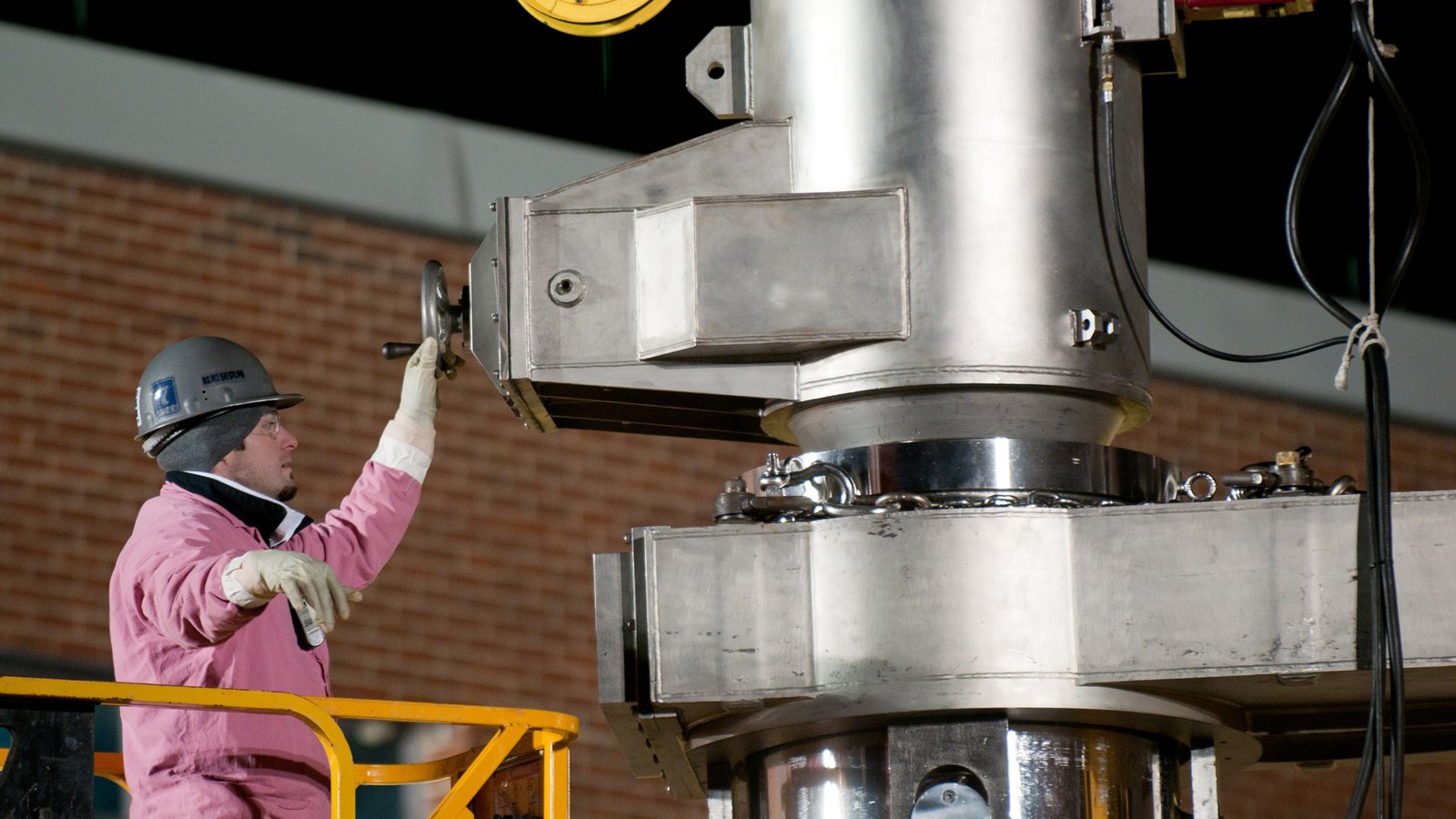
The U.S. Department of Energy’s Advanced Research Projects Agency-Energy (ARPA-E) finalized a landmark SCALEUP Ready cooperative agreement on November 19, 2026, executing Modification No. 0001 to Award No. DE-AR0002176 with Deep Isolation US LLC to provide up to $20 million in federal matching funds to advance commercialization of its Universal Canister System (UCS) and deep borehole disposal architecture. Formally disclosed in a regulatory filing with the U.S. Securities and Exchange Commission, the binding agreement converts a conditional September 2026 selection into an active three-year project with an approved budget of $47,470,829, supporting full-scale field demonstrations and regulatory licensing for advanced reactor spent fuel.
Execution of the Finalized SCALEUP Ready Agreement
Modification No. 0001, signed by ARPA-E contracting authorities on November 19, 2026, lifts all preliminary spending restrictions issued under Notice of Funding Opportunity DE-FOA-0003467. The agreement establishes a three-year period of performance running from November 19, 2026, through November 18, 2029. The project operates under the ARPA-E SCALEUP Ready commercialization initiative, an agency funding pathway designed to transition lab-validated energy prototypes into commercial deployment across domestic markets.
Because the mechanism is a cooperative agreement rather than a standard grant, ARPA-E maintains substantial operational involvement throughout project execution, reserving legal authority to redirect, reduce, or terminate work at scheduled Go/No-Go decision gates. For institutional research administrators, evaluating how a grant vs. contract vs. cooperative agreement distributes governance is critical, as ARPA-E program directors actively steer engineering milestones and technical parameters.
In executing the agreement, ARPA-E designated Deep Isolation US LLC—a subsidiary of Deep Isolation Nuclear, Inc.—as presenting an increased financial administration risk. The agency established special oversight conditions, requiring monthly cost reimbursement submissions with advance draft reviews and transaction-level ledger reconciliations. These enhanced controls remain mandatory until the company demonstrates six consecutive timely, reconciled monthly submissions.
Award Structure, Budget Allocation, and Technical Workstreams
The approved $47,470,829 project requires a mandatory recipient cost share. Federal funding covers up to $20,000,000 (42.13%), while Deep Isolation must contribute $27,470,829 (57.87%) in non-federal funds. Reimbursements are administered under 2 CFR Part 200 and energy supplements under 2 CFR Part 910 on a cost-reimbursement basis.
The project organizes its technical deliverables into three core workstreams:
- FIRST (First Real-World Deployment): Fabricates and qualifies commercial-scale prototypes of the Universal Canister System. This workstream incorporates engineering collaboration with Westinghouse Electric Company to adapt the UCS for storing and transporting spent fuel from the eVinci microreactor.
- FILE (Regulatory Engineering): Compiles safety analysis reports to pursue formal Nuclear Regulatory Commission (NRC) certification for the UCS under commercial storage and transport regulations.
- FUTURE (Commercial Pilot Demonstration): Field trials at the Deep Borehole Demonstration Center in Cameron, Texas, conducting non-radioactive canister handling, downhole emplacement, and retrieval trials in stable geologic formations over a mile deep.
Budget allocations are front-loaded to support initial manufacturing and pad construction, as noted in independent coverage by MLQ.ai:
| Project Dimension | Budget Period 1 (Year 1) | Budget Period 2 (Year 2) | Budget Period 3 (Year 3) | Total Lifecycle Commitment |
|---|---|---|---|---|
| Federal Share (ARPA-E) | $17.08 million | $2.87 million | $0.06 million | $20.00 million (42.13%) |
| Recipient Cost Share | $11.57 million | $10.74 million | $5.16 million | $27.47 million (57.87%) |
| Total Approved Budget | $28.65 million | $13.61 million | $5.22 million | $47.47 million (100.0%) |
| Workstream Priority | Canister manufacturing & pad civil works | NRC safety dossiers & handling tools | Subsurface handling & pilot completion | Three-year end-to-end deployment |
| Milestone Schedule | February 17, 2027 initial deliverables | Mid-project Go/No-Go evaluation | November 17, 2029 project closeout | Mandatory decision review gates |
Background and Nuclear Waste Technology Context
Permanent disposal of spent nuclear fuel remains a pressing challenge for the civilian nuclear sector. With federal repository efforts at Yucca Mountain stalled for decades, more than 90,000 metric tons of commercial spent fuel sit in surface storage pools and dry casks across the country. The deployment of small modular reactors (SMRs) and transportable microreactors has driven demand for scalable, decentralized disposal solutions.
Deep Isolation adapts directional drilling technologies from the energy sector to isolate radioactive waste in deep horizontal or vertical boreholes 1,000 to 1,500 meters underground in stable rock formations. The company holds over 100 patents worldwide covering canister mechanics, underground placement downhole tools, and retrieval assemblies.
Prior federal research under ARPA-E’s UPWARDS and SAVANT programs funded the preliminary engineering of the Universal Canister System. As reported by Nuclear Engineering International, Deep Isolation broke ground on its non-radioactive commercial pilot in Cameron, Texas, in January 2026. The facility operates with an industrial team that includes Halliburton for directional drilling, Amentum for nuclear engineering, and NAC International for spent fuel packaging systems.
Simultaneously, Westinghouse has achieved key development milestones, with reporting from NucNet confirming the completion of zero-power criticality testing for the eVinci microreactor. Pairing deep borehole canisters with microreactors addresses the full lifecycle of advanced nuclear deployments.
Stakeholder Perspectives from Agency Leadership and Industry
Agency leadership and company executives emphasized the strategic value of the finalized agreement for domestic energy security and nuclear waste management.
“ARPA-E backed this technology for its potential to transform the back-end of our nuclear fuel cycle,” said Conner Prochaska, Director of ARPA-E. “This is President Trump’s nuclear renaissance in action—advancing American energy dominance and keeping U.S. nuclear technology at the forefront of global innovation.”
“This agreement marks an important transition from technology development toward commercial-scale implementation,” stated Jesse Sloane, Executive Vice President of Engineering at Deep Isolation and principal investigator for the SCALEUP project. “We are excited to work with ARPA-E and our project collaborators to demonstrate the UCS at full-scale, non-radioactive Commercial Pilot, advance the regulatory pathway and build the technical foundation needed for future commercial deployment.”
Policy analysts at ClearPath noted that ARPA-E’s rolling SCALEUP awards under FOA-0003467 help viable energy technologies bridge the capital-intensive scaling gap between laboratory prototypes and commercial adoption.
What It Means for Researchers, Universities, and Research Offices
The finalized $47.47 million agreement provides vital compliance and administrative precedents for academic research offices, national laboratory consortia, and clean-tech ventures:
- Cost-Share Accounting Under 2 CFR 200: The mandatory 57.87% matching obligation highlights strict federal rules governing non-federal capital. Under 2 CFR 200.306, matching contributions must be verifiable, allocable, and documented to single-audit standards. Research leaders managing cost share must understand the financial mechanics of cost-reimbursable vs. fixed-price contracts to maintain cash liquidity across invoice cycles.
- Pre-Award Cost Rules: Because negotiations ran from September to November 2026, unapproved early expenditures carried financial risk. Under federal grant standards, pre-award costs under 2 CFR 200.458 incurred more than 90 days prior to award execution require express prior written approval from the contracting officer.
- Domestic Manufacturing and Patent Retention: The agreement mandates that products embodying subject inventions—specifically including the Universal Canister System—must be manufactured substantially in the United States. University technology licensing managers must carefully monitor Bayh-Dole march-in rights and government licensing, as unauthorized assignment or failure to adhere to domestic manufacturing rules allows the Department of Energy to seize title to subject patents without compensation.
- Environmental Review Compliance: Prior to advancing subsurface borehole drilling or construction at the Cameron site, recipients must secure formal National Environmental Policy Act (NEPA) clearances and applicable state environmental permits.
- Advanced Reactor Fuel Alignment: Nuclear engineering departments developing TRISO fuels and microreactor systems now have an established canister geometry to benchmark thermal, structural, and criticality models for backend fuel cycle integration.
Regulatory Timelines, Demonstration Milestones, and Next Steps
Over the 36-month project period concluding on November 18, 2029, the initiative follows a phased operational roadmap:
- Early 2027 Deliverables: Initial technical milestones scheduled for February 17, 2027, focus on completing canister material specifications, preliminary engineering reviews, and site environmental approvals.
- Mid-Project Go/No-Go Review (2028): ARPA-E directors will evaluate canister sealing mechanics, structural load testing, and joint engineering data developed with Westinghouse for the eVinci microreactor spent fuel package.
- At-Depth Handling Demonstrations: Downhole tooling tests will emplace and retrieve non-radioactive simulant canisters at the Cameron demonstration borehole, validating operational safety under subsurface pressures.
- NRC Regulatory Submissions: Deep Isolation plans to assemble the Safety Analysis Report for the Universal Canister System, establishing the technical foundation for commercial licensing under 10 CFR Part 72 for storage and 10 CFR Part 71 for transport.
Sources
- U.S. Securities and Exchange Commission: Deep Isolation Nuclear, Inc. Form 8-K Current Report (Cooperative Agreement Award No. DE-AR0002176), checked 2026-11-24
- Advanced Research Projects Agency-Energy: SCALEUP Program Overview and Commercialization Pathway, checked 2026-11-24
- MLQ.ai: Deep Isolation finalizes up to $20 million ARPA-E award for nuclear waste canister and Texas borehole pilot, checked 2026-11-24
- Nuclear Engineering International: Deep borehole waste project breaks ground, checked 2026-11-24
- ClearPath: Doubling Down on the ARPA-E SCALEUP Program, checked 2026-11-24
- NucNet: Westinghouse Completes Zero-Power Criticality Testing For eVinci Microreactor, checked 2026-11-24






