
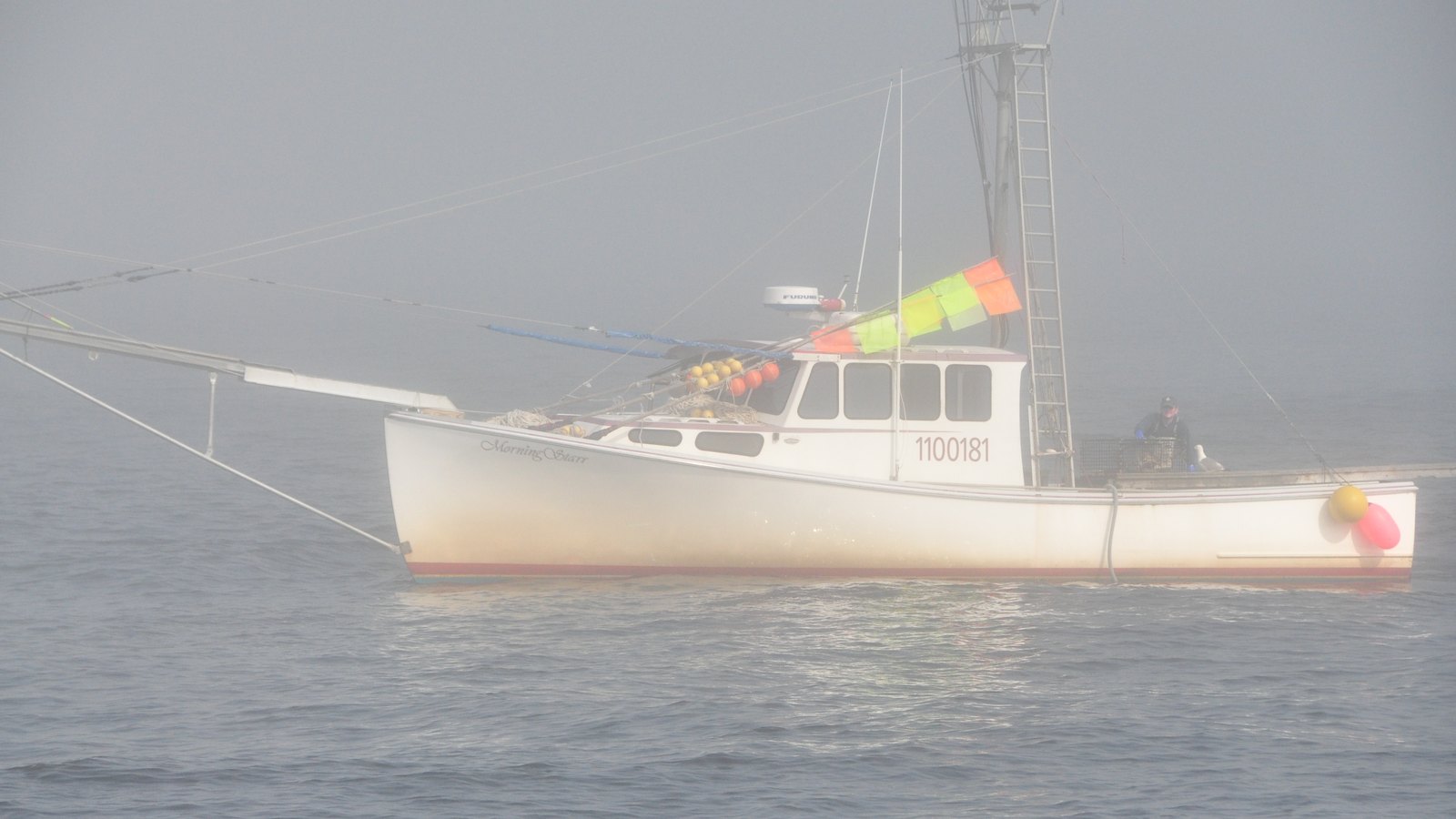
On November 23, 2026, the National Oceanic and Atmospheric Administration submitted an information collection request to the Office of Management and Budget to extend mandatory gear-marking compliance rules under the Atlantic Large Whale Take Reduction Plan, initiating a 30-day federal review that directly shapes forensic entanglement tracking, fixed-gear maritime research, and oceanographic fieldwork across the eastern seaboard.
What happened
The National Oceanic and Atmospheric Administration (NOAA), operating through the National Marine Fisheries Service (NMFS), officially submitted its information collection renewal package (Notice 2026-23869, OMB Control Number 0648-0364) to the Office of Management and Budget (OMB) on November 23, 2026. Scheduled for official Federal Register publication on November 24, the notice opens a final 30-day public comment window before OMB issues clearance under the Paperwork Reduction Act of 1995. The action follows an initial 60-day public comment period initiated on June 24, 2026, and incorporates updated 2025 economic data reflecting current material, twine, paint, and maritime labor costs.
Under the renewed mandate, commercial trap, pot, and gillnet vessels operating in federal and state waters throughout the Northeast and Mid-Atlantic must continuously maintain standardized color markings on all vertical buoy lines. These regulatory marks enable wildlife authorities and marine mammal biologists to identify the exact fishery and geographic zone of origin whenever an endangered whale is documented trailing fishing lines or discovered stranded with embedded gear.
Key details
The information collection request outlines extensive operational requirements across the commercial fleet and scientific sampling vessels operating under exempted permits. Governed by federal regulations at 50 CFR 229.32, the rules establish standardized color sequences, minimum marking lengths, and buoy identification standards across Northeast and Mid-Atlantic fishing zones.
| Regulatory Parameter | Federal Value / Requirement | Compliance Detail |
|---|---|---|
| OMB Control Number | 0648-0364 | Regular extension of approved information collection |
| Active Regulated Fleet | 3,970 commercial vessels | Fixed-gear trap/pot and commercial gillnet operators |
| Marks per Vessel | 392 line marks (average) | Distributed along top, middle, and bottom thirds of vertical lines |
| Labor Time per Mark | 6.6 to 8.6 minutes | Surface prep, paint application, braided tracer splicing, or heat-shrink sleeve |
| Total Annual Burden | 222,803 burden hours | Mandatory fleet-wide reporting and maintenance allocation |
| Rope Replacement Cycle | 5 to 6 years | New vertical line purchases must be fully marked prior to deployment |
| Target Cetacean Species | 4 large whale species | North Atlantic right, humpback, fin, and minke whales |
| Statutory Authorities | MMPA & ESA | Marine Mammal Protection Act Sec. 118; Endangered Species Act |
Under 50 CFR 229.32, vertical lines deployed in federal waters require a primary state or regional color identifier paired with a distinct federal marking, such as a solid 36-inch colored band within the top two fathoms of the surface buoy system. Intermediate markings along the body and bottom of the line must measure at least 12 inches in length. In addition, surface buoys must display vessel documentation numbers or federal commercial fishing permit IDs in contrasting block lettering at least one inch in height, ensuring unambiguous attribution during aerial surveys and maritime patrols.
Background and context
Section 118 of the Marine Mammal Protection Act directs NOAA Fisheries to establish Take Reduction Teams composed of commercial fishermen, scientific researchers, state wildlife managers, and environmental advocates. The resulting Atlantic Large Whale Take Reduction Plan focuses on eliminating mortalities and serious injuries that exceed Potential Biological Removal limits. For the critically endangered North Atlantic right whale (Eubalaena glacialis), whose population hovers near 370 individuals, incidental entanglement represents the single greatest source of human-induced mortality and sub-lethal physical trauma.
Forensic analyses conducted over the past two decades indicate that more than 85 percent of all right whales show visible scarring from at least one entanglement interaction, with many individuals enduring multiple entanglements over their lifetimes. When gear lacks identifying marks, federal investigators cannot ascertain whether entanglements originate in nearshore state waters, offshore federal lobstering grounds, or Canadian fisheries. The 2021 Atlantic Large Whale Take Reduction Plan amendments significantly expanded gear-marking requirements to resolve these spatial data gaps, establishing distinct color schemes for Maine, New Hampshire, Massachusetts, Rhode Island, and federal offshore zones.
Federal investment in cetacean protection has simultaneously expanded across complementary technological fronts. As recently documented in CASRAI reporting on NOAA and NFWF whale avoidance grants, federal agencies have channeled millions of dollars into artificial intelligence and real-time acoustic buoy arrays to curb vessel strikes. However, static rope compliance and physical forensic marking remain the primary regulatory mechanism for managing fixed-gear interactions within large marine ecosystems along the continental shelf.
Reaction
The submission of the 222,803-hour compliance burden calculation reflects ongoing dialogue between regulators, coastal harvesters, and marine mammalogists. The Marine Mammal Commission, an independent federal oversight agency established under Title II of the MMPA, has repeatedly emphasized that comprehensive gear marking is essential for evaluating the efficacy of spatial closures and weak-rope modifications. Commission biologists point out that without granular forensic attribution, management models cannot determine whether right whales are interacting with lines in seasonal feeding aggregations or along migratory corridors.
Commercial fishing groups, while acknowledging the necessity of whale conservation, have highlighted the significant labor and economic demands imposed by the 392 marks required per vessel. Harvester associations note that applying colored zip-ties, paint, and braided inserts at sea or on winter docks represents hundreds of uncompensated operational hours per crew. Conversely, marine conservation organizations maintain that while gear marking provides vital forensic records after an animal becomes trapped, it does not mechanically prevent whales from encountering vertical ropes. Consequently, conservation scientists advocate pairing gear marking with transitions toward on-demand and ropeless fishing technology.
What it means for researchers, universities and research offices
For marine scientists, academic research institutions, and university compliance officers, NOAA’s information collection renewal carries practical implications across fieldwork operations, forensic research, and grant administration:
- Entanglement Forensics Data Quality: Standardized color marks provide the empirical backbone for university laboratories and research consortia tracking right whale demographics. When disentanglement response teams recover gear, academic pathologists and biomechanical engineers cross-reference mark patterns with sighting databases to evaluate wound mechanics, line tension, and duration of entanglement.
- Research Vessel Compliance: Oceanographic institutions deploying fixed ocean bottom seismometers, passive acoustic recorders, sediment traps, or environmental sensor moorings with vertical recovery lines must adhere to strict protected species protocols. Field research directors must ensure research moorings either qualify for exempted fishing permits or comply with vertical line marking and weak-link standards under 50 CFR 229.32.
- On-Demand and Ropeless Gear Trials: Marine engineering departments collaborating with commercial fleets receive critical baseline data from gear-marking attribution. Demonstrating the spatial risk of conventional marked endlines strengthens proposals for acoustic acoustic-release ropeless systems funded by federal ocean technology grants.
- Institutional Compliance and Oversight: University research offices managing marine field stations should incorporate federal gear-marking protocols into their environmental compliance matrices. Aligning field protocols with standards reflected in the OMB Compliance Supplement and institutional regulatory compliance software ensures research vessels maintain unblemished maritime authorizations.
What happens next
Following the formal publication of Notice 2026-23869 in the Federal Register on November 24, 2026, the 30-day public comment period will run through late December 2026. Academic institutions, fishery stakeholders, and coastal researchers may submit formal technical comments directly to the Office of Information and Regulatory Affairs (OIRA) within OMB via the federal regulatory portal at www.reginfo.gov/public/do/PRAMain by referencing OMB Control Number 0648-0364.
Once OMB completes its review and grants clearance, the information collection approval will extend for an additional three-year period. Meanwhile, NOAA Fisheries and the Atlantic Large Whale Take Reduction Team continue to analyze forensic recovery data to evaluate whether additional modifications to 50 CFR 229.32—such as enhanced color differentiation in offshore waters or expanded acoustic line tracking—will be required in upcoming rulemaking cycles. Independent oceanographic researchers at the Woods Hole Oceanographic Institution and partner universities are slated to present updated entanglement telemetry and hydrodynamic line-interaction findings at forthcoming regional marine mammal conservation meetings in 2027.
Sources
- NOAA / Federal Register: Agency Information Collection Activities; Proposals, Submissions, and Approvals: Gear-Marking Requirement for Atlantic Large Whale Take Reduction Plan, checked 2026-11-23
- Electronic Code of Federal Regulations: 50 CFR 229.32 – Atlantic large whale take reduction plan regulations, checked 2026-11-23
- NOAA Fisheries: Atlantic Large Whale Take Reduction Plan, checked 2026-11-23
- Marine Mammal Commission: North Atlantic Right Whale Conservation and Take Reduction, checked 2026-11-23
- Woods Hole Oceanographic Institution: Right Whales, Entanglement Threats, and Ocean Acoustics, checked 2026-11-23






