
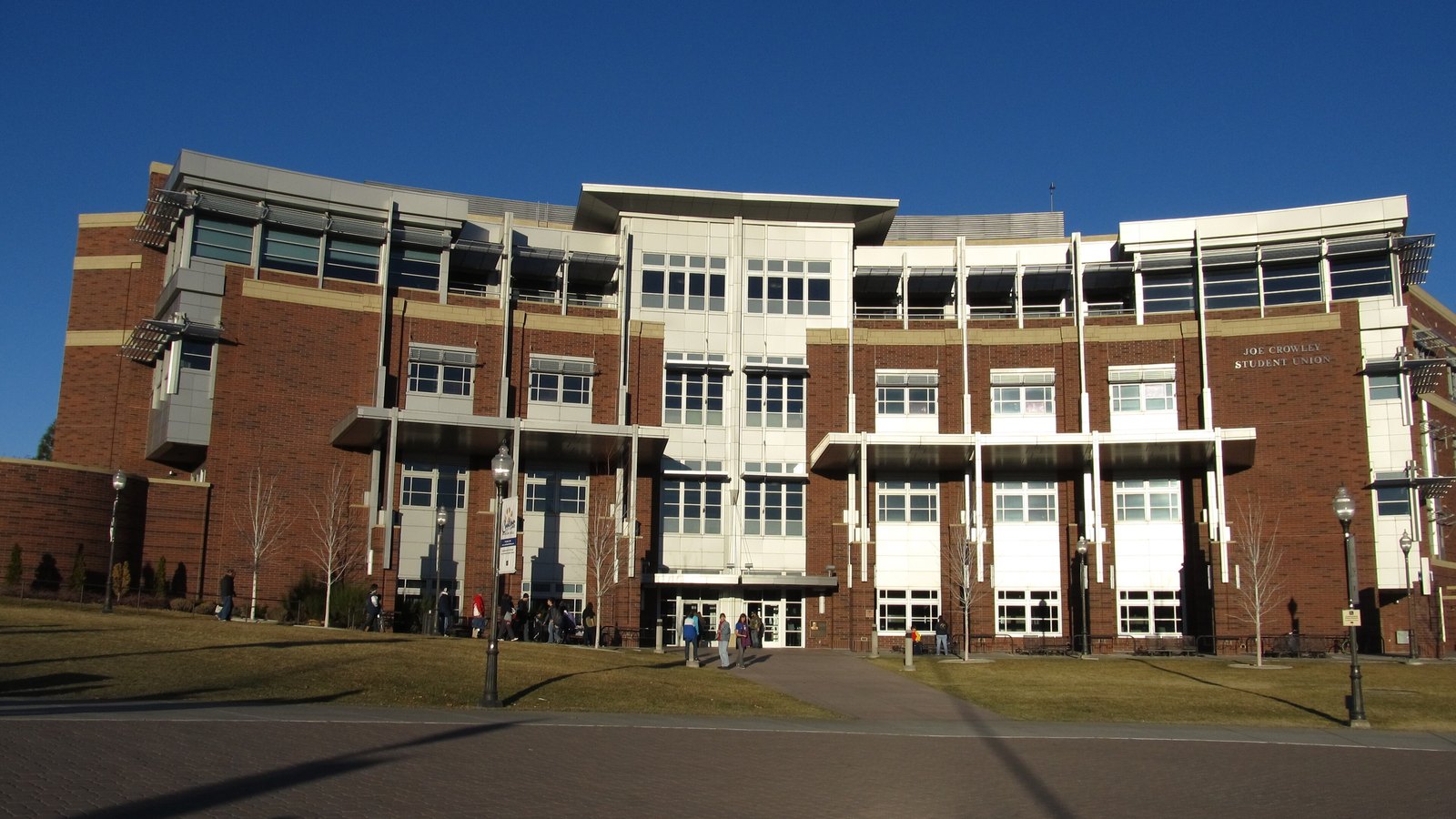
The U.S. Department of Energy (DOE) Office of Critical Minerals and Energy Innovation announced $117 million across 56 projects nationwide to modernize key industrial sectors, including a $2,092,583 federal research award to the University of Nevada, Reno to pioneer energy-efficient iron ore beneficiation for clean steelmaking. The multi-institution project addresses critical mineral supply bottlenecks in direct-reduction ironmaking, requiring university sponsored programs offices to administer strict mandatory matching cost-share commitments, multi-party subrecipient agreements, and industry materials partnerships.
Federal Investment in Critical Minerals and Clean Metallurgy
On September 1, 2026, the U.S. Department of Energy Office of Critical Minerals and Energy Innovation announced $117 million to strengthen America’s industrial sector, funding 56 projects across key manufacturing domains. Executed through the DOE Industrial Technologies Office, the selections target energy and cost-saving innovations to enhance domestic industrial competitiveness, lower commodity production costs, and reduce high-temperature heating and wastewater treatment burdens.
As detailed in the University of Nevada, Reno announcement of its $2 million clean steel award, researchers at UNR secured $2,092,583 under federal project number EE0011821. The three-year initiative, titled “Energy Efficient Comminution and Advanced Separation Technology for the Production of Direct Reduction (DR) Grade High-Quality Iron Ores,” develops a novel mineral beneficiation flowsheet to transform domestic low-grade hematite deposits into direct-reduction-grade iron ore.
Materials Science and Engineering Professor Mano Misra leads the project as principal investigator. He is supported by co-investigators Pradeep Menezes, professor of mechanical engineering, and Mostafa Khodakarami, assistant professor of metallurgical engineering, collaborating with the University of Utah alongside graduate and postdoctoral researchers.
Technical Specifications and Project Allocation Details
Comminution—the industrial crushing and grinding of ore—accounts for substantial electricity consumption in mineral processing. The UNR flowsheet combines artificial intelligence optical sorting with high-pressure grinding rolls (HPGR) to achieve fracture size reduction while significantly cutting power demands. Subsequent beneficiation utilizes biotechnological flocculation and advanced flotation to remove non-valuable gangue rock, producing iron concentrates containing 67% to 70% iron with less than 2% gangue.
According to the U.S. Geological Survey Mineral Commodity Summaries 2026 on iron and steel, domestic apparent consumption of steel mill products reached an estimated 95 million metric tons in 2025. Although domestic mines produced 38 million metric tons of usable iron ore, existing processing flowsheets are largely optimized for traditional blast furnaces rather than low-carbon direct reduction facilities.
The table below details selected university-led projects funded under Topic Area 2 (Iron and Steel: Low Grade Ore Recovery) within the $117 million federal portfolio.
| Lead Institution | Project Title | Federal Award | Collaborators | Technical Focus |
|---|---|---|---|---|
| University of Nevada, Reno | Energy Efficient Comminution and Advanced Separation Technology | $2,092,583 | University of Utah | AI optical sorting, HPGR comminution, and bio-flocculation for 67%–70% Fe direct-reduction hematite |
| University of Minnesota Duluth | Induction Smelting of DRI-Processed Low Grade Ores | $2,997,738 | Metcovery II LLC, National Laboratory of the Rockies | Continuous induction smelting to produce pig iron from lower-grade ores |
| Cornell University | Circular and Intensified Recovery of Iron Oxide from Waste | $3,000,000 | NRRI UMD, National Laboratory of the Rockies, Nucor | Electrochemical recovery of high-grade iron oxide from mine tailings and slag |
| Michigan Technological University | Production of Improved DRI Feed by Bioleaching | $1,035,309 | Constructed wetland partners | Microbial bioleaching to concentrate iron from dilute waste ores |
| Carnegie Mellon University | Evaluating Performance of Electrolytic Iron for Steelmaking | $1,000,000 | ElectraSteel Inc. | Process modeling and oxidation testing of pure electrolytic iron in electric arc furnaces |
Industrial Decarbonization Pressures and the Direct-Reduction Bottleneck
Primary steelmaking accounts for roughly 7% to 11% of global greenhouse gas emissions because traditional blast furnaces rely on metallurgical coal to chemically reduce iron oxides. The primary low-carbon alternative pairs Direct Reduced Iron (DRI) shafts with Electric Arc Furnaces (EAF). As highlighted in Canary Media reporting on direct reduced iron technology, utilizing DRI with clean electricity and hydrogen offers the clearest technical route to deep industrial emissions reductions.
Direct reduction processes, however, operate in the solid state without melting the ore, meaning all gangue minerals present in the feedstock carry over into the sponge iron. Consequently, DRI plants demand high-purity feedstocks with at least 67% iron content. Because standard U.S. taconite and hematite ores typically yield lower natural grades, advanced mineral processing is essential to prevent international supply dependence. In structuring such research partnerships, university administrators evaluate whether awards operate under standard federal grants or cooperative agreements, following principles established in grant vs contract vs cooperative agreement guidelines.
Institutional and Sector Responses
DOE Assistant Secretary of Energy Audrey Robertson underscored the commercial and security goals of the program: “DOE is committed to funding innovation that positions American industry at the forefront of the global marketplace. These projects will deliver affordable, market-ready solutions that strengthen America’s energy security and support job creation and economic growth nationwide.”
UNR College of Engineering Dean Tom Weller affirmed the regional importance of the grant: “Nevada Engineering is committed to research that supports regional and national needs. Dr. Misra’s project is an example of UNR research contributing to a key national priority.”
Principal Investigator Mano Misra explained the operational mechanics of the research: “The direct reduction iron process requires extremely clean and high-quality iron-bearing ores. The process utilizes several new and existing technologies to make the clean product. These steps involve AI-enabled optical sorting, fracture mechanics using high-pressure grinding rolls and size reduction to decrease the energy consumption, followed by biotechnological flocculation and advanced flotation.”
Misra added that domestic steelmakers will provide materials: “We are working with the steel companies to use the technology for making clean steel using direct reduction iron. Steel companies will supply the raw materials and work with UNR researchers during the project implementation.”
Operational Implications for Academic Research Offices
The execution of DOE industrial decarbonization awards establishes several administrative priorities for university research operations:
Mandatory Cost-Share Compliance
Under the Energy Policy Act of 2005 (EPAct Section 988), applied research awards from the DOE Industrial Technologies Office typically require a 20% non-federal matching commitment. Sponsored programs offices must establish auditable accounting structures to verify third-party in-kind valuations, industry equipment donations, and unrecovered indirect costs under cost share (mandatory) rules, ensuring all contributions meet 2 CFR 200.306 documentation standards.
Consortium Agreements and Subrecipient Governance
Because projects involve academic co-investigators and commercial materials suppliers, sponsored programs staff must establish precise partner designations under subrecipient vs contractor vs vendor classifications. Subawards to partner universities like the University of Utah require formal risk assessments, invoicing verification, and active monitoring per federal subrecipient monitoring mandates.
Intellectual Property and Material Transfer Agreements
Working with domestic steelmakers supplying raw ore requires comprehensive Material Transfer Agreements (MTAs) and data protection protocols. University technology transfer teams must protect university background IP while defining ownership rights for newly synthesized microbial flocculants, separation flowsheets, and proprietary process software.
Environmental Health and Safety Scale-Up Controls
Pilot-scale comminution and bio-beneficiation introduce unique physical and biological hazard profiles. Campus EH&S departments must establish mechanical safety procedures, dust suppression systems for high-pressure grinding equipment, and containment protocols for microbial cultures deployed in wet separation tanks.
Project Timeline and Implementation Milestones
The three-year UNR award runs through federal fiscal years 2026 to 2029. Year one focuses on optical sensor calibration, baseline hematite ore characterization, and high-pressure roll comminution testing. Year two shifts to microbial flocculation kinetics and flotation testing at UNR and the University of Utah. The final project year will execute continuous pilot-scale beneficiation on commercial ores provided by industrial steelmakers, targeting direct-reduction hematite purity exceeding 67% iron prior to DOE stage-gate evaluations.
Sources
- U.S. Department of Energy: DOE’s Office of Critical Minerals and Energy Innovation Announces $117 Million to Strengthen America’s Industrial Sector, checked 2026-11-22
- University of Nevada, Reno: Critical minerals research will support clean steelmaking, checked 2026-11-22
- U.S. Geological Survey: Mineral Commodity Summaries 2026 — Iron and Steel, checked 2026-11-22
- Canary Media: Cleaner ironmaking tech a bright spot as US firms retreat from green steel, checked 2026-11-22


