
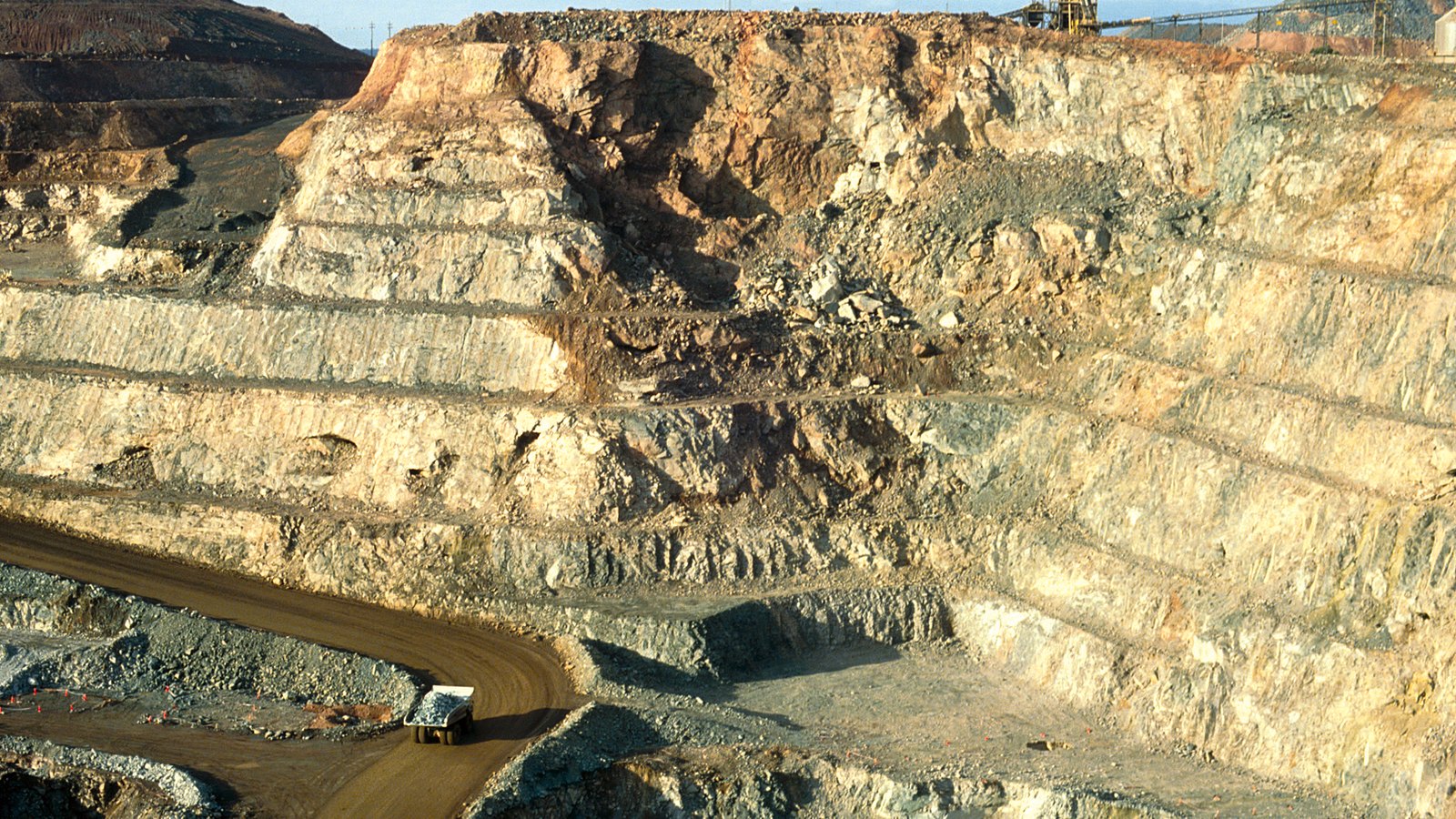
Following an initial filing on mine accident surveillance, the Department of Labor submitted two companion regulatory packages to the Office of Management and Budget on November 27, 2026, submitting information collections under notice 2026-24201 for written surface mobile equipment safety programs and pre-shift defect logs. Expanding upon earlier mine accident surveillance rules, the actions enforce equipment safety requirements across university experimental mines and academic research operations nationwide.
Labor Department Transmits Mobile Equipment and Defect Rules to OMB
The United States Department of Labor and the Mine Safety and Health Administration (MSHA) formally submitted two companion information collection requests to the Office of Management and Budget (OMB) for Paperwork Reduction Act review on November 27, 2026. The twin notices, placed on public inspection ahead of scheduled publication in the Federal Register on November 30, 2026, establish the mandatory recordkeeping architecture governing heavy mobile machinery and pre-operational safety inspections across the domestic mining sector.
Signed by Senior Paperwork Reduction Act Analyst Nicole Bouchet pursuant to statutory authorities under 44 U.S.C. § 3507(a)(1)(D), the dual submittals initiate 30-day public comment proceedings before the Office of Information and Regulatory Affairs (OIRA). The primary submission, designated Document Number 2026-24201 under OMB Control Number 1219-0155, covers written safety programs for surface mobile equipment. MSHA estimates that this program impacts 17,798 respondents generating 57,583 annual responses, imposing 190,732 annual burden hours and $26,697 in other non-labor annual costs.
The parallel filing, designated Document Number 2026-24200 under OMB Control Number 1219-0089, covers pre-shift examination, correction, and recordkeeping protocols for safety defects on machinery, equipment, tools, and pressure vessels. MSHA projects that 11,687 mining entities will produce 6,055,179 annual responses under this collection, requiring an estimated 1,351,405 burden hours and $427,919 in annual recordkeeping and certification expenses. Both requests seek standard three-year approvals, with existing authorizations maintained under month-to-month administrative extensions during OMB review.
Mandatory Program Elements and Pre-Shift Defect Recordkeeping
The regulatory framework governing surface mobile equipment programs is codified in 30 CFR Part 56 (Subpart T, §§ 56.23000–56.23004) for surface metal and nonmetal mines, 30 CFR Part 57 (Subpart T, §§ 57.23000–57.23004) for underground metal and nonmetal surface areas, and 30 CFR Part 77 (Subpart V, §§ 77.2100–77.2104) for surface coal operations. The rule mandates that every mine operator employing six or more miners, as well as independent contractors employing six or more workers, must develop, implement, and maintain a site-specific written safety program.
Under 30 CFR § 56.23002, compliant safety programs must incorporate four substantive pillars: procedures to identify and mitigate operational hazards related to mobile machinery movement; explicit schedules for routine preventive servicing and unscheduled repairs, integrating certified laboratory safety equipment and precision maintenance sensors; structured evaluations of emerging safety technologies such as collision warning systems and automated interlocks; and specialized safety training curricula for equipment operators. Operators must actively solicit miner participation during program creation and assign a designated responsible supervisor with full administrative authority.
Concurrently, pre-shift defect standards under 30 CFR §§ 56.14100, 57.14100, 77.404, and 77.1606 require designated competent persons to conduct physical examinations of all machinery and mobile haulage gear before operation on each shift. Any defect affecting safety requires immediate tag-out, halting operation until certified repairs occur. Operators must log examinations, defect discoveries, and corrective actions in formal registers, demanding continuous inspection readiness for federal audits. The companion collection also enforces mandatory inspection logs for compressed-air receivers and boilers under National Board Inspection Code and ASME Boiler and Pressure Vessel Code standards.
| Regulatory Package | OMB Control No. | CFR Mandates | Annual Respondents | Annual Responses | Annual Burden Hours | Annual Non-Labor Costs |
|---|---|---|---|---|---|---|
| Surface Mobile Equipment Safety Program | 1219-0155 | 30 CFR Parts 56, 57, 77 (Subparts T and V) | 17,798 | 57,583 | 190,732 | $26,697 |
| Safety Defects Examination and Records | 1219-0089 | 30 CFR §§ 56.14100, 57.14100, 77.404, 77.1606 | 11,687 | 6,055,179 | 1,351,405 | $427,919 |
Regulatory Background and the Powered Haulage Safety Mandate
The Department of Labor initiated targeted mobile equipment rulemaking following decades of longitudinal fatality data identifying powered haulage as one of the persistent causes of mining casualties. Analysis by federal regulators indicated that heavy haulage trucks, front-end loaders, graders, and excavators accounted for a substantial proportion of fatal crushing and rollover incidents at surface facilities between 2007 and 2021, frequently resulting from blind-spot collisions and seat-belt non-usage.
In response, MSHA promulgated its final rule on Safety Programs for Surface Mobile Equipment on January 19, 2024 (89 FR 3388), establishing an initial enforcement date of July 17, 2024. While initial baseline programs were required by mid-2024, the underlying information collection requirements undergo reauthorization under the Paperwork Reduction Act every three years. The current OMB submittals follow preliminary 60-day notice and comment periods initiated on July 27, 2026 (91 FR 46948 and 91 FR 46967), reflecting updated industry fleet counts and operational data.
Agency and Legal Analysis on Equipment Compliance Trends
Legal analysts tracking mine safety compliance emphasize that federal enforcement has shifted from paper verification to operational implementation. Analysis published by Ogletree Deakins highlights that MSHA inspectors increasingly scrutinize whether written equipment programs actively incorporate worker feedback and whether maintenance schedules reflect actual mine wear. Regulatory attorneys caution that treating safety programs as generic template binders leaves operators exposed to elevated unwarrantable failure citations.
Simultaneously, researchers within the National Institute for Occupational Safety and Health (NIOSH) Mining Program have accelerated technical evaluations of collision avoidance technologies. NIOSH studies across the Spokane Research Laboratory and Pittsburgh Mining Research Division demonstrate that single-sensor detection often produces false alarms in dusty surface pits. NIOSH technical reports urge operations to benchmark against the Earth Moving Equipment Safety Round Table (EMESRT) control framework, transitioning from basic driver proximity alerts (Level 7) to active intervention controls (Level 9) capable of autonomous machine deceleration.
Implications for University Experimental Mines and Research Operations
The submission of these collections carries immediate operational implications for higher education institutions that maintain accredited mining engineering programs, mineral extraction laboratories, and experimental research mines. Prominent academic facilities—including the Colorado School of Mines Edgar Experimental Mine in Idaho Springs, the Missouri University of Science and Technology Experimental Mine in Rolla, and the University of Arizona San Xavier Mining Laboratory—regularly operate heavy haulage machinery, articulated loaders, and customized autonomous platforms for pedagogical and grant-funded research.
Whenever an academic research mine operates equipment with six or more qualifying workers—including research engineers, facility technicians, student employees, and graduate investigators—the university must maintain an active written safety program under 30 CFR § 56.23000. Institutional compliance requires four concrete steps:
- Institutional researchers must document formalized technical evaluations of feasibility before deploying experimental autonomous haulage, LiDAR sensor arrays, or collision warning systems on heavy equipment.
- Facility managers must integrate pre-shift defect examination logs into daily laboratory operating protocols, establishing systematic corrective and preventive action documentation whenever equipment safety defects arise.
- Principal investigators and safety directors must formalize mandatory laboratory safety agreements and heavy-machinery training certifications for all students, postdocs, and visiting researchers before field testing.
- Research administration offices overseeing federally sponsored testing must retain equipment defect and pressure vessel maintenance records for at least one year, ensuring full audit readiness during unannounced MSHA compliance inspections.
Next Steps, Comment Deadlines, and OMB Review Process
Following formal publication of the notices in the Federal Register on November 30, 2026, the Office of Management and Budget will accept public feedback during a mandatory 30-day review period ending on December 30, 2026. Academic institutions, mining technology developers, labor representatives, and industry operators may submit written comments regarding paperwork burden estimates, digital recordkeeping techniques, and collection practical utility.
Submissions must be routed directly to the Office of Information and Regulatory Affairs through the reginfo.gov portal by selecting the 30-day open review category for MSHA. Following the close of the comment window, OMB will evaluate agency justifications before issuing three-year approval decisions, establishing renewed information collection authorities extending through late 2029.
Sources
- Office of the Federal Register: Agency Information Collection Activities; Proposals, Submissions, and Approvals: Safety Program for Surface Mobile Equipment (Doc. 2026-24201), checked 2026-11-28
- Office of the Federal Register: Agency Information Collection Activities; Proposals, Submissions, and Approvals: Safety Defects; Examination, Correction, and Records (Doc. 2026-24200), checked 2026-11-28
- Cornell Law School Legal Information Institute: 30 CFR Part 56 — Safety and Health Standards – Surface Metal and Nonmetal Mines, checked 2026-11-28
- Ogletree Deakins: Trends in MSHA Surface Mobile Equipment Compliance, checked 2026-11-28
- National Institute for Occupational Safety and Health: Mining Safety and Health Research Program, checked 2026-11-28
- Office of Information and Regulatory Affairs: Paperwork Reduction Act Information Collection Review Portal, checked 2026-11-28






