
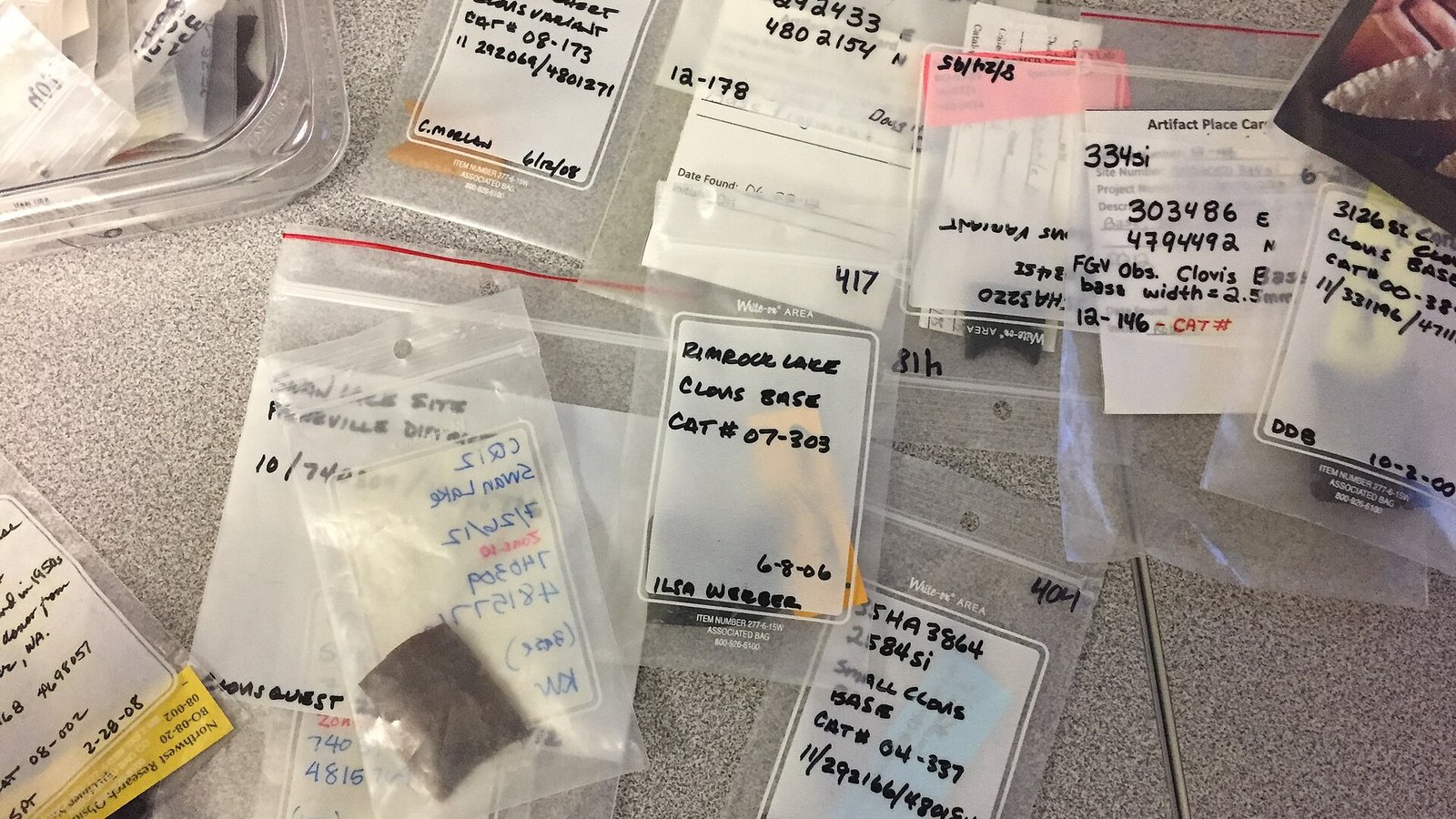
Following recent repatriation filings for cultural items at Harvard, UCLA, UC Berkeley, and Penn reported in an earlier CASRAI report, the National Park Service published five official Notices of Inventory Completion on public inspection in the Federal Register, led by FR Doc. 2026-24306 for the University of Michigan, documenting ancestral remains across five public research universities to initiate formal 30-day repatriation transfers under revised federal regulations.
Archaeological Inventory Completions Across Five Universities
On November 27, 2026, the Department of the Interior’s National Park Service (NPS) National NAGPRA Program placed five Notices of Inventory Completion on public inspection for Federal Register publication on November 30, 2026. The notices cover collections held by five public research institutions: the University of Michigan, the University of Texas at Austin, the University of Texas at San Antonio, the University of Wisconsin-Stevens Point, and the University of Cincinnati. Together, the filings resolve the minimum number of individuals (MNI) and associated funerary objects (AFO) representing 166 Native American ancestors and 3,810 associated cultural belongings curated across anthropology departments and museums for decades.
The filings represent a major operational milestone under the revised Native American Graves Protection and Repatriation Act regulations (43 CFR Part 10). Under the updated rules, federally funded institutions must complete cultural affiliations, maintain proactive tribal consultation, and transition ancestral remains into repatriation pipelines within strict statutory windows.
At the University of Texas at Austin’s Texas Archeological Research Laboratory (TARL) and the University of Texas at San Antonio Center for Archaeological Research (CAR) under FR Doc. 2026-24312, the inventory accounts for 160 ancestors and 3,805 funerary items from coastal Galveston County sites. At the University of Wisconsin-Stevens Point, an inventory published under FR Doc. 2026-24311 accounts for an ancestral cranium found in a mislabeled mammal skull carton. In Ohio, two University of Cincinnati filings—FR Doc. 2026-24322 and FR Doc. 2026-24323—document four ancestors and four funerary lots from Fort Ancient sites.
Repository Counts, Site Provenance, and Comparative Metrics
The notices reflect varied collection histories, from formal twentieth-century excavations to legacy teaching specimens. The following table compares repository details, Federal Register citations, site provenance, MNI counts, funerary object quantities, and consulting Tribes.
| Institution and Repository | Document No. | Site Provenance and Location | Ancestors (MNI) | Funerary Objects (AFO) | Affiliated Indian Tribes |
|---|---|---|---|---|---|
| University of Michigan Museum of Anthropological Archaeology |
FR Doc. 2026-24306 | Burch Creek Mound Site (20AC17), Arenac County, MI (Late Woodland, A.D. 500–1400) | 1 | 2 lots (sherds and mixed materials) | 12 Michigan Tribes (including Bay Mills, Grand Traverse Band, Hannahville, Pokagon Band, Saginaw Chippewa) |
| UT Austin and UTSA TARL and Center for Archaeological Research |
FR Doc. 2026-24312 | Caplan (41GV1), Spanish Moss (41GV10), Shell Beach (41GV16), Mitchell Ridge (41GV66), Galveston County, TX | 160 | 3,805 items (beads, lithics, faunal bone, ceramics, projectile points) | 7 Tribes (Alabama-Coushatta, Cheyenne and Arapaho, Comanche, Coushatta, Kiowa, Mescalero Apache, Tonkawa) |
| UW-Stevens Point Biology / System Administration |
FR Doc. 2026-24311 | Unknown provenance (Texas alumnus donation shipped 1980s/1990s, found in mammal collection) | 1 | 0 | Tribal nations with historical and geographic ties to Texas and the Southwest |
| University of Cincinnati Department of Anthropology |
FR Doc. 2026-24322 | Hine Village (33Bu33), Butler County, OH (Fort Ancient, ca. 1000–1650 CE, Shetrone 1921) | 1 | 3 lots (faunal remains, grave fill, burial soil) | 5 Tribes (Absentee Shawnee, Eastern Shawnee, Miami Tribe, Ottawa Tribe, Shawnee Tribe) |
| University of Cincinnati Department of Anthropology |
FR Doc. 2026-24323 | Haffner-Kuntz (33Ha95) and Mariemont Church (33Ha873), Hamilton County, OH | 3 | 1 lot (ceramics, fauna, mixed material) | 4 Tribes (Absentee Shawnee, Eastern Shawnee, Miami Tribe, Shawnee Tribe) |
Evolution of 43 CFR Part 10 and University Compliance Mandates
The inventory completions reflect the regulatory force of the updated 43 CFR Part 10 regulations. Designed to resolve longstanding bottlenecks that kept ancestral remains in university storerooms, the revised rules established a streamlined framework prioritizing geographic, historical, and oral traditional evidence over exhaustive biological continuity.
Under guidelines from the National Park Service National NAGPRA Program, universities can no longer retain ancestral remains indefinitely as culturally unidentifiable to facilitate osteological research. The regulations also introduce mandatory duty-of-care obligations under 43 CFR § 10.1(d). Repositories must care for collections in consultation with Tribes, prevent physical deterioration, and disclose any historical pesticide or chemical treatments such as mercuric chloride.
These federal requirements align with international frameworks of Indigenous data governance and the CARE Principles for Indigenous Data Stewardship, which mandate Collective Benefit, Authority to Control, Responsibility, and Ethics in managing physical remains, excavation archives, and associated metadata.
Institutional Governance Responses and Consultation Mandates
The five filings illustrate the extensive archival and provenance research required to achieve regulatory compliance. At Michigan, the Museum of Anthropological Archaeology consulted twelve federally recognized Michigan Tribes regarding the Late Woodland Burch Creek Mound site, confirming geographic affiliation.
In Texas, TARL and CAR reviewed coastal collections excavated between 1932 and 1992 across four sites in Galveston County. The effort included reconciling materials transferred from Rice University in 2019 that had been treated with clear preservatives, as well as an ancestor in an anthropology teaching collection whose original catalog labels had deteriorated.
At UW-Stevens Point, locating an ancestral cranium in a mislabeled carton of mammal skulls led university administrators to consult over fifty Tribes across the Southwest. The case highlights how legacy osteological specimens often remain dispersed across departmental teaching spaces outside formal museum facilities.
The revised regulations strictly require that research, photography, or public display of ancestral remains proceed only with free, prior and informed consent (FPIC) from affiliated Indian Tribes. Upholding Indigenous data sovereignty also requires that institutions respect tribal oversight regarding digital records, preventing unauthorized 3D scanning or data dissemination without tribal consent.
Implications for University Archives, Curators, and Grant-Funded Research
For university research offices and museum directors, these completions require immediate compliance steps. Crucially, institutions must enforce strict prohibitions against destructive sampling. Faculty cannot conduct radiocarbon dating, stable isotope analysis, ancient DNA sequencing, or histological testing on NAGPRA-eligible remains without explicit written tribal consent.
Research institutions must carry out several core operational measures:
- Comprehensive Departmental Audits: Extend physical inventories across biology, geology, and medical collections to locate unregistered osteological specimens.
- Research Protocol Freezes: Ensure institutional review bodies halt unconsented handling, public display, and destructive analysis on affiliated ancestors.
- Hazardous Substance Disclosures: Audit historical preservation logs to inform recipient Tribes of legacy arsenic, mercury, or chemical pesticide applications.
- Archive Access Controls: Secure sensitive burial and site documentation, restricting unrestricted public access in coordination with Tribal Historic Preservation Officers.
Next Steps and Repatriation Transfer Timelines
With the publication of the five notices in the Federal Register on November 30, 2026, a 30-day statutory period begins. Lineal descendants or Tribes not named in the notices may submit repatriation claims demonstrating cultural affiliation by a preponderance of the evidence.
Physical repatriation and transfer of legal custody may take place on or after December 30, 2026. If competing claims emerge, the holding university must determine the appropriate recipient through consultation before transfer. Joint repatriation requests from consulting Tribes are treated as a single unified request, facilitating orderly re-interment.
Sources
- Federal Register: Notice of Inventory Completion: University of Michigan, Ann Arbor, MI (FR Doc. 2026-24306), checked 2026-11-28
- Federal Register: Notice of Inventory Completion: Texas Archeological Research Laboratory, University of Texas at Austin, Austin, TX, and University of Texas at San Antonio Center for Archaeological Research, San Antonio, TX (FR Doc. 2026-24312), checked 2026-11-28
- Federal Register: Notice of Inventory Completion: University of Wisconsin-Stevens Point, Madison, WI (FR Doc. 2026-24311), checked 2026-11-28
- Federal Register: Notice of Inventory Completion: University of Cincinnati, Cincinnati, OH (FR Doc. 2026-24322), checked 2026-11-28
- Legal Information Institute: 43 CFR Part 10 – Native American Graves Protection and Repatriation Regulations, checked 2026-11-28
- National Park Service: Native American Graves Protection and Repatriation Act (National NAGPRA Program), checked 2026-11-28






