
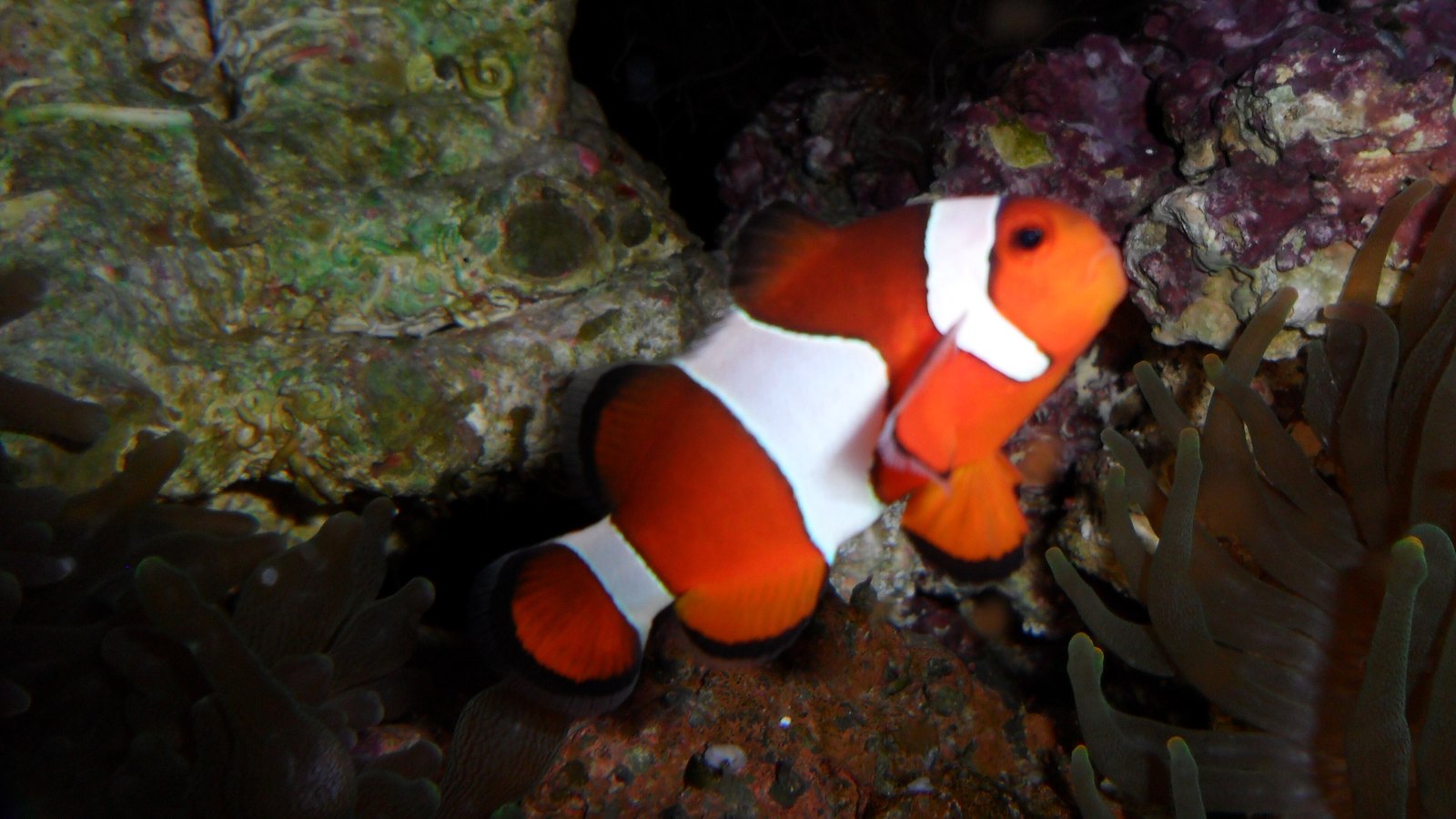
In November 2026, the scientific journal Ecology Letters officially retracted a foundational 2009 marine biology paper authored by former University of Delaware ecologist Danielle L. Dixson, Philip L. Munday, and Geoffrey P. Jones, according to a formal retraction notice issued by Editor-in-Chief Peter H. Thrall and publisher John Wiley and Sons. The decision invalidates a long-disputed study on clownfish predator detection, underscoring critical data audit challenges for university research offices and compliance integrity committees.
What happened
The retracted paper, titled “Ocean acidification disrupts the innate ability of fish to detect predator olfactory cues,” was first published online in December 2009 and appeared in print in 2010 in Ecology Letters. For over a decade, the study served as a primary empirical pillar supporting the hypothesis that anthropogenic ocean acidification disrupts marine animal cognition and predator avoidance. Across global policy discussions, the paper provided a foundational narrative illustrating how elevated carbon dioxide could impair juvenile reef fish, causing them to swim toward rather than flee from predators.
The retraction follows an editorial investigation after a third-party complainant alerted the publisher to statistically implausible variance within the underlying raw datasets. Editorial evaluations by Ecology Letters revealed substantial errors across the data submitted by the authors, including repeated data blocks, missing values, and structural inconsistencies. The editorial board determined that the datasets supplied during the investigation did not match the physical observation methods described in the published article.
Although the authors acknowledged inconsistencies, attributing them to organizational carelessness during manuscript preparation and asserting they did not alter overall findings, the journal concluded otherwise. Both the Editor-in-Chief and Wiley determined that persistent discrepancies left no basis to maintain confidence in the published results, requiring a formal retraction.
Key details
The retraction marks the third formal retraction in Dixson’s publication record, following sustained scrutiny into her experimental work at James Cook University and later at the University of Delaware. As reported by Retraction Watch in November 2026, the study had accumulated 412 citations in Clarivate’s Web of Science database, with 86 citations accruing after reproducibility concerns were formally raised in 2020.
The underlying experiments evaluated larval orange clownfish (Amphiprion percula) in two-channel choice flumes under elevated CO2 concentrations near 1,000 microatmospheres. While control larvae avoided predatory rockcod scent, acidified larvae reportedly displayed a complete behavioral reversal, spending up to 100 percent of their time in predator-scented water. Editorial forensic reviews determined that the recorded observations lacked natural biological variance.
| Study or Investigation | Focus Organism and Scope | Core Finding or Allegation | Institutional or Editorial Outcome |
|---|---|---|---|
| Dixson, Munday and Jones (2010, Ecology Letters) | Larval orange clownfish (Amphiprion percula) | Elevated CO2 impairs predator avoidance and induces scent preference for predators. | Retracted in 2026 after investigation identified repeated data blocks and methodology mismatches. |
| Dixson et al. (2014, Science) | Coral reef fish settlement and coral chemical cues | Ocean acidification degrades chemically mediated habitat selection during recruitment. | Retracted in August 2022 following University of Delaware investigation finding data fabrication. |
| Clark et al. (2020, Nature) | Multi-species coral reef teleost fishes | Multi-laboratory three-year replication testing over 900 individual fish found no behavioral impairment. | Published in January 2020, establishing empirical divergence from previous findings. |
| University of Delaware Investigation (2022) | Laboratory notebooks, spreadsheets, and grant files | Investigative committee documented pattern of copying, spreadsheet splicing, and missing lab notebooks. | University leadership pursued faculty termination and revoked tenure. |
The case illustrates how institutional investigations and journal reviews operate on separate timelines. While whistleblowers compiled evidence starting in 2020, editorial reviews spanned multiple years. Examining how a retraction actually happens through publisher ethics committees explains why statistical forensic audits often require years before formal index updates occur.
Background and context
The clownfish olfactory experiments initiated a major wave of marine behavioral studies suggesting ocean chemistry changes would disrupt the GABAA neurotransmitter receptor in fishes. These claims directly shaped international climate impact assessments and marine conservation priorities.
In 2020, an international team led by Timothy D. Clark, Sandra A. Binning, Dominique G. Roche, Fredrik Jutfelt, and Josefin Sundin published a comprehensive replication in Nature. Testing more than 900 fish across six species with automated video tracking, the researchers found that ocean acidification did not impair reef fish behavior. Subsequent scrutiny of raw spreadsheets revealed repeated numerical blocks and identical variances, prompting university inquiries at the University of Delaware.
Reaction and stakeholder perspectives
Institutional responses highlighted friction between research governance and faculty employment protections. In an investigative report published by Times Higher Education, Provost Laura Carlson stated that committee findings established gross irresponsibility warranting termination. President Dennis Assanis maintained that the university could not retain faculty who engaged in research misconduct. Dixson defended her record, contending that recording irregularities reflected field challenges rather than deliberate fabrication.
Replication researchers emphasized the broader impact on scientific training, noting that junior researchers spent years attempting to build upon unrepeatable experiments. The dispute underscores how post-publication peer review serves as an indispensable corrective mechanism when initial peer review fails to catch underlying data anomalies.
What it means for researchers and research offices
The retraction provides direct lessons for sponsored research administration and compliance officers. First, institutions must enforce rigorous electronic lab notebook (ELN) systems. The University of Delaware committee found that primary laboratory notebooks were missing, leaving only unverified spreadsheets. Research offices must require central archiving of immutable primary records for all sponsored projects.
Second, the retraction reinforces requirements for transparent data sharing. Instituting guidelines on how to write a data availability statement for reproducibility ensures that raw behavioral tracking logs, calibration records, and full datasets are deposited in open repositories upon publication, allowing rapid community validation.
Third, universities must expand responsible conduct of research training covering spreadsheet data integrity, digital file curation, and ethical record-keeping, alongside transparent whistleblower protections for reporting anomalies.
What happens next
The retraction notice takes immediate effect across major bibliographic indexes, including Clarivate Web of Science, Scopus, and PubMed Central. Automated Crossref updates will flag the record to prevent uncritical citation in future literature.
In marine ecology, independent researchers continue publishing re-evaluations of ocean acidification impacts, with recent field studies in the Journal of Animal Ecology confirming little to no behavioral impairment under natural conditions. Meanwhile, institutions and federal grant administrators continue auditing legacy award expenditures associated with retracted publications.
Sources
- PubMed Central: RETRACTION: Ocean Acidification Disrupts the Innate Ability of Fish to Detect Predator Olfactory Cues, checked 2026-11-26
- Retraction Watch: Third retraction for former marine ecologist could ‘reopen wounds’ in decade-long scientific dispute, checked 2026-11-26
- Times Higher Education: ‘It is all explainable,’ says scholar accused of data fabrication, checked 2026-11-26
- Nature: Ocean acidification does not impair the behaviour of coral reef fishes, checked 2026-11-26






