
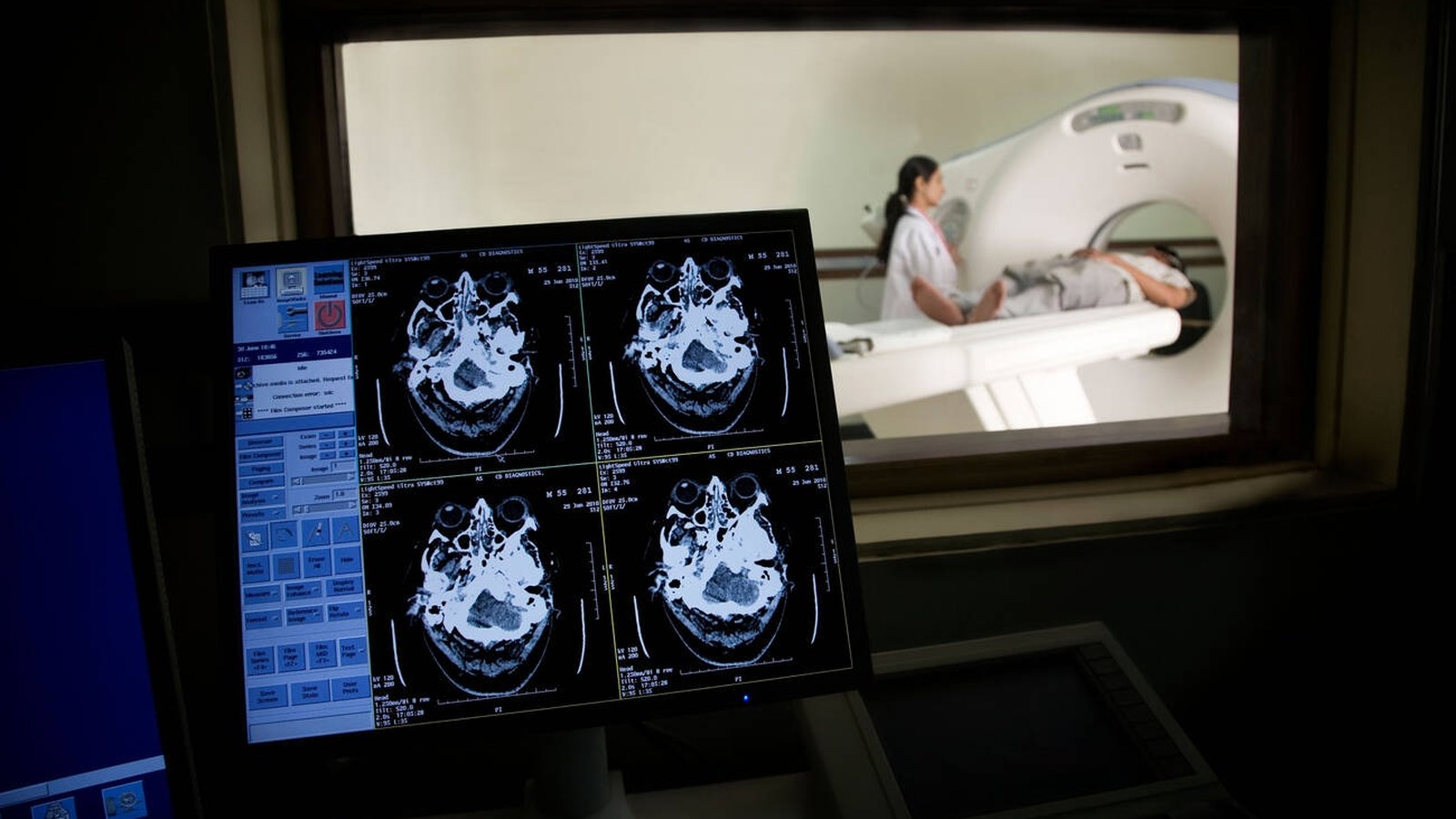
On November 23, 2026, researchers from Virginia Tech, the University of Maryland, Baltimore County, Texas Tech University, and Princeton University published a topological and statistical validation framework in the Proceedings of the National Academy of Sciences, as announced by Virginia Tech, to mathematically verify whether artificial intelligence-generated medical imaging datasets faithfully replicate human patient biology for clinical device trials.
What happened
On November 23, 2026, an interdisciplinary team spanning four American research universities published a peer-reviewed methodology titled “Topological validation of generated scientific images” in Volume 123, Issue 48 of the Proceedings of the National Academy of Sciences (PNAS paper DOI 10.1073/pnas.2622414123).
Led by Professor Yulia R. Gel and doctoral researcher Jaidev Goel from the Virginia Tech Department of Statistics, the study included co-authors Professor Snigdhansu Chatterjee from the University of Maryland, Baltimore County (UMBC), Professor Asim K. Dey from Texas Tech University, and Professor H. Vincent Poor from Princeton University. The research was supported by the National Science Foundation (NSF), National Institutes of Health (NIH), and Food and Drug Administration (FDA) through their joint Foundations for Digital Twins as Catalyzers of Biomedical Technological Innovation (FDT-BioTech) program.
The study introduces a mathematical protocol that enables regulators and clinical trialists to certify whether generative artificial intelligence models reproduce authentic physiological structures. While generative algorithms can easily produce high-resolution synthetic images, biomedical researchers previously lacked rigorous metrics to verify whether synthetic patient cohorts introduce unobserved mathematical artifacts. To validate their approach, the consortium evaluated synthetic mammograms against real patient scans, testing tumor structural responses across varying radiation doses.
Key details of the topological framework
The validation pipeline combines computational topology—specifically persistent homology and multi-scale filtration—with non-parametric statistical hypothesis testing. Conventional computer vision benchmarks evaluate generative models using pixel-level differences or feature correlations from neural networks. However, these traditional measures often overlook subtle structural disruptions, such as altered microcalcifications or abnormal tissue boundary connectivity.
By mapping multi-scale connected components, loops, and voids within tissue structures, the framework generates persistence diagrams that capture invariant geometric features. When tested against breast cancer mammography across variable radiation doses, the topological framework detected subtle generative artifacts that standard computer vision checks missed completely.
As independent clinical reporting from News-Medical noted, verifying synthetic image integrity provides a path to reduce medical imaging trial timelines from several years to months while safeguarding patient safety.
| Validation Metric | Analytical Basis | Sensitivity to Structural Flaws | Regulatory Viability |
|---|---|---|---|
| Peak Signal-to-Noise Ratio (PSNR) | Pixel-by-pixel intensity mean squared error | Low; insensitive to connectivity and spatial topology | Inadequate for clinical trial equivalence |
| Structural Similarity Index (SSIM) | Local luminance, contrast, and structural degradation | Moderate; evaluates local patches but misses global geometry | Insufficient for device premarket clearances |
| Fréchet Inception Distance (FID) | Feature activation distribution in ImageNet classifiers | Low to moderate; biased toward non-clinical textures | Unaccepted by FDA as standalone proof |
| PNAS Topological Framework (2026) | Persistent homology and multi-scale topological filtration | High; quantifies connected loops, cavities, and tissue geometry | Designed for FDA regulatory evaluations |
Background and regulatory context
Deploying advanced medical imaging hardware—such as next-generation MRI systems, digital tomosynthesis devices, and photon-counting CT scanners—requires premarket clearance or approval from the U.S. Food and Drug Administration. Conventional clinical trials require recruiting human patient cohorts, navigating multi-center approvals, and investing millions of dollars over multi-year timelines.
To streamline medical device translation, the FDA Digital Health Center of Excellence has promoted computational modeling and in silico clinical trials. In these frameworks, computational simulations and digital twins in clinical trials generate control cohorts to augment patient datasets. However, regulators have consistently required rigorous evidence that synthetic data captures genuine biological variation without introducing statistical bias.
Without objective mathematical certification, synthetic datasets risk corrupting trial endpoints, violating ICH E9 statistical principles for clinical trials. The PNAS validation methodology provides the mathematical rigor needed to audit generative algorithms before synthetic datasets enter regulatory submissions.
Stakeholder reactions and expert perspectives
Lead investigator Yulia R. Gel emphasized that verifying synthetic data against human biology is essential before using it in regulatory reviews. “The problem is, you have to verify that the synthetic data is true to life,” Gel stated. “We want clinical trials with synthetic data to reach the same conclusions we would get with real people.”
Co-lead author Jaidev Goel highlighted the responsibility of statisticians in evaluating generative technologies. “AI applications are vast and varied,” Goel remarked. “It is being used to generate new protein structures and new compounds in drug discovery. A materials scientist may want to make something with the properties of cotton. We can use this tool to make sure it truly does have the properties of cotton—its density or texture. We shouldn’t blindly buy into the hype of AI. We have always come up with ways to stress-test new tools. That’s the crucial role statistics plays in human history.”
Zhilan Feng, program director at the National Science Foundation, praised the inter-agency collaboration: “Precisely quantifying the ‘reality’ of synthetic data is a complex mathematical problem. This work gives us a rigorous new way to more rapidly evaluate potentially life-saving therapies and medical devices, and a range of other technologies that can enhance our quality of life.”
In its independent industry analysis, technology outlet Convergence Now emphasized that demonstrating synthetic data reliability is the central prerequisite for broader clinical AI adoption, noting that ongoing FDA discussions will determine how rapidly the tool moves into regulatory review pipelines.
What it means for researchers, universities and research offices
The release of this topological validation methodology carries direct operational implications for academic medical centers, research administrators, and biomedical engineers:
- Institutional Review Boards: Research offices evaluating device trials can leverage topological validation metrics to justify synthetic cohort augmentation, satisfying ethical guidelines on minimizing human subject exposure.
- Federal Grant Proposals: University sponsored research teams targeting NSF, NIH, and FDA joint calls should integrate topological validation into digital twin and computational biology proposals.
- Computational Reproducibility: Implementing objective topological scoring standards strengthens computational reproducibility across clinical AI development pipelines.
- Technology Transfer and Startups: Academic spinouts developing imaging software can generate validated in silico evidence to support early FDA regulatory filings while controlling pre-seed capital expenditure.
- Statistical Analysis Plans: Biostatistics facilities can establish verifiable equivalence margins between synthetic datasets and human control cohorts in clinical protocols.
What happens next
Following publication, the Virginia Tech-led team is actively consulting with FDA technical staff to tailor the framework for device premarket clearances and post-market safety evaluations. These discussions focus on standardizing acceptance thresholds for synthetic imaging data in formal regulatory filings.
The research consortium is also expanding the topological framework beyond healthcare. Pilot projects are underway in materials science to validate synthetic models of wood, fabrics, and metals. The team also plans to apply topological constraints to electrical power grid simulations and large multimodal foundation models to prevent algorithmic hallucinations and ungrounded inferences.
Sources
- Virginia Tech: Can AI expedite medical imaging? Yes — if we can trust the picture, checked 2026-11-26
- Proceedings of the National Academy of Sciences: Topological validation of generated scientific images, checked 2026-11-26
- News-Medical: AI-generated data could accelerate medical imaging trials with new validation tool, checked 2026-11-26
- Convergence Now: AI-Generated Data Could Speed Up Medical Imaging Trials as Researchers Develop New Validation Tool, checked 2026-11-26
- U.S. Food and Drug Administration: Digital Health Center of Excellence, checked 2026-11-26






