
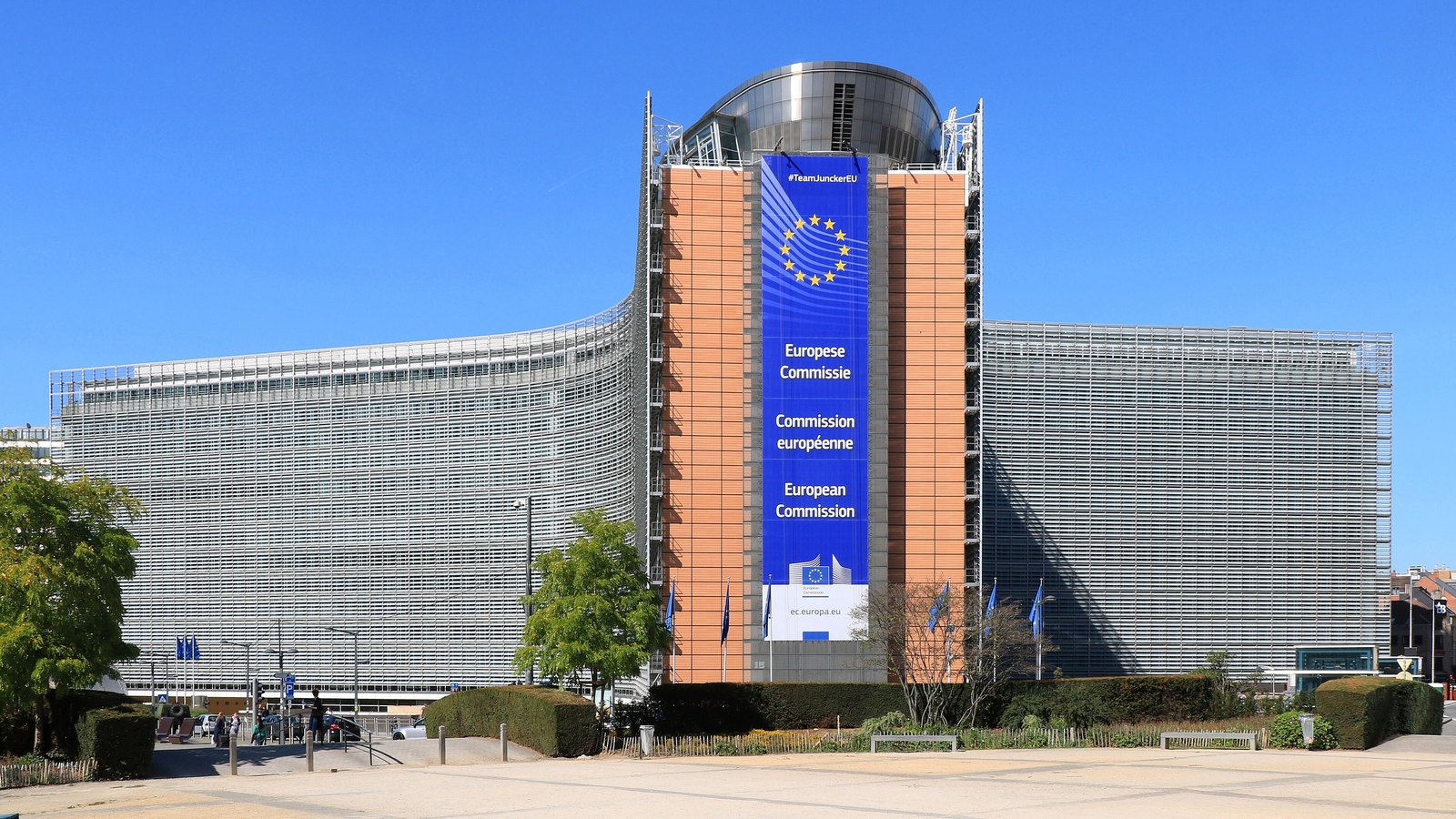
On November 18, 2026, following the close of public consultation, the European Data Protection Board advanced its draft Guidelines 04/2026 on the application of the power to impose administrative fines in relation to other corrective powers in Brussels. The guidance establishes a binding five-step methodology and a presumption of monetary penalties for non-minor violations, establishing urgent compliance requirements for European universities, clinical research sponsors, and institutional data repositories.
European regulators advance harmonized fining criteria
The European Data Protection Board (EDPB) adopted draft Guidelines 04/2026 during its autumn plenary work and moved into technical synthesis on November 18, 2026, following the closure of public consultation on November 13, 2026. The guidelines resolve a major structural ambiguity in European General Data Protection Regulation (GDPR) enforcement. While EDPB Guidelines 04/2022 established mathematical formulas for fine calculation, regulators lacked a harmonized standard governing the prior decision: when a national data protection authority (DPA) should impose an administrative fine under Article 83 rather than deploying non-monetary corrective measures under Article 58(2).
Under GDPR Article 58(2), supervisory authorities hold diverse corrective powers, including warnings (Article 58(2)(a)), reprimands (Article 58(2)(b)), compliance orders (Articles 58(2)(c)-(e)), temporary or definitive processing bans (Article 58(2)(f)), and certification withdrawals (Article 58(2)(h)). Guidelines 04/2026 confirm that administrative fines under Article 58(2)(i) are not measures of last resort. Instead, for any infringement deemed non-minor, European supervisory authorities now operate under a clear regulatory presumption that an administrative fine will be imposed, either alone or cumulatively with operational corrective orders.
Key details of the five-step enforcement methodology
Guidelines 04/2026 introduce a mandatory five-step sequential evaluation that DPAs must follow during enforcement proceedings:
- Step 1: Statutory eligibility. The authority verifies whether the infringement is fineable under GDPR Article 83(4)-(6) or national law. The EDPB notes that general organizational duties under Article 24 link directly to the accountability principle in Article 5(2), bringing governance deficits into the higher fining tier.
- Step 2: Attribution of liability. Regulators verify whether the investigated party is the responsible controller or processor under Articles 4(7), 4(8), and 28. Legal entities remain strictly liable for acts of staff and contractors unless an actor operated entirely outside institutional scope for private gain.
- Step 3: Intent or negligence. Confirming Court of Justice of the European Union (CJEU) jurisprudence, a fine requires culpability. The EDPB establishes that negligence requires only that the organization was in an objective position to know of its obligations. Unawareness or reliance on contested legal advice does not negate negligence.
- Step 4: Minor infringement assessment. The authority evaluates all circumstances under Article 83(2). An infringement is minor only where it caused negligible harm, affected few data subjects, and was promptly remedied.
- Step 5: Proportionality and the fining presumption. Under Step 5(a), minor infringements generally warrant a reprimand or warning rather than a fine. Under Step 5(b), non-minor infringements trigger a strong presumption that an administrative fine must be imposed, unless a financial penalty would create a ruinous burden.
The five-step enforcement framework is summarized below:
| Step | Procedural Stage | GDPR Basis | Assessment Criteria | Presumptive Outcome |
|---|---|---|---|---|
| 1 | Statutory Scope | Articles 83(4)-(6) | Verifying statutory power to fine for the breach | Mandatory gateway check |
| 2 | Entity Attribution | Articles 4(7)-(8), 28 | Establishing controller or processor status | Entity accountability confirmed |
| 3 | Culpability Baseline | Article 83(2)(b) | Intent or objective negligence standard | Only unavoidable legal error exculpates |
| 4 | Severity Grading | Article 83(2)(a)-(k) | Duration, data sensitivity, and mitigation | Minor vs non-minor classification |
| 5(a) | Minor Enforcement | Recital 148, Art. 58(2)(b) | Spontaneous correction and isolated breach | Formal reprimand without fine |
| 5(b) | Standard Enforcement | Article 58(2)(i), Art. 83 | Dissuasiveness and general deterrence | Presumption of administrative fine |
Regulatory background and enforcement fragmentation
Guidelines 04/2026 respond to documented divergence among national supervisory authorities. Since 2018, regulators in France (CNIL), Italy (Garante), and Ireland (DPC) have imposed frequent administrative fines, while other supervisory bodies have relied primarily on warnings or reprimands for similar conduct. This inconsistency created regulatory arbitrage across the single market.
Recent CJEU rulings accelerated the harmonisation mandate. In Case C-807/21 (Deutsche Wohnen), the CJEU affirmed that legal entities can be fined directly without individual criminal convictions, provided negligence or intent is established. Concurrently, European institutions adopted the GDPR Procedural Regulation (EU) 2025/2518, which standardizes cross-border investigations ahead of its application in August 2027. Guidelines 04/2026 provide the substantive baseline for this coordinated enforcement system.
Stakeholder reactions and legal analyses
Regulatory practitioners and legal observers have highlighted the stringent implications of the new framework. In a client alert, international law firm Crowell & Moring LLP published an analysis by partners Emma Wright and Lauren Cuyvers alongside associates Grace Tang and Thanasis Christou, emphasizing that the EDPB has reversed the enforcement question. Supervisory authorities must now articulate why they would withhold a fine for non-minor violations, rather than justifying its imposition.
In a separate regulatory review, Hunton Andrews Kurth LLP highlighted the five-step approach, cautioning that the threshold for proving an unavoidable error in law is exceptionally high. Compliance teams cannot rely on favorable external legal opinions if those opinions acknowledged competing regulatory interpretations.
Furthermore, an advisory brief by Pearl Cohen Zedek Latzer Baratz, privacy partners Haim Ravia and Dotan Hammer explained that mitigation counts toward Step 4 only when adopted spontaneously before regulatory notification. Remedial measures implemented after an inquiry begins are treated as legally required actions rather than mitigating good faith. During the public consultation ending November 13, 2026, feedback from privacy group noyb and the Centre for Information Policy Leadership (CIPL) similarly pressed the Board for balanced application across public and private bodies.
Implications for universities, research repositories, and institutional DPOs
Guidelines 04/2026 carry direct operational implications for universities, academic medical centres, and research data management units. While public universities in certain member states benefit from national laws restricting fines under GDPR Article 83(7), private universities, foundations, and commercial research partners face full exposure to maximum fines of up to €20 million or 4% of annual turnover.
Moreover, public institutions remain subject to non-monetary corrective measures under Article 58(2). A processing ban under Article 58(2)(f) or an erasure order under Article 58(2)(g) can immediately halt clinical trials, longitudinal cohorts, or biobank studies, causing disruption far exceeding financial penalties.
For institutions operating a scientific data repository, compliance protocols must be updated. While GDPR Article 5(1)(b) purpose limitation supports secondary scientific use, repositories hosting special category data under GDPR Article 9 face heightened scrutiny. Security lapses involving biomedical data will systematically fail the minor infringement test in Step 4.
Where researchers rely on the GDPR Article 6(1)(e) public task legal basis, institutional Data Protection Officers (DPOs) must pre-approve Data Protection Impact Assessments (DPIAs) prior to data intake. If scientific workflows require cloud or high-performance compute resources outside the EEA, transfers must strictly adhere to GDPR Article 44 international data transfers. Under the EDPB objective negligence standard, failure to assess processor compliance leaves institutions without a viable defense.
What happens next
Following the close of the consultation window on November 13, 2026, the EDPB secretariat and rapporteurs are reviewing feedback from research organizations, industry associations, and legal bodies. The Board plans to present the finalized text for plenary adoption in early 2027.
Once formally adopted, Guidelines 04/2026 will govern cross-border joint enforcement across the EEA, preceding the August 2027 application of the GDPR Procedural Regulation. Academic research offices and institutional DPOs should conduct comprehensive data governance audits during late 2026 to ensure documented compliance before the final guidelines take full effect.
Sources
- European Data Protection Board: Guidelines 04/2026 on the application of the power to impose administrative fines in relation to other corrective powers under the GDPR, checked 2026-11-21
- Crowell & Moring LLP: EDPB Draft Guidelines 04/2026: GDPR Enforcement Default Shifts to Fining — Five-Step Methodology & Compliance Implications, checked 2026-11-21
- Hunton Andrews Kurth LLP: EDPB Publishes Guidelines on GDPR Fines and Other Corrective Powers for Public Consultation, checked 2026-11-21
- Pearl Cohen Zedek Latzer Baratz: EDPB Adopts a Five-Step Method for Enforcement, checked 2026-11-21


