
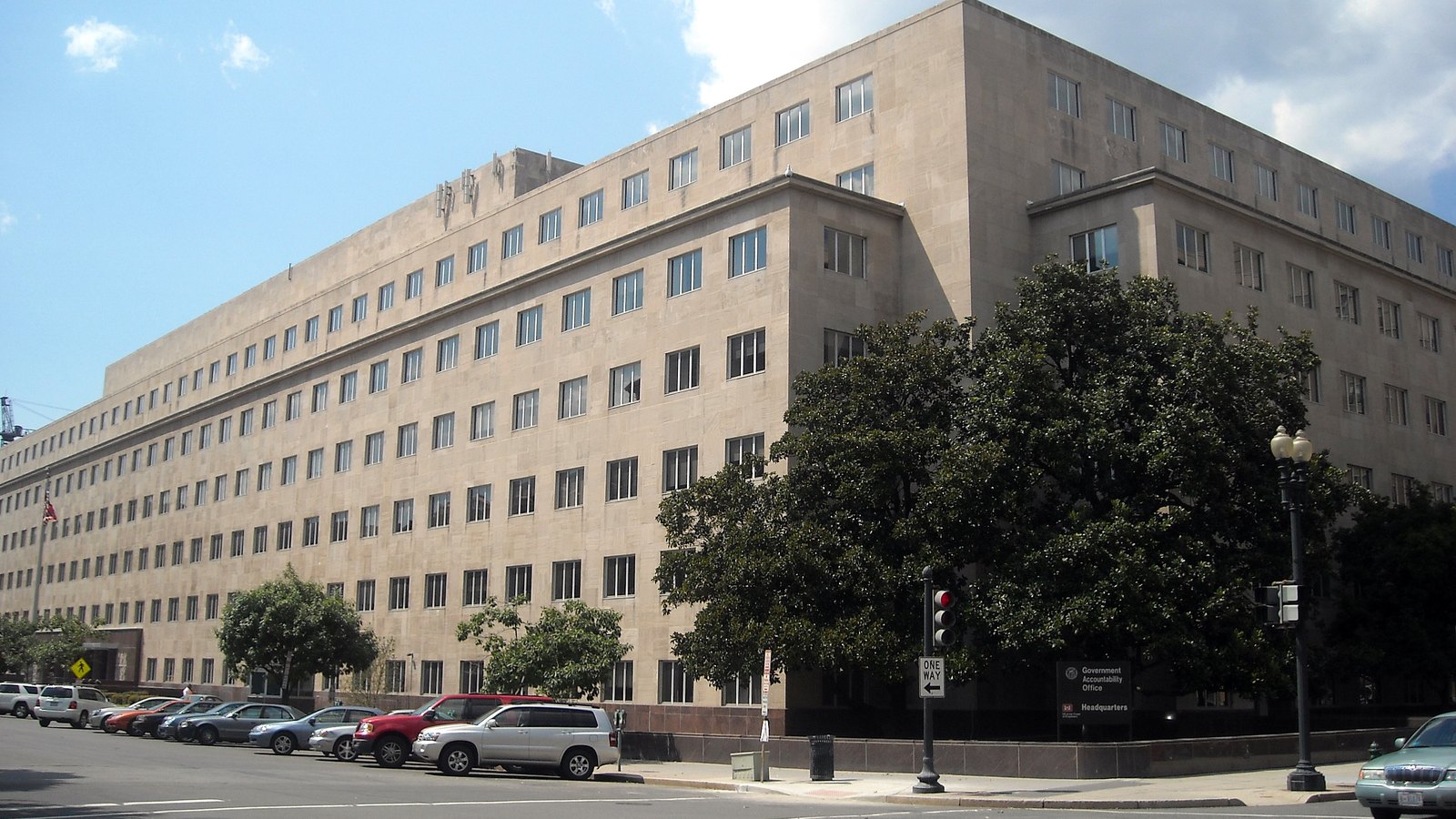
On November 19, 2026, the U.S. Government Accountability Office released report GAO-27-107934, finding that federal agencies inconsistently test and remediate digital tools for accessibility before deployment. The audit warns that widespread noncompliance with Section 508 of the Rehabilitation Act disrupts public services, impedes disabled researchers navigating federal portals, and exposes university research offices to expanding regulatory compliance obligations.
Audit Findings on Federal Digital Accessibility Gaps
Section 508 of the Rehabilitation Act of 1973 requires federal departments and agencies to ensure that Information and Communication Technology (ICT)—including public-facing websites, electronic forms, web portals, kiosks, and digital documents—is accessible to individuals with disabilities. Despite statutory requirements established over two decades ago, the GAO report concluded that digital accessibility remains a persistent and unresolved operational challenge across the federal government.
A central finding of the audit is the absence of consistent pre-deployment testing. While federal directives require agencies to verify accessibility before digital products go live, a 2025 federal survey analyzed by the GAO revealed that most responding departments test ICT inconsistently. Agencies routinely deploy web pages and software without automated accessibility scans, manual code reviews, or assistive technology testing.
To evaluate agency responsiveness, the GAO conducted covert testing across 23 federal departments and agencies. Investigators submitted anonymous feedback regarding specific digital accessibility barriers, such as missing alternative text, inaccessible form controls, and broken screen-reader navigation. Nine of the 23 agencies—approximately 39 percent—failed to fix the reported defects within the audit window. The report noted that while informal feedback channels are far easier for citizens to use than lengthy, complex formal administrative complaints, agency inaction often leaves these feedback loops ineffective.
Testing Deficiencies and Agency Case Studies
The GAO evaluated three departments in depth—the Department of Homeland Security (DHS), the Department of Agriculture (USDA), and the Department of Housing and Urban Development (HUD)—to assess adherence to leading accessibility practices established by the Office of Management and Budget (OMB) and the General Services Administration (GSA).
| Federal Agency / Cohort | Maturity Assessment | Pre-Deployment Testing Practices | Primary Operational Gaps | Remediation Status |
|---|---|---|---|---|
| Department of Homeland Security (DHS) | Substantially Follows Leading Practices | Integrated automated and manual testing across major digital assets | Persistent testing gaps for legacy systems and specialized software | Pursuing continuous improvements to expand testing coverage |
| Department of Agriculture (USDA) | Partially Follows Leading Practices | Inconsistent testing without standardized manual verification | Outdated Section 508 policy; lacks an operational testing manual | Neither agreed nor disagreed with GAO recommendations |
| Department of Housing and Urban Development (HUD) | Partially Follows Leading Practices | Testing paused or fragmented across program offices | Staffing shortages; paused key positions and test verifications | Halted procurement form updates; neither agreed nor disagreed |
| Covert Feedback Cohort (23 Federal Agencies) | 61% Resolved / 39% Unresolved | Public reporting mechanisms evaluated via anonymous barrier reports | Nine agencies took no action on confirmed accessibility barriers | Demonstrated lack of backend escalation and ticketing accountability |
While DHS demonstrated active efforts to close testing gaps, USDA and HUD showed critical administrative vulnerabilities. USDA operated under an outdated departmental policy without an accompanying procedural manual, leaving staff without clear testing instructions. At HUD, acute staffing shortages forced the agency to pause key Section 508 implementation efforts, including filling coordinator positions, revising procurement documentation, and verifying vendor testing assertions.
The GAO warned that unverified contractor claims represent a major source of compliance failures. Federal buyers frequently accept vendor accessibility templates without independent validation, allowing inaccessible commercial platforms into production. Agencies must strengthen acquisition oversight under 2 CFR 200 procurement standards, which require pass-through entities and federal contractors to verify technical deliverables against mandatory specifications.
Evolution of Section 508 and OMB Mandates
Federal electronic accessibility standards stem from the 1998 amendments to the Rehabilitation Act. In 2017, the Access Board updated these requirements through the Revised 508 Standards, aligning federal rules with Web Content Accessibility Guidelines (WCAG) 2.0 Level AA criteria maintained by the U.S. Access Board.
To accelerate lagging compliance, OMB issued Memorandum M-24-08 in December 2023, titled “Strengthening Digital Accessibility and the Management of Section 508 of the Rehabilitation Act.” The memorandum required agencies to establish formal digital accessibility programs, appoint dedicated program managers, and publish feedback mechanisms on Section508.gov policy frameworks.
Government-wide reviews show these rules have faced protracted implementation hurdles. An analysis by MeriTalk showed federal agencies consistently falling short on GSA accessibility maturity scales, with internal intranets and electronic documents showing the steepest failure rates. Reporting by Nextgov/FCW similarly documented that a minority of the government’s most-trafficked web resources fully comply with federal accessibility standards.
Oversight Reactions and Technology Sector Response
The GAO audit prompted swift reaction from congressional oversight committees and disability advocacy organizations. Members of Congress emphasized that although billions are expended on federal IT modernization, accessibility is too often treated as an afterthought rather than a core requirement. Lawmakers reiterated that inaccessible interfaces prevent veterans, seniors, and disabled citizens from accessing essential federal benefits.
In response to the draft findings, both USDA and HUD neither agreed nor disagreed with GAO’s specific recommendations, citing budget limitations and technical staffing shortages. Accessibility advocates, however, disputed that resource constraints justify ongoing exclusion, noting that automated testing catches only a fraction of usability barriers. Comprehensive compliance requires routine manual testing, assistive device evaluations, and executive accountability across procurement pipelines.
Implications for University Grantees and Federal Deliverables
The audit’s findings directly impact research universities, academic medical centers, and scientific institutes that interact with federal systems. Academic investigators and research administrators rely daily on federal grant application portals and reporting databases hosted by agencies like NIH, NSF, and USDA. Persistent interface barriers disproportionately hinder researchers and grant administrators with disabilities from submitting proposals and managing awards.
Moreover, federal grant agreements increasingly require recipients to deliver accessible digital assets. Publicly accessible databases, interactive dashboards, software tools, and digital reports resulting from federally sponsored research must meet federal accessibility benchmarks. Institutions can document compliance using standardized accessibility remediation metadata to verify document and code conformance. Research offices must integrate digital accessibility tracking into standard federal grant reporting requirements and leverage specialized regulatory compliance software to ensure deliverables satisfy federal standards.
Institutions must also align campus policies with broader civil rights enforcement. The Department of Justice published updated ADA Title II web accessibility regulations, available on ADA.gov, establishing binding WCAG 2.1 Level AA requirements for public universities. The convergence of Section 508 scrutiny and ADA Title II deadlines requires universities to implement rigorous digital accessibility testing across administrative, academic, and research infrastructure.
Upcoming Deadlines and Agency Remediation Milestones
Following the publication of GAO-27-107934, audited agencies must submit formal corrective action plans to congressional committees within 180 days under federal statutory oversight rules. These submissions must articulate concrete timelines for updating departmental policies, publishing testing manuals, and resuming paused oversight functions.
At the executive level, OMB will review agency accessibility progress in its next annual evaluation cycle under Memorandum M-24-08 in early 2027. Bipartisan congressional leaders are also examining legislative measures to strengthen Section 508 enforcement through statutory reporting mandates and dedicated compliance funding.
For higher education institutions, digital compliance checkpoints are imminent. State universities and public community colleges face ADA Title II compliance deadlines beginning in April 2026 and April 2027 based on population tier. Research institutions must utilize the remainder of 2026 to review software deliverables, establish pre-deployment accessibility auditing, and ensure federal grant portals and public scientific repositories provide barrier-free access.
Sources
- U.S. Government Accountability Office: Federal Accessibility: Agencies Not Consistently Meeting the Information and Communication Technology Needs of People with Disabilities (GAO-27-107934), checked 2026-11-21
- Section508.gov: IT Accessibility Laws and Policies, checked 2026-11-21
- U.S. Access Board: Revised 508 Standards and 255 Guidelines, checked 2026-11-21
- Nextgov/FCW: Much of the government’s technology isn’t accessible, internal report finds, checked 2026-11-21
- MeriTalk: GSA: Federal Agencies Lag on Section 508 Accessibility Compliance, checked 2026-11-21
- U.S. Department of Justice: Guidance on Web Accessibility and the ADA, checked 2026-11-21


