
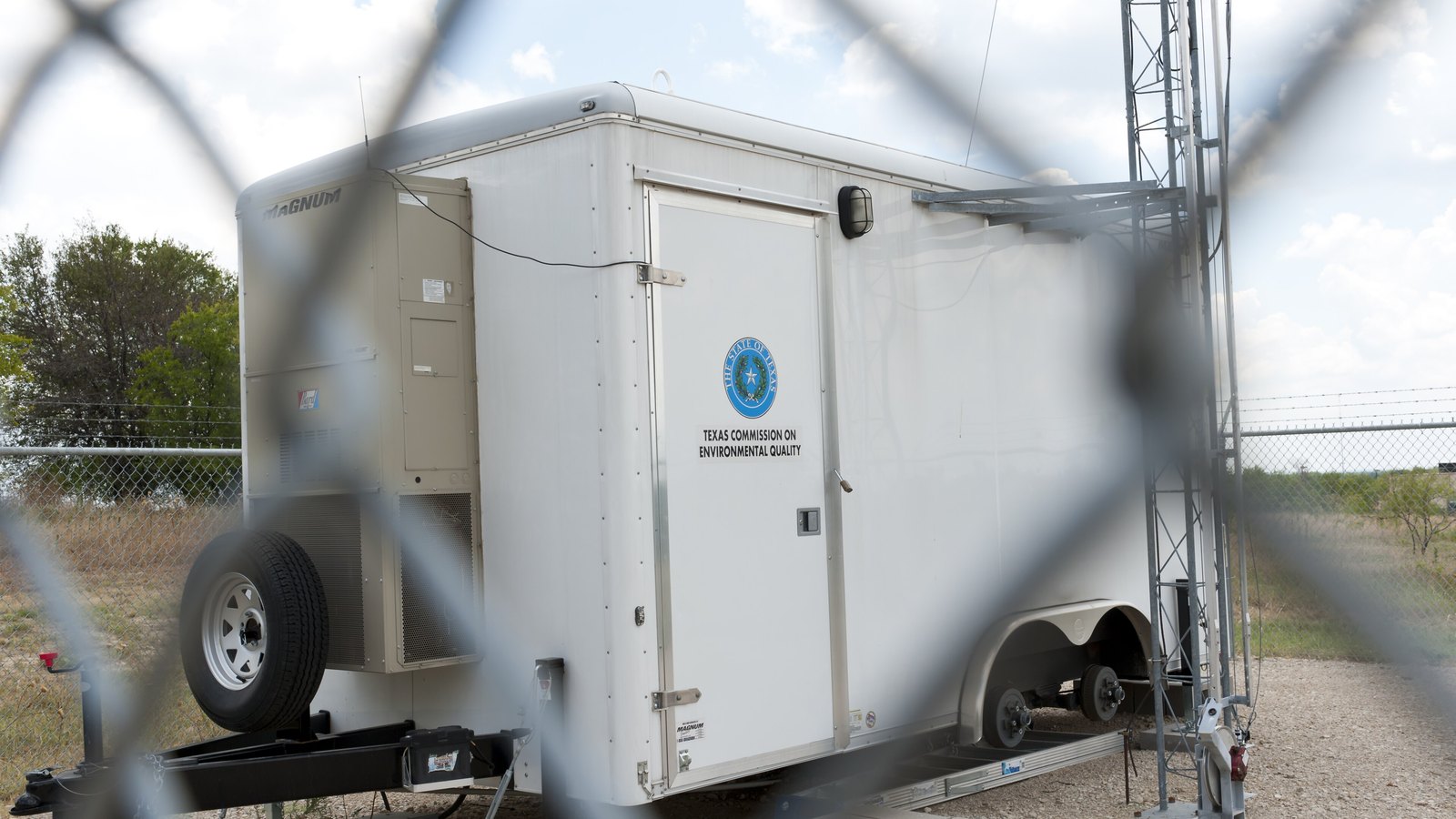
On November 27, 2026, the U.S. Environmental Protection Agency finalized a conditional approval under Clean Air Act Section 110(k)(4) incorporating San Diego County Air Pollution Control District Rule 69.7 into the California State Implementation Plan. The rule imposes strict nitrogen oxide caps and source testing on enclosed landfill flares, creating binding benchmarks for university environmental engineering labs, atmospheric chemists, and campus research facilities.
Conditional Clean Air Act Approval for San Diego Landfill Flare Rules
The U.S. Environmental Protection Agency (EPA) Region 9 issued a final rule in the Federal Register on November 27, 2026 (effective December 28, 2026, under 40 CFR Part 52, Docket No. EPA-R09-OAR-2025-1641, Document 2026-24092) conditionally approving revisions to the California State Implementation Plan (SIP). Codified in the U.S. Environmental Protection Agency final rule in the Federal Register, the action incorporates San Diego County Air Pollution Control District (SDCAPCD) Rule 69.7 into the federally enforceable California air quality plan.
Rule 69.7 was adopted by the SDCAPCD Governing Board on March 9, 2023, and submitted to federal regulators on April 3, 2023, by the California Air Resources Board (CARB) as part of the California State Implementation Plans portfolio to attain National Ambient Air Quality Standards (NAAQS). While SDCAPCD adopted local amendments on October 8, 2026, the EPA evaluated the submitted April 2023 package, granting conditional approval due to a technical deficiency in test method references.
Technical Flare Standards, Testing Protocols, and Deficiencies
Under the codified provisions of Rule 69.7, cataloged within the official San Diego County Air Pollution Control District Rules and Regulations, municipal solid waste (MSW) landfills whose combined actual or potential nitrogen oxide (NOx) emissions from flares meet or exceed federal major stationary source thresholds must comply with binding emission limits, continuous parameter monitoring, and periodic source testing.
For enclosed landfill gas flares, NOx emissions (calculated as NO2) cannot exceed 0.060 pounds per million British thermal units (lb/MMBtu) of heat input, alongside a carbon monoxide (CO) limit of 0.20 lb/MMBtu. Enclosed units require automatic dampers, automated shutdown interlocks, flame arresters, and continuous temperature recorders accurate to ±1%. Operators must halt gas flow and close collection valves within one hour if a flare fails. In normal operation, 3-hour average combustion temperatures cannot drop more than 82°F (28°C) below the baseline established during the facility’s latest compliant source test.
The deficiency precluding immediate full SIP approval centers on compliance testing flexibility. While Rule 69.7 specifies EPA Reference Method 19 for mass emission calculations and SDCAPCD Test Method 100 for continuous monitoring of NOx, CO, and diluent oxygen, subsection (h)(3) allowed operators to analyze landfill gas composition using EPA Method 25C or American Society for Testing and Materials (ASTM) methods D3588-98(2017)e1 and D1945-14(2019). Crucially, the rule included phrasing permitting operators to use the “most current version” of those ASTM standards. Under 40 CFR 51.212(c) and Clean Air Act Section 110(a)(2)(A), SIP testing methods must remain transparent and enforceable; unapproved future revisions cannot be automatically incorporated into a SIP without prior EPA review.
| Regulatory Parameter | Rule 69.7 Standard / EPA Requirement | Statutory or Test Standard | Compliance Frequency |
|---|---|---|---|
| Enclosed Flare NOx Limit | 0.060 lb/MMBtu heat input (as NO2) | SDCAPCD Rule 69.7(d)(1) | Continuous operation; annual source test |
| Enclosed Flare CO Limit | 0.20 lb/MMBtu heat input | SDCAPCD Rule 69.7(d)(2) | Continuous operation; annual source test |
| Combustion Temperature Floor | Max 82°F (28°C) drop below test average | SDCAPCD Rule 69.7(g)(9)(i) | Continuous 3-hour block averaging |
| Gas Flow Rate Monitoring | Automated flow display and recording | SDCAPCD Rule 69.7(f)(1) | Recorded every 15 minutes; annual calibration |
| Gas Composition Testing | EPA Method 25C; ASTM D3588; ASTM D1945 | 40 CFR 60 App. A / 40 CFR 51.212(c) | Periodic compliance determination |
| Record Retention | On-site electronic or hardcopy records | SDCAPCD Rule 69.7(g) | Retained for minimum 5 calendar years |
Severe Ozone Nonattainment and Statutory RACT Framework
The Clean Air Act requires ozone nonattainment areas classified as Moderate or above to implement Reasonably Available Control Technology (RACT) for major stationary sources of volatile organic compounds and nitrogen oxides. On June 2, 2021 (86 FR 29522), the EPA reclassified San Diego County from Serious to “Severe” nonattainment for the 2008 8-hour ozone standard (75 parts per billion) and from Moderate to “Severe” for the 2015 standard (70 parts per billion).
Under Severe nonattainment, the major stationary source threshold drops to 25 tons per year. SDCAPCD committed in its 2020 RACT demonstration to adopt dedicated stationary source rules for major landfill gas combustion operations. Bacterial decomposition in landfills yields raw gas containing roughly 50% methane and 50% carbon dioxide. While flaring oxidizes methane to mitigate greenhouse warming, high combustion temperatures prompt thermal NOx formation, necessitating RACT limits to curb ground-level ozone.
Researchers analyzing municipal waste containment and gas extraction dynamics can examine engineering configurations detailed in the CASRAI reference on Landfill design, gas collection systems, and environmental closure rules to understand how vacuum header balances influence combustion emissions. Broader pollution control methodologies and stack monitoring principles are explored in the guide to Environmental engineering research areas and emissions monitoring.
Public Comment Record and State Commitments
The EPA initially proposed conditional approval on May 7, 2026 (91 FR 24765), opening a 30-day public comment window in Regulations.gov Docket EPA-R09-OAR-2025-1641. The agency received a single public comment supporting conditional approval while emphasizing that the statutory one-year deadline for curing test method deficiencies must be strictly enforced to ensure intended air quality improvements.
In its response, EPA Region 9 affirmed that Section 110(k)(4) mandates automatic disapproval if required revisions are not submitted within 12 months. Both local and state agencies have submitted binding commitment letters. SDCAPCD committed on January 13, 2026, to resolve the ASTM testing flexibility and transmit an amended rule to CARB by Spring 2027. CARB followed on February 10, 2026, committing to submit the revised Rule 69.7 to the EPA no later than June 30, 2027, or within one year of the final rule’s effective date, whichever is soonest.
Research Implications for Environmental Engineering Labs and University Compliance
The codification of Rule 69.7 in the California SIP establishes operational benchmarks for academic research facilities, environmental engineering laboratories, and campus compliance administrators:
- Combustion Kinetics and Low-NOx Burner Development: Environmental engineering groups studying biogas combustion must balance high destruction removal efficiency (DRE) for methane against thermal NOx formation. Maintaining emissions below 0.060 lb/MMBtu while handling variable landfill gas heat content provides an empirical target for testing porous media burners and exhaust recirculation systems.
- Analytical Testing and Method Verification: Laboratories supporting stack compliance or landfill monitoring must adhere strictly to EPA-approved ASTM versions. Unapproved updates to ASTM D1945 or D3588 cannot be used without formal approval from the District and the EPA.
- Campus Compliance and Facilities Tracking: Research institutions operating agricultural digesters, pilot gas plants, or closed campus disposal sites must maintain rigorous emissions inventories and operating permits. Teams tracking regulatory identifiers under federal reporting rules can review procedural steps in the overview of EPA Identification Number application and facility compliance.
- Emissions Modeling and Environmental Data Mining: Atmospheric modeling teams assessing regional photochemical smog rely on certified continuous emission monitoring records. Researchers querying reported industrial emissions can cross-reference reporting channels through the guide on the EPA Envirofacts environmental compliance data API.
- Sponsored Research Field Protocols: Research offices administering field measurement grants on municipal sites must verify that experimental protocols budget for certified Reference Method 19 test runs and multi-point continuous sampling.
Rule Timelines, Judicial Review, and Next Milestones
The EPA’s final conditional approval sets key legal and administrative deadlines across 2026 and 2027:
- December 28, 2026: Effective date of the final rule, formally incorporating Rule 69.7 into 40 CFR Part 52 and making its standards federally enforceable under the Clean Air Act.
- January 26, 2027: Deadline for filing judicial review petitions in the Ninth Circuit under Clean Air Act Section 307(b)(1).
- Spring 2027: Target date for SDCAPCD to finalize local rule revisions correcting the ASTM testing flexibility and transmit the updated text to CARB.
- June 30, 2027: CARB deadline to submit the corrected SIP revision to EPA Region 9, satisfying the one-year commitment window that closes on December 28, 2027.
- Consequences of Non-Submittal: If CARB fails to submit the corrected rule within one year of December 28, 2026, the conditional approval automatically converts to a SIP disapproval under CAA Section 110(k)(4), triggering mandatory sanctions clocks under Clean Air Act Section 179.
Sources
- U.S. Environmental Protection Agency: Air Quality Plan; California; San Diego County Air Pollution Control District; Landfill Flares, checked 2026-11-26
- Regulations.gov: EPA Docket EPA-R09-OAR-2025-1641, checked 2026-11-26
- California Air Resources Board: California State Implementation Plans, checked 2026-11-26
- San Diego County Air Pollution Control District: Rules and Regulations, checked 2026-11-26






