
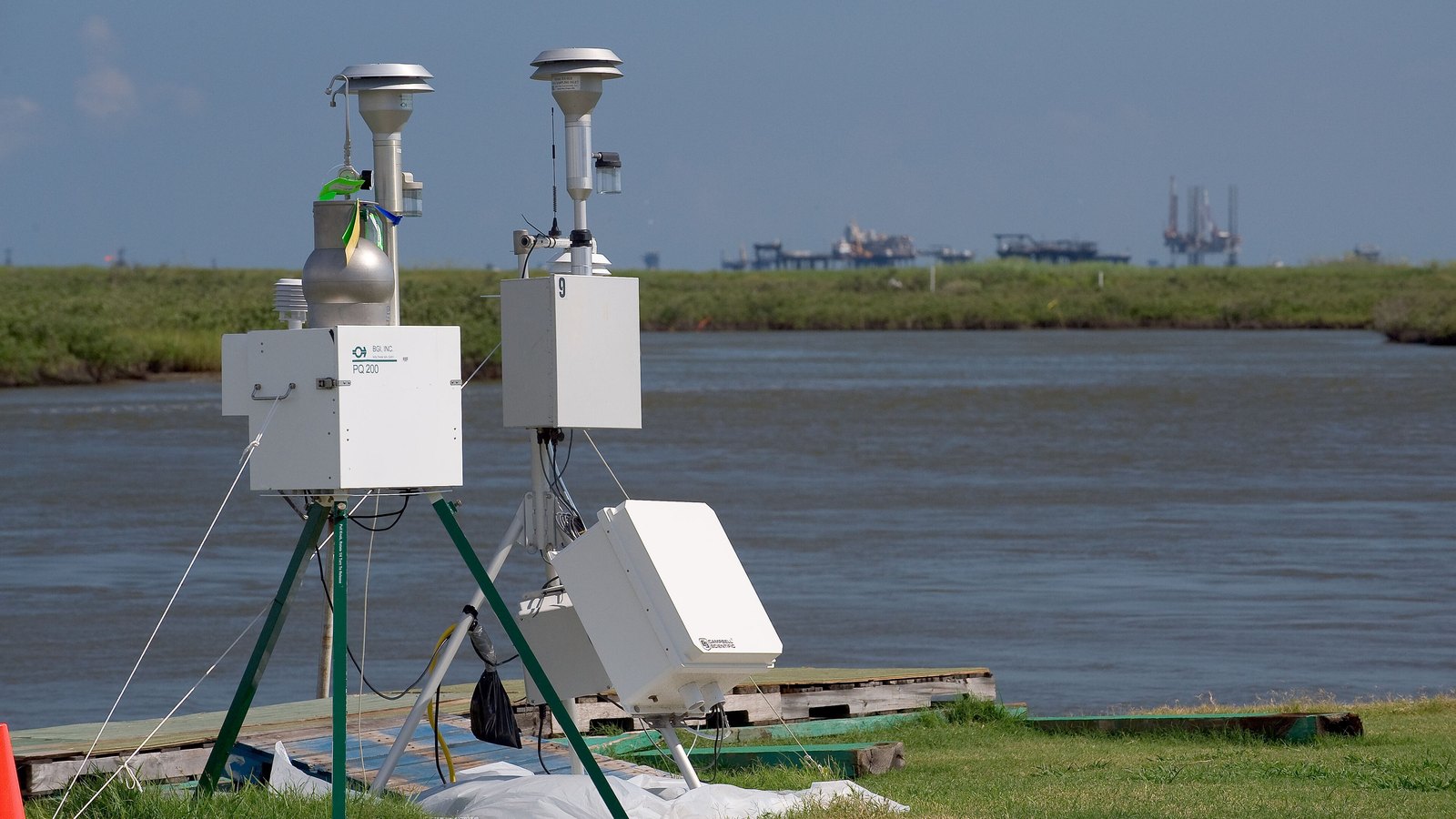
On November 26, 2026, the U.S. Environmental Protection Agency issued proposed Clean Air Act rules approving the Texas attainment plan for the Navarro County sulfur dioxide nonattainment area alongside vehicle inspection revisions in Utah’s Cache County, establishing enforceable industrial emission limits and compliance benchmarks that directly impact regional atmospheric research, dispersion modeling validation, and university environmental health monitoring.
What happened across the federal air quality dockets
The Environmental Protection Agency (EPA) issued multiple State Implementation Plan (SIP) decisions under 40 CFR Part 52, led by Document 2026-24033 for Texas and Document 2026-24036 for Utah. In Document 2026-24033 (Docket ID EPA-R06-OAR-2024-0069), EPA Region 6 proposed approving the Texas attainment demonstration for Navarro County under the 2010 1-hour primary National Ambient Air Quality Standard for sulfur dioxide of 75 parts per billion (ppb). Submitted by the Texas Commission on Environmental Quality (TCEQ) on October 24, 2022, the plan establishes enforceable emission limitations, a comprehensive point-source inventory, reasonably available control measures, and an attainment demonstration based on AERMOD dispersion modeling.
Concurrently, under Document 2026-24036 (Docket ID EPA-R08-OAR-2026-4555), EPA Region 8 proposed approving the Utah Cache County inspection and maintenance program revision submitted on February 28, 2025. This action amends Utah Administrative Rule R307-110-36 to incorporate local updates from the Bear River Health Department (BRHD), granting testing exemptions for emergency vehicles and establishing a parts unavailability waiver. The EPA also issued companion SIP proposals for Maryland (Document 2026-24042) and Virginia (Document 2026-24043), advancing regional Clean Air Act compliance infrastructure.
Key regulatory details and compliance benchmarks
The Texas plan resolves sulfur dioxide (SO2) emissions from the Arcosa Lightweight Streetman Plant, an expanded shale aggregate facility contributing over 99% of modeled SO2 in the Navarro County nonattainment area. Codified under 30 Texas Administrative Code (TAC) Chapter 112, Subchapter G, the rules require a dedicated wet scrubber stack meeting Good Engineering Practice (GEP) height and enforce a 222 pounds per hour (lbs/hr) SO2 limit on kiln Emission Point Number E3-1. Compliance is verified via Continuous Emissions Monitoring Systems (CEMS) under 40 CFR Part 60.
In Utah, the Cache County inspection and maintenance (I/M) revisions address emissions testing administered by the Bear River Health Department air quality and vehicle maintenance division under BRHD Regulation No. 2013-1. The revisions update inspection station definitions, exempt 102 active emergency vehicles out of 124,718 registered vehicles (0.08% of the fleet), and create Appendix G procedures allowing waivers when replacement emissions components are discontinued or unavailable. A Clean Air Act Section 110(l) demonstration confirmed these changes do not interfere with maintaining the fine particulate matter (PM2.5) standard.
| Regulatory Metric | Texas Navarro County Plan (Document 2026-24033) | Utah Cache County Revision (Document 2026-24036) |
|---|---|---|
| Docket Identifier | EPA-R06-OAR-2024-0069 | EPA-R08-OAR-2026-4555 |
| Target Ambient Standard | 2010 1-Hour SO2 Primary NAAQS (75 ppb) | 2006 24-Hour PM2.5 NAAQS (35 μg/m³) Maintenance |
| Primary Source / Scope | Arcosa Lightweight Streetman Plant (Kiln Stack E3-1) | Cache County Motor Vehicle Fleet (124,718 Vehicles) |
| Enforceable Control Measures | 30 TAC Chapter 112 Subchapter G; 222 lbs/hr SO2 limit | BRHD Regulation 2013-1; Utah Admin. Rule R307-110-36 |
| Compliance Mechanisms | Continuous Emissions Monitoring Systems (CEMS) | Biennial On-Board Diagnostics (OBD-II) inspections |
| Emissions Baseline vs. Projected | 3,493.10 tons/year (2019 base) to 972.36 tons/year (2026 projection) | 102 emergency vehicles exempted; projected ≤ 10 waivers/year |
| Attainment / Effective Deadline | Statutory Attainment Date: April 30, 2026 | State Effective Date: July 1, 2024 (BRHD Regulation 2013-1) |
Projected point-source emissions in Navarro County fall from 3,493.10 tons per year in 2019 to 972.36 tons per year in 2026, delivering an annual reduction of 2,520.74 tons (72.2%).
Background and atmospheric dispersion context
The Navarro County nonattainment designation stems from the 2010 1-hour SO2 standard. Ambient data from the Richland Southeast 1220 Road monitor (AQS ID 48-349-1081) recorded a 2017–2019 design value of 165 ppb, leading EPA to designate the area nonattainment in 2021.
To demonstrate attainment, state scientists modeled emissions using AERMOD, archived in the TCEQ Navarro County dispersion modeling archive. Incorporating five years (2016–2020) of surface meteorology from Corsicana Municipal Airport, Shreveport upper-air data, and a 6 ppb background from the Midlothian OFW monitor, the modeling yielded a maximum predicted 5-year design value of 73.8 ppb, beneath the 75 ppb NAAQS. Recent ambient monitoring at the Richland station confirmed compliance, with measured levels dropping from 165 ppb to 16 ppb.
AERMOD modeling illustrates the critical role of environmental modelling and software tools in simulating complex atmospheric transport. Similarly, ensuring continuous industrial monitors and ambient analyzers produce reliable compliance data requires traceable sensor calibration protocols and rigorous quality assurance.
Stakeholder perspectives and regulatory analysis
EPA technical evaluations highlighted that Texas successfully combined enforceable emission limits with operational flexibility through Alternate Means of Control (AMOC) provisions. Facilities seeking alternative operating limits must demonstrate through dispersion modeling that ambient concentrations will remain below the 73.8 ppb attainment ceiling.
Industrial representatives noted that installing wet scrubbers and certified CEMS requires substantial capital investment and multi-year engineering. Environmental health analysts underscored that lowering ambient SO2 protects vulnerable populations from severe bronchoconstriction and asthmatic attacks. Demonstrating compliance in Navarro County validates the Clean Air Act’s cooperative framework, proving targeted point-source controls can clean airsheds effectively.
What it means for researchers, universities and research offices
The EPA’s proposed rule approvals carry direct implications for academic research programs, campus facilities, and environmental health offices:
- Aerosol chemistry and dispersion modeling: Atmospheric scientists gain a validated field test case for evaluating plume dispersion algorithms. Because one point source generated over 99% of local SO2, researchers can model the chemical oxidation of SO2 into secondary sulfate particulate matter under real-world conditions.
- Monitoring station operation and SOPs: University environmental research teams operating ambient air quality monitors must maintain documented standard operating procedures for zero/span calibration and maintenance to meet federal data quality objectives.
- Laboratory accreditation and compliance: Environmental analytical laboratories performing testing for regional regulatory agencies should align quality systems with environmental laboratory accreditation standards to ensure sample integrity and defensible data reporting.
- University fleet management in maintenance areas: Institutions in maintenance counties, such as Utah State University in Logan, Cache County, benefit from clarified emergency vehicle exemptions and structured procedures for parts unavailability waivers across institutional fleets.
- Research data stewardship: Research offices managing ambient air quality data must implement auditable data validation pipelines, preserving raw sensor outputs and calibration records for reproducible regulatory research.
What happens next
Publication in the Federal Register on November 27, 2026, initiates a 30-day public comment window ending on December 28, 2026. Comments on the Texas plan should reference Docket ID No. EPA-R06-OAR-2024-0069, while comments on the Utah program should cite Docket ID No. EPA-R08-OAR-2026-4555.
Texas faces a statutory attainment date of April 30, 2026. With scrubbers operational and monitored values at 16 ppb, EPA Region 6 expects to issue final approval in early 2027. Following final action, these limits become permanently enforceable within the federally approved SIP.
Sources
- Federal Register: Air Quality State Implementation Plans; Approvals and Promulgations: Texas; Attainment Plan for the Navarro County 2010 Sulfur Dioxide Primary National Ambient Air Quality Standard Nonattainment Area, checked 2026-11-26
- Federal Register: Air Quality State Implementation Plans; Approvals and Promulgations: Utah; Cache County Inspection and Maintenance Program Revision, checked 2026-11-26
- U.S. Environmental Protection Agency: Primary National Ambient Air Quality Standard (NAAQS) for Sulfur Dioxide, checked 2026-11-26
- Texas Commission on Environmental Quality: Sulfur Dioxide Dispersion Modeling for Navarro County, checked 2026-11-26
- Bear River Health Department: Air Quality & Vehicle Maintenance, checked 2026-11-26






