
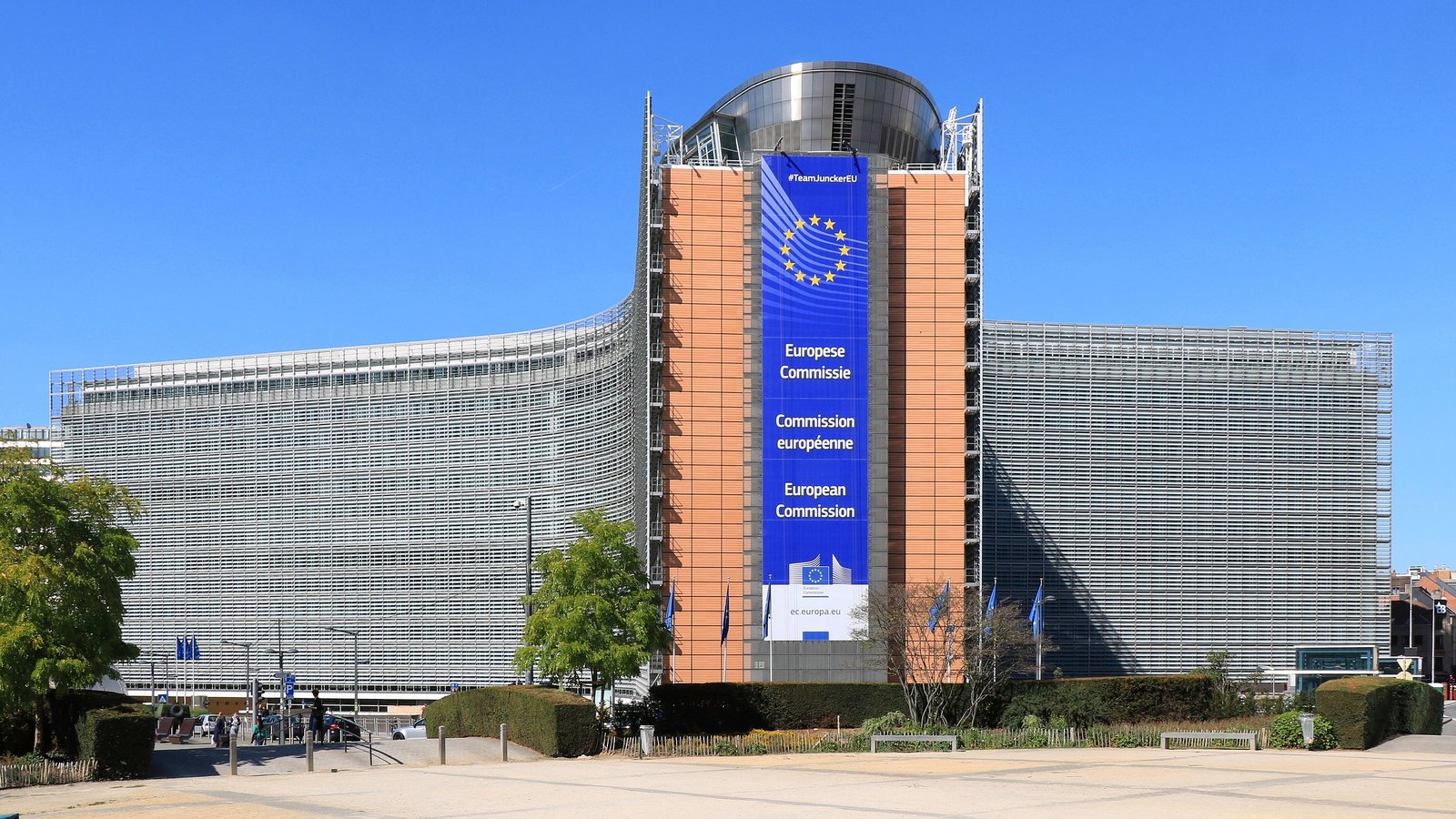
On November 20, 2026, the European Commission Directorate-General for Trade and Economic Security convened the annual 2026 Export Control Forum at the Albert Borschette Conference Centre in Brussels, gathering policymakers, industry leaders, and academic representatives to confront the escalating friction between national security controls and international scientific collaboration.
High-Level Alignment on Economic Security and Strategic Trade
The high-level plenary opened with joint addresses by Maroš Šefčovič, European Commissioner for Trade and Economic Security, and Bernd Lange, Chair of the European Parliament Committee on International Trade (INTA). Šefčovič underscored that economic security has transitioned from an exceptional defensive posture into a permanent structural component of European trade and industrial policy. He emphasised that safeguarding critical technological knowledge from non-aligned strategic competitors is essential to defending democratic resilience, but insisted that enforcement mechanisms must avoid unnecessarily isolating European researchers from global innovation networks.
Bernd Lange reflected on the five-year operational trajectory of Regulation (EU) 2021/821, the recast dual-use regime enacted in 2021. Lange highlighted Parliament’s ongoing commitment to multilateral governance, transparency, and human rights safeguards, pointing out that export controls are no longer restricted to conventional military hardware or ballistic delivery systems. Instead, they increasingly regulate intangible data, software algorithms, and advanced manufacturing platforms that originate within academic laboratories. Declan Hughes, Secretary-General of Ireland’s Department of Enterprise, Tourism and Employment, presented the perspective of national competent authorities, calling for enhanced administrative convergence and shared digital screening infrastructures to reduce procedural delays for lawful researchers.
Key Dual-Use List Updates and Sensitive Technologies
Technical sessions led by Stéphane Chardon, Head of Sector at DG Trade and Economic Security, and Giovanni Squadrito of the Service for Foreign Policy Instruments examined the Commission’s 2026 delegated act updates to Annex I of the EU Dual-Use Regulation. Adopted in September 2026, the revised control list incorporates technical determinations negotiated across multilateral non-proliferation regimes, including the Wassenaar Arrangement, the Australia Group, and the Nuclear Suppliers Group.
Regulatory analysis published by law firm NautaDutilh indicates that the 2026 revisions significantly tighten export and transfer parameters across four critical technology pillars: semiconductor manufacturing equipment, advanced computing integrated circuits, additive manufacturing systems for energetic materials, and high-temperature composite coatings. The revisions reflect growing international scrutiny over civilian research that could inadvertently accelerate third-country military modernisation or advanced electronic warfare capabilities.
| Technology Domain | 2026 Control List Focus | Primary Research & Academic Exposure |
|---|---|---|
| Semiconductor Fabrication | Atomic layer deposition (ALD) systems for ruthenium/molybdenum, EUV mask inspection tools | Nanofabrication facilities, applied physics labs, cleanroom research consortia |
| Advanced Computing | Integrated circuits with Digital Processing Units (DPUs), high interconnect bandwidth architectures | High-performance computing (HPC) clusters, AI model acceleration, supercomputing centres |
| Advanced Materials | Mullite-reinforced ceramic matrix composites (CMCs) with thermal operating limits above 1,400°C | Aerospace engineering, high-temperature propulsion studies, materials science departments |
| Additive Manufacturing | Automated precision powder deposition tools designed for energetic materials and specialized alloys | Mechanical engineering, additive fabrication laboratories, metallurgy partnerships |
Single Market Cohesion and Member State Divergence
A central debate during the forum revolved around single market fragmentation driven by unilateral national export control measures. Under Articles 9 and 10 of Regulation (EU) 2021/821, individual EU Member States retain the legal prerogative to introduce national control lists on public security grounds. In recent months, national authorities including the German Federal Office for Economic Affairs and Export Control (BAFA) and the Dutch Ministry of Foreign Affairs have enacted national licensing restrictions covering advanced lithography equipment, quantum computing processors, and specialized biotechnology tools.
While these national measures aim to address urgent strategic risks in the absence of consensus within consensus-based multilateral export regimes, industry leaders and university administrators warned that divergent national rules disrupt collaborative cross-border research within the European Union. In response, DG Trade Deputy Director-General Denis Redonnet stressed that the Commission is actively developing a coordinated European framework to harmonise national control measures, preventing regulatory arbitrage and safeguarding intra-EU research mobility.
Academic Sector Concerns and Intangible Technology Transfers
The afternoon panel, titled “From the lab to the cloud,” directly addressed how emerging export controls impact academic institutions and scientific research. Branislav Aleksic, Co-Chair of the European Export Control Association for Research Organisations (EECARO), articulated the growing compliance burdens faced by European universities. Aleksic stressed that research institutions operate under fundamentally different organizational models than commercial defense contractors, relying on open intellectual exchange, decentralized departmental governance, and highly internationalized research teams.
In its formal contribution to the Commission’s ongoing dual-use evaluation, EECARO warned that export controls should not be deployed as an all-encompassing solution for institutional research security risks. In particular, academic compliance officers encounter acute ambiguity when managing intangible technology transfers (ITT)—such as sharing uncompiled source code, computational blueprints, or advanced lab protocols across cloud storage environments or virtual collaborative repositories. Aleksic cautioned that without clear, legally predictable exemptions for early-stage basic research, overly broad controls risk chilling legitimate cross-border science and deterring international talent from joining European research institutions.
The discussions highlighted the delicate intersection between dual-use research of concern (DURC), mandatory export licensing, and traditional academic freedom. Panel participants examined where the boundary lies between open scientific discovery and export-controlled research, underscoring that institutional compliance programmes must recognize the standard fundamental research exemption while applying targeted screening to applied research projects that carry tangible proliferation risks.
Implications for Universities and Research Compliance Offices
The outcomes of the 2026 Export Control Forum signal a decisive shift toward institutional accountability for research organisations. European universities and independent research institutes must implement several concrete administrative steps to align with evolving regulatory expectations:
- Strengthen Internal Compliance Programmes (ICPs): Institutions must operationalize formal compliance guidelines tailored to academic environments, establishing clear governance structures, designated compliance contacts, and documented risk-assessment procedures.
- Implement Pre-Award Research Security Screening: Research administration offices must integrate automated screening into grant intake workflows, reviewing foreign funding sources, international research partners, and proposed technical deliverables prior to contractual sign-off.
- Audit Cloud Infrastructure and Remote Collaboration Platforms: IT and compliance teams must evaluate institutional cloud architectures to ensure that sensitive technical data, software repositories, and remote access environments do not facilitate unlicensed intangible exports to restricted destinations.
- Clarify Fundamental Research Thresholds: Faculty members and principal investigators must receive structured training on distinguishing basic scientific inquiry intended for open public dissemination from proprietary or applied research that requires export authorization.
Timeline and Upcoming Implementation Milestones
In her closing remarks, DG Trade Director-General Ditte Juul Jørgensen outlined the Commission’s policy timeline for the coming year. Following the conclusion of formal scrutiny by the European Parliament and the Council, the 2026 Delegated Regulation updating Annex I of the EU Dual-Use Regulation will be published in the Official Journal of the European Union and enter into force immediately across all 27 Member States.
Concurrently, the European Commission will continue synthesizing evidence gathered during its comprehensive 2026 evaluation of Regulation (EU) 2021/821. DG Trade intends to publish a detailed evaluation report in early 2027, which will explore potential legislative revisions to enhance single-market coordination, streamline licensing for trusted academic and industrial research networks, and establish harmonized export screening standards across the Union.
Sources
- European Commission: Export Control Forum 2026 Event Programme and Overview, checked 2026-11-21
- EUR-Lex: Regulation (EU) 2021/821 Setting Up a Union Regime for Dual-Use Items, checked 2026-11-21
- NautaDutilh: EU Export Control: 2026 Update of the Dual-Use Control List (Annex I), checked 2026-11-21
- European Export Control Association for Research Organisations (EECARO): Contribution to Dual-Use Evaluation, checked 2026-11-21
- Federal Office for Economic Affairs and Export Control (BAFA): Export Control Framework and Dual-Use Goods, checked 2026-11-21


