
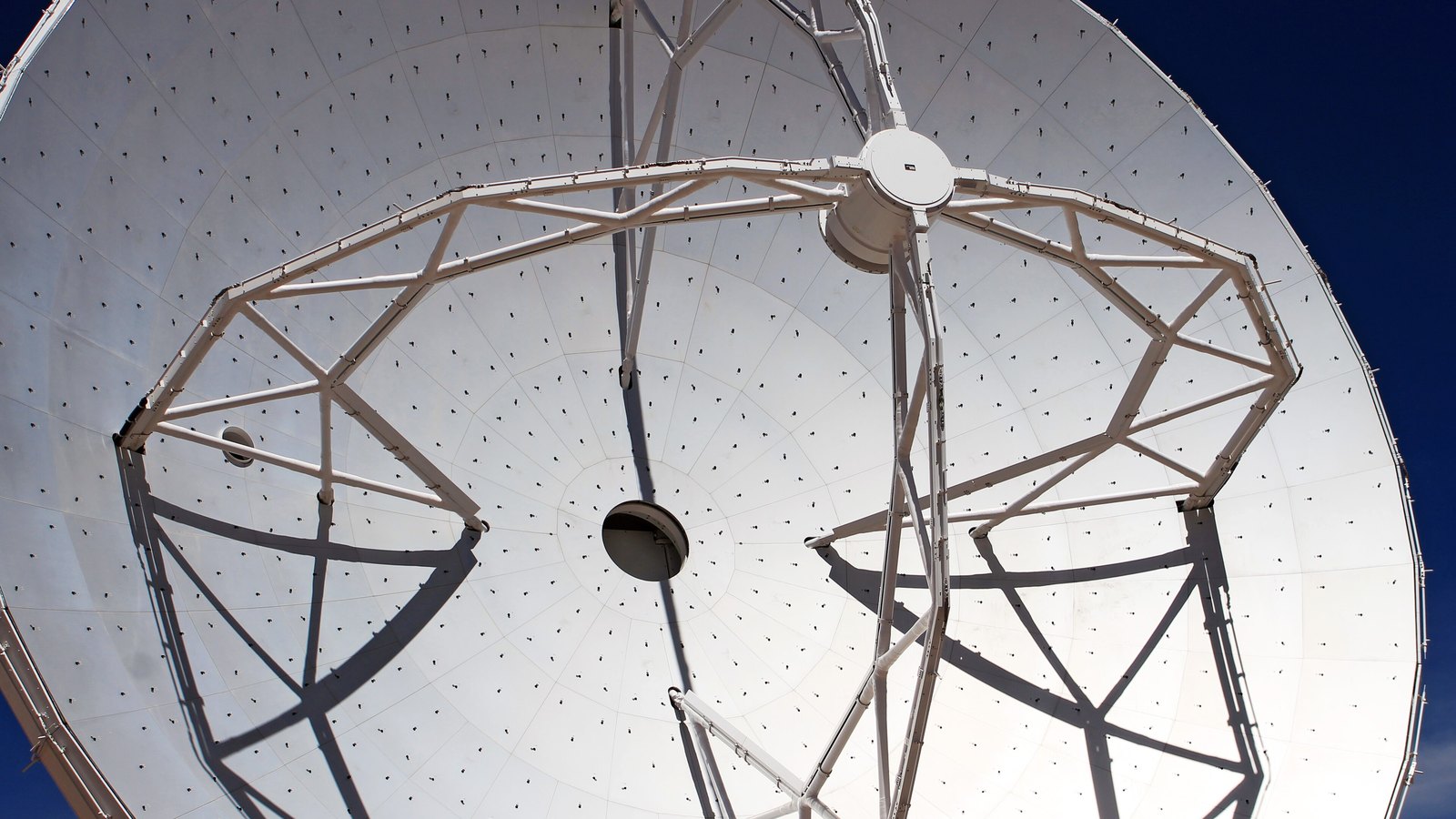
On November 24, 2026, the Federal Communications Commission placed an official notice on public inspection in the Federal Register convening winter meetings for all four Informal Working Groups of the 2027 World Radiocommunication Conference Advisory Committee under OIA Docket Number 24-30. The virtual sessions, spanning December 2026 through February 2027, will formulate draft United States spectrum proposals that directly govern radio astronomy observatories, Earth remote-sensing satellite missions, and university wireless engineering laboratories.
Federal Notice Details and Advisory Architecture
The Federal Communications Commission (FCC) issued Federal Register Document 2026-24014 on November 24, 2026, with official publication scheduled for November 25, 2026. Administered by the FCC Office of International Affairs (OIA) under OIA Docket No. 24-30 and Federal Register Identifier FR ID 379148, the notice activates the advisory apparatus authorized under the Federal Advisory Committee Act (FACA), Public Law 92-463. Assistant Chief Sarah Van Valzah signed the notice on behalf of the Commission, with Designated Federal Official Gregory Baker overseeing proceedings across the Global Strategy and Negotiation Division.
The Advisory Committee operates through four specialized bodies: Informal Working Group 1 (IWG-1) for Maritime, Aeronautical, and Radar Services; Informal Working Group 2 (IWG-2) for Mobile and Fixed Services; Informal Working Group 3 (IWG-3) for Fixed-Satellite Service and Regulatory Matters; and Informal Working Group 4 (IWG-4) for Mobile Satellite and Space Science Services. Each working group is co-chaired by industry and legal experts alongside designated FCC technical staff, ensuring recommendations feed into interagency reviews with the National Telecommunications and Information Administration (NTIA) and the Department of State.
Working Group Remits and Winter 2026–2027 Meeting Schedule
The scheduled sessions run across three monthly cycles in December 2026, January 2027, and February 2027. All meetings occur virtually on Microsoft Teams with public access and dial-in telephone bridges. The four groups divide technical review across distinct radio disciplines:
- IWG-1 (Maritime, Aeronautical, and Radar Services): Focuses on radar sensing bands, aeronautical telemetry, and maritime radio navigation safety.
- IWG-2 (Mobile and Fixed Services): Assesses terrestrial wireless allocations, International Mobile Telecommunications (IMT) expansion, and mid-band spectrum sharing.
- IWG-3 (Fixed-Satellite Service and Regulatory Matters): Reviews non-geostationary orbit (NGSO) satellite constellations, feeder links, and regulatory limit reviews.
- IWG-4 (Mobile Satellite and Space Science Services): Manages space research, passive Earth exploration-satellite services (EESS), direct-to-device satellite systems, and radio astronomy allocations.
The Commission established specific convening windows for each working group across the three monthly rounds, as detailed below:
| Working Group | Leadership | December 2026 Date and Time | January 2027 Date and Time | February 2027 Date and Time |
|---|---|---|---|---|
| IWG-1 (Radar and Aeronautical) | Kim Kolb (Boeing) / Nicholas Shrout (ASRI) | December 8, 2026 (1:00–2:00 PM ET) | January 12, 2027 (1:00–2:00 PM ET) | February 2, 2027 (1:00–2:00 PM ET) |
| IWG-2 (Mobile and Fixed) | Daudeline Meme (Verizon) / Reza Arefi (Apple) | December 10, 2026 (2:00–3:30 PM ET) | January 12, 2027 (2:00–3:30 PM ET) | February 2, 2027 (2:00–3:30 PM ET) |
| IWG-3 (Fixed-Satellite) | Alex Epshteyn (Amazon) / Ryan Henry (Blue Origin) | December 9, 2026 (2:00–4:00 PM ET) | January 13, 2027 (2:00–4:00 PM ET) | February 3, 2027 (2:00–4:00 PM ET) |
| IWG-4 (Space Science and MSS) | Damon Ladson (HWG LLP) / Ben Wagner (AST SpaceMobile) | December 9, 2026 (11:00 AM–1:00 PM ET) | January 13, 2027 (11:00 AM–1:00 PM ET) | February 3, 2027 (11:00 AM–1:00 PM ET) |
Regulatory Background: ITU WRC-27 Preparations and Spectrum Pressure
Every three to four years, the International Telecommunication Union (ITU) convenes member states to update the international Radio Regulations, a binding global treaty governing electromagnetic spectrum. The upcoming conference, structured under ITU Resolution 813 and detailed on the International Telecommunication Union WRC-27 portal, will convene in Shanghai, China, in late 2027. Ahead of the conference, national administrations formulate preliminary views and draft proposals that are subsequently harmonized through regional telecommunications bodies such as the Inter-American Telecommunication Commission (CITEL).
The U.S. preparatory process relies on the Advisory Committee to build consensus between competing spectrum users. Commercial demand for broadband connectivity, direct-to-device satellite communications, and high-altitude platform stations has accelerated competition for frequencies historically reserved for passive observation. At the same time, academic institutions and national laboratories rely on unpolluted radio windows to detect faint cosmological signals and measure atmospheric moisture profiles. As detailed on the FCC WRC-27 Advisory Committee homepage, preliminary U.S. positions finalized through this advisory structure will directly determine which frequency bands the United States defends or seeks to reallocate during multilateral treaty negotiations.
Scientific Stakeholder Priorities for Spectrum Protection
Scientific spectrum organizations have mobilized to ensure that commercial constellations do not blind scientific instrumentation. Specialized research bodies, such as the European Committee on Radio Astronomy Frequencies, emphasize that out-of-band emissions and aggregate interference from thousands of low-Earth orbit satellites threaten passive radio astronomy bands protected under Radio Regulations Footnote 5.340, which prohibits all intentional radio transmissions.
The issue has gained global urgency among ground-based radio observatories. The international SKA Observatory has actively partnered with astronomical institutions through the International Astronomical Union Centre for the Protection of the Dark and Quiet Sky from Satellite Constellation Interference to study downlink impacts. For WRC-27, scientific stakeholders are championing agenda items such as Agenda Item 1.16, which studies regulatory mechanisms to safeguard designated Radio Quiet Zones, and Agenda Item 1.18, which evaluates compatibility between active commercial systems and passive sensing bands operating above 76 GHz.
Implications for University Observatories, Satellite Teams, and 6G Labs
The deliberations across the four informal working groups carry direct consequences for campus research infrastructure, academic compliance officers, and university-operated flight missions:
- Radio Astronomy Facilities: University observatories operating within the National Radio Quiet Zone or regional protection areas must monitor IWG-4 and IWG-3 proceedings. Decisions on aggregate power-flux density thresholds will dictate whether ground-based receivers can filter interference from commercial satellite constellations or face permanent data loss in scientific frequency bands.
- Passive Remote Sensing and Earth Science: Academic CubeSat programs and university space laboratories developing radiometers for climate monitoring rely on uncorrupted allocations in the C-band and millimeter-wave spectrum. Establishing clean data collection environments aligns directly with institutional commitments to the FAIR Data Principles, ensuring observational datasets remain verifiable and reusable over decadal timelines.
- Hardware Design and Export Controls: University laboratories developing advanced microwave receivers, cryogenic low-noise amplifiers, and radar sensors must maintain rigorous export control classification protocols. Specialized satellite hardware and high-frequency RF instrumentation often cross into restricted categories governed by dual-use and defense regulations.
- Experimental 6G Wireless Testbeds: Engineering departments testing centimetric and terahertz wireless prototypes must track IWG-2 deliberations on IMT spectrum identification. Facilities operating experimental transmitting equipment must ensure testbed hardware avoids interference with scientific passive bands and complies with domestic licensing rules for dual-use items.
- Research Data Infrastructure: University observatories processing petabyte-scale sensor streams require robust scientific data management system architectures capable of automated radio frequency interference flagging, metadata recording, and calibrated archive integrity.
Next Steps and Advisory Committee Timelines
The FCC public notice establishes that all four Informal Working Groups will convene on their scheduled dates in December 2026, January 2027, and February 2027. Following the conclusion of the winter working group cycle, the full WRC-27 Advisory Committee will meet in the Spring of 2027 to review consolidated draft recommendations and vote on formal U.S. proposal packages.
Approved proposals will then be submitted to the FCC, which coordinates with the NTIA and the Department of State to advance U.S. contributions into the regional CITEL Permanent Consultative Committee II meeting cycle. Stakeholders wishing to attend working group sessions or submit technical analyses can access virtual links and documentation directly through the Commission’s WRC-27 portal or contact Designated Federal Official Gregory Baker at [email protected].
Sources
- Federal Register: Hearings, Meetings, Proceedings, etc.: Informal Working Group 1, Informal Working Group 2, Informal Working Group 3, and Informal Working Group 4 of the 2027 World Radiocommunication Conference Advisory Committee, checked 2026-11-24
- Federal Communications Commission: World Radiocommunication Conference 2027 (WRC-27), checked 2026-11-24
- International Telecommunication Union: WRC-27 – World Radiocommunication Conference 2027, checked 2026-11-24
- Committee on Radio Astronomy Frequencies: Compatibility and coordination issues, checked 2026-11-24
- SKA Observatory: SKAO renews commitment to Centre for the Protection of the Dark and Quiet Sky for five years, checked 2026-11-24






