
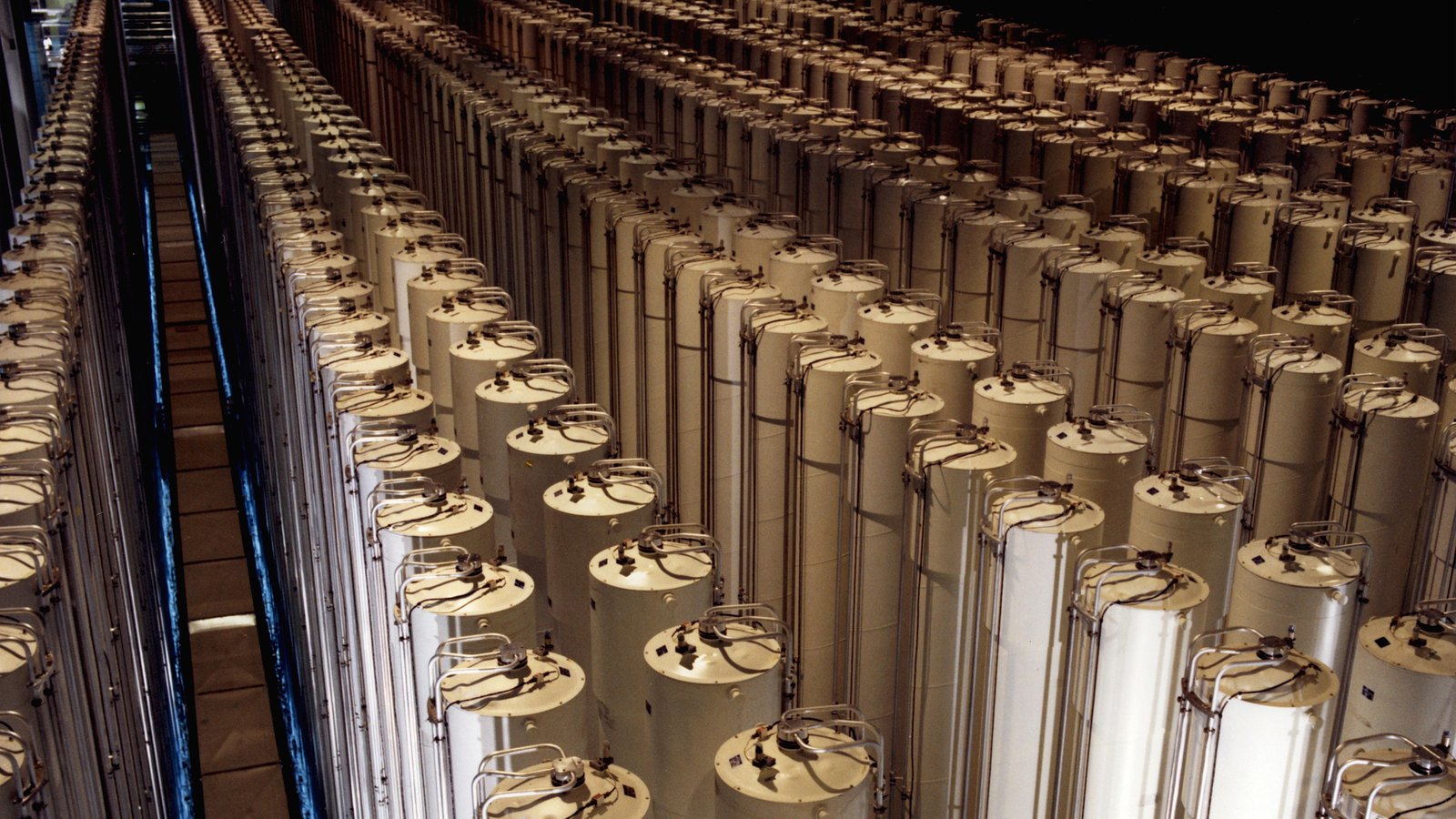
The U.S. Nuclear Regulatory Commission released a draft Environmental Impact Statement on November 24, 2026, recommending a 40-year operating licence for Orano Enrichment USA’s uranium enrichment facility near Oak Ridge, Tennessee. The decision advances a multi-billion-dollar domestic centrifuge project producing up to 10% enriched uranium, securing crucial fuel supplies that directly support academic nuclear engineering programs, advanced reactor developers, and national laboratory research pipelines.
NRC Issues Preliminary Environmental Approval for Project Ike
In Federal Register Notice 2026-24019, docketed as Docket No. 70-7038 and NRC-2026-2906 (CEQ ID EISX-429-00-000-1770360643), the Nuclear Regulatory Commission (NRC) formally made available its draft Environmental Impact Statement (EIS) evaluating Orano Enrichment USA, LLC’s proposed commercial gas centrifuge enrichment facility. The draft statement, signed by Joseph O’Hara, Acting Chief of the Environmental Review Materials Branch in the NRC Office of Nuclear Material Safety and Safeguards, represents the primary environmental gate under the National Environmental Policy Act (NEPA). Staff deposited the full regulatory assessment in the agency’s online record system under Accession No. ML26317A254, accessible to institutional researchers through NRC ADAMS.
The NRC staff concluded that the environmental impacts across all evaluated resource areas—including air quality, groundwater hydrology, ecological habitat, and radiological health—are manageable and justified when balanced against the public interest in expanding domestic enriched uranium production. Subject to the resolution of remaining safety reviews and public commentary, the staff officially recommends that the Commission issue the requested combined construction and 40-year operating licence to Orano.
Technical Specifications, Footprint, and Licensing Metrics
The proposed facility, designated internally by Orano as Project Ike, will occupy a 188-acre developed footprint situated within a larger 624-acre parcel in Roane County, Tennessee, approximately 6.7 miles southwest of the Oak Ridge municipal core. The land comprises a former Department of Energy site transferred to support regional industrial redeployment. The licence would authorize Orano to receive title to, possess, transfer, and enrich source and special nuclear material using modular centrifuge cascades capable of enriching uranium up to 10 percent by weight in the fissile isotope uranium-235 (U-235), known commercially as low-enriched uranium plus (LEU+).
Initial commercial capacity is engineered for 4 million separative work units (SWU) per year, with room for modular cascade expansion. The following table summarises the primary regulatory and engineering parameters established in the draft EIS and associated licensing dockets:
| Metric / Specification | NRC Docket Parameter | Operational Significance |
|---|---|---|
| NRC Docket Numbers | Docket No. 70-7038 / NRC-2026-2906 | Formal licensing proceeding under 10 CFR Part 70 |
| Total Property Size | 624 acres (Roane County, TN) | Former U.S. Department of Energy reservation land |
| Industrial Footprint | 188 developed acres (approx. 750,000 sq ft) | Cascade halls, feed/withdrawal stations, cylinder yards |
| Enrichment Technology | Gas centrifuge cascades | Modular aerodynamic separation adapted from Georges Besse II |
| Enrichment Level | Up to 10.0 wt% U-235 (LEU+) | Supports extended fuel burnup and small modular reactors |
| Initial Production Capacity | 4.0 million Separative Work Units (SWU)/year | Supplies approximately one-fourth of U.S. commercial utility demand |
| Licence Term Requested | 40-year operational duration | Extended commercial lifespan covering multi-decade fuel cycles |
| Capital Investment | Estimated at nearly $5.0 billion | Supported by a $900M federal domestic fuel supply award |
Context: Restructuring the Domestic Nuclear Fuel Supply Chain
The licensing milestone occurs amidst a comprehensive restructuring of the United States nuclear fuel supply architecture. Historically, American commercial utilities relied heavily on imported enriched uranium product, sourcing nearly a quarter of domestic enrichment services from the Russian state monopoly Rosatom. Following federal enactment of the Prohibiting Russian Uranium Imports Act in 2024, the United States established strict import caps phasing into a complete prohibition by 2028. To counter supply vulnerability, the U.S. Department of Energy awarded $900 million in cost-share funding to Orano to catalyze greenfield enrichment infrastructure on American soil, as highlighted by the U.S. Department of Energy.
Project Ike draws on mature centrifuge designs currently operating at Orano’s Georges Besse II facility in Tricastin, France, while incorporating licensing documentation previously developed for the Eagle Rock Enrichment Facility in Idaho, for which the NRC issued a licence in 2011. According to documentation detailed by World Nuclear News, Orano submitted its comprehensive Environmental Report following more than a year of baseline ecological and hydrological characterization in the Clinch River basin.
Stakeholder Perspectives and Accelerated Federal Reviews
Federal regulators and corporate leadership have emphasized the national security and economic imperatives behind the Oak Ridge project. NRC Chairman Ho Nieh underscored the commission’s dual mandate of stringent safety and procedural agility, observing that the regulatory agency is safely enabling national efforts to reduce dependence on foreign enrichment through predictable and timely safety reviews. The NRC is executing an expedited 12-month review framework initiated under Executive Order 14300, targeting completion of all licensing determinations by April 30, 2027, as reported by World Nuclear News.
From the industrial perspective, Orano USA Chief Executive Officer Jean-Luc Palayer stated that the company’s half-century of enrichment operational experience provides a rigorous foundation for constructing Project Ike. The facility is expected to generate approximately 300 direct, high-skill technical positions in Roane County, alongside hundreds of specialized construction and component-manufacturing jobs across East Tennessee, according to project documentation published by Orano USA.
Implications for University Nuclear Research and Compliance Offices
The establishment of commercial LEU+ centrifuge capacity in the Oak Ridge corridor carries immediate structural implications for academic researchers, university departments, and research compliance administrators. The availability of domestic fuel enriched up to 10 percent U-235 expands the envelope of experimental reactor designs, enabling university-led consortia to model higher fuel burnup rates and optimize next-generation light water reactor cores. Furthermore, proximity to Oak Ridge National Laboratory (ORNL) fosters integrated research initiatives spanning advanced isotope characterization, materials irradiation testing, and specialized fuel qualification.
For campus export control officers and sponsored research administrations, the project reinforces the necessity of strict regulatory governance. Centrifuge enrichment technologies, aerodynamic rotor dynamics, and isotopic separation processes fall under rigorous dual-use controls administered by the Nuclear Suppliers Group and the Bureau of Industry and Security. University laboratories collaborating on isotopic modeling or fuel-cladding interactions must establish robust technology control plans to comply with 10 CFR Part 810, which regulates assistance to foreign atomic energy activities. Sponsored programs engaging in uranium fuel cycle research must maintain rigorous screening to prevent unauthorized transfers of deemed exports within institutional research facilities, ensuring full alignment with protocols governing export-controlled research.
Regulatory Next Steps and Public Comment Procedures
The release of the draft EIS commences a formal 45-day statutory public comment window extending through January 9, 2027. The NRC is soliciting written submissions from regional stakeholders, scientific bodies, tribal governments, and members of the public concerning the environmental findings. Comments may be submitted electronically via the Federal Rulemaking portal at Regulations.gov under Docket ID NRC-2026-2906, or transmitted by mail addressed to the Office of Nuclear Material Safety and Safeguards, Guidance and Publication Branch.
Physical copies of the draft statement are deposited for public inspection at the Oak Ridge Public Library located on Oak Ridge Turnpike. NRC staff will review public submissions, prepare formal responses, and integrate necessary revisions into the final Environmental Impact Statement, scheduled for publication ahead of the final safety evaluation report and licensing determination in early 2027.
Sources
- Office of the Federal Register: Orano Enrichment USA, LLC; Uranium Enrichment Facility; Draft Environmental Impact Statement, checked 2026-11-24
- World Nuclear News: US enrichment plant begins accelerated review, checked 2026-11-24
- World Nuclear News: Orano submits environmental report for Project IKE, checked 2026-11-24
- U.S. Department of Energy: Oak Ridge Multibillion Dollar Nuclear Project: Largest Investment in Tennessee History, checked 2026-11-24
- Orano USA: Project IKE Enrichment Facility Overview, checked 2026-11-24






