
On November 24, 2026, the National Highway Traffic Safety Administration (NHTSA) issued a Federal Register notice announcing a nationwide human-factors experimental study, “Driver Body Position and Readiness to Respond When Using L2 Systems,” under the Paperwork Reduction Act. The research effort, contracted to university transportation institutes, evaluates how driver seating configurations, posture, and limb positions affect takeover readiness and response latency when partially automated vehicles encounter operational limits, carrying significant implications for academic laboratories, institutional review boards, and autonomous vehicle safety standards.
What Happened: Federal Human-Factors Investigation
NHTSA published notice of a new information collection scheduled for formal publication on November 25, 2026, under Document 2026-23966 and Docket No. NHTSA-2026-0299. Issued by Associate Administrator for Vehicle Safety Research Cem Hatipoglu and overseen by Jeremiah Singer in NHTSA’s Human Factors and Engineering Integration division, the initiative opens a 60-day public comment window pursuant to the Paperwork Reduction Act of 1995 and OMB regulations at 5 CFR 1320.8(d). Comments submitted through Regulations.gov will refine study methodology and survey instruments prior to final Office of Management and Budget review.
The research is executed through a federal prime contract awarded to the Virginia Tech Transportation Institute (VTTI), with subcontracts to the University of Minnesota (UMN) and Keisler Social and Behavioral Research. Up to 2,780 licensed adult drivers will participate nationwide across two coordinated arms: an online survey of 2,750 motorists evaluating naturalistic postures, and an in-person simulator study of 30 drivers measuring takeover latency under simulated automated failures. The protocols apply human factors engineering methodologies to determine how relaxed body postures impair rapid manual control resumption.
Both study arms hold Institutional Review Board clearance: Virginia Tech’s IRB approved the national survey, while the University of Minnesota’s IRB approved the laboratory simulator protocol, ensuring digital informed consent and participant safety screening.
Key Details: Study Architecture, Protocols, and Burden Estimates
The collection spans 12 forms (Forms 2202 through 2213) totaling 1,608 participant burden hours (536 annual hours over a three-year performance period). The project combines broad demographic sampling with laboratory simulation:
- National Survey Cohort (Forms 2202, 2213, 2203): Administered online to 2,750 drivers screened from 3,929 panelists. The sample comprises 1,650 adults matched to U.S. census demographics and 1,100 drivers whose personal vehicles feature active Level 2 automation. The 30-minute instrument assesses socioeconomic factors, attitudes toward automation, and self-reported postures, totaling 1,552 burden hours.
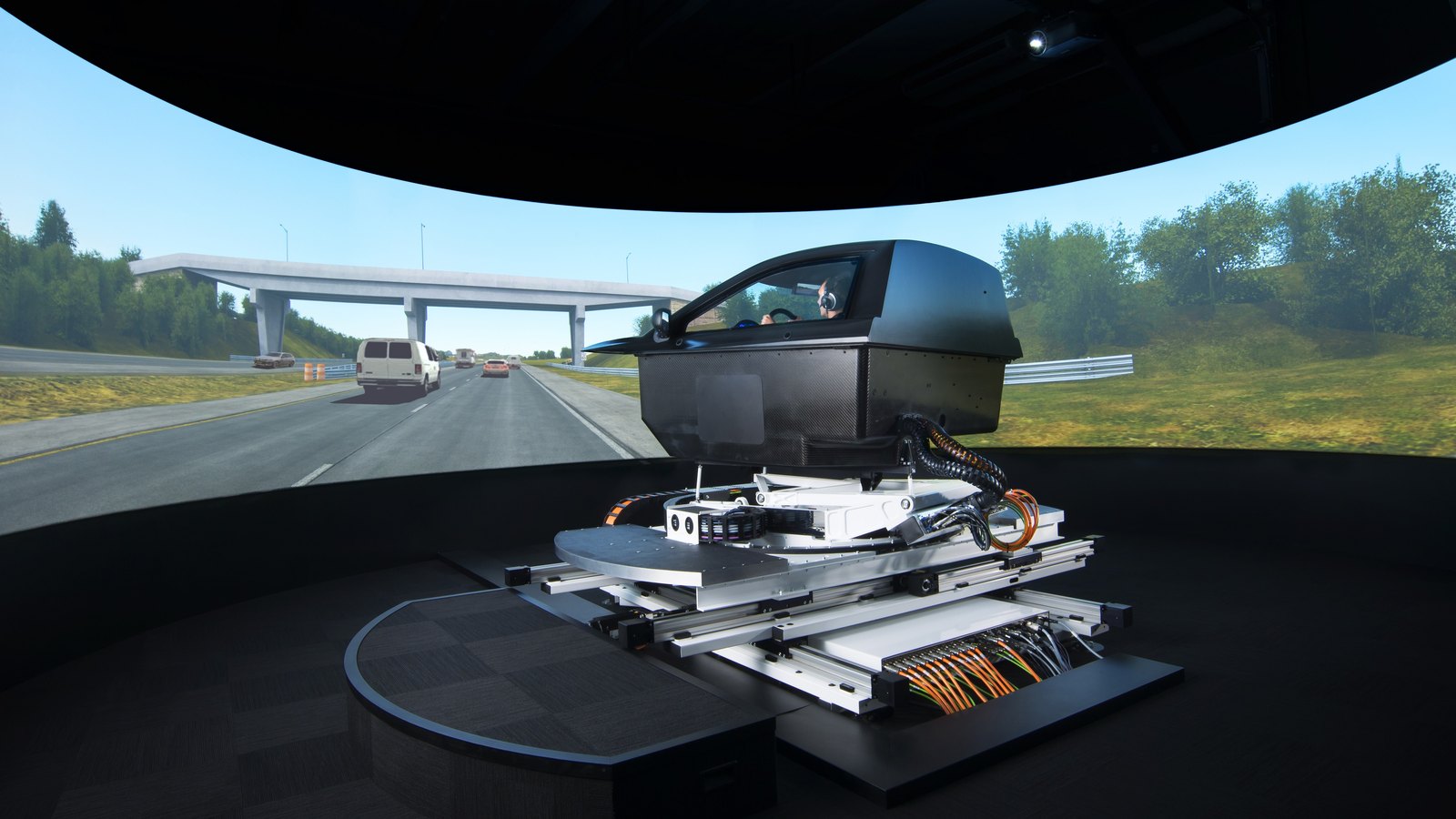
- Laboratory Simulator Protocol (Forms 2204–2212): Hosted at UMN’s Human Factors Safety Laboratory (HFSL) in Minneapolis. Thirty licensed drivers screened from 70 candidates complete baseline assessments, the Cognitive Failures Questionnaire, the Driver Behavior Questionnaire, and the Technology Readiness Index.
- Experimental Takeover Scenarios: Subjects complete four 12-minute drives along divided and undivided highway environments at highway speeds under Level 2 hands-off and feet-off operation. Participants perform a secondary mental workload task (counting backward by threes from 800) to induce cognitive disengagement before encountering an unexpected system-limit failure and takeover request (TOR).
- Psychometric Evaluations: Drivers complete pre-drive and post-drive Short Stress State Questionnaires, the Rating Scale Mental Effort, the Situation Trust Scale for Automated Driving, and simulation sickness screenings. Participants receive Greenspire ClinCard compensation, including standard federal travel reimbursement up to $7.00.
The table below summarizes the core parameters across both study arms:
| Study Arm | Lead Organization | Sample Target | Methodology | Collection Forms | Burden Hours |
|---|---|---|---|---|---|
| National Survey | Virginia Tech (VTTI) / Keisler | 2,750 drivers | Online panel (general pop. and L2 owners) | Forms 2202, 2213, 2203 | 1,552 hours |
| Simulator Study | University of Minnesota (HFSL) | 30 drivers | Motion simulator with induced TOR triggers | Forms 2204–2212 | 56 hours |
| Full Project | NHTSA / U.S. DOT | 2,780 participants | Mixed-method behavioral and experimental study | 12 instruments | 1,608 hours |
Background and Context: Driver Disengagement in Partial Automation
Under the automated driving taxonomy defined in SAE J3016, Level 2 partial driving automation controls both steering and acceleration/braking simultaneously. However, as outlined in official SAE J3016 standards, the human driver remains legally responsible for vehicle supervision and must intervene when automated features encounter environmental limits or system boundaries.
Human factors researchers emphasize a critical distinction between naturally assumed “posture” (spontaneous body positions) and deliberate “pose” (prescribed vehicle seating). While manual driving constrains motorists to an upright, forward-facing orientation to operate pedals and steering, hands-off and feet-off automated features permit drivers to slouch, recline seatbacks, cross their legs, or place hands far from the wheel. Transitioning from an unconstrained posture to physical control of vehicle pedals introduces mechanical and biomechanical delays that increase collision risks during emergencies.
Current crashworthiness regulations and evaluations—such as those analyzed in Euro NCAP protocols—rely on a standardized seating position. NHTSA’s investigation directly addresses the reality that standard seating models fail to represent the ergonomics of real-world automated vehicle operation.
Reaction and Stakeholder Context: Safety Evidence and Regulatory Scrutiny
The study arrives amid heightened scrutiny over whether partial automation delivers measurable safety advantages. In its filing, NHTSA cites landmark findings from the Insurance Institute for Highway Safety (IIHS), which determined there is little empirical proof that partial automation prevents crashes. Although crash-avoidance systems like automatic emergency braking reduce collision claims, adding Level 2 lane centering and adaptive cruise control often induces driver complacency and secondary task engagement.
Ergonomics specialists at the Human Factors and Ergonomics Society have repeatedly noted that physical posture influences cognitive vigilance. When physical driving demands are removed, drivers naturally adopt restful postures that degrade situational awareness, compounding the time needed to interpret takeover warnings and resume manual control.
What It Means for Researchers, Universities, and Research Offices
NHTSA’s research initiative offers actionable guidance for academic institutions, transportation laboratories, and research administration offices:
- Federal Prime and Subrecipient Contracting: The collaborative framework linking NHTSA with VTTI as prime contractor and UMN as subcontractor illustrates federal expectations for multi-institutional compliance, data milestones, and participant compensation management.
- Dual IRB Human-Subjects Protections: Distributing IRB oversight between Virginia Tech (survey instruments) and the University of Minnesota (motion simulation laboratory) provides a reference model for managing distinct experimental risk tiers, simulator sickness screening, and stress protocols.
- Open Transportation Data Access: NHTSA will publish findings in a technical report deposited in the National Transportation Library, delivering open-access empirical distributions on driver postures and takeover response latencies for academic modeling.
- Informing Cabin Monitoring Standards: Empirical findings will inform future Federal Motor Vehicle Safety Standards and driver-monitoring system criteria, guiding academic engineering teams designing interior sensors and computer-vision algorithms.
What Happens Next: Comment Windows and Research Timeline
The 60-day public comment window closes on January 26, 2027. Stakeholders are invited to submit feedback on Docket No. NHTSA-2026-0299 regarding the practical utility of the collection, burden estimates, and collection enhancements. Following comment review, NHTSA will submit the finalized package to OMB for clearance. Upon approval, VTTI and UMN will initiate data collection under the three-year study timeline.
Sources
- Federal Register: Agency Information Collection Activities; Notice and Request for Comment; Driver Body Position and Readiness to Respond When Using L2 Systems (2026-11-24)
- Regulations.gov: NHTSA Docket NHTSA-2026-0299 — Driver Body Position and Readiness to Respond When Using L2 Systems (2026-11-24)
- Electronic Code of Federal Regulations: 5 CFR 1320.8 — Agency Collection of Information Responsibilities (2026-11-24)
- SAE International: Taxonomy and Definitions for Terms Related to Driving Automation Systems for On-Road Motor Vehicles (SAE J3016) (2021-04-30)
- Insurance Institute for Highway Safety: IIHS-HLDI Research Finds Little Evidence That Partial Automation Prevents Crashes (2024-07-11)






