
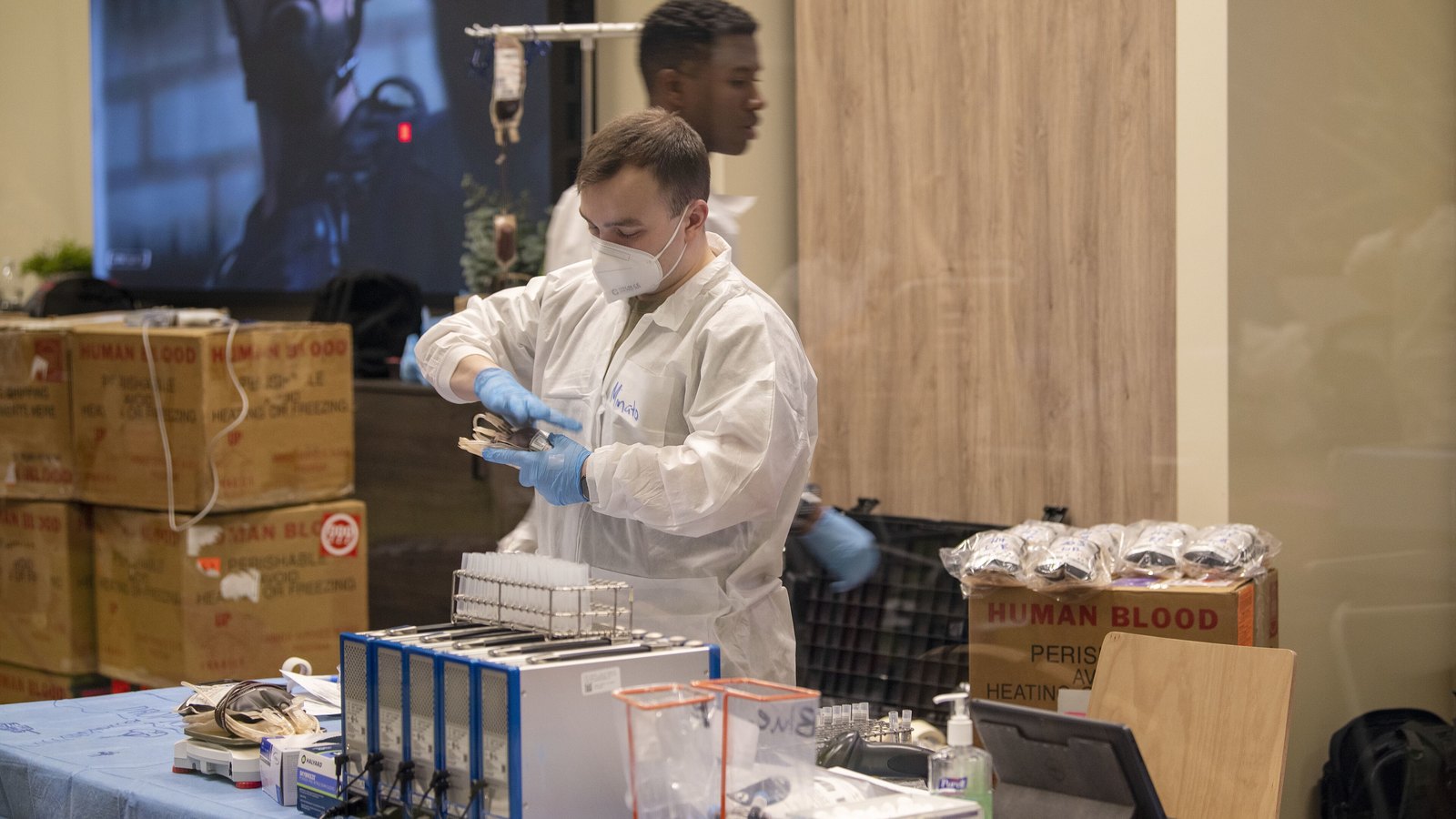
The U.S. Food and Drug Administration filed a regulatory notice on November 27, 2026, submitting its comprehensive blood establishment current good manufacturing practice and transfusion lookback regulations to the White House Office of Management and Budget for renewed Paperwork Reduction Act clearance. The action establishes an estimated 583,206 annual compliance burden hours across 5,482 registered blood facilities, directly affecting academic medical center transfusion services, cellular therapy processing laboratories, and clinical biorepositories.
FDA Reauthorises Blood Safety and Transfusion Lookback Information Burden
On November 27, 2026, the Food and Drug Administration (FDA) placed on public inspection Document No. 2026-24169 (Docket No. FDA-2026-N-13498), initiating a 60-day public comment cycle prior to submitting the information collection renewal to the Office of Management and Budget (OMB) under OMB Control No. 0910-0116. Signed by Grace R. Graham, Deputy Commissioner for Policy, Legislation, and International Affairs, the notice reauthorises mandatory recordkeeping, adverse reaction reporting, and third-party notifications across registered blood establishments nationwide. Scheduled for official Federal Register publication on November 30, 2026, the filing establishes procedural requirements safeguarding the biological blood supply from transfusion-transmitted pathogens.
The regulatory framework encompasses Title 21 of the Code of Federal Regulations, covering Parts 606, 610, 630, and 640. Regulated entities include hospital blood banks, regional donor centers, source plasma collectors, and university hospital apheresis clinics. Across these facilities, the FDA calculated a reauthorised annual burden of 4,116,842 responses requiring 583,206 labor hours. The notice reflects a downward adjustment of 338,755 responses and 668 hours from prior cycles, resolving historical double-counting between standard quality records and investigative reporting.
Regulatory Breakdown Across 21 CFR Parts 606, 610, 630, and 640
Core manufacturing controls are governed by 21 CFR Part 606, establishing Current Good Manufacturing Practice (cGMP) for blood and blood components. Under Subpart I of Part 606, facilities maintain production batch records, equipment calibration logs, donor suitability records, and distribution documentation. The FDA estimates Part 606 accounts for the vast majority of compliance burden, generating 3,189,603 annual responses and 493,445 burden hours across 5,482 respondents, averaging approximately 0.155 hours per recordkeeping event.
Mandatory infectious disease screening and transfusion surveillance fall under 21 CFR Part 610 Subpart E. Establishments must screen donations for relevant transfusion-transmitted infections (RTTIs), including HIV, hepatitis B, and hepatitis C. Subpart E also mandates lookback procedures: when repeat donors test reactive or post-donation reports reveal infection risks, facilities must quarantine in-date prior collections, notify consignees, and support recipient tracing. Part 610 accounts for 74,515 responses and 16,458 burden hours annually.
Donor eligibility standards, health history screening, and deferral registries are codified under 21 CFR Part 630. Establishments must provide pre-donation disclosures, verify donor consent, maintain deferral lists, and provide medical notifications to deferred individuals within specified time limits. Part 630 accounts for 852,622 annual responses and 72,901 burden hours. Standalone requirements under Part 640 for source plasma, along with topic-specific guidance documents and annual reporting under FDA compliance policies, account for the remaining hours.
| 21 CFR Regulatory Authority | Covered Scope and Operational Mandate | Annual Respondents | Annual Responses | Burden (Hours) |
|---|---|---|---|---|
| Part 606 (Subpart I) | cGMP records, laboratory equipment validation, standard operating procedures, and distribution tracking | 5,482 | 3,189,603 | 493,445 |
| Part 610 (Subpart E) | RTTI screening (HIV, HBV, HCV), quarantine of prior units, consignee lookback alerts, and clinical notifications | 5,482 | 74,515 | 16,458 |
| Part 630 (Subparts B and C) | Donor qualification interviews, deferral registries, medical notifications, and donor counseling documentation | 5,482 | 852,622 | 72,901 |
| Part 640 (Subpart G) | Additional standards and donor records specific to source plasma collections | 1 | 1 | 1 |
| Agency RTTI Guidance | Consignee and physician notifications for West Nile virus, Chagas, Babesia, HTLV, Ebola, CJD, and malaria | 1 | 1 | 1 |
| Suitability Policy | Annual reporting of inadvertent technical deviations released under the draft suitability compliance policy | 100 | 100 | 400 |
| Total Reauthorised Burden | Complete national blood establishment regulatory information collection (OMB Control No. 0910-0116) | 5,482 | 4,116,842 | 583,206 |
Evolution of Transfusion Safety and Lookback Mandates
The U.S. blood regulatory structure reflects cumulative public health mandates under the Public Health Service Act and the Federal Food, Drug, and Cosmetic Act. Historically, systematic failures to isolate reactive donations or execute timely consignee notifications resulted in federal enforcement actions, including an injunction or consent decree compelling extensive infrastructure overhauls across regional blood networks.
To address emerging pathogens, the FDA issued specialized guidance documents incorporated into this information collection. These encompass nucleic acid testing for West Nile virus (November 2009), Trypanosoma cruzi serology for Chagas disease (December 2017), regional babesiosis testing (May 2019), and HTLV-I/II screening (February 2020). Further recommendations govern lookback alerts following post-donation reports of exposure to Ebola virus, Creutzfeldt-Jakob disease, or malaria. The FDA maintains active oversight policies on its central repository for blood and blood products compliance guidance.
Additionally, the collection accounts for the FDA’s October 2023 draft compliance policy on donation suitability. Under this policy, facilities that inadvertently breach procedural steps not affecting donor safety or product purity may release units, provided they maintain an internal standard operating procedure and submit an annual summary report to the agency.
Industry and Standards Body Perspectives on Compliance Burden
Professional transfusion organizations and accrediting bodies monitor federal compliance demands closely. Accreditation standards issued by the Association for the Advancement of Blood and Biotherapies incorporate 21 CFR 606 and 610 requirements directly into facility inspection checklists. Sector analyses indicate that while automated laboratory analyzers and electronic records systems handle high-volume routine testing efficiently, manual administrative effort remains elevated during lookback investigations.
When repeat donors yield reactive confirmatory results, transfusion services must review retrospective donation histories, trace distributed components across consignees, and coordinate with hospital risk management teams. Quality assurance personnel must verify that medical directors and attending physicians receive formal notification to facilitate recipient diagnostic evaluation.
Impact on Academic Medical Centers, Biorepositories, and Cell Therapy Cores
The reauthorised regulations impose operational duties on university teaching hospitals and health science campuses. Academic transfusion services must maintain validated inventory systems capable of executing rapid quarantine actions upon receipt of supplier alerts. Facilities failing to trace and isolate implicated units risk federal compliance sanctions during regulatory inspections.
The rules directly affect cellular therapy laboratories producing chimeric antigen receptor (CAR) T-cell therapies, hematopoietic stem cell grafts, and gene-modified cellular products under investigational new drug protocols. University apheresis cores harvesting starting cellular materials must comply with cGMP donor qualification, infectious disease testing, and documentation standards. A reactive test result on an apheresis donor triggers immediate lookback reviews across active cellular clinical trials.
Furthermore, any academic biorepository maintaining human blood, plasma, or peripheral blood mononuclear cell collections must align with donor qualification records. Biobanking facilities supporting translational studies increasingly adopt ALCOA+ data integrity practices. Under lookback triggers, biorepository managers must rapidly locate, segregate, and quarantine biospecimens derived from deferred donors to protect downstream clinical research integrity.
Comment Timeline and Regulatory Next Steps
Public comments on Document No. 2026-24169 must be submitted within 60 calendar days of publication, closing on January 29, 2027. Academic medical center leaders, laboratory directors, and researchers can submit electronic comments via Regulations.gov under Docket No. FDA-2026-N-13498, or send written comments to the FDA Dockets Management Staff in Rockville, Maryland.
The FDA solicits comment on whether the collection is necessary for proper agency operations, the accuracy of its burden estimates, practical approaches to enhance data quality, and methods to reduce administrative overhead through automation. Following the 60-day review, the agency will submit the final collection package to OMB for clearance under Control No. 0910-0116.
Sources
- Federal Register: Agency Information Collection Activities; Proposed Collection; Current Good Manufacturing Practice and Related Regulations for Blood and Blood Components; Requirements for Donation Testing, Donor Notifications, and “Lookback”, checked 2026-11-28
- Legal Information Institute, Cornell Law School: 21 CFR Part 606 — Current Good Manufacturing Practice for Blood and Blood Components, checked 2026-11-28
- Legal Information Institute, Cornell Law School: 21 CFR Part 610 — General Biological Standards, checked 2026-11-28
- Legal Information Institute, Cornell Law School: 21 CFR Part 630 — Requirements for Blood and Blood Components Intended for Transfusion or Further Manufacturing Use, checked 2026-11-28
- Regulations.gov: Docket FDA-2026-N-13498 — Agency Information Collection Activities: Blood and Blood Components Regulatory Requirements, checked 2026-11-28
- U.S. Food and Drug Administration: Blood and Blood Products Guidance, Regulations, and Compliance Information, checked 2026-11-28
- Association for the Advancement of Blood and Biotherapies: Standards for Blood Banks and Transfusion Services, checked 2026-11-28






