
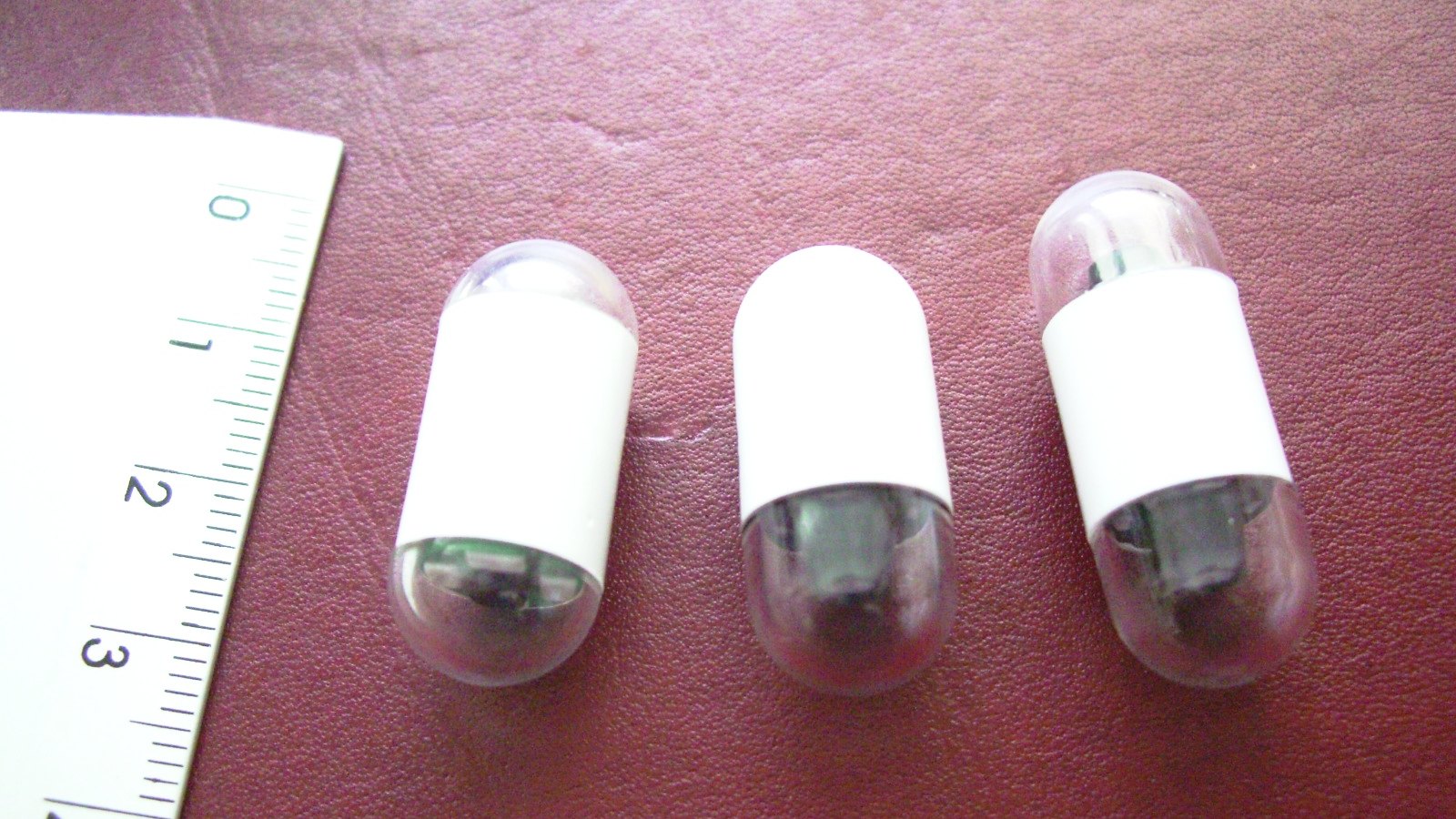
The US Food and Drug Administration has issued a final order classifying gastrointestinal capsule endoscopy analysis software, the artificial intelligence that helps clinicians review capsule camera video, into class II with special controls, according to a Federal Register order filed for public inspection on 27 November 2026 and scheduled for publication on 30 November. The order adds 21 CFR 876.1540 and sets validation, labeling and postmarket surveillance requirements that developers of this software, including university spinouts, will need to meet.
What happened
The order, filed under docket FDA-2026-N-12145 and signed by Deputy Commissioner for Policy, Legislation, and International Affairs Grace R. Graham, codifies a classification the agency already made in 2023. FDA says the order takes effect on the date of publication in the Federal Register, while the classification itself has applied since 12 December 2023.
That earlier decision came from a De Novo request. On 14 April 2023 FDA received a request from Ankon Technologies Co., Ltd for its NaviCam ProScan software, and on 12 December 2023 it issued an order placing the device type in class II. The new final order writes that decision into the Code of Federal Regulations under the generic name “gastrointestinal capsule endoscopy analysis software device”.
FDA defines the device as software used to analyse pre-recorded capsule endoscopy videos of the gastrointestinal tract that are suspected of containing lesions. It uses algorithms to flag images and areas of interest to aid the clinician, for clinician review of the outputs, and may include hardware to connect to a capsule imaging system. The agency says classifying the device into class II gives reasonable assurance of safety and effectiveness and, in part by reducing regulatory burdens, should improve access to beneficial innovation.
Key details of the special controls
The regulation lists five special controls. Together with FDA’s general controls, they define what a sponsor has to show.
- Clinical performance validation and postmarket surveillance. Data must show the device performs as intended in the intended patient population. The clinical test dataset must come from a representative patient population, ground truth must be clinically justified, and study protocols must describe how ground truth was set for training and test datasets. The test dataset must come from sites different from those used to train or develop the model, and adverse events must be reported. Postmarket surveillance data are required unless FDA decides, from the totality of the premarket information, that they are not.
- Performance measures. Patient-level, lesion-level and image-level results must be reported with confusion matrices and statistical analyses, plus summary demographic information and sub-group analyses for each study site, relevant demographic sub-groups and acquisition systems.
- Standalone algorithm testing. The performance of the algorithm alone, without a clinician, must be provided.
- Software and hardware testing. Software verification, validation and hazard analysis, with a detailed technical description of the software architecture, plus electromagnetic compatibility, electrical, mechanical and thermal safety testing for any hardware.
- Labeling. Labeling must warn against overreliance, state that findings or the lack of them should be reviewed by the clinician and that the device is not a standalone diagnostic, summarise the performance testing including demographic and sub-group analyses, and carry updated surveillance data on the timeframe set in any FDA-approved postmarket protocol.
FDA names the risks these controls address: algorithm failure producing false positives that lead to unnecessary treatment or false negatives that delay treatment, missed analysis because the tract site was misclassified, and false results caused by user overreliance. The order states that FDA has not exempted this device type from premarket notification, so new products remain subject to the 510(k) process.
Background and context
The 2023 decision is documented in FDA’s De Novo decision summary for NaviCam ProScan (DEN230027). It describes the software as an AI-assisted reading tool intended to help small bowel capsule endoscopy reviewers cut review time for adults whose images were taken for suspected small bowel bleeding, and also to help identify which part of the digestive tract an image shows. Its limitations state that it is not a standalone diagnostic device, that the clinician must review the entire video, and that standalone AI performance was not evaluated in the clinical study and has therefore not been established.
The supporting evidence came from the ARTIC study, a prospective multicentre trial run from February 2021 to January 2022. According to the summary, 137 patients were enrolled and 133 from Italy, France, Germany, Hungary, Spain, Sweden and the UK were analysed. Diagnostic yield for significant small bowel lesions was 62.4% with standard reading and 73.7% with AI-assisted physician reading (p=0.015), against 78.2% for the expert board used as ground truth. The AI-assisted arm missed seven patients identified by the board. The summary adds that race and ethnicity were not collected for ARTIC participants, and that the lesion-detection algorithm was trained on 1,476 subjects and tested on 218, all recorded as Asian.
The device type has since been used by others. In a letter dated 25 September 2026, FDA found CapsoVision’s CapsoView and CapsoCloud software substantially equivalent under the same regulation, class II and product code QZF, showing how the 510(k) route works once a type is classified.
Reaction and independent coverage
Trade coverage at the time of the 2023 decision relied on the company’s announcement. Healio reported on 4 January 2024, citing a company release, that NaviCam ProScan was the first AI-assisted reading tool intended to support endoscopy reviewers in identifying patients with suspected small bowel bleeding. PharmaTimes reported on 3 January 2024 that the software was trained on more than 150,000 images from 1,971 patients, citing a study in Gastroenterology that it said found sensitivity of 99.88% in per-patient analysis. Both quoted Cristiano Spada, director of endoscopy and digestive surgery at Gemelli Hospital in Rome, who called it a pivotal advancement. The sensitivity and quotation figures are company-supplied and are not FDA findings.
What it means for researchers, universities and research offices
Teams building diagnostic imaging algorithms in university hospitals and spinouts now have a codified checklist rather than a single company’s De Novo precedent. Study protocols should plan, from the outset, for a test set drawn from sites other than the training sites, a documented process for ground truth, sub-group analyses by demographic group and acquisition system, and adverse event reporting. The ProScan summary shows why this matters: a training and test population recorded entirely as Asian and an ARTIC study with no race or ethnicity data bear directly on the sub-group reporting the regulation now requires.
Research offices and technology transfer teams should treat postmarket surveillance as a planned cost. Unless FDA waives it, surveillance data must be gathered under anticipated conditions of use and fed back into labeling, which affects licensing terms, data-sharing agreements with clinical sites and ethics approvals for retrospective data reuse. Because the device type is subject to 510(k), a sponsor can use the classified type as a reference device, as described in the order, instead of a new De Novo request, which is relevant when spinout timelines are set. For background see our guides to class II medical devices, De Novo classification and predicate devices and substantial equivalence, and the comparison of 510(k) and De Novo.
What happens next
The order is due to be published in the Federal Register on 30 November 2026 and takes effect that day. Developers with software in this category should check their existing validation packages against the five special controls, and those already cleared under product code QZF should expect FDA’s labeling and surveillance expectations to follow the codified text.
Sources
- Federal Register public inspection: Medical Devices; Classification of the Gastrointestinal Capsule Endoscopy Analysis Software Device, document 2026-24213, FDA, filed 27 November 2026
- FDA, De Novo Classification Request for NaviCam ProScan (DEN230027)
- FDA, 510(k) substantial equivalence letter K254230, 25 September 2026
- Healio, FDA grants de novo clearance to AnX Robotica’s AI tool for small bowel capsule endoscopy, 4 January 2024
- PharmaTimes, AnX Robotica receives FDA clearance for small bowel capsule endoscopy technology, 3 January 2024






