
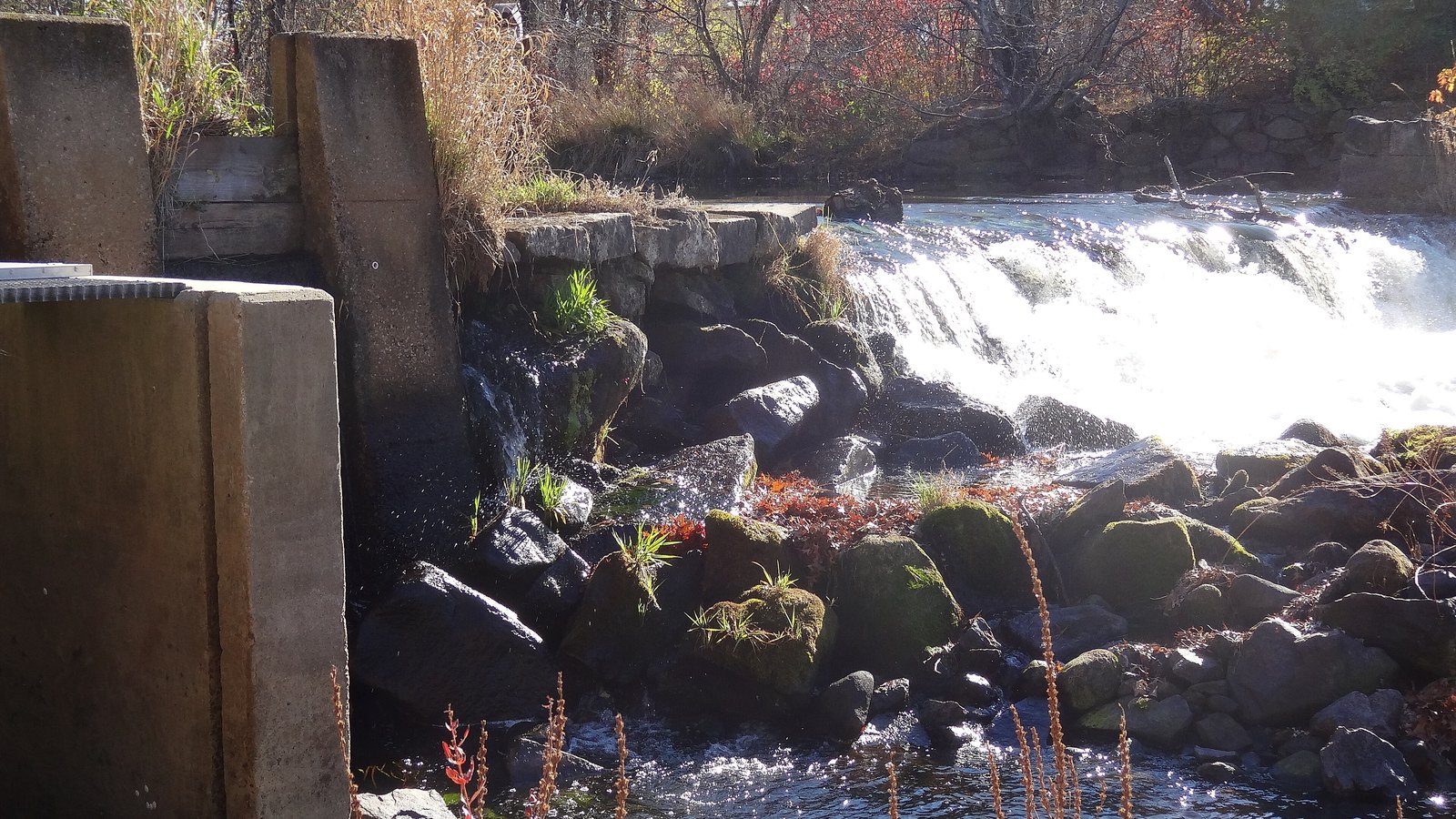
On November 27, 2026, the Federal Energy Regulatory Commission released an Environmental Assessment for the Starks Hydroelectric Project approving the surrender of license exemption and complete dam removal on Lemon Stream in Somerset County, Maine, establishing an unencumbered fluvial research corridor for university ecologists studying Atlantic salmon habitat recovery and sediment dynamics.
Surrender Application and Environmental Assessment Findings
The Federal Energy Regulatory Commission (FERC) Office of Energy Projects formally published its Notice of Availability of the staff-prepared Environmental Assessment (EA) under Document No. 2026-24101 (Project No. 8791-005) pursuant to regulations codified at 18 CFR Part 380. Commission staff evaluated the decommissioning application filed by project exemptee R.J. Fortier Hydropower, Inc., who requested authorization to surrender the project exemption and dismantle all generation and water-impounding infrastructure. The environmental review, conducted under identification number EAXX-019-20-000-1781511078, concluded that the proposed surrender and physical removal, when executed alongside mandatory environmental protective measures, will not constitute a major federal action significantly affecting the quality of the human environment.
The environmental review process adhered to established standards administered across federal agencies under the U.S. Environmental Protection Agency NEPA review framework, analyzing environmental baseline conditions, project alternatives, water quality impacts, and migratory aquatic species passage. Decommissioning represents an operational transition away from aging, low-capacity run-of-river infrastructure toward stream naturalization, mirroring national initiatives cataloged in research platforms such as HydroSource that track hydropower lifecycle assessments and asset retirements.
Decommissioning Specifications and Regulatory Framework
The Starks Hydroelectric Project operated under an exemption for small conduit and small hydroelectric power projects of 10 megawatts or less, governed by 18 CFR Part 4 Subpart K under statutory provisions of the Federal Power Act codified at 16 U.S.C. Chapter 12 Subchapter I. The surrender application encompasses the total deconstruction and removal of the concrete dam spillway, timber flashboards, powerhouse generating units, intake structures, and electrical interconnection equipment situated across Lemon Stream. The project occupies private riparian parcels without encumbering federal lands.
Deconstruction protocols outlined in the EA emphasize controlled reservoir drawdown, gradual notch excavation, and containment of accumulated alluvial sediments to prevent downstream turbidity spikes. Commission staff integrated environmental measures requiring staged dewatering, fish rescue salvage operations, continuous dissolved oxygen monitoring, and bank revegetation with native riparian seed mixes.
| Project Metric / Regulatory Element | Specification and Staff Determination |
|---|---|
| Project Identification | Starks Hydroelectric Project, FERC Docket No. P-8791-005 |
| Federal Notice Publication | FR Doc. 2026-24101 (Published November 27, 2026) |
| Exemptee / Applicant | R.J. Fortier Hydropower, Inc. |
| Waterway Location | Lemon Stream, Somerset County, Maine (Sandy River Subbasin) |
| Federal Land Status | No federal lands occupied |
| Regulatory Action | Surrender of small hydro exemption and complete decommissioning |
| NEPA Determination | Finding of No Significant Impact (FONSI) with protective measures |
| Public Comment Deadline | December 23, 2026 (5:00 p.m. Eastern Time) |
Ecological Context and Diadromous Fish Migration in the Kennebec Basin
Lemon Stream represents an ecologically critical tributary of the Sandy River within Maine’s Kennebec River watershed, an area prioritized by state and federal biologists for native diadromous fish restoration. Low-head dams alter natural stream morphology by converting free-flowing lotic environments into slow-moving lentic impoundments, trapping coarse gravels, elevating summer water temperatures, and creating insurmountable physical barriers to upstream fish passage.
The removal of the Starks dam directly benefits the Gulf of Maine Distinct Population Segment of anadromous Atlantic salmon (Salmo salar), a federally endangered population that depends on unobstructed access to cold, gravel-bedded headwater streams for spawning redd construction and juvenile rearing. Reconnecting Lemon Stream to the Sandy River also restores longitudinal migration corridors for alewife, blueback herring, and catadromous American eel. Recent aquatic studies featured in PLOS Water demonstrate that tributary dam removals produce rapid reductions in thermal stress and restore natural flow pulses essential for native salmonid survival.
Stakeholder Positions and Resource Agency Coordination
The decommissioning plan reflects extensive multi-agency coordination among FERC, the U.S. Fish and Wildlife Service, the National Oceanic and Atmospheric Administration (NOAA Fisheries), the Maine Department of Marine Resources, and the Maine Department of Environmental Protection. State resource agencies highlighted that the economic costs of retrofitting modern upstream and downstream fish passage facilities at the small Starks facility significantly outweighed the commercial value of its modest power generation.
Regional river conservation coalitions and watershed councils have endorsed full dam removal as the preferred environmental alternative, pointing to previous landmark removals in the Kennebec and Penobscot basins that generated dramatic recoveries in migratory biomass. Clean Water Act Section 401 water quality certifications issued for the surrender require stringent sediment transport safeguards during channel re-exposure.
Implications for River Restoration Research and University Field Stations
The Starks dam removal provides university freshwater ecologists, geomorphologists, and environmental engineering departments with an exceptional natural laboratory to investigate rapid channel re-equilibration. Academic researchers tracking dam removal responses frequently examine bedload sediment transport rates, macroinvertebrate index of biological integrity (IBI) metrics, and environmental DNA (eDNA) detection of returning anadromous fish.
Field investigations conducted across Maine river systems yield crucial longitudinal data sets, frequently disseminated in scholarly venues such as the Environmental Monitoring and Assessment Journal. Research teams can integrate findings from Lemon Stream into broader ecological monitoring frameworks modeled after the NSF Long-Term Ecological Research network, advancing empirical predictive models of watershed recovery, gravel bar formation, and benthic recolonization rates following the retirement of obsolete run-of-river dams.
Public Comment Deadlines and Procedural Milestones
FERC established a public comment period closing on December 23, 2026, at 5:00 p.m. Eastern Time. The Commission strongly encourages electronic submissions through its online eFiling portal or via the streamlined eComment system, which accepts unindexed comments up to 6,000 characters without prior user registration. Stakeholders opting for paper submissions must deliver filings addressed to Secretary Debbie-Anne A. Reese at FERC headquarters in Washington, D.C., referencing docket number P-8791-005 on the cover page.
Inquiries regarding administrative intervention, technical rehearing procedures, or public participation may be directed to the FERC Office of Public Participation or project coordinator Diana Shannon in the Office of Energy Projects. Following the close of the comment window, Commission staff will review public submissions before drafting a final surrender order that specifies the timeline for on-site structural deconstruction and post-removal site stabilization.
Sources
- Federal Register: R.J. Fortier Hydropower, Inc.; Notice of Availability of Environmental Assessment, checked 2026-11-28
- Electronic Code of Federal Regulations: 18 CFR Part 380 — Regulations Implementing the National Environmental Policy Act, checked 2026-11-28
- Electronic Code of Federal Regulations: 18 CFR Part 4 Subpart K — Exemption of Small Hydroelectric Power Projects of 10 Megawatts or Less, checked 2026-11-28
- Cornell Law School Legal Information Institute: 16 U.S.C. Chapter 12 Subchapter I — Federal Power Act Regulation of Hydroelectric Power, checked 2026-11-28
- U.S. Environmental Protection Agency: National Environmental Policy Act Review Process, checked 2026-11-28
- NOAA Fisheries: Atlantic Salmon (Salmo salar) Species Profile, checked 2026-11-28






