
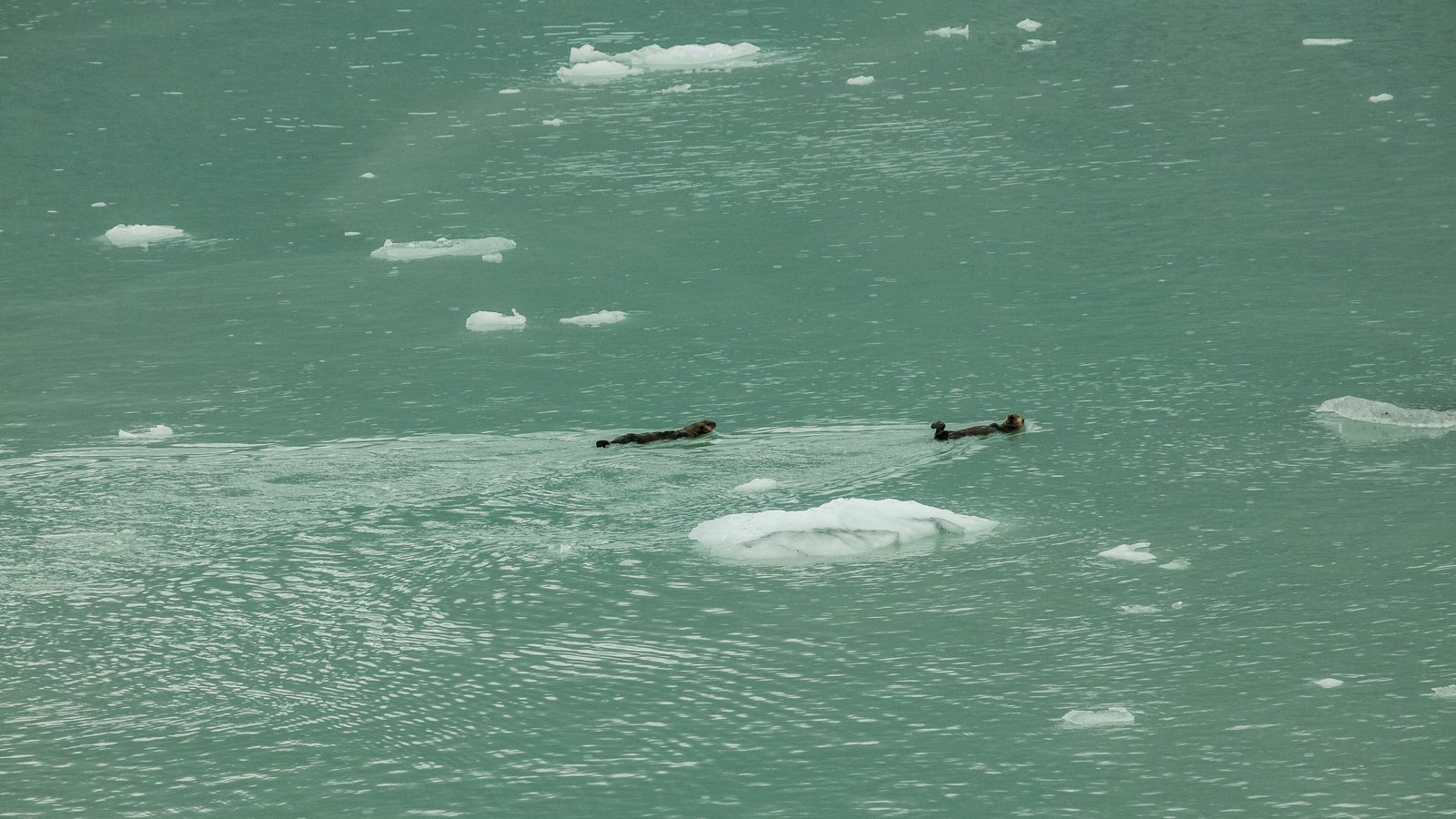
On November 23, 2026, the U.S. Fish and Wildlife Service proposed an Incidental Harassment Authorization under the Marine Mammal Protection Act for northern sea otters during dock construction at the Alaska Railroad Corporation’s Seward Marine Terminal in Resurrection Bay, Alaska. The regulatory proposal establishes rigorous underwater acoustic thresholds, mandatory shutdown radiuses, and observational protocols that define critical compliance benchmarks for marine acoustics researchers and coastal infrastructure environmental teams.
Proposed Authorization for Freight Dock Modernization in Resurrection Bay
Published in the Federal Register (91 FR 75539, Document No. 2026-23734, Docket No. FWS-R7-ES-2026-3037), the notice from the U.S. Fish and Wildlife Service (USFWS) responds to an application from the Alaska Railroad Corporation (ARRC). The proposed one-year Incidental Harassment Authorization (IHA) covers non-lethal incidental take by Level A and Level B harassment of the Southcentral Alaska stock of northern sea otters (Enhydra lutris kenyoni) during pile driving at the Seward Alaska Marine Terminal Freight Dock.
Located at the head of Resurrection Bay on the Kenai Peninsula, the facility serves as a vital intermodal freight hub connecting Southcentral Alaska rail lines to Pacific shipping routes. The capital modernization expands the existing Freight Dock by 114 meters (375 feet) using a steel sheet pile bulkhead backed by a rock revetment. Associated work includes installing new mooring dolphins, a catwalk, sacrificial anodes, and high-capacity bollards, while widening uplands facilities. Alongside the draft authorization, the agency issued a draft Environmental Assessment under the National Environmental Policy Act.
Acoustic Thresholds and Pile-Driving Operational Parameters
The authorization governs extensive in-water and uplands pile driving. In-water activities involve removing four existing 61-centimeter (24-inch) dolphin piles, installing and removing 60 temporary 24-inch steel pipe template piles, installing 425 sheet pile pairs, driving 14 anchor H-piles, installing 14 round 76.2-centimeter (30-inch) fender piles, and driving four 30-inch dolphin piles. Contractors will utilize vibratory hammers for extraction and initial seating, followed by impact hammers to reach final design depth on dolphin piles. Uplands activities include removing an onshore bollard pile, conducting 2,157 temporary vibrocompaction H-pile probe cycles over 100 days of ground improvement, and setting light pole foundations.
USFWS modeled underwater sound propagation across Resurrection Bay using a practical spreading loss model (15 log R). For northern sea otters, the agency established 160 decibels (dB) root-mean-square received sound pressure level (re 1 μPa) from 125 Hz to 38 kHz as the Level B harassment threshold for both impulsive and nonimpulsive sources, concluding that sea otters tolerate industrial sounds up to 160 dB without sustained behavioral disruption. Level A injury thresholds were set at 232 dB peak sound pressure level or 203 dB cumulative sound exposure level for impact driving, and 219 dB cumulative sound exposure level for vibratory driving. Airborne noise was modeled at a 100 dB Level B threshold.
| Project Component | Activity and Hammer Type | Level A Distance (m) | Level B Distance (m) | Shutdown Zone (m) | Authorized Take Allocation |
|---|---|---|---|---|---|
| Existing Dolphin Piles (4) | 24-in steel pipe, vibratory removal | 1.3 | 15.9 | 20 | 8 Level B takes |
| Template Piles (60) | 24-in steel pipe, vibratory install and remove | 1.3 | 15.9 | 20 | 200 Level B takes |
| Bulkhead Sheet Piles (425 pairs) | Steel sheet pairs, vibratory install | 1.3 | 11.1 | 20 | 0 takes (within cell enclosure) |
| Anchor Piles (14) | Steel H-piles, vibratory install | 0.1 | 2.2 | 10 | 0 takes (attenuated zone) |
| Fender Piles (14) | 30-in steel pipe, vibratory install | 1.8 | 29.3 | 30 | 12 Level B takes |
| Dolphin Piles (4) | 30-in steel pipe, vibratory install | 1.2 | 29.3 | 30 | 10 Level B takes |
| Dolphin Piles (4) | 30-in steel pipe, impact install | 36.4 | 1,000.0 | 310 | 10 Level A, 40 Level B takes |
| Uplands Vibrocompaction and Piles | Vibratory soil probing and driving | N/A (In-Air) | Localized | Operational boundary | 128 Level B takes (In-Air) |
Statutory Framework and Southcentral Stock Conservation
Incidental harassment authorizations are governed by Section 101(a)(5)(D) of the Marine Mammal Protection Act of 1972, codified at 16 U.S. Code § 1371. Under implementing regulations in 50 CFR Part 18, the Secretary of the Interior may authorize incidental harassment of small numbers of marine mammals for up to one year upon finding negligible impact on the stock and no unmitigable adverse impact on subsistence harvests.
Northern sea otters are keystone predators that regulate benthic invertebrates and protect kelp ecosystems. Species profiles and stock assessments from the U.S. Fish and Wildlife Service estimate the Southcentral Alaska stock at 21,617 individuals across Prince William Sound and the Kenai Peninsula. Unlike blubber-insulated seals and whales, sea otters rely on dense fur and high metabolic rates for thermal balance, making acoustic disruptions to feeding and grooming energetically costly. The independent Marine Mammal Commission regularly oversees federal incidental take reviews across Alaska to ensure cumulative maritime noise does not destabilize regional populations.
Stakeholder Considerations, Subsistence Protections, and Observer Protocols
USFWS evaluated potential interference with Alaska Native subsistence hunting in Resurrection Bay. Subsistence harvest occurs primarily in outer bay passages and open Gulf waters, whereas the ARRC freight terminal is an active industrial harbor with heavy vessel traffic where hunting does not take place. The agency determined the project will not reduce otter availability or impede customary harvesting.
To minimize acoustic exposure, the proposed IHA mandates qualified Protected Species Observers (PSOs) at elevated observation points. PSOs must monitor shutdown zones for 30 minutes before pile driving begins, and operations cannot commence until zones remain clear for 15 minutes. PSOs maintain autonomous stop-work authority to shut down equipment if otters approach exclusion boundaries. Monitoring follows a defined institutional standard operating procedure governing shift lengths, data logging, and environmental tracking.
Project vessels must maintain a 500-meter standoff from rafts of 10 or more otters, stay 100 meters away from individual animals, avoid dividing groups, and lower transit speeds in shallow nearshore channels.
Implications for Marine Science and Institutional Compliance
The proposed authorization establishes significant compliance and operational benchmarks for academic research teams, oceanographic facilities, and university compliance offices:
- Acoustic Modeling Benchmarks: The agency’s 160 dB RMS Level B threshold for sea otters provides concrete parameters for ocean acoustics researchers modeling coastal ambient soundscapes, tidal power arrays, and marine construction noise.
- Field Research Welfare Oversight: University marine biology programs handling wild marine mammals must coordinate field monitoring and observational protocols through an IACUC (Institutional Animal Care and Use Committee) to reconcile project requirements with federal welfare standards.
- Deviation Reporting Protocols: Marine operations must log all shutdowns and acoustic incursions. Any unauthorized take or monitoring failure constitutes an actionable protocol deviation requiring formal reporting to federal authorities within 48 hours.
- Observational Data Contributions: ARRC must submit a comprehensive draft monitoring report within 90 days of project completion, supplying empirical data on sea otter habitat use in active commercial harbors.
Public Comment Timeline and Project Next Steps
Publication of the proposal initiates a 30-day public comment period ending at 11:59 p.m. Eastern Time on December 23, 2026. Comments may be submitted through Regulations.gov under Docket No. FWS-R7-ES-2026-3037 or mailed to the USFWS Public Comments Processing division in Falls Church, Virginia.
Following public and tribal review, USFWS will evaluate feedback and issue a final determination on the Incidental Harassment Authorization prior to planned 2027 marine construction.
Sources
- Federal Register: Marine Mammals; Incidental Take During Specified Activities; Proposed Incidental Harassment Authorization for Southcentral Alaska Stock of Northern Sea Otters at the ARRC Seward Alaska Marine Terminal Freight Dock in Seward, Alaska, checked 2026-11-28
- Cornell Law School Legal Information Institute: 16 U.S. Code § 1371 – Moratorium on taking and importing marine mammals and marine mammal products, checked 2026-11-28
- Electronic Code of Federal Regulations: 50 CFR Part 18 – Marine Mammals, checked 2026-11-28
- Marine Mammal Commission: Northern Sea Otter – Species of Concern and Research Oversight, checked 2026-11-28
- U.S. Fish and Wildlife Service: Northern Sea Otter (Enhydra lutris kenyoni) Species Profile and Stock Assessments, checked 2026-11-28






