
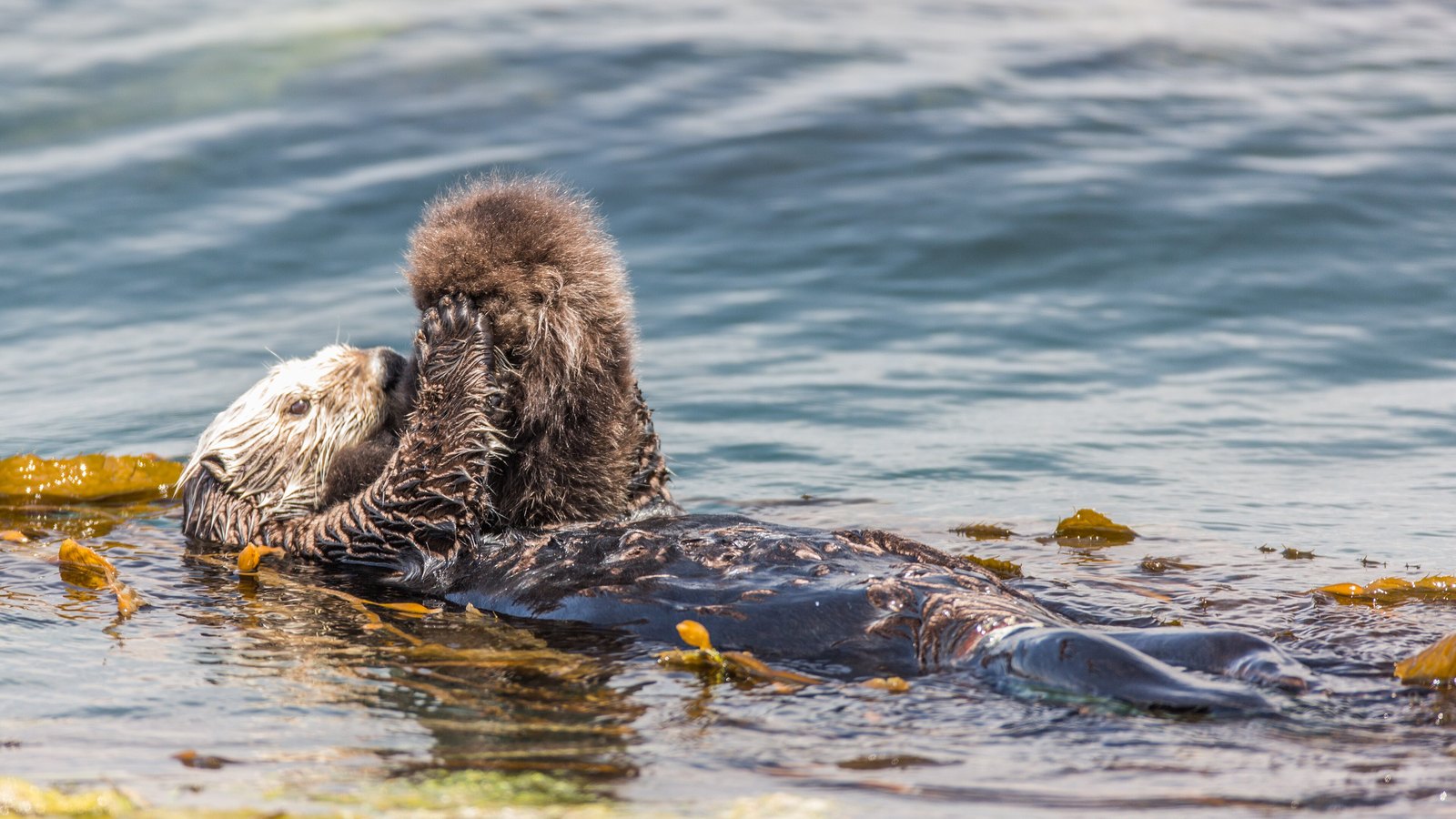
On November 23, 2026, the U.S. Fish and Wildlife Service published a notice proposing an Incidental Harassment Authorization for Southwest Alaska northern sea otters in Kodiak, Alaska, establishing binding bioacoustic disturbance thresholds, mandatory shutdown buffers, and protected species observer standards for municipal harbor reconstruction that create critical operational precedents for university marine research teams.
Proposed Incidental Take Authorization for Kodiak Harbor Reconstruction
The U.S. Fish and Wildlife Service (USFWS) issued a formal notice under Docket No. FWS-R7-ES-2026-1486 (91 FR 75524, Document No. 2026-23771) announcing receipt of an application from the City of Kodiak and proposing a one-year Incidental Harassment Authorization (IHA). The decision addresses incidental, non-lethal harassment of the threatened Southwest Alaska stock of northern sea otters (Enhydra lutris kenyoni) resulting from pile driving and dock reconstruction at St. Herman Harbor in Kodiak, Alaska. The authorization spans twelve months, covering in-water construction tasks required to upgrade critical municipal maritime infrastructure.
Statutory authority under 16 U.S. Code § 1371 Section 101(a)(5)(D) of the Marine Mammal Protection Act (MMPA) permits the incidental harassment of small numbers of marine mammals if the agency finds negligible impact on the stock and no unmitigable adverse impact on subsistence needs. Alongside the proposed authorization, the USFWS published a draft Environmental Assessment under the National Environmental Policy Act (NEPA), opening a 30-day public comment window running through December 23, 2026.
Acoustic Harassment Thresholds and Underwater Sound Modeling
The technical core of the proposed authorization evaluates underwater acoustic emissions using marine carnivore hearing criteria established by Southall et al. (2019). The analysis separates noise exposure into Level A harassment (auditory injury, specifically Permanent Threshold Shift, or PTS) and Level B harassment (behavioral disturbance or Temporary Threshold Shift, or TTS). For underwater impact hammering, Level A thresholds are defined at 203 dB cumulative sound exposure level (SELcum) and 232 dB peak sound pressure level (SPL), while Level B behavioral harassment begins at 160 dB root-mean-square (rms) sound pressure level.
For non-impulsive continuous noise produced by vibratory hammers, the Level A threshold is 219 dB SELcum, with the Level B disturbance boundary set at 120 dB rms. Applying a standard practical spreading transmission loss model (15 log R), federal biologists established radial isopleths and exclusion boundaries based on pile size and installation technique.
| Project Activity and Pile Dimension | Installation Method | Level A Threshold Distance (m) | Level B Disturbance Distance (m) | Mandatory Physical Shutdown Zone (m) |
|---|---|---|---|---|
| Temporary 61.0-cm (24-inch) steel pile | Vibratory Installation | 0.6 | 16 | 10 |
| Temporary 61.0-cm (24-inch) steel pile | Impact Hammering | 22.9 | 1,000 | 10 |
| Permanent 61.0-cm (24-inch) steel pipe | Vibratory Driving | 0.6 | 16 | 10 |
| Permanent 61.0-cm (24-inch) steel pipe | Impact Proofing | 22.9 | 1,000 | 10 |
| Sheet pile bulkhead installation | Vibratory Hammer | 1.2 | 46 | 10 |
The USFWS calculated that harbor operations may result in up to 48 Level A harassment takes and 276 Level B behavioral takes, totaling 324 authorized exposures across the project duration. Neither the municipality nor federal biologists anticipate lethal take. Sound propagation dynamics across semi-enclosed embayments remain a vital focus across coastal research in large marine ecosystems where infrastructure expansion borders marine wildlife habitats.
Mitigation Mandates, Exclusion Zones, and Protected Species Observer Protocols
To satisfy the statutory requirement for the least practicable adverse impact under 50 CFR Part 18 Subpart C, the USFWS mandated physical sound dampening and visual monitoring. Contractors must employ functional acoustic attenuation devices, such as bubble curtains, during all impact pile driving. Operations must also implement soft-start procedures, delivering three initial strikes at reduced energy separated by 30-second intervals before operating at full power.
Visual surveillance must be conducted by qualified Protected Species Observers (PSOs) stationed along harbor vantage points. Observer watch shifts are limited to a maximum of 4 consecutive hours and no more than 12 hours per day to prevent observation fatigue. PSOs must monitor a 10-meter physical interaction shutdown zone and calculated Level A zones for 30 minutes prior to in-water work, during all active hammering, and for 30 minutes following shutdown.
Field protocols require PSOs to utilize 7×50 reticule binoculars, 30x spotting scopes, inclinometers, and laser rangefinders to verify animal locations. In-water activities must cease immediately if an otter enters a shutdown zone and may not resume until the individual leaves or remains undetected for 15 minutes. Observer data reporting standards mirror scientific criteria highlighted in the Environmental Monitoring and Assessment Journal to support auditable regulatory compliance.
Regulatory Dual Status and Southwest Alaska Stock Conservation
Northern sea otters in Southwest Alaska carry dual protection under both the MMPA and the Endangered Species Act (ESA), having been listed as threatened in 2005 after catastrophic population crashes across the Aleutian archipelago. Under ESA Section 7, the USFWS conducted intra-agency formal consultation to ensure the proposed incidental take authorization does not jeopardize stock recovery or degrade critical habitat.
Stock assessments monitored by the Marine Mammal Commission estimate the Southwest Alaska population at 51,935 individuals. The authorized take of 324 otters constitutes approximately 0.6 percent of the regional stock, legally fulfilling the MMPA small numbers criterion. Demographic modeling and distribution tracking align with quantitative methodologies examined in wildlife population dynamics, while federal inter-agency reviews demonstrate practical principles central to global environmental politics.
Agency Findings and Stakeholder Perspectives
In municipal filings, the City of Kodiak underscored that rebuilding aging harbor bulkheads and docks is vital to regional maritime safety and commercial fleet logistics. The municipality emphasized that seasonal scheduling and bubble curtain attenuation minimize disruptions to marine life while maintaining commercial harbor viability.
In its biological review, the USFWS determined that observed behavioral effects will be limited to short-term displacement and temporary foraging interruption. The agency confirmed that the harbor activities will not affect Alaska Native subsistence hunting, as St. Herman Harbor is an active industrial navigation basin where traditional harvests do not take place. Marine mammalogists and conservation specialists have noted that rigorous enforcement of Level A shutdown buffers is essential to prevent permanent auditory injury in nearshore foraging otters.
Technical and Operational Implications for University Marine Research
The Kodiak authorization establishes relevant operational benchmarks for academic oceanographic institutions, university marine laboratories, and field compliance offices. Marine bioacoustics programs deploying active sound sources, such as sub-bottom profilers, active sonars, and oceanographic acoustic telemetry systems, operate under comparable MMPA permitting frameworks. The specific application of Southall et al. (2019) weighting functions confirms the auditory thresholds university researchers must incorporate into field environmental compliance reviews.
University Environmental Health and Safety divisions and Institutional Animal Care and Use Committees (IACUC) must align project approvals with these bioacoustic thresholds. Field campaigns employing autonomous underwater vehicles, surface drones, or bottom-mounted hydrophones must integrate PSO shift limits, pre-clearance monitoring intervals, and standardized data sheets into expedition schedules and grant budgets. Furthermore, the observational datasets collected by PSOs provide high-fidelity occurrence records that can support academic studies on marine mammal acoustic habituation.
Public Comment Deadlines and Implementation Timeline
Publication of the proposed authorization opens a 30-day public comment period concluding December 23, 2026. Comments must cite Docket No. FWS-R7-ES-2026-1486 and can be submitted online via Regulations.gov or through postal delivery to the USFWS Public Comments Processing unit in Falls Church, Virginia.
Following public review, the USFWS Anchorage office will issue a final authorization determination alongside its final NEPA decision document. If approved, the IHA will govern all in-water pile installation and structural repairs at St. Herman Harbor through autumn 2027.
Sources
- Federal Register: Marine Mammals; Incidental Take During Specified Activities; Proposed Incidental Harassment Authorization for Southwest Alaska Stock of Northern Sea Otters in Kodiak, Alaska, checked 2026-11-28
- Cornell Law School Legal Information Institute: 16 U.S. Code § 1371 – Moratorium on Taking and Importing Marine Mammals and Marine Mammal Products, checked 2026-11-28
- Electronic Code of Federal Regulations: 50 CFR Part 18 – Marine Mammals, checked 2026-11-28
- U.S. Marine Mammal Commission: Marine Mammal Species and Populations of Concern, checked 2026-11-28






