
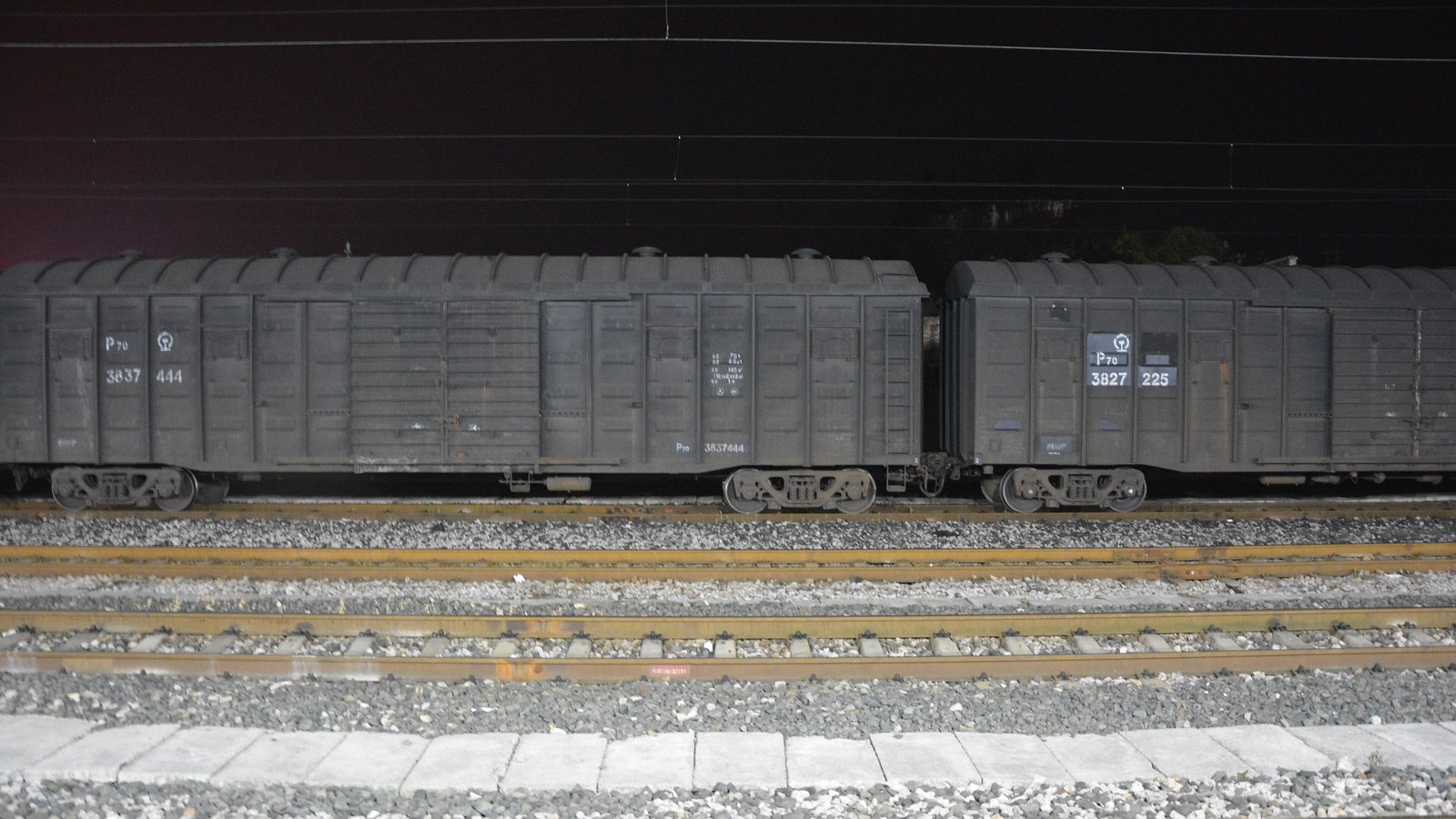
On November 24, 2026, the Federal Railroad Administration published a notice in Washington, D.C., requesting public comment on the renewal of OMB Control No. 2130-0553 governing Positive Train Control safety hazard reporting, establishing critical baseline operational data and defect tracking mandates across 59,000 route miles that directly influence federally funded transportation research, safety quality systems, and academic rail engineering partnerships.
Federal Notice Proposes OMB Information Renewal for Rail Safety Systems
On November 24, 2026, the Federal Railroad Administration (FRA), an agency within the U.S. Department of Transportation, issued Federal Register Document 2026-23910 (Docket No. FRA-2026-2146) titled “Proposed Agency Information Collection Activities; Comment Request.” The publication initiates a 60-day public comment window under the Paperwork Reduction Act of 1995 (44 U.S.C. 3501-3520) and 5 CFR part 1320, soliciting feedback through January 25, 2027.
The Information Collection Request (ICR) covers Positive Train Control (PTC) and Other Signal Systems under OMB Control Number 2130-0553. This collection governs reporting requirements across approximately 59,000 route miles of mandated freight and passenger rail corridors. FRA Information Collection Clearance Officer Joanne Swafford highlighted that public comments will guide agency determinations on four criteria: the necessity of the collection for executing rail safety functions; the precision of burden calculations; avenues to improve data quality; and automated information technology solutions to reduce paperwork burdens.
The respondent universe comprises 742 operating railroads—including Class I freight carriers, passenger operators, and short lines—together with 10 specialized PTC technology vendors and hardware suppliers. The proceeding constitutes an extension without change in regulatory scope, but updates burden estimates based on recent operational reporting.
Regulatory Burden Metrics and Mandatory Hazard Database Workflows
Codified within 49 CFR Part 236 Subpart I, rail carriers must develop, file, and maintain detailed Positive Train Control Safety Plans (PTCSPs), Implementation Plans (PTCIPs), and Development Plans (PTCDPs). These filings define the technical architecture, fail-safe parameters, and risk-mitigation measures that govern interoperable train operations.
A critical operational requirement is the safety hazard database mandate set forth in 49 CFR 236.1023. Under Section 236.1023(e), railroads must maintain a continuous database tracking all safety-relevant hardware and software hazards identified in their approved PTCSPs, as well as newly discovered hazards encountered during revenue operations. If a hazard’s frequency exceeds thresholds established in the carrier’s risk analysis, or if an unanalyzed defect degrades PTC safety functions, the railroad must notify the FRA and equipment suppliers using Form FRA F 6180.179 (Errors and Malfunctions Notification). PTC vendors face matching mandates under Section 236.1023(h) to report safety-critical defects and identify affected railroads.
Additionally, under 49 U.S.C. 20157(m), host railroads must submit quarterly performance evaluations on Form FRA F 6180.152 (Quarterly Report of PTC System Performance), enabling federal regulators to track component failures, en route cut-outs, and corrective engineering countermeasures.
The following table summarizes key annual burden estimates and labor cost equivalents calculated by the FRA across major reporting requirements:
| Regulatory Activity and CFR Citation | Respondent Universe | Annual Responses | Burden Hours | Cost Equivalent (USD) |
|---|---|---|---|---|
| Departure Tests and Retention (49 CFR 236.587) | 742 Railroads | 6,054,538 tests | 8,409 hours | $794,650.50 |
| Quarterly Performance Reports (Form FRA F 6180.152 / 49 U.S.C. 20157(m)) | 38 Host Railroads | 146 reports | 4,672 hours | $441,504.00 |
| High-Speed Service Filings HSR-125 (49 CFR 236.1007(c)) | 38 Host Railroads | 1 filing | 3,200 hours | $406,560.00 |
| Joint Product Safety Plan Filings (49 CFR 236.913(a)) | 742 Railroads | 1 joint plan | 2,000 hours | $254,100.00 |
| Hazard Database Updates (49 CFR 236.1023(e)) | 38 Railroads | 38 updates | 608 hours | $57,456.00 |
| Vendor Malfunction Reports (Form FRA F 6180.179 / 49 CFR 236.1023(h)) | 10 Vendors | 20 reports | 150 hours | $14,175.00 |
| Total Annual Information Collection (All Requirements) | 742 Railroads, 10 Vendors | 6,057,758 responses | 53,174 hours | $5,078,000+ |
Statutory Evolution and Information Accounting Adjustments
The federal train control mandate originated in the Rail Safety Improvement Act of 2008 following major collision investigations. Congress directed freight and passenger lines to deploy systems preventing train-to-train collisions, over-speed derailments, work-zone incursions, or switch-misalignment accidents. Following phased statutory extensions, full revenue deployment across all mandated lines was completed by December 31, 2020. Federal oversight has since transitioned from initial physical installation toward operational reliability and defect tracking.
In the current ICR renewal, the FRA calculated an overall annual burden increase from 51,931 hours to 53,174 hours, adding 1,243 net burden hours. This upward adjustment is primarily driven by updated empirical reporting for departure tests under 49 CFR 236.587, which requires retaining test records for 92 days. Based on carrier operating data, the FRA estimated that 6,054,538 departure tests occur annually, requiring 5 seconds per test and generating 8,409 burden hours valued at $794,650.50.
Conversely, the agency eliminated several obsolete or out-of-scope burden categories. Hours previously counted for public comments under Sections 236.913, 236.1011, and 236.1021 were excised because public comments do not constitute paperwork collections under 5 CFR 1320.3(h)(4). The FRA also removed burdens previously assigned to internal railroad rules under Section 236.1001 and third-party assessments under Section 236.1017. In addition, installation progress reporting under Section 236.1006(b) was discontinued following the expiration of statutory implementation deadlines for Class II and III carriers.
Industry Stakeholders and Trade Body Perspectives on Compliance Overhead
The rail sector has maintained ongoing technical discussions with federal regulators regarding information collection overhead. According to data compiled by the Association of American Railroads, freight railroads invested over $15 billion in private capital to develop, test, and deploy interoperable train control systems across North America. Trade leaders emphasize that because tenant railroads operate across multiple host networks, unified data schemas and standard reporting mechanisms are vital for minimizing operational friction.
Carrier technical personnel have noted that administering Section 236.1023 hazard databases involves filtering high volumes of operational telemetry. Modern train control architectures generate numerous transient alerts, including temporary communications latency and GPS shading events. Safety engineers must distinguish benign anomalies from safety-critical component failures to avoid overburdening defect logs and regulatory channels. Railroad operators continue to advocate for standardized machine-readable data feeds and automated submission APIs to streamline compliance.
Implications for Transportation Research Centers and Safety Quality Systems
For academic researchers, university transportation centers, and institutional research offices, the renewal of OMB Control No. 2130-0553 carries direct implications for research data access, safety systems design, and laboratory compliance. Academic institutions supported through the U.S. Department of Transportation University Transportation Centers program routinely rely on federal safety and failure data to evaluate rail network resilience.
Research programs such as the Rail Transportation and Engineering Center at the University of Illinois Urbana-Champaign conduct vital studies on risk analysis and railway safety systems. The database framework established under 49 CFR 236.1023 embodies principles of risk-based quality management (RBQM), where predefined threshold metrics and systematic anomaly tracking guide proactive interventions before systemic failures occur.
University engineering teams developing experimental railway communications or sensor payloads must adhere to documented controls similar to those in a formal quality management system laboratory guide. When experimental systems experience software anomalies during field demonstrations, investigators apply structured methodologies outlined in what is root cause analysis and healthcare investigative frameworks described in root cause analysis in healthcare to trace operational defects back to fundamental logic errors or hardware faults.
Furthermore, research offices managing industry-sponsored rail agreements must account for confidentiality provisions under 49 CFR 236.1009(e). Because carriers submit sensitive software architectures and proprietary risk plans to the FRA, academic research agreements must establish clear protocols protecting confidential commercial data while preserving publication rights.
Federal Docket Timeline and Public Comment Deadlines for 2027
The public comment window for Federal Register Document 2026-23910 remains open through January 25, 2027. Comments and supporting data should be submitted to the federal eRulemaking portal under Docket No. FRA-2026-2146, referencing OMB Control Number 2130-0553. Stakeholders may address the accuracy of burden estimates, practical data utility, and automated filing methods.
Following the 60-day comment period, the FRA will review public submissions, adjust its burden calculations as warranted, and issue a second notice in the Federal Register. That publication will initiate a final 30-day review period before OMB issues a formal decision on the three-year information collection renewal. In the interim, all existing reporting requirements under 49 CFR Part 236 Subpart I and 49 U.S.C. 20157(m) remain fully effective.
Sources
- Federal Register: Proposed Agency Information Collection Activities; Comment Request, checked 2026-11-29
- eCFR: Title 49 Subtitle B Chapter II Part 236 Subpart I Positive Train Control Systems, checked 2026-11-29
- Legal Information Institute: 49 CFR 236.1023 Errors and Malfunctions, checked 2026-11-29
- Regulations.gov: Docket FRA-2026-2146 Information Collection Activities, checked 2026-11-29
- University of Illinois RailTEC: Rail Safety and Risk Research, checked 2026-11-29
- Association of American Railroads: Positive Train Control Overview, checked 2026-11-29






